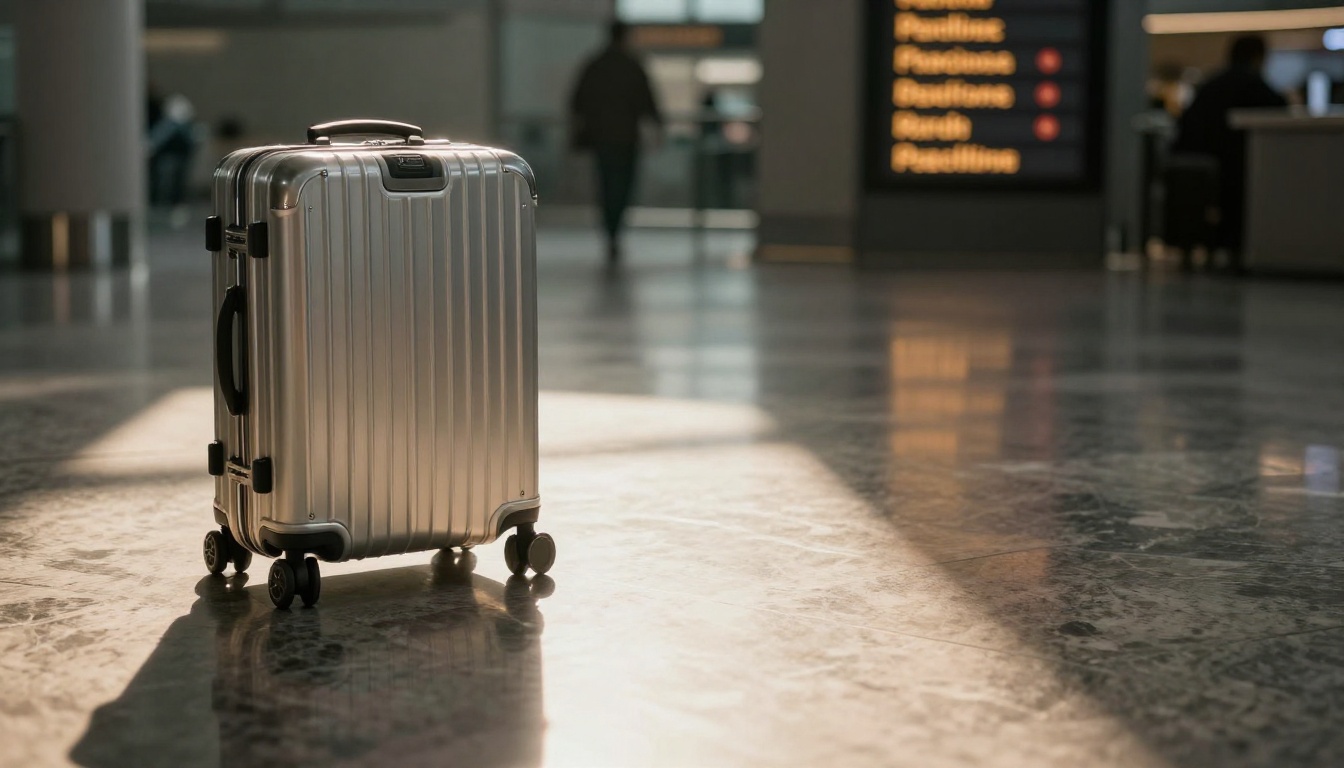
A Rimowa Original cabin case costs $1,350 and dents the first time a baggage handler drops it from three feet. A Briggs & Riley Baseline carry-on costs $679, absorbs the same impact without a mark, and comes with a lifetime warranty that actually covers airline damage. Neither fact tells the whole story, but together they explain why choosing luggage is more complicated than choosing a price point.
The premium luggage market is built on two conflicting promises: that your bags will signal taste and that they will survive the reality of modern air travel. Those goals are often at odds. The same aluminum shell that photographs well on an airport carousel is the one most likely to come back looking like it lost a fight. The real question is not which brand is best. It is which trade-offs you are willing to live with.
Hard Shell vs Soft Side: The Debate Nobody Settles Honestly
Hard-shell polycarbonate and aluminum cases dominate the premium market right now. They look sharp. They stack well. They protect fragile contents from compression. But they have a fundamental limitation that brands rarely mention: they cannot flex. Every impact either bounces off cleanly or leaves a permanent dent or crack. There is no middle ground.
Soft-sided luggage made from ballistic nylon or high-denier polyester absorbs impact by deforming and springing back. It also expands, compresses into overhead bins more easily, and weighs less. The trade-off is that it offers less crush protection and shows scuffs and abrasion marks over time. For first-class travelers who check bags regularly, soft-sided cases age more gracefully under real airline conditions. For cabin-only travelers, hard shell wins on protection and aesthetics.
The honest answer: own both. A hard-shell carry-on for short trips where the bag never leaves your sight, and a soft-sided checked bag built to absorb punishment from conveyor belts, rain, and handlers who treat every bag like it personally wronged them.
Five Brands, Tested Honestly
Rimowa
The in aluminum is the most recognizable piece of luggage in any airport. The grooved shell, the TSA-approved locks, the German engineering pedigree that LVMH acquired in 2016. It is a genuinely well-made case. But here is the thing nobody at the boutique will tell you: aluminum dents. Not might dent. Will dent. Every checked Rimowa Original returns with new character marks. Rimowa leans into this, calling them "travel stories." Whether you find that charming or infuriating determines whether this is your bag.
The polycarbonate Essential line ($775-$950 for cabin size) is lighter and more dent-resistant, though it scratches. Both lines use a multiwheel system that rolls beautifully on smooth floors and struggles on cobblestones. Warranty coverage is five years, does not cover airline damage, and repair turnaround averages three to four weeks.
Globe-Trotter
The has been making luggage in Hertfordshire since 1897 using vulcanised fibreboard, the same material they used when the company started. The cases are remarkably light for their size, distinctive in a way that no other brand replicates, and genuinely handmade. They are also fragile by modern standards. The corners chip. The leather straps wear. The latches are not TSA-compatible, which means TSA will cut locks off checked bags on US routes.
Globe-Trotter works best as a carry-on for travelers who want something with personality and are willing to baby it. As a checked bag on transatlantic routes, it is a liability. Prices start around $1,600 for a cabin trolley and climb past $3,000 for larger sizes. The warranty is two years. For a bag at this price, that is remarkably short.
Tumi
Tumi occupies the space between fashion luggage and professional workhorse. The line, built from their proprietary FXT ballistic nylon, remains one of the most durable soft-sided collections available. A well-maintained Alpha 3 will outlast two or three Rimowa polycarbonate cases under the same travel frequency. The U-zip expansion, the magnetic accessory pockets, the Tumi Tracer registration system for lost bags: these are features designed by people who actually travel 200 days a year.
The downside is aesthetic. Tumi looks corporate. The Alpha 3 cabin carry-on ($795) is the bag you see in every business-class overhead bin on the New York to London route. It signals competence rather than taste. For some travelers, that is exactly right. For others, it defeats the purpose of spending $800 on a bag. The warranty covers defects but explicitly excludes airline damage and normal wear, which is disappointing given the brand positioning.
Louis Vuitton
Louis Vuitton Horizon cases ($3,400-$4,400 for a cabin size) are fashion objects that happen to be shaped like luggage. The monogram canvas is treated to resist water and scratching, the rolling mechanism is smooth, and the interior layout is considered. But the zipper is the weak point. LV uses a single-track zipper system that, when it fails, requires a full panel replacement. On a $4,000 bag, that is a significant design vulnerability.
The older Pegase line and the classic trunk-style Keepall ($2,030 for the 50) are better travel companions. The Keepall in particular, made from the same treated canvas, collapses flat when empty and holds up remarkably well to rough handling. It is the one LV travel piece that earns its price through function rather than just branding. Warranty is not publicly stated in duration and repairs go through LV boutiques, which can take six to eight weeks.
Briggs & Riley
The is the answer to a question most premium luggage brands refuse to ask: what if we just made the bag work? The Baseline carry-on ($679) uses a CX compression-expansion system that lets you pack more and still close the bag without sitting on it. The outsider construction means all mechanical components are accessible from the outside, so repairs never require opening or cutting the case. And the warranty is the best in the industry: lifetime, unconditional, covering airline damage. No receipt required. No questions asked.
Briggs & Riley will never be the bag that turns heads at the Aman check-in desk. The design is purely functional, the colorways are conservative, and the brand recognition outside of frequent-traveler circles is minimal. But among consultants, journalists, and anyone who flies more than 100,000 miles a year, it has a devoted following for good reason. It is the Toyota Land Cruiser of luggage: not glamorous, profoundly reliable.
The Price and Warranty Comparison
Premium Luggage: Cabin Carry-On Comparison
| Brand & Model | Price (Cabin) | Weight | Shell Type | Warranty | Covers Airline Damage |
|---|---|---|---|---|---|
| Rimowa Original Cabin | $1,350 | 4.3 kg | Aluminum | 5 years | No |
| Rimowa Essential Cabin | $775 | 3.2 kg | Polycarbonate | 5 years | No |
| Globe-Trotter Carry-On Trolley | $1,600+ | 3.0 kg | Vulcanised fibreboard | 2 years | No |
| Tumi Alpha 3 Carry-On | $795 | 3.4 kg | Ballistic nylon | Limited lifetime | No |
| Louis Vuitton Horizon 55 | $3,400 | 3.5 kg | Monogram canvas / PC | Unspecified | No |
| Briggs & Riley Baseline Carry-On | $679 | 3.6 kg | Ballistic nylon | Lifetime | Yes |
That last column is where the real differentiation lives. Every premium luggage brand will repair manufacturing defects. Only Briggs & Riley will fix your bag after an airline destroys it, for free, forever. When you factor in the cumulative cost of repairs over ten years of heavy travel, the $679 Baseline is often cheaper to own than the $1,350 Rimowa.
What Airline Handling Actually Does to Luggage
Airlines lose or damage roughly 7.4 bags per thousand passengers globally, according to SITA's 2025 baggage report. That number has improved from the post-pandemic chaos, but it still means a frequent traveler checking bags on 50 round trips per year has a statistically meaningful chance of damage each year. Baggage systems involve conveyor drops of up to four feet, compression between other bags, exposure to rain and tarmac temperatures, and occasional forklift mishandling on wide-body aircraft.
Aluminum dents under these forces. Polycarbonate cracks at stress points, particularly around the wheel housings and corner bumpers. Ballistic nylon tears at seams if the fabric catches on conveyor mechanisms. Zippers fail when bags are overstuffed and then compressed by other luggage. No material is immune. The question is which failure mode you prefer: cosmetic damage you can live with, structural damage that ends the bag, or wear that can be repaired.
For travelers who fly private, none of this applies. Your bags go from car trunk to aircraft hold by a single handler. In that context, choose purely on aesthetics and weight. For everyone flying commercial, even in first class, your checked bags enter the same system as every other passenger's.
Specific Recommendations by Travel Style
- Carry-on only, short trips (2-5 days) — Rimowa Essential Cabin ($775). Light, protective, fits international cabin dimensions. Accept the scratches as inevitable.
- Frequent flyer, mostly domestic — Briggs & Riley Baseline Domestic Carry-On ($619). The compression system packs more than competitors, and the warranty means you never buy another bag.
- International checked bags — Tumi Alpha 3 Short Trip Packing Case ($995). Ballistic nylon absorbs belt-system abuse. Expansion for souvenirs. Durable enough for 200+ trips.
- Fashion-forward, minimal checking — Louis Vuitton Keepall 50 ($2,030). Collapses flat in your main bag. Distinct without being ostentatious. Remarkably tough canvas.
- Heritage and character — Globe-Trotter Centenary 20" Trolley ($1,800). Carry-on only, handle with care, and enjoy owning something no one else on the flight has.
- The pragmatist's luxury pick — Rimowa Original Cabin ($1,350) for carry-on paired with a Briggs & Riley Baseline for checked. Beauty and durability without compromise.
The Details That Actually Matter
Wheels wear out before shells do. Every luggage brand uses similar bearing assemblies, and most will need wheel replacement after 150-200 flights of regular use. Rimowa charges around $80-$120 per wheel replacement. Briggs & Riley does it free. Tumi charges $40-$60. Factor this into your ownership cost calculation, particularly if you travel weekly.
Handles matter more than you think. Telescoping handle mechanisms are the most common point of failure across all brands. A handle that wobbles after two years of use makes an otherwise perfect bag feel cheap. Rimowa and Tumi have the sturdiest handle systems in the category. Globe-Trotter's single-pole design is elegant but flexes under heavy loads. The material quality of the grip itself varies more than you would expect at these price points.
Interior organization is where Tumi genuinely leads. The Alpha 3's pocket layout, garment sleeve, and compression straps are designed around actual packing needs: a suit, five days of clothes, a laptop, toiletries. Rimowa interiors are clean but spartan. LV interiors are attractive but oddly shaped by the bag's tapered silhouette. Briggs & Riley splits the difference with a practical layout that lacks Tumi's refinement but covers all the essentials.
The Verdict
If forced to own exactly one piece of carry-on luggage for the rest of my traveling life, it would be the Briggs & Riley Baseline. Not because it is the most beautiful or the most prestigious, but because it will still be functioning perfectly after a decade of weekly flights, and the warranty means the manufacturer agrees with that assessment enough to put it in writing.
If money is not the constraint and you want something that performs and signals, the Rimowa Original plus a Tumi Alpha 3 for checked bags covers every scenario. The Rimowa handles the overhead bin with presence; the Tumi handles the baggage system with resilience. Together they cost roughly $2,150, less than a single Louis Vuitton Horizon, and will likely outlast it.
The worst move is buying luggage based on how it looks in a store. Buy it based on how it will look after fifty flights, what happens when a wheel breaks, and whether the brand will stand behind it when an airline doesn't. That calculation changes the ranking entirely.
Looking for luxury brands, stores, and services? Browse our curated directory: