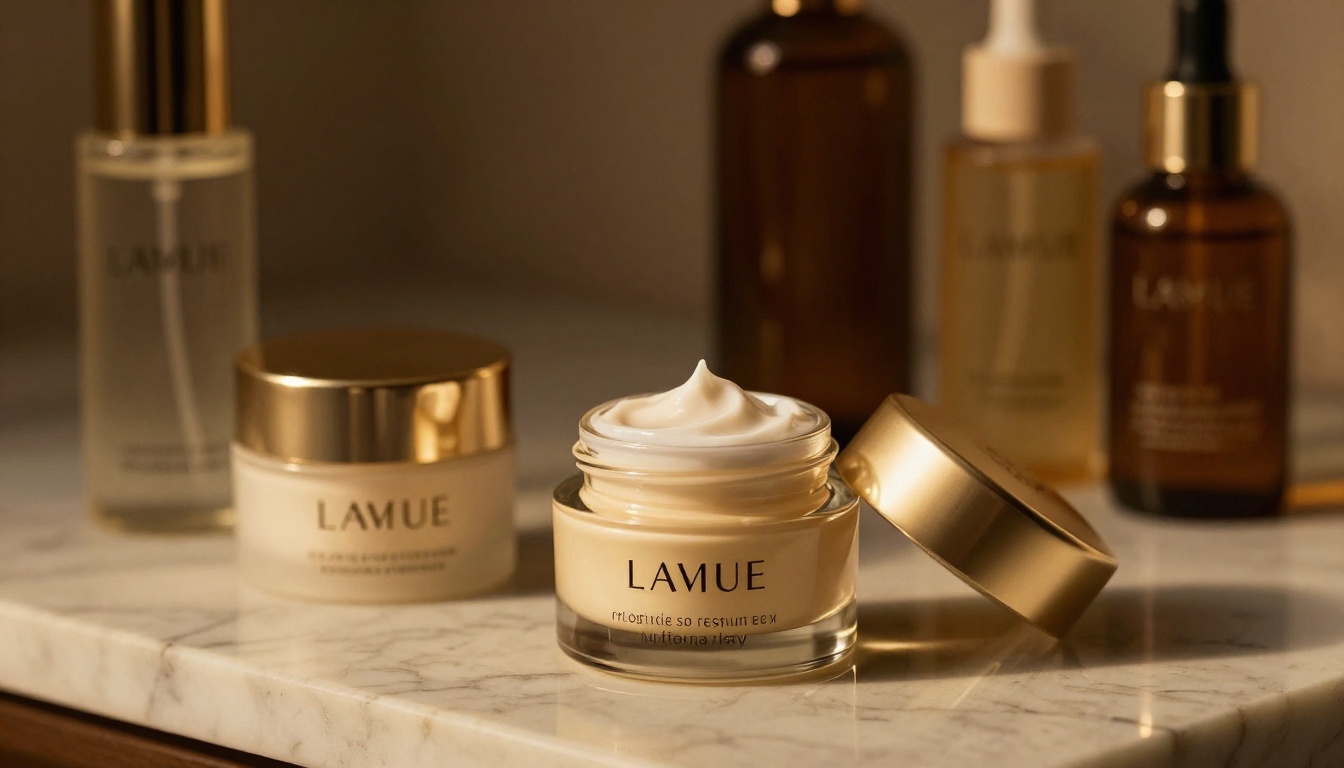
A jar of Augustinus Bader The Rich Cream retails for $280 per 50ml. The full ingredient list is public. The hero component — a patented TFC8 complex — has a single peer-reviewed clinical study, funded by the brand itself. The moisturizer ranks highly in dermatologist surveys, performs well in consumer trials, and contains the same glycerin, shea butter, and squalane base found in products costing one-tenth the price. That gap between ingredient cost and retail price is where the entire premium skincare industry lives.
"Clean beauty" has become the dominant marketing framework for skincare products priced above $150. The term has no regulatory definition. The FDA does not recognize it. The EU's cosmetics regulation — the strictest in the world — governs ingredient safety but says nothing about "clean." What the term actually signals varies by brand: for some, it means free of parabens and sulfates; for others, it implies clinical-grade formulation backed by peer-reviewed research. The difference matters, because at $300 a jar, the buyer deserves to know which one they are getting.
The Brands and What They Claim
Five brands dominate the $200-$500 moisturizer tier: Augustinus Bader, La Mer, Dr. Barbara Sturm, Tatcha, and Vintner's Daughter. Each makes distinct claims about formulation, sourcing, and efficacy. The marketing narratives are sophisticated. The clinical evidence behind them varies enormously.
The line leans on the credentials of its founder, Professor Augustinus Bader, a biomedical scientist whose wound-healing research at Leipzig University is real and peer-reviewed. The leap from wound healing to anti-aging moisturizer is where the science thins. TFC8 — Trigger Factor Complex — is the brand's proprietary blend, and its mechanism in skincare (as opposed to clinical wound care) has limited independent verification.
tells a different origin story: NASA physicist Max Huber, a lab accident, fermented sea kelp. The hero ingredient is Miracle Broth, a proprietary ferment. 's parent company, Estee Lauder, has significant R&D resources, but the brand has published no independent clinical trials demonstrating that Miracle Broth outperforms standard moisturizing ingredients at comparable concentrations. What La Mer does exceptionally well is texture — the cream's sensory profile is distinctive, and that experience has genuine value for some buyers.
Dr. Barbara Sturm positions her line as "molecular cosmetics" — science-forward, anti-inflammatory, built around purslane extract and hyaluronic acid. The formulations are straightforward and well-tolerated. The prices ($310 for 50ml of Face Cream) reflect the brand positioning more than ingredient rarity. Purslane is an antioxidant, but its superiority over well-studied alternatives like vitamin C or niacinamide at equivalent concentrations remains unproven in comparative trials.
What the Ingredient Lists Actually Show
Skincare ingredient lists follow INCI (International Nomenclature of Cosmetic Ingredients) rules: ingredients are listed in descending order of concentration down to 1%, below which they can appear in any order. This means the first five to seven ingredients tell the real story. For most premium moisturizers, that story is remarkably similar.
Key Active Ingredients: Premium Moisturizer Comparison
| Brand & Product | Price (50ml) | Hero Claim | Key Actives | Independent Clinical Evidence | Disclosed Concentrations |
|---|---|---|---|---|---|
| Augustinus Bader The Rich Cream | $280 | TFC8 complex | Squalane, shea butter, evening primrose oil, TFC8 | 1 brand-funded study | No |
| La Mer Creme de la Mer | $380 | Miracle Broth | Seaweed ferment, mineral oil, glycerin, lime extract | None independent | No |
| Dr. Barbara Sturm Face Cream | $310 | Molecular cosmetics | Purslane, hyaluronic acid, squalane, vitamin E | Limited | No |
| Tatcha Dewy Skin Cream | $72 | Japanese beauty rituals | Hyaluronic acid, ceramides, green tea, rice bran | Minimal | No |
| Vintner's Daughter Active Botanical Serum | $185 (30ml) | Whole-plant formulation | 22 botanical oils, phytoceramides, vitamin C ester | None | Partial (oils listed) |
| SkinCeuticals Triple Lipid Restore | $142 | Lipid correction | 2% ceramides, 4% cholesterol, 2% fatty acids | Multiple independent | Yes |
| CeraVe Moisturizing Cream | $19 | Dermatologist-developed | Ceramides, hyaluronic acid, petrolatum | Extensive | Partial |
The table reveals two patterns. First, brands that disclose active ingredient concentrations tend to be those with clinical evidence behind them — SkinCeuticals being the clearest example in the premium tier. Second, the most expensive products rely heavily on proprietary complexes whose compositions and concentrations remain trade secrets. That is not inherently suspicious — pharmaceutical companies protect formulations too — but it makes independent verification impossible.
What Dermatologists Say About Price and Efficacy
Board-certified dermatologists who have commented publicly on premium skincare — including Dr. Shereene Idriss, Dr. Sam Bunting, and Dr. Ranella Hirsch — tend to converge on a few points. The ingredients with the strongest clinical evidence for anti-aging are retinoids (tretinoin and retinol), vitamin C (L-ascorbic acid at 10-20%), niacinamide, alpha hydroxy acids, and broad-spectrum SPF. These are not proprietary. They are not expensive to source. The fundamentals of an effective skincare routine do not change based on price point.
Where premium products can justify higher prices is in formulation stability (vitamin C degrades rapidly and is difficult to stabilize), vehicle technology (how effectively the product delivers actives to the relevant skin layer), and user experience (texture, scent, absorption speed). These are real differentiators, but they do not require $300 price points. Products in the $40-$80 range from brands like Paula's Choice, SkinCeuticals, and Drunk Elephant routinely match or exceed premium competitors in independent testing.
The most expensive ingredient in a $300 moisturizer is rarely the one doing the most work. It is the one with the best story.
Where the Money Actually Goes
The economics of premium skincare are well-documented in beauty industry analyses. Raw ingredient costs for a 50ml jar of moisturizer — even one using high-quality botanical extracts and stable actives — typically range from $3 to $15. Packaging, particularly the weighted glass jars and magnetic closures favored by brands like La Mer and Augustinus Bader, can cost $10-$25 per unit. The rest goes to marketing, retail margins, and brand positioning.
Price per Ounce: Premium Moisturizers
That is not a condemnation. Packaging and sensory experience genuinely matter to many buyers, and there is nothing wrong with paying for pleasure. The problem arises when brands present marketing-driven pricing as evidence of superior efficacy. A heavier jar does not mean better ingredients. A higher price does not correlate with stronger clinical evidence — in most cases, the relationship runs in the opposite direction.
The parallel to premium fabrics is instructive. With cashmere or silk, fiber quality is measurable: micron count, tensile strength, staple length. With skincare, measurable quality — active concentration, stability, penetration — is rarely disclosed by the brands charging the most.
The "Clean" Question
"Clean beauty" as a category emerged partly from legitimate concerns — the EU bans over 1,300 cosmetic ingredients that the US does not — and partly from marketing opportunism. Brands like Tatcha and Drunk Elephant built their positioning on "free from" lists: no parabens, no sulfates, no synthetic fragrance. The implication is that these ingredients are harmful. The evidence is more nuanced.
Parabens, for instance, have been used as preservatives for decades. The safety concern originated from a 2004 study that detected parabens in breast tumor tissue — but the study did not establish causation, and subsequent research, including reviews by the EU Scientific Committee on Consumer Safety, has found parabens safe at concentrations used in cosmetics. Removing them is a marketing decision, not a safety one. The alternatives — phenoxyethanol, sodium benzoate, potassium sorbate — are not inherently safer; they are simply less controversial.
Sulfates (specifically sodium lauryl sulfate and sodium laureth sulfate) are effective surfactants that can irritate sensitive skin. Avoiding them in cleansers is reasonable for reactive skin types. Framing their absence as a marker of product quality, however, is misleading. Many "clean" brands replace sulfates with cocamidopropyl betaine or decyl glucoside — effective alternatives, but not premium ones.
Which Products Justify Their Price
Separating the worthwhile from the merely expensive requires focusing on three questions: Does the product contain proven actives at effective concentrations? Is the formulation stable and well-engineered? Does the brand provide evidence beyond testimonials and before-and-after photos?
By those criteria, the premium market splits into tiers. consistently publishes ingredient concentrations and supports claims with independent clinical data. Their products are expensive relative to drugstore brands but defensible relative to the science. The same holds for select products from Skinceuticals' parent company L'Oreal's research arm, and for specific prescription-adjacent lines like Dr. Dennis Gross and Murad, which disclose actives and fund third-party testing.
Products from Augustinus Bader and Dr. Barbara Sturm fall into a middle ground: sophisticated formulations, credentialed founders, limited independent evidence. The experience of using them is genuinely pleasant, and anecdotal consumer satisfaction is high. Whether that satisfaction reflects the proprietary complexes or the well-formulated moisturizer base is an open question — and one neither brand seems eager to answer through independent comparative trials.
La Mer and La Prairie sit at the extreme: the highest prices, the most elaborate brand narratives, and the least clinical evidence relative to cost. La Prairie's Skin Caviar line, which runs above $400 per 50ml, lists caviar extract — a protein-rich ingredient with antioxidant properties but no proven superiority over niacinamide or vitamin C at equivalent concentrations. The product works as a moisturizer. Whether it works $380 better than CeraVe is a question the ingredient list cannot support.
What the Wellness Industry Overlap Reveals
The premium skincare market shares structural similarities with the broader high-end wellness sector: strong aesthetic branding, credentialed founders, proprietary terminology, and a gap between what the science supports and what the marketing implies. This is not unique to beauty — the same dynamic appears in supplements, functional foods, and spa-based wellness programs. The pattern is consistent: the further a product moves from pharmaceutical-grade evidence toward lifestyle positioning, the wider the gap between price and provable efficacy.
That gap is not always a problem. Skincare is partly functional and partly experiential. The ritual of applying a beautifully textured cream from a weighted jar has psychological value. Dermatologists acknowledge that compliance — actually using the product consistently — matters more than the specific product in most routines. If a $280 cream makes someone more likely to moisturize daily than a $19 one, the expensive cream is arguably doing its job.
The Honest Assessment
The "clean beauty" label at the $300 tier is, at best, a statement about ingredient exclusion — what the product does not contain. It says nothing reliable about what the product does contain in effective concentrations, whether those actives have been independently tested, or whether the formulation outperforms products at one-fifth the price. At worst, it is a marketing framework designed to charge premium prices for standard formulations wrapped in superior packaging and brand storytelling.
The products themselves are not bad. Most are well-formulated, stable, pleasant to use, and unlikely to cause irritation. They are, by and large, fine moisturizers. The question is whether "fine moisturizer" justifies $280-$400, or whether the buyer is paying primarily for the narrative — the professor, the physicist, the molecular cosmetics, the Japanese beauty ritual — rather than measurably superior skincare outcomes.
For anyone building a skincare routine grounded in evidence, the advice from dermatologists has not changed: tretinoin or retinol, stable vitamin C, SPF 30+, and a basic moisturizer with ceramides or hyaluronic acid. The total cost of that routine, using products with published concentrations and clinical evidence, runs $80-$200. Everything above that price point is buying something — but it is worth being honest about what that something is.