A Rogue SML-2C squat stand, a flat bench, a barbell, 300 pounds of iron plates, and a decent pull-up bar can be had for under $2,000. That setup, in a garage with rubber stall mats from Tractor Supply, is enough to build serious strength for a lifetime. Everything above that number is a question of how much the training environment matters — and for those who have decided it matters a great deal, the cost curve steepens fast.
This is the practical build-out guide for people who have already decided to build a home gym and want to understand where the money goes at three distinct levels: a serious garage-level setup at $15,000, a dedicated room with proper finishes at $50,000, and a purpose-built wellness wing at $150,000. The differences between tiers are less about what exercises are possible and more about acoustics, climate, flooring, and whether the space is somewhere a person wants to be at 6 a.m. on a cold Tuesday.
The $15,000 Build: A Garage That Works
At this budget, the equipment is the priority and the room is what it is — a garage bay, a basement corner, a spare bedroom with reinforced flooring. The goal is a complete training setup with quality pieces that will last a decade or more, plus minimal environmental upgrades to make the space usable year-round.
Equipment ($10,000-$11,000)
The strength foundation starts with a power rack, not a squat stand. The power rack runs roughly $1,200 and handles everything from heavy squats to banded work to ring attachments. Pair it with a Rogue Ohio Power Bar ($395), a set of Rogue Echo bumper plates ($700 for 370 lbs), and an adjustable bench like the Rep Fitness AB-5200 ($450). That is the core of any serious program, and these brands hold up under daily use for years.
Cardio at this tier means one machine, and the right choice depends on the training style. A Concept2 RowErg ($1,100) is the best all-around option — compact when stored upright, nearly indestructible, and demanding enough to replace most steady-state cardio. Runners who will not row should consider the Assault AirRunner ($3,000), a motorless treadmill that better mimics outdoor running mechanics than any belt-driven alternative. Skip the Peloton unless cycling is the primary mode; the subscription model and limited durability make it a poor fit for a gym built to last.
Fill the gaps with a set of adjustable dumbbells (PowerBlock Pro EXP, $600 for 5-90 lbs), a GHD machine ($500), a pull-up bar if the rack does not include one, kettlebells in 16kg, 24kg, and 32kg ($350), and a plyometric box ($150). Budget $500-$800 for accessories: bands, a foam roller, a landmine attachment, and fractional plates.
Flooring and Environment ($4,000-$5,000)
This is where most $15K builds go wrong. Owners spend $12,000 on iron and $200 on flooring, then wonder why deadlifts crack the concrete and the space smells like a tire shop by August. Proper rubber flooring — 3/4-inch vulcanized rubber roll from Regupol or similar — costs roughly $3-$4 per square foot installed. For a 400-square-foot space, that is $1,200-$1,600. Add an 8x8 deadlift platform built from horse stall mats over plywood ($300 in materials) and the floor is handled.
Climate control at this budget means a mini-split HVAC unit ($2,000-$3,000 installed), which is non-negotiable in any garage gym that will be used through summer or winter. A box fan does not count. A portable dehumidifier ($300) keeps mold off the equipment. Lighting gets overlooked: replace dim garage fixtures with 5000K LED shop lights ($150 for four). Sound is a Bluetooth speaker and a phone — no reason to spend more here.
The $50,000 Build: A Dedicated Room Done Right
The jump from $15K to $50K is not primarily about more equipment. It is about the room itself — proper flooring systems, ventilation that handles sustained training without turning the space into a sauna, sound isolation so early-morning sessions do not wake the house, and enough climate control to maintain the equipment and the occupant. This tier typically involves converting a basement, a large spare room, or a detached outbuilding into a purpose-designed training space.
Equipment ($18,000-$22,000)
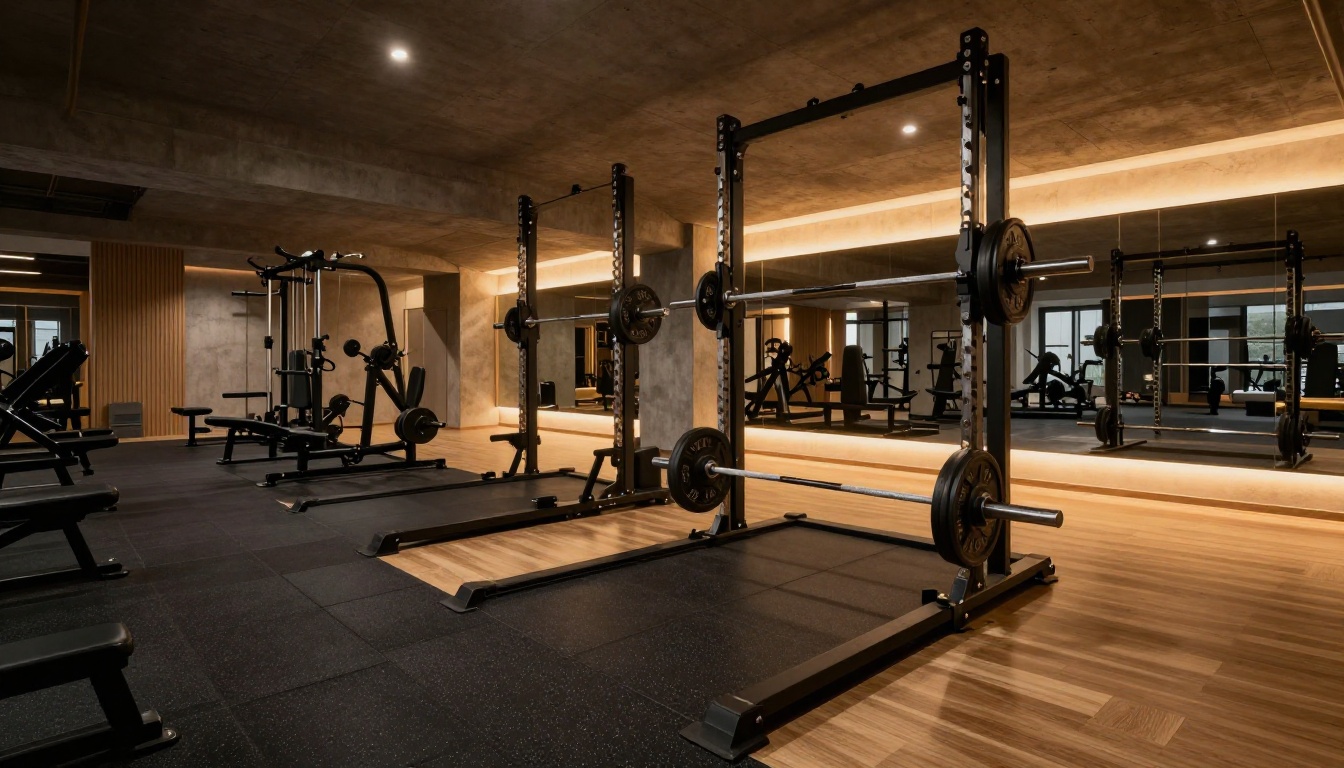
The strength equipment at this level steps up from Rogue to , the Swedish manufacturer whose barbells are used in international Olympic weightlifting competition. An Eleiko IWF Weightlifting Training Bar ($900) and a set of Eleiko Sport Training Plates ($2,500) bring a tangible quality difference — tighter tolerances on plate weight, better knurling consistency, and calibrated balance that makes a real difference under heavy loads. The power rack can be a Sorinex Base Camp ($3,500) or a Rogue Monster Lite series ($2,500), both meaningfully more rigid than the $1,200-tier options.
Cardio expands to two or three machines. The Concept2 stays (it is hard to beat at any price), and adds a Technogym Skillmill ($7,000-$8,000), a curved motorless treadmill with sled-push resistance, or an Assault Air Bike ($800). A cable crossover station like the Inspire FTX ($2,500) adds functional training options without the footprint of separate machines. Dumbbells upgrade to a full commercial set — Ivanko or Rogue urethane pairs from 5 to 100 lbs ($3,000-$4,000). Specialty bars (a safety squat bar, a trap bar, a Swiss bar) run another $800-$1,200 total.
Flooring ($5,000-$8,000)
This tier justifies a proper flooring system, not just rubber roll. The best approach for a dedicated gym room is a floating floor: a layer of 3/4-inch plywood over a moisture barrier, topped with 8mm Regupol or Dinoflex commercial rubber tiles interlocked and glued. This assembly absorbs impact, protects the subfloor, reduces noise transmission to rooms below, and provides a surface that cleans easily and will not shift under lateral movement. For a 600-square-foot room, materials and professional installation run $5,000-$7,000. A dedicated Olympic lifting platform with inlaid hardwood ($1,500 built to spec) sits on top.
Climate, Ventilation, and Sound ($8,000-$12,000)
A ducted mini-split system with two zones ($5,000-$7,000 installed) keeps one end of the room cooler for cardio and the other moderate for lifting — a detail that sounds minor until someone tries to bench press in a 64-degree room. Mechanical ventilation matters more than most builders realize. A dedicated exhaust fan pulling 200+ CFM, paired with a filtered intake, cycles the air volume every 8-10 minutes. Without it, CO2 levels climb during sustained effort and the rubber off-gassing never dissipates. Budget $1,500-$2,000 for the ventilation system.
Sound isolation — not soundproofing, which is a different and more expensive undertaking — keeps the sound of dropped weights and loud music from traveling through the house. Resilient channel on the ceiling joists, a second layer of drywall with Green Glue compound, and weatherstripping on the door runs $2,000-$3,000 for a standard basement room. The difference is substantial: a similar principle to plumbing infrastructure, invisible but transformative.
Technology and AV ($3,000-$5,000)
A wall-mounted 55-65 inch commercial display ($800-$1,200) with an Apple TV handles streaming workout apps, music, and training video review. Ceiling-mounted speakers — two Sonos In-Ceiling pairs ($500 each) or a pair of JBL Control 26CT — eliminate the need for a speaker occupying floor space. A simple IP camera ($200) angled at the lifting platform allows form review from a phone. The smart home integration piece is worth doing at this tier: a single control panel or voice command that sets the HVAC, lighting, and music preset when the gym is in use.
The $150,000 Build: A Purpose-Built Wellness Wing
At $150,000, the conversation shifts from equipping a room to designing a space. This budget typically involves architectural work — an addition, a detached structure, or a full basement build-out that may include a sauna, a cold plunge, a stretching and recovery area, and a shower. The equipment becomes a smaller fraction of the total spend, and the quality of the built environment becomes the point. An interior designer experienced in wellness spaces earns their fee at this level, particularly on material selection and lighting design.
Equipment ($25,000-$35,000)
This is where enters as a full ecosystem rather than a single machine. Technogym's Personal Line — designed for residential spaces and available in custom wood and leather finishes — includes the Kinesis Personal ($8,000), a cable-based functional trainer that mounts flush to the wall, the Skillrow ($3,500), and the Run Personal ($12,000), a treadmill with a 22-inch touchscreen and vibration-dampening base. For those who prefer the feel of competition equipment over design pieces, Eleiko's full platform setup with a competition bar, calibrated plates, a power rack, and a pulling block set runs $12,000-$15,000.
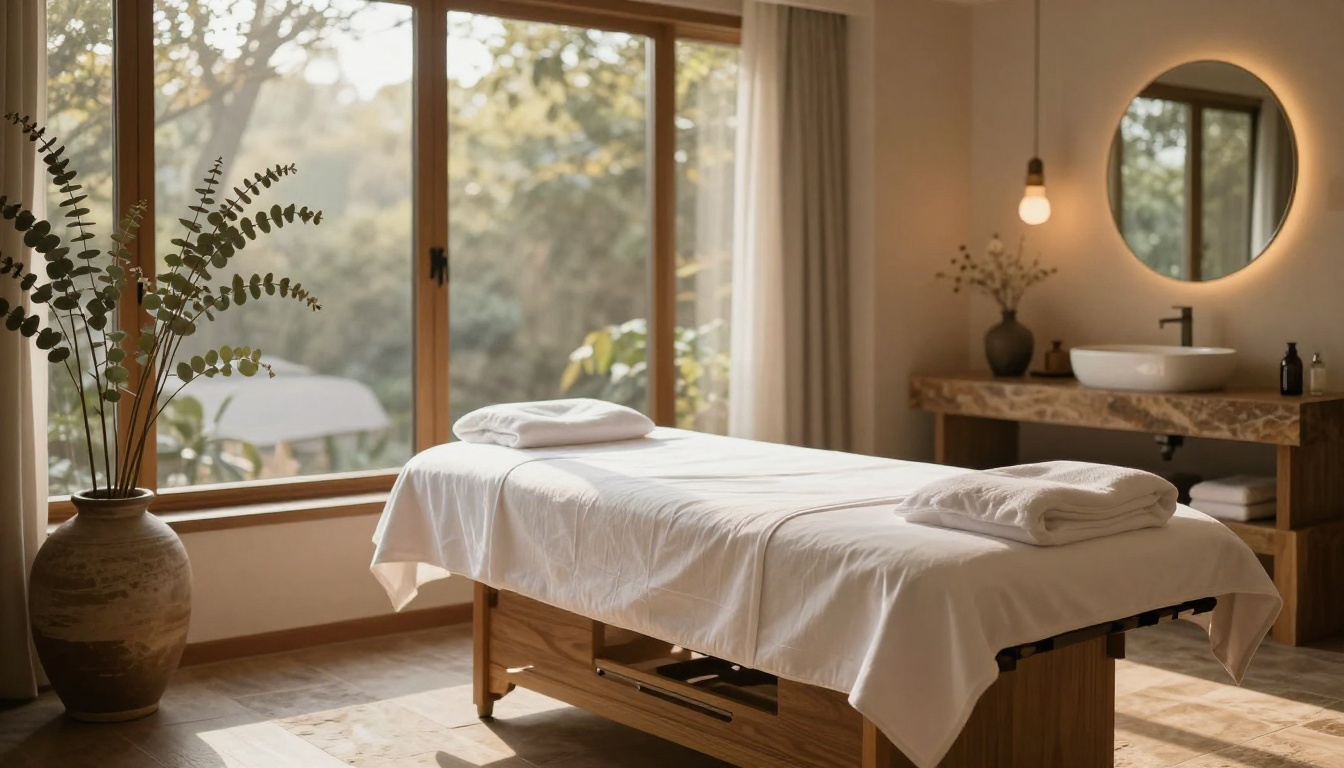
The intelligent addition at this budget is recovery equipment: a Morozko Forge cold plunge ($12,000) with a chiller that holds water at 33-39 degrees without ice, a Harvia or Helo sauna ($8,000-$15,000 installed, depending on size and whether it is infrared or traditional Finnish), and a dedicated stretching and mobility area with a massage table, a Theragun mount, and wall-mounted resistance bands. The sauna-to-cold-plunge circuit, backed by growing evidence for cardiovascular and inflammatory benefits, is the single most-used feature in high-end home gyms according to installers and architects who specialize in these projects.
The Built Environment ($60,000-$80,000)
Flooring at this tier means a sprung floor system in the stretching and movement area — the same subfloor construction used in dance studios and martial arts dojos, with a suspended plywood deck over foam blocks or rubber isolators. It costs $15-$25 per square foot installed and makes a real difference for anyone doing yoga, mobility work, or barefoot training. The lifting area gets a poured rubber surface (Mondo or Pulastic, $10-$18 per square foot) over an engineered subfloor, with embedded lifting platforms. Total flooring for an 800-1,200 square foot space runs $15,000-$25,000.
HVAC becomes a commercial-grade ducted system with independent zone control, HEPA filtration, and humidity management ($12,000-$18,000). The sauna and cold plunge areas need dedicated drainage, waterproofing, and ventilation — a plumbing scope that runs $8,000-$12,000 depending on proximity to existing lines. Lighting shifts from functional shop lights to a designed scheme: recessed LED fixtures on dimmers, indirect cove lighting for the recovery area, and task lighting for the lifting platform. A good lighting plan runs $5,000-$8,000 with fixtures and installation.
The shower and changing area, if included, adds $10,000-$15,000 depending on finishes — similar principles apply as in a bathroom renovation at this level. Sound isolation at this tier means a fully decoupled wall and ceiling assembly (double-stud walls, isolated ceiling, acoustic doors) at $8,000-$15,000 — enough to deadlift at midnight without disturbing someone sleeping one floor above.
Budget Breakdown by Category
The allocation across tiers tells an important story: as the budget grows, the proportion spent on iron and machines shrinks while the built environment takes a larger share. At $15K, roughly 70% goes to equipment. At $150K, equipment is closer to 20%.
Spending Allocation by Tier
Budget Allocation Summary
| Category | $15K Build | $50K Build | $150K Build |
|---|---|---|---|
| Strength Equipment | $8,000 (53%) | $14,000 (28%) | $22,000 (15%) |
| Cardio Equipment | $2,500 (17%) | $8,000 (16%) | $13,000 (9%) |
| Flooring | $2,000 (13%) | $7,000 (14%) | $22,000 (15%) |
| Climate & Ventilation | $2,000 (13%) | $9,000 (18%) | $18,000 (12%) |
| Technology & AV | $500 (3%) | $4,000 (8%) | $8,000 (5%) |
| Recovery (Sauna/Plunge) | — | — | $25,000 (17%) |
| Construction & Finishes | — | $8,000 (16%) | $35,000 (23%) |
| Design & Contingency | — | — | $7,000 (5%) |
| Total | $15,000 | $50,000 | $150,000 |
Running Costs Nobody Mentions
Buying the equipment is the easy part. Maintaining the space is the ongoing commitment that turns a showroom into a functioning gym — or, more commonly, turns a functioning gym into an expensive storage unit.
Estimated Monthly Running Costs
Electricity is the largest recurring cost. A mini-split running four hours a day in a garage adds $40-$80/month depending on climate zone. A full wellness wing with sauna, cold plunge chiller, and commercial HVAC can run $250-$350/month. The Morozko Forge chiller alone draws about 200 watts continuously to maintain 39-degree water — roughly $25-$35/month.
Equipment maintenance is predictable but often neglected. Cable machines need annual cable replacement ($100-$200 per machine). Treadmill belts require lubrication every 3-6 months and replacement every 2-3 years ($150-$500). Barbells need cleaning and oiling quarterly. Rubber flooring should be deep-cleaned monthly with a pH-neutral cleaner — harsh chemicals degrade the surface. At the $150K tier, most owners hire a cleaning service for the full space, running $150-$250/month.
The Three Mistakes That Waste the Most Money
Gym installers and architects who build these spaces consistently point to the same errors, regardless of budget.
Over-buying machines. The most underused piece of equipment in residential gyms is the multi-station cable machine — not because it is a bad tool, but because owners buy $8,000 units that duplicate what a $2,500 cable crossover already handles. Commercial selectorized machines (lat pulldowns, leg presses, pec decks) are even worse: they occupy 20-40 square feet each, serve one exercise, and require maintenance. Unless the program specifically demands a leg press that a barbell squat cannot replace, skip it.
Underinvesting in flooring. Cracked garage concrete, damaged subfloors, and noise complaints are the top three reasons home gym projects fail or get dismantled. Every dollar spent on proper rubber over a prepared subfloor prevents three dollars in remediation later. This is the same logic that drives smart renovation spending in kitchens — the invisible infrastructure determines whether the project holds up.
Neglecting ventilation. A sealed room with a mini-split and no fresh air exchange will cool the space but not ventilate it. CO2 levels rise during heavy training, rubber off-gasses volatile organic compounds (especially in the first six months), and humidity from perspiration has nowhere to go. A mechanical ventilation system with a filtered intake and an exhaust fan is a $1,500-$2,000 fix that most builders leave out because the client did not ask for it. Ask for it.
The Resale Value Question
Real estate appraisers do not add value for gym equipment — it is personal property, not a fixture. What they do value is finished, conditioned square footage with good lighting, proper flooring, and HVAC. A well-built gym that could also function as a family room, a studio, or a guest suite with minimal modification adds to a home's appraised value. A basement that has been bolted full of Rogue rigs, smells like rubber, and has holes in the drywall from wayward barbell clips does the opposite.
The practical implication: at the $50K and $150K tiers, prioritize build quality and reversibility. Floating floors can be removed. Wall-mounted equipment can be unbolted. A well-ventilated, well-lit, climate-controlled room with clean finishes is an asset regardless of what goes in it. The same principle applies to garden projects — hardscaping and infrastructure hold value, while personal-taste additions are neutral at best.
The best home gyms are designed as great rooms first and gyms second. Equipment can be sold or upgraded. A well-built space is permanent.
Who Should Spend What
The $15K build suits someone who trains seriously — four to six days a week, with a structured program — and wants to eliminate the commute to a commercial gym. The garage or basement is already there. The training does not require variety machines or recovery modalities. This person will use every piece of equipment weekly. If that training is guided by a qualified coach, even remotely via video review, the setup is more than sufficient.
The $50K build makes sense when the gym is a permanent part of the home — a finished room that the family recognizes as a real space, not a corner of the basement someone tolerates. Sound isolation, proper climate control, and a flooring system that protects the house are the key differences. The equipment is better but not transformatively so; the environment is.
The $150K build is for a home where wellness is a design priority, not an afterthought. The sauna-and-plunge circuit, the sprung recovery floor, the lighting that shifts from energizing to calming — these are architectural decisions, not equipment purchases. They require planning during a renovation or new build, not an impulse order from a fitness retailer. Done well, a purpose-built wellness wing becomes the most-used room in the house. Done poorly — overloaded with machines nobody programs, underbuilt on climate and flooring — it becomes the most expensive mistake in the home.
At every tier, the same rule holds: the room matters more than the iron. A considered space with a barbell, a rack, and a rower will see more use than a showroom full of machines that nobody planned a program around.