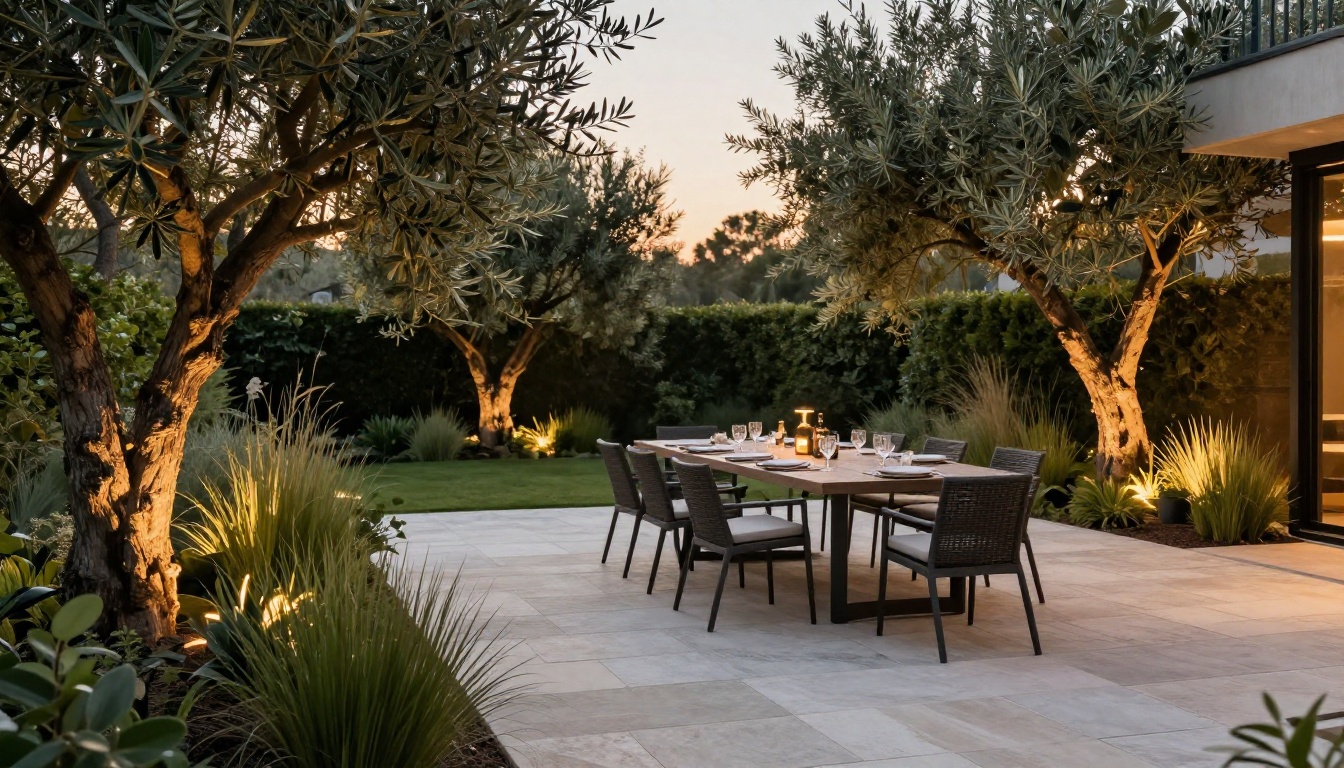
A landscape architect once told me that the most expensive part of any garden is the part you never see. Drainage, irrigation, soil amendments, root barriers, underground electrical — all of it buried before a single plant goes in. On a $200,000 garden redesign, roughly a third of the budget disappears beneath the surface. Understanding where that money goes, and where it makes a visible difference, is the gap between a garden that impresses on day one and one that still looks good in year ten.
This is the outdoor equivalent of a high-end bathroom renovation — a project where the headline number sounds enormous until you see the line items. The difference is that gardens have ongoing costs that bathrooms do not, and the margin for error is wider because plants are living things that do not follow a specification sheet.
Landscape Architect vs. Garden Designer: The Distinction That Matters
The terms get used interchangeably, but they describe different professionals with different training. A landscape architect holds a degree in landscape architecture (typically five years), is licensed in most US states and many countries, and can produce engineered drawings for grading, drainage, retaining walls, and structures. A garden designer focuses on planting schemes, aesthetic composition, and soft landscaping. Some garden designers are extraordinary. But if your project involves significant level changes, water features, outdoor kitchens, or pool integration, you need a landscape architect — or at the very least, a garden designer working alongside a structural engineer.
Fees vary, but expect to pay 10-15% of the total project cost for a landscape architect’s full-service design, or a flat fee of $15,000-$40,000 for a comprehensive plan on a project of this scale. Garden designers typically charge less — $5,000-$15,000 for a planting plan and layout — but the scope is narrower. The mistake most people make is the same one they make with interior designers: hiring based on portfolio images alone without asking how those projects performed three years later.
A good landscape architect will talk about soil drainage before they mention a single plant species. If the first conversation is all about aesthetics, keep looking.
Where the Money Actually Goes
On a $200,000 garden redesign for a property with 2,000-4,000 square feet of outdoor space, here is a realistic breakdown of how the budget allocates. These numbers assume a temperate climate (think Northeast US, UK, or Northern Europe) and will shift significantly in arid or tropical zones.
Budget Breakdown: $200,000 Garden Redesign
| Category | Typical Range | % of Budget | Notes |
|---|---|---|---|
| Design & Professional Fees | $20,000-$30,000 | 10-15% | Architect, engineer, permits |
| Hardscaping (Patios, Paths, Walls) | $40,000-$60,000 | 20-30% | Natural stone vs. porcelain matters |
| Planting & Soft Landscaping | $25,000-$45,000 | 12-22% | Mature trees drive this up fast |
| Irrigation & Drainage | $10,000-$18,000 | 5-9% | Invisible but non-negotiable |
| Lighting Design & Installation | $12,000-$25,000 | 6-12% | The single biggest impact per dollar |
| Outdoor Kitchen / Built-In Grill | $20,000-$45,000 | 10-22% | Optional — but common at this budget |
| Pool or Water Feature | $40,000-$80,000 | 20-40% | Pool alone consumes the budget |
| Fencing, Screening & Boundaries | $8,000-$15,000 | 4-7% | Mature hedging costs more than you think |
| Contingency | $10,000-$20,000 | 5-10% | You will need this |
The math does not add up to $200,000 if you total the upper ranges — and that is exactly the point. At this budget, you cannot have a pool, an outdoor kitchen, and a mature planting scheme. You choose two of the three, or you do all three at a more modest specification. The clients who are happiest with their results are the ones who made that decision early, not the ones who tried to squeeze everything in.
Hardscaping: Where Quality Shows for Decades
The terrace, pathways, and retaining walls are the bones of the garden. They also represent the area where spending more produces the most lasting visible difference. A poured concrete patio costs $15-$25 per square foot installed. Natural Yorkstone or bluestone runs $35-$60 per square foot. Porcelain pavers — the current darling of contemporary garden design — sit at $25-$45 per square foot and offer remarkable consistency with near-zero maintenance.
The honest assessment: porcelain pavers have become very good. Twenty-millimeter Italian porcelain from brands like or Mirage replicates stone convincingly, handles freeze-thaw cycles without cracking, and never needs sealing. Natural stone has character, ages beautifully, and feels different underfoot. But the cost premium over porcelain is 30-50%, and maintenance is real. If the budget is tight, porcelain on the terrace and natural stone as accent borders is a smart compromise.
Retaining walls are where costs escalate without warning. A simple 2-foot-high dry-stone wall might cost $80-$150 per linear foot. Once you need engineered foundations and proper drainage behind the wall, that figure doubles. If your property has significant grade changes, budget conservatively — retaining walls are structural, and cutting corners invites collapse.
The Pool Question
A pool is the single most consequential decision in any garden redesign because it dominates both the budget and the available space. A basic in-ground concrete pool (12 x 6 meters) costs $50,000-$80,000 installed, including coping, filtration, heating, and safety fencing. A natural swimming pool with regeneration zone pushes that to $80,000-$120,000. An above-grade infinity pool with structural engineering can exceed $150,000 easily.
The number that matters more than the build cost is the annual maintenance. A heated pool in a temperate climate costs $3,000-$6,000 per year to operate — heating, chemicals, cleaning, winterization, and the inevitable pump or filter replacement every 5-8 years ($2,000-$5,000). Over a decade, maintenance costs will equal 40-60% of the original build cost. This is the figure that catches people off guard.
The alternative gaining ground, particularly in the UK and Northern Europe, is the natural swimming pool. pioneered the concept, and the running costs are substantially lower — no chemicals, lower energy consumption, and the regeneration zone doubles as a planted feature. The trade-off is a larger footprint (you need roughly 50% additional area for the regeneration zone) and water that is cooler and less crystalline than a conventional pool. For some people, that is a feature, not a bug.
Outdoor Kitchens: The $20,000 Grill Problem
An outdoor kitchen sounds straightforward until you start specifying it. A standalone premium gas grill — a or Napoleon Prestige — costs $3,000-$6,000 and works beautifully on a simple stone countertop. That is a $10,000-$15,000 outdoor cooking setup, and for most people, it is enough.
A fully built-in outdoor kitchen with granite or Dekton countertops, a built-in grill, side burner, sink with hot and cold water, undercounter refrigerator, and proper drainage starts at $20,000 and can reach $45,000. The infrastructure alone — gas line, water supply, waste drainage, electrical for refrigeration and lighting — accounts for $5,000-$8,000 before any visible element is installed.
The honest take: built-in outdoor kitchens look spectacular in photos and get used enthusiastically for 18-24 months. After that, most homeowners revert to using them as expensive barbecue stations. Unless you genuinely cook outdoors multiple times a week for at least six months of the year, a high-quality freestanding grill on a well-designed terrace gives you 80% of the pleasure at 30% of the cost. Spend the savings on better lighting or mature planting instead.
Lighting Design: The Best Money You Will Spend
If there is one area where the money-to-impact ratio is disproportionately high, it is lighting. A professionally designed exterior lighting scheme transforms a garden from something you look at during the day to something you live in at night. And the cost — $12,000-$25,000 for a comprehensive scheme on a garden of this scale — is modest relative to the total budget.
Good exterior lighting design follows three layers: ambient (general illumination of pathways and seating areas), accent (uplighting trees, architectural features, and focal points), and task (cooking areas, steps, and transitions). The hardware itself is increasingly LED, with warm-white (2700K) fixtures from brands like FX Luminaire, Hunza, or John Cullen producing light that flatters both plants and people.
The integration with home automation systems is where lighting becomes transformative. Programmable scenes — one for dinner parties, another for quiet evenings, a security mode when you are away — mean the garden adapts to how you use it. Low-voltage LED systems draw minimal power, and the fixtures are designed to disappear during the day. The installation is also less disruptive than most hardscaping because the cabling runs through shallow trenches.
The mistake to avoid: buying cheap fixtures and planning to upgrade later. Low-quality outdoor fixtures corrode, leak, and fail within 2-3 years. Marine-grade brass or powder-coated aluminum costs more upfront but lasts 15-20 years with minimal attention.
Mature Planting vs. Growing In
This is the decision that most directly affects how the garden looks on completion day versus how it looks in five years. A semi-mature tree — say a 5-6 meter multi-stem birch or a 4-meter pleached hornbeam — costs $1,500-$4,000 per tree delivered and planted, including the rootball handling, staking, and aftercare. A whip of the same species costs $15-$30. The difference is 5-7 years of growth.
At the $200,000 budget level, most designers will specify a mix: 3-5 semi-mature specimen trees for instant structure, with younger planting filling in around them. A single mature olive tree — the kind you see in magazine shoots — can cost $5,000-$12,000 depending on size and provenance. They look magnificent. They also require careful placement, protection from hard frosts if you are outside USDA zones 8-10, and patience as they establish.
Planting Cost Comparison: Mature vs. Young
| Plant Type | Young / Small | Semi-Mature | Mature / Specimen |
|---|---|---|---|
| Multi-stem Birch (Betula) | $30-$80 | $1,500-$3,000 | $4,000-$8,000 |
| Pleached Hornbeam | $60-$120 | $400-$800 each | $1,200-$2,000 each |
| Olive Tree | $50-$150 | $800-$2,000 | $5,000-$12,000 |
| Yew Hedging (per meter) | $40-$80 | $150-$300 | $400-$800 |
| Ornamental Grasses | $10-$20 | $30-$60 | N/A |
| Lavender / Perennials | $5-$15 | $20-$40 | N/A |
The practical advice: spend on mature trees for the framework — they define the scale and character of the space — but plant perennials, grasses, and hedging young. Herbaceous planting fills in remarkably quickly (one to two growing seasons for most perennials), and young hedging planted in good soil with proper irrigation will form a dense screen within three years. The patience required is real, but the savings are significant.
One caveat: mature tree planting requires crane access in many cases, which adds $1,000-$3,000 per tree depending on site access. If your garden is behind a terraced house with no side access, the logistics of getting a 5-meter rootball through the property need to be planned — and priced — early.
The Invisible Infrastructure
Drainage and irrigation are the unglamorous heart of any serious garden. A well-designed irrigation system — drip lines for beds, pop-up sprinklers for lawn areas, smart controllers that adjust to weather — costs $8,000-$15,000 installed. It will save plants that cost ten times that amount. It also eliminates the most common cause of garden failure: inconsistent watering during the first two establishment years.
Drainage is even less exciting and even more important. Poor drainage creates waterlogged soil, which kills root systems, undermines retaining walls, and creates standing water near the house. A proper drainage scheme — French drains, soakaways, channel drains at hardscaping transitions — runs $5,000-$12,000 depending on site conditions. Clay soil, high water tables, or sloping sites toward the house push this figure higher.
This is genuinely the area where the money makes the most difference and is the least visible. Every landscape architect will tell you to invest here first. Most clients resist because there is nothing to photograph. Listen to your architect.
What $200,000 Does Not Cover
At this budget, several items that people assume are included often are not:
- Planning permissions and building regulations — Pools, structures over a certain size, and boundary walls may require permits. Allow $2,000-$5,000 for applications and any required surveys.
- Tree removal or protection orders — If mature trees on the site are protected (common in the UK and parts of Europe), you cannot remove them. Working around them adds cost.
- Garden buildings — A properly insulated garden studio or pool house with electricity starts at $25,000-$40,000. This is a separate project masquerading as a garden feature.
- Furniture — Outdoor furniture that weathers well costs more than most people expect. A quality teak or powder-coated aluminum dining set runs $5,000-$15,000. Budget accordingly.
- Year-two planting adjustments — No planting scheme survives first contact with reality perfectly. Budget $2,000-$4,000 for replacements and additions in the second growing season.
Annual Maintenance: The Cost After the Cost
A garden of this caliber requires ongoing professional maintenance unless you are both skilled and committed. A fortnightly visit from a qualified gardener — pruning, weeding, feeding, lawn care, irrigation checks — costs $300-$600 per month in most markets. A property with a pool adds $200-$400 monthly. That is $6,000-$12,000 per year, indefinitely.
If you own a second home and the garden sits empty for months at a time, maintenance costs are higher because damage from neglect is more expensive to repair than consistent upkeep. Irrigation systems that freeze, lawns that go feral, and climbing plants that take over structures all create repair bills that dwarf what regular maintenance would have cost.
The gardens that age best are the ones designed with maintenance in mind from the start. Ask your designer: what does this garden need weekly, monthly, and annually? If the answer requires a full-time gardener and your budget does not, the design needs simplifying.
Where the Money Makes a Visible Difference
After watching dozens of garden projects at this budget level, the hierarchy is clear. Listed from highest impact to lowest:
- Lighting design — Doubles the hours you use the space. Nothing else comes close for the money.
- Mature specimen trees — Three to five well-placed semi-mature trees give a garden structure that younger planting cannot replicate for years.
- Hardscaping quality — Natural stone or premium porcelain ages gracefully. Cheap concrete pavers do not.
- Professional irrigation — Invisible, but it keeps everything alive. Especially critical in the first two years.
- Pool (if you swim) — High impact, high cost, high maintenance. Only worth it if you will genuinely use it at least 40 days per year.
- Outdoor kitchen — High visual impact, moderate practical use for most households. A quality freestanding grill often suffices.
The pattern is consistent: the money that goes underground (drainage, irrigation, electrical infrastructure) protects the investment. The money that goes into lighting and trees transforms the experience. And the money that goes into pools and outdoor kitchens delivers the most dramatic initial wow factor but the highest ongoing costs.
A $200,000 garden redesign is a serious investment — comparable to a high-end kitchen renovation or a new car that depreciates the moment you drive it off the lot. The garden, at least, appreciates. Plants grow. Materials weather. The space becomes more itself with each passing season. That only happens if the bones are right, the infrastructure is sound, and you have the budget — and the willingness — to maintain what you have built.
Looking for luxury brands, stores, and services? Browse our curated directory: