Every year, thousands of wealthy foreigners fall in love with the South of France over a two-week holiday and decide they need a villa of their own. Most of them have no idea what they're getting into. The agents will show you the infinity pool and the sea view, but they won't walk you through the Société Civile Immobilière paperwork, the 36.2% capital gains tax, or the fact that the road to Saint-Tropez becomes a parking lot every July.
This is the practical guide to buying and owning property on the French Riviera and in Provence — the stuff your agent won't mention until you've already signed.
The SCI Structure: Why Almost Everyone Uses One
If you're a non-French buyer, your notaire will almost certainly recommend purchasing through a Société Civile Immobilière, a French civil company specifically designed for holding real estate. The SCI is not a tax dodge. It's a structural tool that solves several problems at once, and understanding it is the first step toward a clean purchase.
The primary advantage is inheritance. French succession law is notoriously rigid, with forced heirship rules that override your will and distribute property according to a fixed formula. For non-direct heirs — stepchildren, unmarried partners, nieces and nephews — the inheritance tax rate can reach 60%.
An SCI holds the property as company shares rather than direct real estate, allowing you to transfer ownership through share gifts over time and dramatically reducing the inheritance tax burden. You can also structure the SCI with multiple owners from the start, making it straightforward for couples or business partners to hold property together.
Setting up an SCI costs between €2,000 and €5,000 through a notaire, and the ongoing administrative burden is minimal — an annual general meeting and basic accounts. For any property over €500,000, the cost is trivial relative to the tax savings it enables. Skip this step and your heirs may face a six-figure tax bill on property they assumed would pass to them cleanly.
Purchase Costs: The Price Tag Is Just the Beginning
The number on the listing is not the number you'll pay. France front-loads its property transaction costs in ways that catch foreign buyers off guard, and none of these fees are negotiable because most of them are government taxes collected by the notaire.
On a resale property, notaire fees run approximately 7-8% of the purchase price. On a new-build, they drop to 2-3%. These are not professional fees — they're transfer taxes, land registry charges, and stamp duties collected on behalf of the state.
Agent commissions add another 3-8%, typically paid by the seller but always factored into the asking price. On a €2 million villa, your all-in acquisition cost will land between €2.15 million and €2.18 million before you've spent a cent on furniture.
Budget 10% above the listing price for total acquisition costs on a resale property. If you can't comfortably afford €2.2 million all-in, don't look at properties listed at €2 million. The margin is not optional.
Where to Buy: The Geography That Shapes Everything
The South of France is not one market. It's several distinct micro-markets with wildly different price points, lifestyles, and practical realities. Your choice of location will determine everything from rental income potential to how often you actually use the property.
Cap d'Antibes and Cap Ferrat are the most prestigious addresses on the Riviera. Villas range from €5 million to well over €50 million, with the most private waterfront properties rarely appearing on the open market at all. This is old money territory — discreet, quiet, and extraordinarily beautiful. The buyer profile here is someone who values privacy above convenience and doesn't mind that the nearest decent restaurant requires a car.
Cannes, particularly the Californie and Super Cannes neighborhoods, offers the best balance of infrastructure and prestige. Properties range from €2 million to €10 million, with proximity to Nice airport being a genuine advantage — you can be poolside within 30 minutes of landing. The Film Festival creates a rental premium in May, and the town has year-round energy that many Riviera communes lack outside summer.
Saint-Tropez and Ramatuelle command €3 million to €20 million and up, with the charm and cachet that justify the prices. But here's what the brochures omit: the peninsula is connected to the mainland by a single road, and in July and August, traffic becomes genuinely catastrophic. A 20-minute drive to dinner becomes 90 minutes. Locals avoid the peninsula between 11am and 8pm in high season entirely.
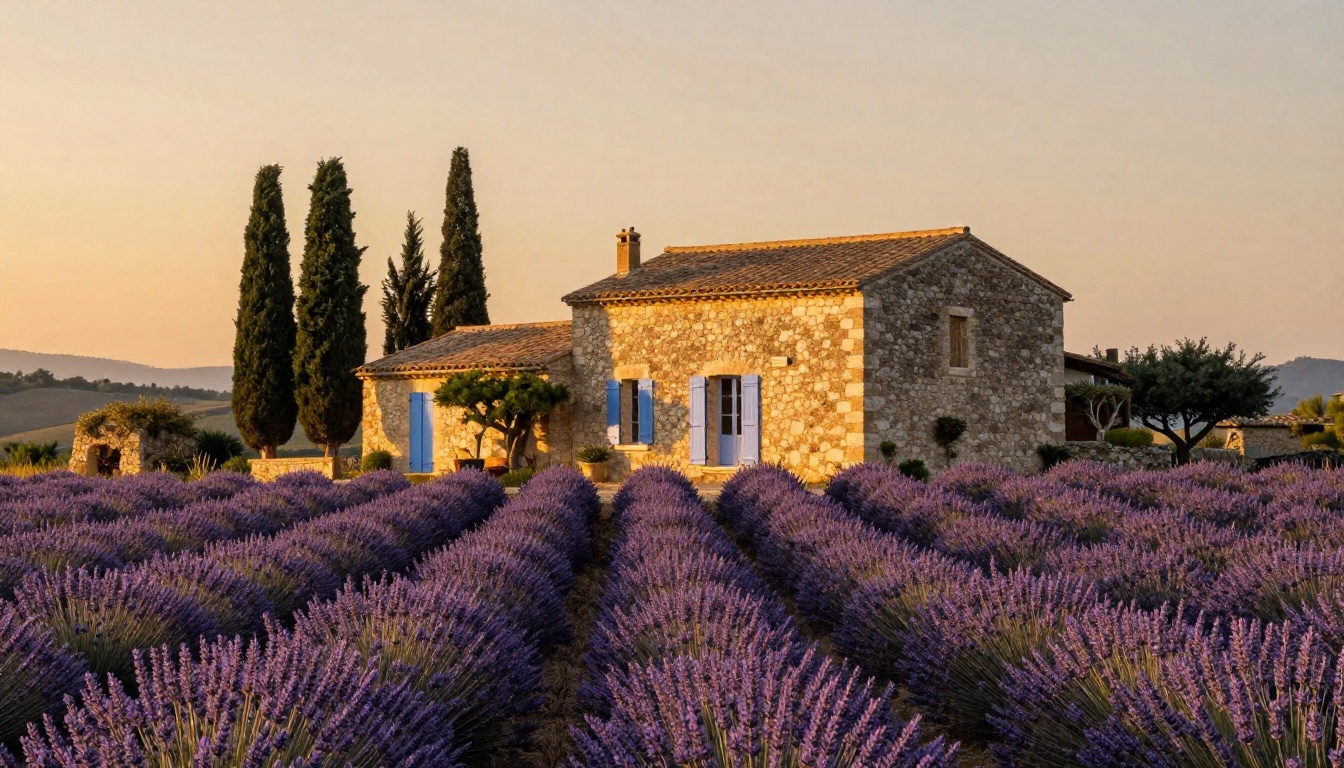
The Luberon and inland Provence — Gordes, Ménerbes, Bonnieux, Lourmarin — represent the thinking person's South of France. Properties run €1 million to €5 million, the landscape is arguably more beautiful than the coast, the food is definitively better, and you'll actually get to know your neighbors. The trade-off is a two-hour drive from Nice airport, though flying private into Avignon or Marseille shrinks that gap considerably.
Property Management and the Cost of Absence
A second home that sits empty for 40 weeks a year still needs constant attention. Gardens grow aggressively from March through October, pools require year-round chemical maintenance, and pipes can freeze in the occasional Provençal cold snap. An unoccupied villa is also a target for burglary, particularly in the off-season when entire neighborhoods stand dark.
You need someone on the ground. A property management arrangement — whether through Knight Frank's local arm, a specialized firm like Riviera Retreats, or a trusted local gardien — will cost between €500 and €1,500 per month depending on property size.
This covers garden maintenance, pool upkeep, regular cleaning, security checks, and the kind of small emergency responses that prevent a broken pipe from becoming a €30,000 renovation. Do not economize here. The cost of neglect always exceeds the cost of management.
Rental Income: Attractive on Paper, Modest in Practice
A well-positioned €3 million villa in the Saint-Tropez area can command €15,000 to €30,000 per week during July and August, and €5,000 to €10,000 per week during the shoulder seasons of June and September. The gross yield looks compelling — 3-6% annualized if you fill the peak weeks. But the net reality is considerably less exciting.
French rental income tax for non-residents starts at 20% minimum, with social charges adding to the burden. Management agencies take 15-25% of gross rental income for bookings, guest services, cleaning, and key exchange.
Add maintenance, insurance, and the inevitable weeks that don't book, and your net rental yield typically lands between 1.5% and 3%. That's before accounting for wear and tear from guests, which accelerates furniture replacement and repainting cycles.
The honest calculation: buy in the South of France because you want to live there, not because you expect rental income to justify the purchase. If yield is your primary motivation, Portugal and Croatia offer substantially better numbers with lower entry costs and simpler tax treatment.
Tax Obligations That Follow You Home
French property taxation for non-residents operates on multiple layers, and the cumulative burden is significant enough to influence your purchase decision.
The Impôt sur la Fortune Immobilière (IFI) is France's wealth tax on real estate. If your French property holdings exceed €1.3 million in net value, you'll pay an annual tax of 0.5% to 1.5% on the amount above that threshold. Holding through an SCI does not avoid the IFI — the tax looks through the company structure to the underlying real estate value.
On a €3 million property, expect an annual IFI bill of approximately €8,500 to €12,000.
Capital gains tax on sale hits non-residents at 19% plus 17.2% in social charges, totaling 36.2% on the gain. Tapering relief begins after five years of ownership, with full exemption reached after 22 years for the tax and 30 years for social charges. This timeline makes French property fundamentally a hold-forever asset.
Annual property taxes — the taxe foncière — vary by commune and property size but typically run €3,000 to €15,000 or more per year. Some communes have increased rates sharply in recent years, so check the current taxe foncière with the mairie before committing to a purchase.
Living With It: The Lifestyle Realities
Nice Côte d'Azur Airport is genuinely excellent — direct flights to London in two hours, connections to every major European city, and increasingly good long-haul options. Getting to the Riviera is easy. Getting around once you're there is another matter entirely.
The Autoroute A8, which connects Nice to Cannes, Fréjus, and the Saint-Tropez turnoff, becomes gridlocked on summer weekends and during the July-August peak. Plan journeys before 9am or after 8pm, or accept significant delays. Inland Provence is better, but the D-roads through the Luberon villages are narrow, winding, and shared with tour buses that have no business being on them.
Daily life follows a rhythm that takes adjustment. Shops, banks, and many restaurants close between 12pm and 2:30pm. This is not optional or old-fashioned — it's how France works, and fighting it will only frustrate you.
Healthcare is world-class and cheaper than the US or UK private systems, but outside tourist centers, everything operates in French. Basic conversational French is a practical necessity for dealing with tradespeople, the mairie, and your neighbors.
In Provence, the mistral — a cold, dry wind that funnels down the Rhône valley — can blow at 60-100 km/h for three to six consecutive days. It clears the sky to a brilliant blue and drops temperatures sharply. It's not a minor weather footnote — it will reshape how you design your terrace and where you plant your garden.
The Honest Verdict
If you'll use the property six or more weeks per year, if you genuinely love France and its rhythms, and if you're buying with a 10-year-plus horizon, owning in the South of France remains one of the most rewarding property decisions you can make. The light, the food, the landscape, the proximity to the rest of Europe — nothing else quite compares.
But go in with clear eyes. The acquisition costs are steep, the tax burden is real, the bureaucracy is French, and the rental math rarely works as well as your spreadsheet suggests. This is a lifestyle purchase, not an investment thesis. Treat it accordingly, structure it properly through an SCI, hire competent local management, and you'll have a home that your family fights over for the right reasons — not because of a 60% inheritance tax bill.
Looking for luxury brands, stores, and services? Browse our curated directory: