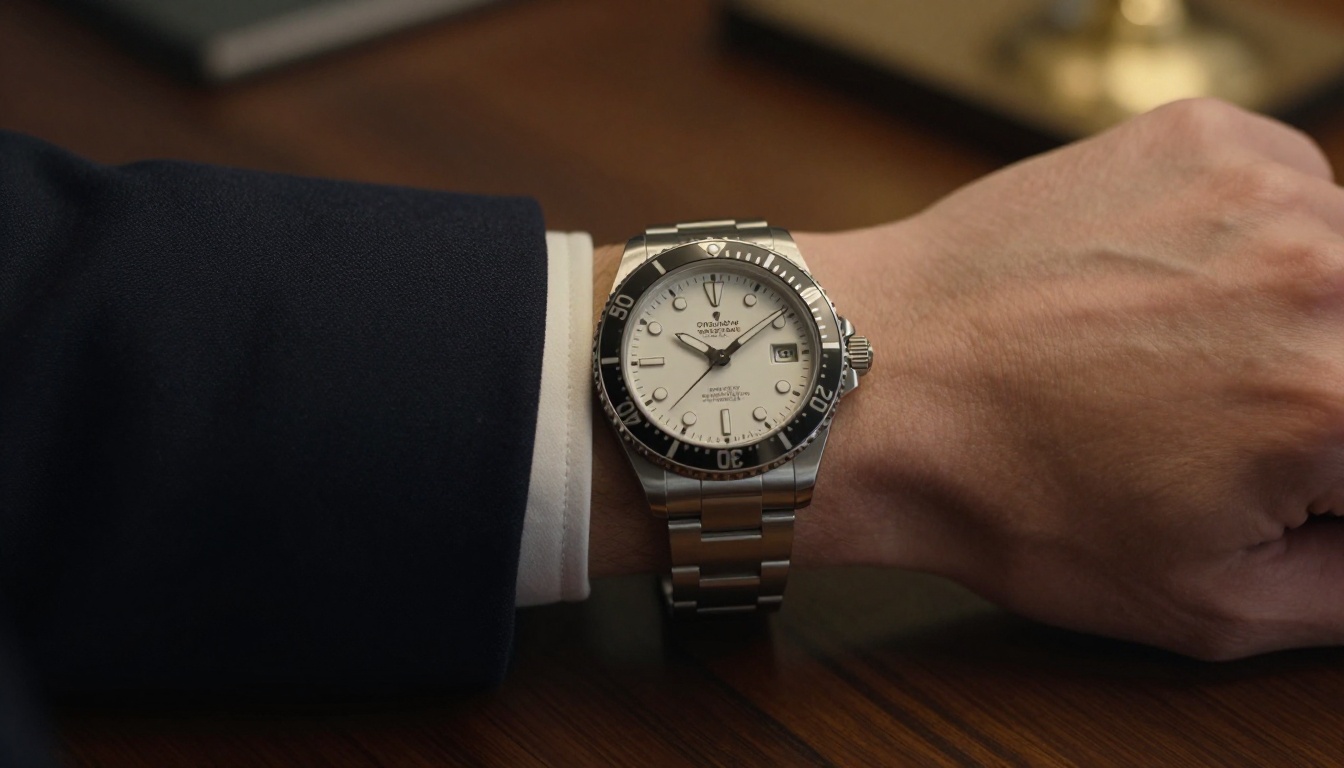
A 1960s Rolex Submariner ref. 5513 sold for $6,200 at a regional auction in 2018. By early 2022, the same reference — in comparable condition — was trading for $18,000 on Chrono24. Today, that number has settled around $11,500. The watch didn't change. The market around it did.
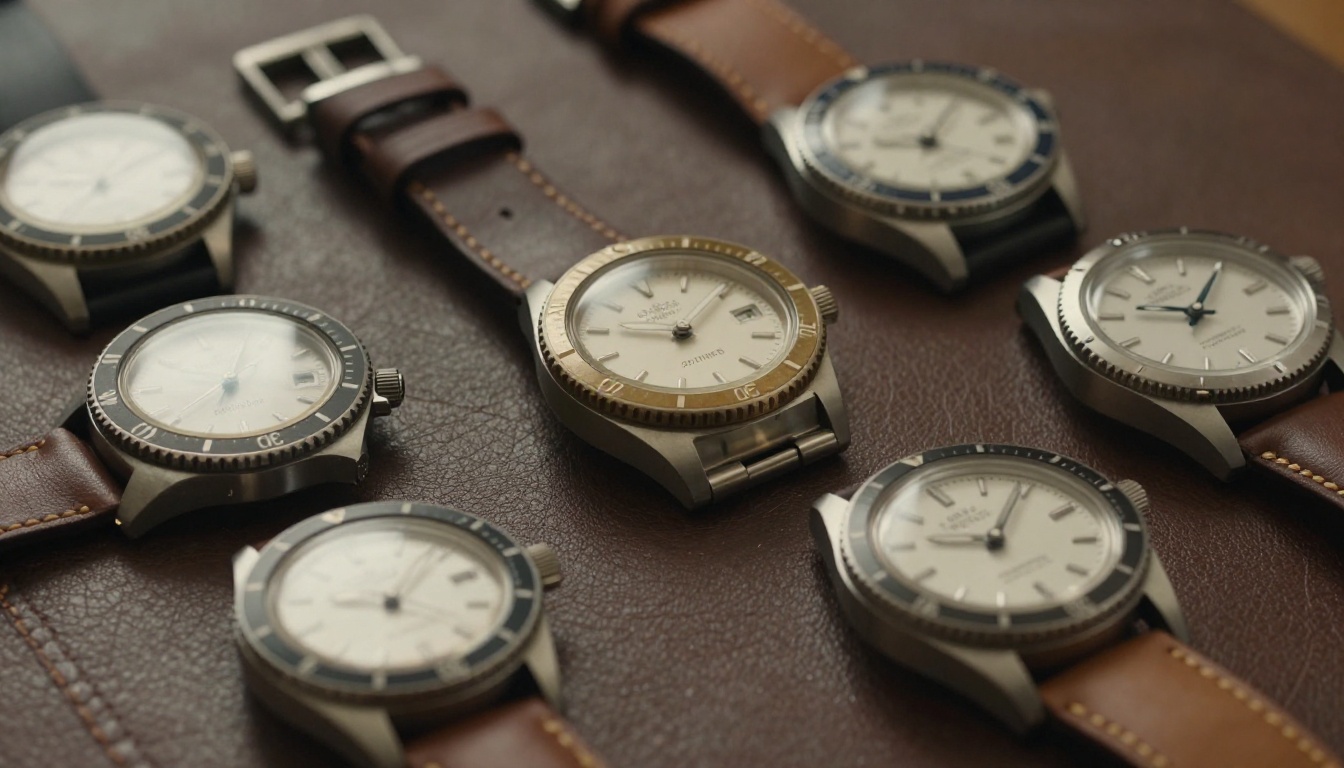
The vintage sports watch market has gone through a full speculative cycle since 2020. Stimulus money, social media hype, and a generation of new collectors flooded a market that had historically been the province of patient enthusiasts. Prices spiked, corrected, and have now entered a more rational phase — though "rational" is relative when a forty-year-old Heuer Autavia commands more than a brand-new Omega Speedmaster. Understanding where prices have stabilized, where speculation still distorts value, and where genuine opportunities remain requires looking at the data without the noise.
The Boom and the Correction: What the Numbers Show
The pandemic-era watch boom was driven by a collision of forces: low interest rates, excess liquidity, social media evangelism (particularly from YouTube and Instagram watch channels), and a broader turn toward tangible assets. Vintage watches benefited disproportionately because supply is fixed — nobody is making more 1960s Submariners — and scarcity narratives sell well on social media.
Between January 2020 and March 2022, prices on key vintage sports references rose between 80% and 250%, depending on the model and condition grade. The correction that followed was uneven. Some models gave back half their gains. Others barely moved. The divergence reveals which watches have genuine collector demand and which were riding pure speculation.
Vintage Sports Watch Price Trajectory: 2020 vs. 2022 Peak vs. 2026
The pattern is consistent: models with deep collector communities and established provenance (Rolex Daytona, early Submariners) retained more of their gains. Models that surged on social media hype without an equivalent collector base (Seiko chronographs, some Heuer references) have corrected more sharply, in several cases returning close to pre-boom levels.
Where Prices Have Stabilized — and Where They Haven't
Rolex: Still the Market Anchor
Vintage Rolex remains the most liquid segment of the market, and that liquidity is precisely why prices have held up better than most. The in its various vintage references (5512, 5513, 1680) commands a floor that rarely drops below $8,000 even for later-production examples in average condition. Earlier references with gilt dials or pointed crown guards trade at multiples of that, and those prices have barely budged from their 2022 peaks.
The Daytona market is a different animal entirely. Pre-Zenith references (6239, 6262, 6263) with original dials still command six-figure prices, and the Paul Newman sub-market — watches with the distinctive "exotic" dial — exists in a tier where condition nuances can shift values by $50,000 or more. These are not watches that casual collectors are buying. The money here comes from established collectors and funds, and it tends to be patient.
Where Rolex prices have softened is in the 1990s and early 2000s transitional references — the five-digit Submariner (16610), GMT-Master II (16710), and Explorer II (16570). These surged during the boom because they looked like bargains relative to their modern successors. Owners treated them as entry-level Rolex investments. Many of those owners are now selling, and the supply increase has pushed prices down 15-25% from peak. A 16610 that traded at $14,000 in early 2022 now moves at $10,500-$11,000 — still well above 2019 levels, but no longer climbing. For anyone interested in the dynamics of getting allocated a new Rolex at retail, these secondary-market realities provide useful context on where the brand's value actually sits.
Tudor: The Correction That Creates Opportunity
Tudor's vintage market is worth watching closely. The brand spent decades as the overlooked sibling — Rolex cases and crowns, solid movements, fraction of the price. The ref. 7928 Submariner and the "Snowflake" ref. 7016 were both sub-$5,000 watches as recently as 2017. The boom pushed them into the $15,000-$25,000 range, and the correction has been meaningful: most vintage Tudor sport watches have lost 30-40% from their peaks.
That correction, however, may represent the best value proposition in the current market. Tudor's vintage pieces share the same case construction and water resistance specifications as contemporaneous Rolex models, and the brand's collector community has matured considerably. The watches that hold value tend to share specific characteristics — brand heritage, fixed supply, growing collector base — and Tudor checks every box.
Heuer: Volatile and Still Overpriced in Spots
The vintage Heuer market was the biggest beneficiary of social media hype, and it has been the most uneven in its correction. Pre-TAG references — the Autavia, Carrera, and Monaco — were propelled by a combination of Steve McQueen mythology, relatively affordable entry prices, and heavy promotion by watch influencers. The Autavia ref. 2446 peaked above $25,000 and has since settled around $13,000-$14,000. The Monaco ref. 1133, once trading at $12,000-$15,000, can now be found for $7,000-$9,000.
The challenge with vintage Heuer is condition. Many of these chronographs were worn hard — used as the timing instruments they were designed to be — and finding examples with original dials, correct hands, and functioning chronograph mechanisms is genuinely difficult. Servicing costs are high (often $1,500-$3,000 through specialists), and replacement parts can be scarce. Collectors who understand these dynamics see the current prices as reasonable. Those buying purely on aesthetics may not realize what they are taking on.
Omega Speedmaster: The Rational Choice
The in its vintage form — specifically the pre-moon (145.012) and transitional (145.022) references — remains one of the most grounded segments of the vintage sports watch market. Prices rose during the boom, peaked at roughly $12,000-$14,000 for good examples, and have since settled around $7,500-$9,000. The "Moonwatch" provenance is genuine and well-documented, the movements are robust and serviceable, and Omega's own archives can often verify production dates.
Where the Speedmaster market gets interesting is in the early racing dial variants and the so-called "ultraman" and "racing" references, which trade at significant premiums. But the core 145.022 — the same watch NASA certified for spaceflight — represents a vintage sports chronograph with real historical significance at a price that hasn't been inflated beyond reason.
Condition Grading: Where Most Buyers Lose Money
The single largest source of overpayment in the vintage watch market is condition misjudgment. Unlike modern watches, where a box-and-papers example in unworn condition is straightforward to evaluate, vintage watches exist on a spectrum that includes redials, replaced hands, polished cases, and aftermarket parts — each of which can reduce value by 30-60%.
How Condition Affects Vintage Watch Value
| Condition Factor | Impact on Value | What to Look For |
|---|---|---|
| Original dial | +40-80% vs. redial | Consistent aging, correct font, no paint bleed |
| Unpolished case | +20-40% vs. polished | Sharp lug edges, visible tool marks, correct proportions |
| Correct hands | +15-25% vs. replaced | Period-correct lume color, matching patina |
| Full set (box/papers) | +20-50% | Original guarantee, hang tags, period-correct box |
| Service history | +10-20% | Documented servicing with OEM or reputable independent |
| Aftermarket parts | -30-60% | Non-original crown, bezel insert, crystal |
The auction houses — Christie's, Phillips, and Sotheby's — employ specialists who grade condition rigorously and note any non-original components in their lot descriptions. Anyone considering a significant vintage purchase should study how auction specialists evaluate watches before buying from a dealer or private seller, where condition descriptions can be less precise.
A redial on a vintage Submariner can cut its value in half. Learning to spot one — uneven lume plots, text that's too crisp for the stated year, mismatched aging between dial and hands — is the single most valuable skill in vintage watch buying.
When Vintage Outperforms New — and When It Doesn't
The case for vintage over new is strongest in three scenarios. First, when a model has been discontinued with no direct successor and the remaining supply is shrinking — early Rolex GMT-Masters with bakelite bezels, for instance, or the original Zenith El Primero A386. Second, when a vintage piece carries historical significance that no modern production can replicate. Third, when the vintage reference is mechanically superior or aesthetically distinctive in ways the modern version has abandoned — thinner cases, smaller diameters, hand-finished movements.
The case against vintage is equally real. Modern watches from the best manufacturers offer superior water resistance, more accurate movements, longer power reserves, and materials science that simply didn't exist forty years ago. A new Rolex Submariner keeps time to +/- 2 seconds per day; a vintage one, freshly serviced, might manage +/- 8-10. Modern bracelets are better engineered. Modern clasps are safer. The "soul" argument for vintage is real, but so is the practical gap.
Vintage vs. Modern: Key Comparisons
| Factor | Vintage Advantage | Modern Advantage |
|---|---|---|
| Case size | 36-40mm, wears discreetly | Better options for larger wrists |
| Movement accuracy | Character, historical interest | +/- 2 sec/day COSC or better |
| Water resistance | Adequate for most use | 300m+ rated, tested regularly |
| Value trajectory | Fixed supply, potential appreciation | Depreciation on most models |
| Service costs | $500-3,000, specialist required | $300-800, brand service centers |
| Parts availability | Declining, aftermarket risk | Guaranteed for decades |
| Wearability | Thinner, lighter on wrist | More robust for daily wear |
For collectors interested in watches as financial instruments rather than purely mechanical objects, the data on which references hold their value makes a compelling case that certain vintage models outperform not just their modern counterparts but most traditional asset classes. That said, treating watches primarily as investments introduces risks — illiquidity, authentication challenges, storage and insurance costs — that financial assets don't carry. The parallel to other tangible luxury assets is instructive: the best returns go to those who buy for genuine appreciation and happen to benefit from price increases, not those who buy speculatively.
The Models Worth Buying Now
With the speculative froth cleared, several segments of the vintage market offer genuine value — meaning watches with strong collector communities, verifiable authenticity, and prices that reflect intrinsic quality rather than hype.
- Tudor Submariner ref. 7928 (1960s) — The original Tudor diver, with Rolex Oyster case and crown. Prices have corrected to $12,000-$16,000 for good examples. The gap between Tudor and Rolex vintage Submariners of the same era remains disproportionately wide, suggesting Tudor has room to appreciate.
- Omega Speedmaster 145.022 (1969-1988) — The "Moon Watch" in its most common and most serviceable form. At $7,500-$9,000, it offers genuine space-program provenance at a fraction of what comparable Rolex chronographs command.
- Heuer Carrera ref. 2447 (1960s) — A cleaner, more versatile design than the Autavia, with prices that have corrected more sharply. Good examples trade at $7,000-$10,000. The original Carrera design influence on modern TAG Heuer models keeps collector interest alive.
- Rolex Explorer I ref. 14270 (1990-2001) — The transitional Explorer with a 36mm case and tritium-to-luminova transition. Prices peaked around $12,000 and have settled at $8,000-$9,500. The 36mm size is back in fashion, and the 14270 wears better on most wrists than the current 40mm Explorer.
- Seiko 6105 "Captain Willard" (1970s) — For collectors who value engineering over brand cachet, the 6105 diver — made famous by Martin Sheen in Apocalypse Now — trades at $2,500-$4,000 after a sharp correction from $5,000+ peaks. A genuinely capable dive watch with a distinctive cushion case.
What to Avoid Right Now
Not everything in the vintage market has corrected to fair value. Several segments remain inflated by lingering speculation, thin liquidity, or artificial scarcity narratives.
- "Tropical" dial Rolex models — Watches where the dial has changed color due to UV exposure command enormous premiums (often $20,000-$50,000 above standard examples). The problem: tropical dials are subjective, difficult to authenticate, and the premium is driven more by Instagram aesthetics than collecting fundamentals.
- Modern vintage reissues on the secondary market — The Tudor Black Bay 58, Omega Speedmaster 3861, and TAG Heuer Carrera 60th Anniversary are all available at or near retail. Paying secondary-market premiums for watches that are still in production makes no sense, regardless of waitlist rumors.
- Unserviceable complications — Vintage chronographs with proprietary column-wheel movements that no one can service are time bombs. A beautiful dial means nothing if the movement requires $4,000 in work every five years from one of three living watchmakers who know the caliber.
Reading the Market Going Forward
The vintage watch market follows patterns that are observable, if not perfectly predictable. Interest rate environments matter: when yields are low and cash is cheap, tangible assets appreciate. When rates rise, the opportunity cost of holding a non-yielding asset increases, and marginal sellers appear. The current rate environment suggests prices will remain stable through 2026, with selective appreciation in the highest-quality examples and continued softening in the mid-tier.
The generational shift in collecting also matters. Younger collectors — those who entered the market through social media — tend to favor aesthetics over provenance. This has redirected demand toward visually striking pieces (colored dials, unusual case shapes) and away from the historically significant but visually restrained references that traditional collectors prize. Whether that shift is permanent or a phase remains to be seen, but it creates opportunities for patient buyers willing to acquire historically important watches that the market is temporarily undervaluing.
For anyone building a vintage collection with a long time horizon, the advice from independent watchmaking circles applies equally to vintage: buy what genuinely resonates, buy the best condition available, and hold long enough for the market cycles to become irrelevant. The watches that matter in thirty years are the ones that mattered thirty years ago — regardless of what they cost next quarter.