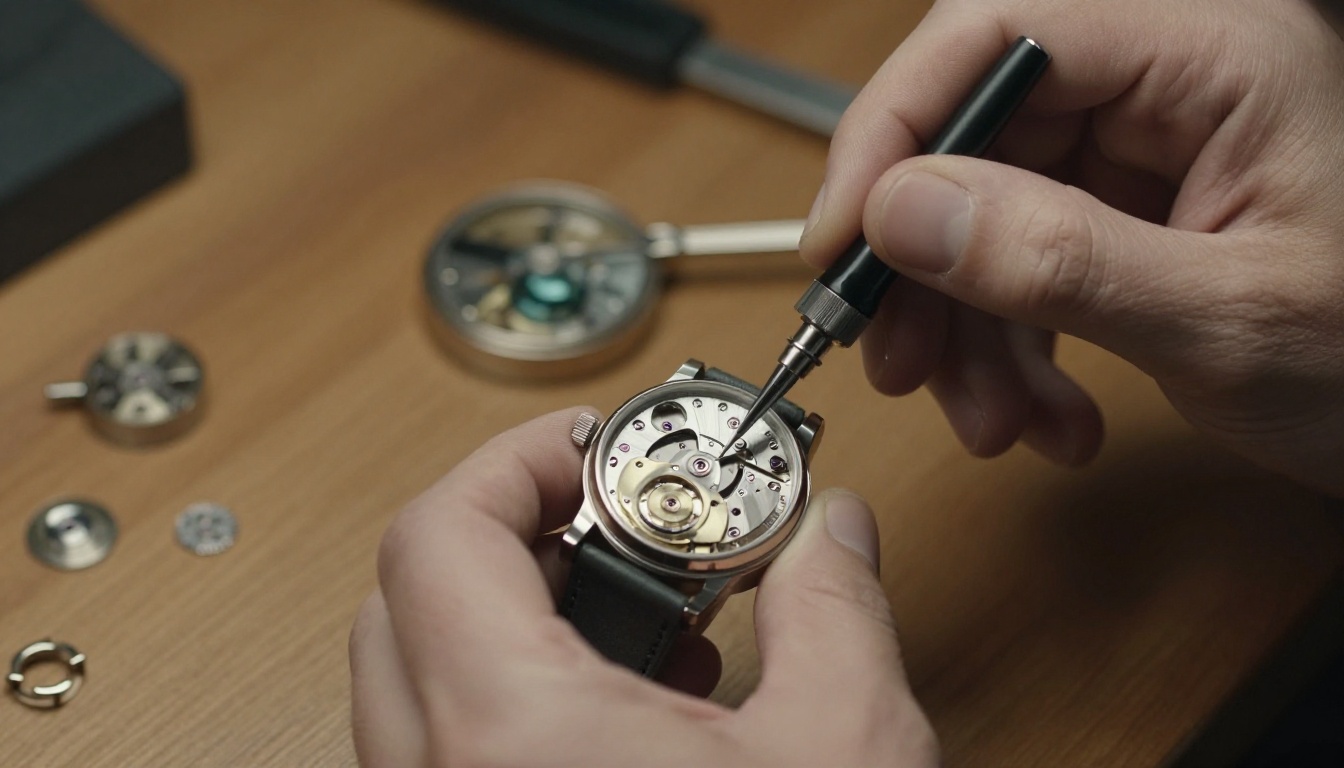
Somewhere in Geneva, a man named François-Paul Journe is hand-finishing a movement that will take six months to complete. His workshop produces roughly 900 watches a year. Rolex makes that many before lunch. Yet at auction, Journe's pieces regularly outperform Submariners, Daytonas, and even some Patek references. The market has spoken, and it has a taste for the small and fiercely independent.
Independent watchmaking sits at the opposite end of the spectrum from the brands most people know. There are no celebrity ambassadors, no airport billboards, no waiting lists manufactured by corporate supply chain strategy. What exists instead is a direct line between the person who conceived the watch and the person who buys it — often with the maker's fingerprints still metaphorically on the case. For collectors who have moved past Rolex allocation games and Patek's carefully managed scarcity, independents represent something rarer: genuine creative freedom backed by extraordinary technical skill.
What "Independent" Actually Means
The term gets thrown around loosely. For the purposes of this piece, independent means the watchmaker or a small founding team controls the design, movement development, and production. No conglomerate parent (LVMH, Richemont, Swatch Group) dictates strategy. No shared movement platforms. The founder's name is on the dial because they are, quite literally, the person responsible for what's inside the case.
This matters because it shapes every decision. An independent maker choosing between a more commercially viable design and the one that interests them technically will almost always choose the latter. The result is watches that look, move, and feel nothing like anything a corporate design committee would approve. It also means production numbers measured in dozens or low hundreds, not tens of thousands.
The Makers Worth Knowing
F.P. Journe
The name carries more weight in serious collecting circles than almost any other living watchmaker. François-Paul Journe began building watches in 1991 and has since created some of the most technically accomplished timepieces of the modern era. The Chronomètre à Résonance — which uses two balances beating in sympathetic resonance to improve accuracy — remains one of the few watches that has genuinely advanced horological science in the last fifty years.
Journe's movements are made in-house using 18k rose gold for the plates and bridges, a detail that serves no functional purpose but signals absolute commitment to craft. His production sits around 900 pieces per year. Secondary market prices have climbed relentlessly: a Chronomètre Bleu purchased for $25,000 a decade ago now trades above $100,000. Entry price for a new piece starts around $40,000 for the Élégante, though most mechanical references begin closer to $55,000-$70,000.
The trade-off: Journe pieces are now almost as hard to acquire as the mainstream grails they were once an alternative to. Waitlists at boutiques stretch years. The secondary market premium is steep.
MB&F
Max Büsser founded MB&F in 2005 with a simple premise: what if a watch didn't have to look like a watch? The resulting Horological Machines — sculptural, sometimes insectoid, always polarizing — have become some of the most recognizable objects in contemporary horology. The HM6, shaped like a space captain's helmet, tells time through rotating domes. The Legacy Machine series takes a more classical approach, exposing a floating balance wheel above the dial in a way that's become the brand's signature.
Büsser doesn't make the movements himself. Instead, he collaborates with top-tier independent movement makers — Jean-François Mojon, Kari Voutilainen, Stephen McDonnell — to realize his designs. Production is around 250-300 pieces per year. Prices start at roughly $50,000 for the LM101 and climb well past $200,000 for limited Horological Machines. The brand inspires a devotion that borders on fanatical among its collectors.
The honest assessment: MB&F watches are conversation pieces first. If you want something understated that disappears under a shirt cuff, look elsewhere. The size and visual intensity of many references make them unwearable for some.
De Bethune
If you want to see what happens when an engineer with no reverence for tradition is given complete creative freedom, study . Founded in 2002 by David Zanetta and master watchmaker Denis Flageollet, De Bethune has quietly produced some of the most innovative mechanical watches of the century. Flageollet developed a silicon-titanium balance wheel, a spherical moon phase display that is mechanically precise to within one day every 1,112 years, and a case material called Mirror-Polished Grade 5 Titanium that looks like liquid mercury.
The DB28 is the most recognizable piece: a distinctive floating-lug design that makes the watch appear to hover above the wrist. The Starry Varius features a hand-engraved and blued titanium dial depicting the night sky as seen from the owner's coordinates. Annual production sits below 200 pieces. Prices start around $60,000 and reach well into six figures.
The caveat: De Bethune's aesthetic is deliberately futuristic. Collectors who prefer classical Geneva finishing and traditional proportions may find the designs cold. The brand's resale market is also thinner than Journe's, though values have been climbing steadily since 2021.
Kari Voutilainen
Finnish-born, Swiss-trained Kari Voutilainen may be the finest hand-finisher alive. His workshop in Môtiers produces approximately 50 watches per year, each finished to a standard that makes even Patek's work look industrial by comparison. Every surface — beveled edges, polished screw heads, grained plates — is done by hand under magnification. A single movement can take weeks to finish.
Voutilainen's dials are equally remarkable, often produced in-house using techniques like engine turning, grand feu enamel, or hand-guilloching on vintage machines. The Vingt-8 is his core model: a time-only watch that exists purely to showcase movement finishing. Prices begin around $80,000-$100,000 and climb from there. At auction, his pieces consistently command premiums.
The reality check: 50 watches a year means getting one requires patience measured in years, not months. Voutilainen's work appeals most to collectors who care deeply about finishing — the kind of people who carry loupes in their jacket pockets. If you are not that person, much of what makes his watches extraordinary happens at a scale you may never notice.
H. Moser & Cie
Moser occupies an interesting middle ground. Owned by the Meylan family (who also own movement maker Precision Engineering AG), it produces around 1,500 pieces per year — large by independent standards, small by everyone else's. The brand is best known for its fumé dials: color gradients that shift from dark edges to lighter centers, created through a meticulous multi-layer lacquering process. The Endeavour Perpetual Calendar, which displays all its information on a clean, minimalist dial, is widely regarded as one of the best perpetual calendar designs ever made.
Moser also has a sharp sense of humor rare in watchmaking. The Swiss Alp Watch, designed to look exactly like an Apple Watch, was a deliberate provocation. The Cheese Watch, with a dial made from actual Swiss cheese, made its point about Swiss-ness with admirable commitment. Prices start around $15,000-$20,000 for the Streamliner or Pioneer models, making Moser the most accessible brand on this list. The perpetual calendar references sit between $40,000 and $70,000.
The downside: Moser's higher production numbers and more accessible pricing mean it doesn't carry quite the same collector cachet as Journe or Voutilainen. Some purists also note that the brand's marketing-forward approach occasionally overshadows the genuinely excellent watchmaking underneath.
Akrivia
Rexhep Rexhepi founded Akrivia in Geneva in 2012, and within a decade had established himself as perhaps the most talented watchmaker of his generation. He was 25 when he started the brand. His Chronomètre Contemporain, a time-only watch with a seconds sub-dial, won the Geneva Watchmaking Grand Prix in 2018 — a remarkable achievement for someone so young working entirely independently.
Rexhepi's finishing is in the same conversation as Voutilainen's, with sharp interior angles, black-polished steel components, and hand-applied Geneva stripes of unusual precision. Production is under 50 pieces per year. Prices start around $60,000-$80,000, but the secondary market tells the real story: Chronomètre Contemporain pieces have sold at auction for multiples of their retail price. Rexhepi is 38 years old. Collectors are betting that his best work is still ahead of him.
The consideration: Akrivia's limited output and exploding demand make acquisition genuinely difficult. The brand has no boutiques — pieces are sold through a small network of authorized retailers and directly. Expect to wait.
How They Compare
Independent Watchmaker Overview
| Maker | Founded | Annual Production | Entry Price | Known For |
|---|---|---|---|---|
| F.P. Journe | 1999 | 900 | $40,000 | Resonance, rose gold movements |
| MB&F | 2005 | 275 | $50,000 | Sculptural Horological Machines |
| De Bethune | 2002 | 200 | $60,000 | Silicon balance, titanium innovation |
| Voutilainen | 2002 | 50 | $80,000 | Hand-finishing, enamel dials |
| H. Moser & Cie | 2005 | 1,500 | $15,000 | Fumé dials, perpetual calendar |
| Akrivia | 2012 | 50 | $60,000 | Finishing, rising auction results |
Why Collectors Are Moving This Direction
The shift toward independents is not just about taste. It's about value, in every sense. As the major brands have leaned harder into controlled scarcity and waitlist culture, many experienced collectors have grown weary of the game. They'd rather spend $60,000 on a Rexhepi that represents one person's vision and 300 hours of hand-finishing than $60,000 on a steel sports watch from a brand that makes 800,000 of them annually.
The numbers support this. Independent watchmakers have dominated auction results over the past three years. F.P. Journe's pieces now routinely trade at 2-3x retail. Akrivia and Voutilainen have shown similar trajectories. Even brands that were previously considered niche — De Bethune, Gronefeld, Laurent Ferrier — are seeing their secondary market values stabilize well above original retail. For those interested in watches as stores of value, the independents are writing a compelling chapter.
There is also a generational element. Younger collectors, many of whom made their money in tech or finance, are drawn to founders' stories and craft narratives over heritage marketing. They want to know who made their watch, not which celebrity wore it in an advertisement.
How to Actually Buy One
Acquiring an independent watch is not like walking into an authorized dealer and putting your name on a list. Most independents sell through a small, carefully chosen network of specialist retailers — names like The Hour Glass, Ahmed Seddiqi, Cellini, and A Collected Man. Some, like Voutilainen and Journe, also sell directly from their own boutiques.
Building a relationship with one of these retailers is the first step. Unlike the big-brand AD game, where purchase history and spending patterns determine allocation, independent retailers tend to prioritize genuine enthusiasm and collecting intent. Come in knowing the references, knowing the movements, knowing why you want this specific piece. That counts for more than a spending history.
The secondary market is the other route. Platforms like A Collected Man, Watchfinder, and auction houses including Phillips, Christie's, and Sotheby's regularly feature independent pieces. Premiums vary: expect to pay significantly above retail for Journe and Akrivia, closer to retail for Moser and De Bethune. As with any auction purchase, set a firm ceiling before bidding and account for buyer's premiums (typically 20-26%).
The Ones to Watch Next
Beyond the six profiled here, several makers are building toward the same level of recognition. Laurent Ferrier, a former Patek Philippe watchmaker, produces classically proportioned watches with exceptional movement architecture. Gronefeld, a Dutch brother duo, makes some of the most finely finished watches outside Switzerland. Raúl Pagès, working alone in Barcelona, is creating hand-finished pieces in quantities so small — under 10 per year — that they barely exist on the market.
The independent watchmaking world rewards those who pay attention early. Collectors who bought Journe in 2010, Akrivia in 2018, or Moser in 2016 are sitting on substantial gains, both financial and aesthetic. The question is not whether independent watchmaking will continue to grow in stature — it will. The question is which names from today's second tier will define the next decade.
The best independent watches are not alternatives to the big brands. They are what the big brands would make if they could start over with no shareholders, no marketing department, and nothing to lose.
Looking for luxury brands, stores, and services? Browse our curated directory: