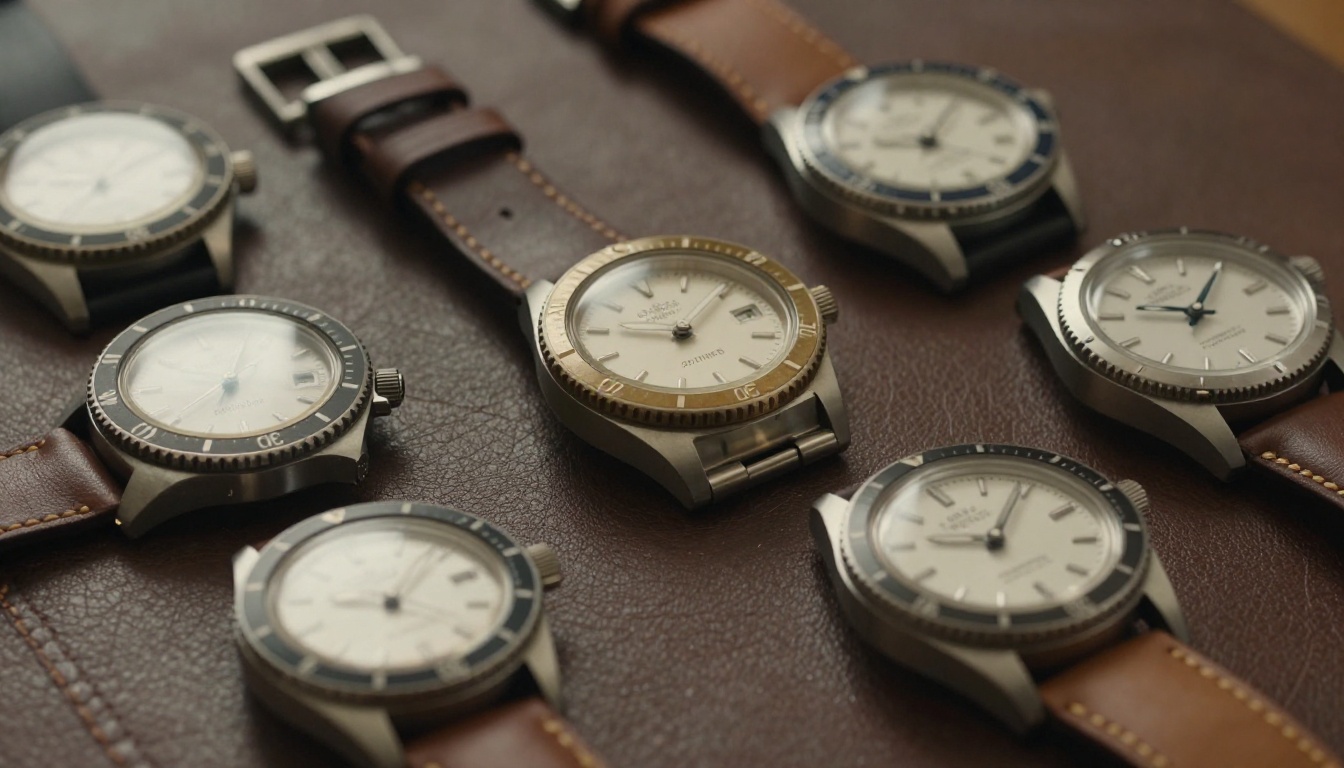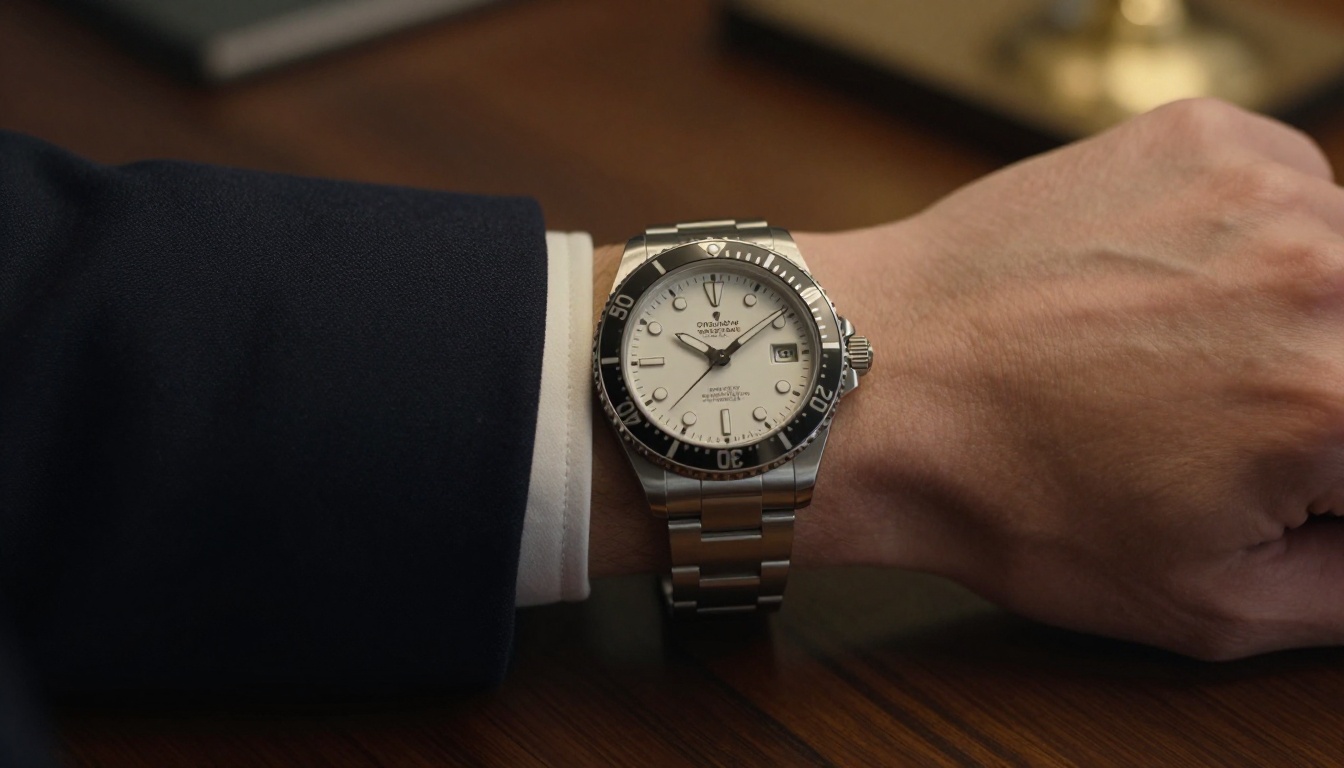
Roughly six percent of dive watch owners have ever worn their watch underwater. The rest wear them to meetings, dinners, airports, and weekend errands. That gap between intended function and actual use is the defining feature of the modern dive watch market — and it explains why the category outsells dress watches, chronographs, and field watches combined at the high end.
The dive watch dominates because it solved a design problem most watchmakers never set out to address: how to build a tool watch robust enough for professional use that also reads as refined on a shirt cuff. That balance is harder to achieve than it sounds, and not every model claiming it actually delivers. Eight of the most prominent contenders reveal just how wide the gap is between marketing copy and wrist reality.
Why Dive Watches Took Over
The dive watch's rise has nothing to do with diving and everything to do with proportion. A well-designed dive bezel adds visual weight without increasing case diameter. Luminous indices provide legibility in dim restaurants and late-night flights. And the inherent water resistance — 200m or more — means no anxiety about rain, showers, or an accidental pool encounter. Dress watches, by contrast, demand caution. A thin manual-wind piece looks superb under a cuff but feels fragile everywhere else.
There is also the matter of resale. Dive watches dominate value retention charts in a way that no other category matches. The Submariner, Fifty Fathoms, and Seamaster have all appreciated steadily over the past decade. Dress watches from the same brands — the Cellini, the Villeret, the De Ville Prestige — rarely do the same.
The dive watch succeeded not because people started diving, but because people stopped wanting to choose between a robust daily watch and a presentable one.
What Actually Matters on a Cuff
Spec sheets list water resistance, power reserve, and movement caliber. None of those matter for the question most buyers are actually asking: will this look right with a suit, and will it fit comfortably under a shirt sleeve?
Three measurements determine the answer. Case thickness dictates whether the watch slides under a cuff or catches on every button. Anything over 14mm becomes a daily irritation with tailored clothing. Lug-to-lug distance determines whether the case sits on the wrist or overhangs it — critical for anyone under a 7.25-inch wrist. And weight on bracelet affects how the watch moves during a handshake or a presentation. Heavy is not inherently bad, but a 230g watch on a link bracelet behaves very differently from a 160g one.
Then there are the subjective factors: bezel finish (matte ceramic reads more formal than brushed aluminum), dial color (black and blue are boardroom-safe; orange is not), and bracelet articulation (a stiff bracelet gaps at the clasp; a well-articulated one drapes). These are the details that separate a dive watch from a diver's watch.
Case Thickness on Bracelet (mm)
The Eight Contenders
Rolex Submariner Date (ref. 126610LN)
The remains the reference point for the entire category, and the 41mm case wears smaller than that number suggests thanks to short, downward-curving lugs and a slim 12.6mm profile. The Oyster bracelet's Glidelock clasp allows micro-adjustments without tools — a detail that matters more than most realize when alternating between a bare wrist and a cuff. Finishing is deliberately restrained: polished center links on brushed outer links, no unnecessary flourish.
The trade-off is familiarity. The Submariner is so common in professional settings that it no longer signals much beyond reliable taste. For some, that is a feature. For others, it is precisely the reason to look elsewhere. Retail sits at $10,750, though getting one at retail requires an AD relationship that takes patience.
Omega Seamaster 300M (ref. 210.30.42.20.01.001)
The offers arguably the best movement in this group — the Co-Axial Master Chronometer 8800, with METAS certification and 15,000-gauss magnetic resistance. The wave-pattern dial is distinctive without being loud, and the helium escape valve at 10 o'clock is the only design element that screams diver rather than dress. At 13.1mm thick, it is slightly chunkier than the Submariner but still manageable under most cuffs.
The bracelet is where Omega trails Rolex. The links are well-finished but the clasp lacks the Submariner's tool-free micro-adjustment, meaning the fit is either right or it is not. A minor point, but one that becomes noticeable over weeks of daily wear. At $5,900, it represents the strongest value proposition in this group.
Blancpain Fifty Fathoms (ref. 5015-1130-52A)
The is the most handsome dive watch ever made. That is not an overstatement. The sapphire bezel insert catches light in a way that ceramic cannot, and the 45mm case, while large on paper, curves enough to wear well on 7-inch wrists. It is also, at 15.4mm, the second-thickest watch in this group — a significant penalty for suit wearers.
This is the watch that transitions from wetsuit to sport coat convincingly but will fight a proper dress shirt. Owners report that French cuffs are essentially incompatible with it. At $15,400, Blancpain is also asking for considerably more than competitors with better cuff clearance. The finishing justifies the price; the proportions demand wardrobe compromise.
Tudor Pelagos 39 (ref. M25407N-0001)
Tudor solved the thickness problem that its 42mm Pelagos could not. The Pelagos 39 comes in at 11.8mm — the thinnest case here — and 39mm across, making it the most cuff-friendly dive watch in this comparison. The titanium construction drops the weight to roughly 135g on bracelet, noticeably lighter than everything else.
The downsides are real: the bracelet finishing is visibly less refined than the Submariner's, and the matte dial, while legible, lacks the depth of Omega's wave pattern or Blancpain's sunburst. Tudor also uses an in-house caliber (MT5400) with a 70-hour power reserve, which is excellent mechanically but the rotor winding sound is audible in quiet rooms — a documented quirk. At $4,325, this is the most practical choice for someone who wears tailored clothing daily.
Grand Seiko SLGA015 "White Birch Diver"
Grand Seiko's Spring Drive movement remains the most technically interesting thing happening in this price segment. The SLGA015 pairs that sweeping, battery-smooth second hand with the brand's celebrated textured dial work — in this case, a birch-forest pattern in white that looks different in every light. At 13.3mm thick and 43.8mm wide, it wears larger than the Submariner but the polished finishing gives it a dressier presence.
The reservation is the bracelet. Grand Seiko bracelets have improved significantly over the past five years, but the clasp still feels industrial compared to Rolex or even Tudor. The watch also lacks the brand recognition that matters in some professional circles. For watch enthusiasts, the SLGA015 is a conversation piece. For everyone else, it is a watch they have never heard of. At $9,100, it sits in an awkward middle ground: too expensive to be an obvious value play, not established enough to carry the social shorthand of a Submariner.
IWC Aquatimer Automatic (ref. IW328803)
IWC's SafeDive bezel system — an internal rotating bezel operated by the outer ring — is genuinely clever engineering, and it gives the Aquatimer a cleaner profile than watches with traditional coin-edge bezels. The 42mm case is well-proportioned, but at 14.1mm thick, it is pushing the limit for comfortable cuff clearance.
The bracelet is IWC's weak point. The H-link design looks dated compared to competitors, and the finishing does not match what Omega or Rolex deliver at similar price points. At $6,400, the Aquatimer offers a less common alternative to the Seamaster, but it is difficult to argue that it is a better one. Those drawn to IWC's pilot watches tend to find the Aquatimer less distinctive than the brand's other collections.
Panerai Submersible (ref. PAM01305)
Panerai makes no pretense of cuff compatibility. The Submersible's 42mm case is 16.3mm thick — the most in this group — and the cushion-shaped case design means the effective width is even larger than the measurement suggests. On a rubber strap it looks purposeful. On the steel bracelet it is heavy, conspicuous, and difficult to wear with anything more formal than an unstructured blazer.
That said, the crown-protecting bridge device and the overall industrial aesthetic have a committed following. Panerai's brand identity is so strongly associated with large, bold watches that slimming the Submersible would arguably defeat the purpose. At $11,200, this is a watch for people who want their watch to be the most visible object in the room. Under a Savile Row suit cuff, it simply does not work.
Breitling Superocean Automatic 42 (ref. A17375E71C1A1)
Breitling's recent redesign brought cleaner lines and a more restrained dial to the Superocean, but at 14.2mm thick and 215g on bracelet, it remains a substantial piece. The ceramic bezel and contrasting minute track give it a slightly sportier read than the Seamaster, which limits its formality ceiling.
The Superocean's strength is durability. The case takes daily wear exceptionally well — reviewers note that the brushed surfaces resist visible scratching better than most competitors. At $4,800, it sits close to Tudor on price but offers a more conventional Swiss movement (Breitling Caliber 17, based on the ETA 2824). Not a bad watch, but one that struggles to distinguish itself in a crowded field.
The Comparison
Dive Watch Specifications for Daily Wear
| Model | Case Size | Thickness | Lug-to-Lug | Weight (Bracelet) | Water Resistance | Retail Price |
|---|---|---|---|---|---|---|
| Tudor Pelagos 39 | 39mm | 11.8mm | 45mm | 135g | 200m | $4,325 |
| Rolex Submariner Date | 41mm | 12.6mm | 48mm | 175g | 300m | $10,750 |
| Omega Seamaster 300M | 42mm | 13.1mm | 50mm | 190g | 300m | $5,900 |
| Grand Seiko SLGA015 | 43.8mm | 13.3mm | 50mm | 185g | 200m | $9,100 |
| IWC Aquatimer | 42mm | 14.1mm | 50mm | 195g | 300m | $6,400 |
| Breitling Superocean 42 | 42mm | 14.2mm | 49mm | 215g | 300m | $4,800 |
| Blancpain Fifty Fathoms | 45mm | 15.4mm | 53mm | 220g | 300m | $15,400 |
| Panerai Submersible 42 | 42mm | 16.3mm | 51mm | 210g | 300m | $11,200 |
Weight on Bracelet (grams)
The Honest Ranking for Suit Wearers
Stripped of diving credentials and judged purely on how well these watches pair with tailored clothing, the ranking looks different from what most watch publications would print.
- Tudor Pelagos 39 — The thinnest, lightest, most unobtrusive. Less refined than the Submariner, but more practical on a dress shirt.
- Rolex Submariner — The benchmark. Nothing else combines slim proportions, bracelet quality, and social currency this well.
- Omega Seamaster 300M — Close to the Submariner on wearability, significantly better on price, marginally worse on bracelet.
- Grand Seiko SLGA015 — The most interesting dial and movement. Size is manageable; brand recognition is the trade-off.
- IWC Aquatimer — Clean bezel profile helps formality but thickness and bracelet hold it back.
- Breitling Superocean — Tough and well-priced, but reads sportier than the top four.
- Blancpain Fifty Fathoms — The most beautiful, but 15.4mm thick is a dealbreaker for anyone who buttons their cuffs.
- Panerai Submersible — A different category entirely. Magnificent on a NATO strap with a linen shirt. Incompatible with formal wear.
The "Tool Watch" Marketing Question
Every brand in this comparison positions its dive watch as a professional tool. Rolex cites deep-sea expeditions. Blancpain references its 1953 collaboration with the French Navy. Omega mentions James Bond. The marketing is effective, and almost entirely irrelevant to how these watches are used.
Only two of these eight models — the Pelagos and the Fifty Fathoms — are regularly worn by professional divers in any meaningful number. The rest are bought by people who need a watch for a Tuesday in Manhattan, not a Tuesday at 200 meters. That is not a criticism. It is an acknowledgment that the dive watch succeeded because it perfected the hybrid: robust enough to not worry about, refined enough to not apologize for.
The brands that understand this — Rolex, Omega, Tudor — design accordingly, prioritizing slim cases, articulated bracelets, and restrained finishing. The brands that still lean into the tool-watch mythology — Panerai, to some extent Blancpain — build watches that are genuinely better underwater and genuinely worse under a cuff. Neither approach is wrong, but buyers should be honest about which life they are actually living.
For anyone building a one-watch collection around tailored clothing, the Submariner remains the most complete package. For anyone willing to trade prestige for pure practicality, the Pelagos 39 is the smarter pick. And for anyone who does not care about cuffs at all, the Fifty Fathoms is the most rewarding watch to look at in this entire category — provided you are honest enough to admit you bought a 45mm dive watch for its beauty, not its bezel.