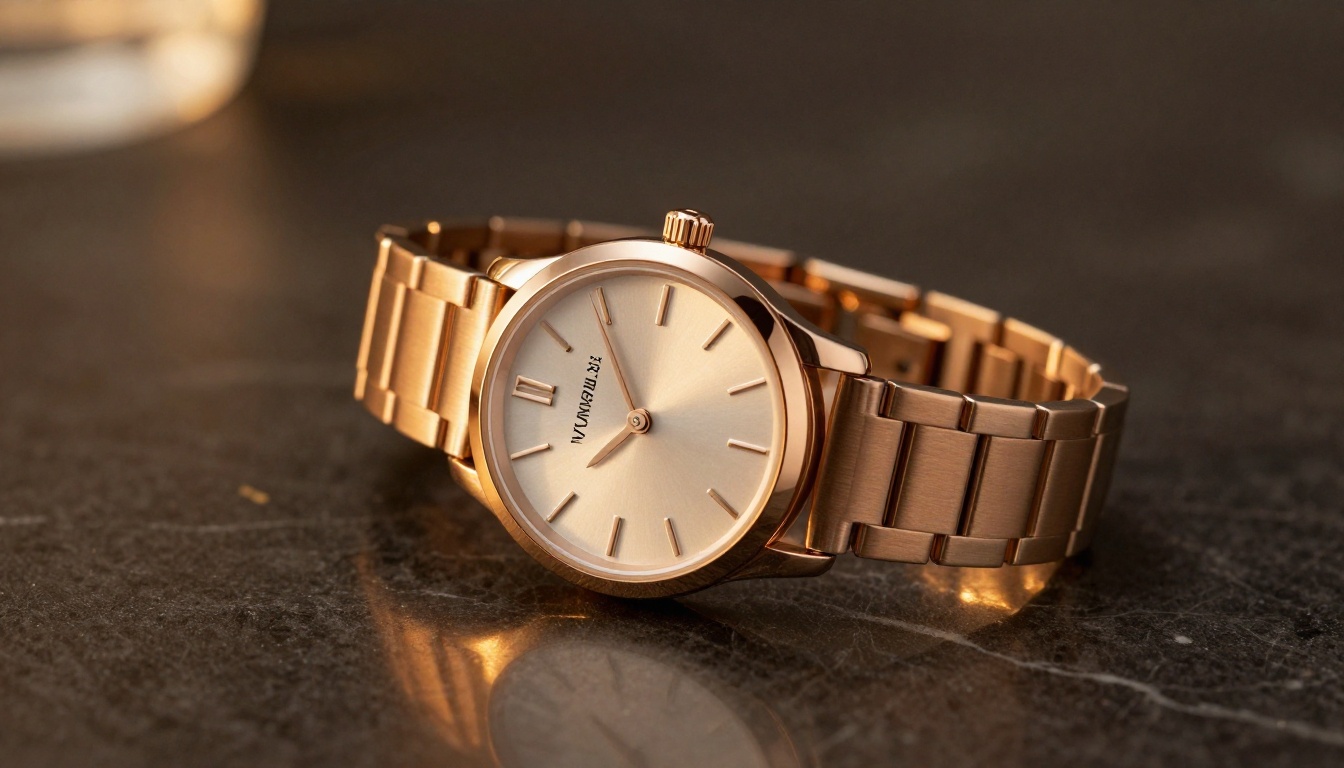
For decades, the watch industry’s idea of a women’s watch was to take a men’s model, shrink it to 28mm, and add diamonds. The result was a category full of pieces that collectors dismissed as “fashion jewelry with a movement” and that rarely held any value on the secondary market. That era is ending, but slowly, and the watches driving the shift deserve closer attention than they typically get.
The women’s watch market has changed faster than most dealers and auction houses have acknowledged. Pieces like the Chanel J12, Cartier Tank Française, and MB&F Legacy Machine FlyingT now generate the kind of waitlists and resale premiums that were once reserved for men’s sport watches. What follows is an honest look at which women’s watches hold value, which are just marketing, and where the secondary market is headed.
The Problem With “Women’s Watches”
The traditional formula was simple and condescending: take a Datejust, make it smaller, set the bezel with diamonds, and charge more for a watch with less material and a cheaper movement. The Rolex Lady-Datejust 28, for instance, uses the calibre 2236 rather than the 3235 found in the men’s 41mm. It is a perfectly good movement, but it reflects a philosophy where women’s watches were accessories first and timepieces second.
This matters for collectors because movements determine long-term respect. A downsized men’s watch with a simpler calibre is, mechanically, less interesting. And a diamond-set bezel on a steel sports watch often destroys resale value rather than enhancing it -- the aftermarket diamond Submariner being the most egregious example. The watches that have broken through are the ones designed with genuine horological intent, not the ones decorated after the fact.
The Patek Philippe Twenty~4: Quiet Dominance
The has done something remarkable: it became the best-selling Patek Philippe model, period. Not the best-selling women’s model. The best-selling model. The original rectangular quartz version (ref. 4910) launched in 1999 and was openly marketed as an “everyday” Patek -- a gateway into the brand for women who weren’t going to spend six figures on a complicated piece. Purists sneered at the quartz movement. The market didn’t care.
The automatic round version (ref. 7300) arrived in 2018 with the calibre 324 S C -- the same movement found in men’s models like the Calatrava. That was a meaningful statement. It signaled that Patek’s broader strategy of controlled scarcity and brand elevation now extended fully to its women’s line.
On the secondary market, the Twenty~4 Automatic in steel (ref. 7300/1200A) trades near or slightly above retail, which is unusual for a women’s watch outside the sport watch category. The diamond-set rose gold versions hold well too, though they don’t command the premiums of a Nautilus. The key insight: the Twenty~4 works as a collector’s piece precisely because Patek treats it as one, not as a decorative afterthought.
Cartier Tank Française: The Fashion-Collecting Crossover
The occupies a peculiar position. It is simultaneously the most recognizable women’s watch in the world and one that serious collectors spent years dismissing as “just a Cartier.” That dismissal was always misguided, and the 2023 redesign -- with cleaner lines, a slimmer case, and the removal of the date window -- has accelerated its rehabilitation.
Cartier’s in-house movement story matters here. The small model still uses a quartz calibre, which limits its collecting credentials. The medium and large sizes now house automatic movements, and the high-complication Cartier pieces (the Tank Cintrée skeleton, the Crash) have always commanded serious auction prices. The Tank Française sits in the middle: respected for design, less so for mechanics.
Secondary market values are stable but not spectacular. A steel small model trades at roughly 75-85% of retail. The medium in steel holds better, around 85-95%. Where the Tank Française wins is longevity -- it is a design that has looked correct for thirty years and will look correct for thirty more. For collectors who value design permanence over movement complexity, this is a rational choice.
Rolex Datejust 31: The Safe Bet
The is the most practical entry on this list, and that’s not a criticism. It houses the calibre 2236 with Rolex’s Syloxi silicon hairspring, comes in every material combination imaginable, and benefits from the same supply constraints that affect every Rolex at an authorized dealer. If you’re wondering how that allocation system works, the dynamics are the same whether you’re after a Datejust or a Submariner.
The Datejust 31 holds value in a way that few women’s watches do. Steel and Oystersteel/white gold combinations trade at or above retail. Full gold versions depreciate more, as with any full gold Rolex. The Jubilee bracelet with fluted bezel configuration has emerged as the most sought-after, with waitlists at many ADs extending beyond six months.
The honest trade-off: the Datejust 31 is a watch that everyone recognizes and nobody finds particularly exciting. It lacks the design ambition of a Tank, the brand storytelling of a Patek, or the creative risk of a Chanel. What it offers instead is reliability -- mechanical, aesthetic, and financial. For many collectors, that is enough. For others, it is the watch you wear while saving for something more distinctive.
Chanel J12: The One They Stopped Laughing At
No watch on this list has had a more dramatic reputation shift than the . When Jacques Helleu designed it in 2000, the watch industry treated it as a fashion brand vanity project. Two decades later, it houses a Kenissi-manufactured movement (the calibre 12.1, developed with Tudor and Chanel’s own watchmaking subsidiary), has a case made from scratch-resistant high-tech ceramic that ages better than steel, and commands genuine respect from collectors who once dismissed it.
The 2019 redesign was the turning point. Chanel rebuilt the J12 from the ground up: new case proportions, a new movement visible through a sapphire caseback, and subtle refinements to the dial that brought it into line with serious watchmaking. The 38mm white or black ceramic version is the one to buy. It trades at roughly 90-100% of its retail price, and certain limited editions -- the Paradoxe, the Interstellar -- trade above.
What makes the J12 compelling for collectors is that Chanel had no obligation to make a good watch. The brand could sell diamond-encrusted quartz pieces all day and still turn a profit. The decision to invest in genuine movement development and ceramic engineering reflects a seriousness that the secondary market has rewarded. The J12 is proof that provenance matters less than commitment.
The Independents: Where the Real Collecting Starts
If the models above represent the mainstream of women’s watch collecting, the independents are where things get genuinely interesting -- and where the auction market offers the most upside potential.
Breguet Reine de Naples
The is based on the watch Abraham-Louis Breguet made for Napoleon’s sister Caroline Murat in 1810 -- arguably the first wristwatch ever created. The modern version (ref. 8918) features an egg-shaped case, moonphase complication, and Breguet’s signature guilloché dial work. It is a genuinely distinctive watch in a market full of round cases on bracelets.
The secondary market is where the Reine de Naples disappoints. Gold versions depreciate significantly -- expect 50-65% of retail on the pre-owned market. This is partly a Breguet problem (the brand has weaker retail demand than its horological pedigree deserves) and partly a complication of the women’s market, where unusual case shapes carry more risk. For the collector who values design and history over resale, however, there is nothing else quite like it.
MB&F Legacy Machine FlyingT
The MB&F Legacy Machine FlyingT is the most ambitious women’s watch made in the last decade. Max Büsser created it specifically for women -- not adapted from a men’s model, not shrunk, not diamond-set-after-the-fact. The flying tourbillon sits on a tilted axis at 7 o’clock, visible through the domed crystal, and the time is displayed on a subdial that only the wearer can read.
At roughly CHF 80,000-130,000 depending on material, this is a serious independent watchmaking investment. The secondary market is thin because production numbers are low, but pieces that do appear at auction tend to hold 70-85% of retail -- strong for an independent brand. The FlyingT makes the most compelling philosophical case on this list: that a women’s watch should be designed from zero, not derived from something else.
What the Secondary Market Data Shows
Secondary Market Performance: Women’s Watches
| Watch | Retail (Approx.) | Secondary Market | Retention | Movement |
|---|---|---|---|---|
| Patek Twenty~4 Auto (Steel) | 8,500 | 7,000-30,000 | 95-105% | Cal. 324 S C |
| Cartier Tank Française (Medium, Steel) | ,550 | ,900-4,300 | 85-95% | Automatic |
| Rolex Datejust 31 (Steel/WG) | 0,200 | 0,500-12,000 | 103-118% | Cal. 2236 |
| Chanel J12 (38mm Ceramic) | ,300 | ,500-7,300 | 89-100% | Cal. 12.1 |
| Breguet Reine de Naples (RG) | 2,800 | 7,000-21,000 | 52-64% | Cal. 537/3 |
| MB&F FlyingT (WG) | 8,000 | 0,000-83,000 | 71-85% | Cal. LM FlyingT |
The pattern is clear: watches backed by strong brand demand (Rolex, Patek) or genuine horological innovation (Chanel, MB&F) hold their value. Watches from brands with weaker retail networks (Breguet) struggle, regardless of their mechanical merit. This mirrors what happens in men’s watch value retention, where brand power often outweighs technical achievement.
What to Actually Buy
The answer depends entirely on why you’re collecting. Here is an honest framework:
- For value retention -- The Rolex Datejust 31 in steel or Oystersteel/white gold is the safest bet. It will never lose you money and never particularly excite you.
- For brand prestige with substance -- The Patek Twenty~4 Automatic. It carries the Patek name and backs it with a proper movement. The steel version is the smart buy.
- For design permanence -- The Cartier Tank Française. Accept the depreciation, wear it for life, and recognize that you’re buying a design object as much as a watch.
- For the collector who wants to surprise people -- The Chanel J12 in 38mm. Nothing starts a better conversation at a watch dinner than a Chanel that turns out to have a COSC-certified manufacture movement.
- For the serious collector -- The MB&F FlyingT or Breguet Reine de Naples. These are the pieces that demonstrate knowledge and taste beyond the mainstream brands. Be prepared for weaker resale.
Where This Market Is Going
Three trends are reshaping women’s watch collecting. First, more women are buying watches for themselves rather than receiving them as gifts. This has shifted demand toward mechanically interesting pieces and away from jeweled quartz models. Second, the major brands are responding with genuine investment: Chanel’s Kenissi partnership, Patek’s decision to put the 324 movement in the Twenty~4, and Cartier’s ongoing push into in-house calibres all reflect a recognition that the women’s market demands the same substance as the men’s.
Third, and most importantly, the secondary market is finally developing depth. Five years ago, trying to sell a women’s watch on Chrono24 or through a dealer meant accepting a steep discount. Today, the gap between men’s and women’s resale values is narrowing -- not because women’s watches are suddenly holding better, but because the pieces being made are finally worth holding onto.
The best women’s watches in 2026 are not smaller men’s watches. They are watches designed with women in mind from the first sketch -- and the market is beginning to price that distinction correctly.
The era of the pink-dialed, diamond-set, mechanically uninteresting “ladies’ watch” is not over. It still dominates the display cases at most authorized dealers. But for collectors who take the category seriously, there has never been a better selection of pieces that are both genuinely beautiful and genuinely worth collecting. The only remaining question is whether the rest of the industry will follow the leaders or keep shrinking men’s watches and hoping nobody notices.
Looking for luxury brands, stores, and services? Browse our curated directory: