Five million dollars sounds like a lot of money until you try to buy a home with it. In Manhattan, that budget gets you a well-located two-bedroom. In Lisbon, it gets you a renovated palace with river views and change left over for a car collection. The gap between these outcomes is not small, and it says more about each city's priorities, tax structures, and cultural relationship with property than any price-per-square-foot metric can.
This is a snapshot of what the same $5 million (or local equivalent at current exchange rates) delivers across ten cities where high-net-worth buyers most frequently shop. The comparisons are based on completed sales and active listings from the past twelve months, focused on the neighborhoods where international buyers actually purchase, not statistical averages that include suburban sprawl.
The Comparison Table
Before the city-by-city breakdown, here is the raw data. The square footage, typical property type, and annual carrying costs tell a story that the listing photos never do.
$5 Million Property Comparison by City (2026)
| City | Neighborhood | Approx. Size | Property Type | Annual Carrying Costs |
|---|---|---|---|---|
| Manhattan | Upper East Side / Tribeca | 1,200-1,600 sq ft | 2-bed condo | $80,000-120,000 |
| London | Chelsea / Notting Hill | 1,400-1,800 sq ft | 2-3 bed flat | $25,000-40,000 |
| Paris | 6th / 7th Arrondissement | 1,200-1,500 sq ft | 2-3 bed apartment | $8,000-15,000 |
| Tokyo | Minato / Shibuya | 2,000-2,800 sq ft | 3-4 bed condo | $12,000-20,000 |
| Dubai | Palm Jumeirah / Downtown | 3,500-5,000 sq ft | 3-4 bed penthouse | $8,000-15,000 |
| Lisbon | Chiado / Estrela | 3,500-5,500 sq ft | Renovated townhouse | $5,000-10,000 |
| Sydney | Eastern Suburbs / North Shore | 2,000-2,800 sq ft | 3-4 bed house | $30,000-45,000 |
| Singapore | Orchard / Sentosa | 1,200-1,600 sq ft | 2-3 bed condo | $15,000-25,000 |
| Miami | Brickell / Miami Beach | 2,500-3,500 sq ft | 3-bed waterfront condo | $35,000-55,000 |
| Lake Como | Bellagio / Tremezzo | 2,500-4,000 sq ft | Historic villa | $10,000-18,000 |
Manhattan: The Expensive Compromise
At $5 million, Manhattan gives you less space than any other city on this list. A new-construction two-bedroom in Tribeca or a pre-war three-bedroom on the Upper East Side with dated finishes. The math is brutal: prime Manhattan condos trade at $2,500 to $4,000 per square foot, depending on the building and floor. A doorman building in a good location with modern finishes and reasonable common charges narrows the options further.
The carrying costs are the real shock. Property taxes on a $5 million condo run $40,000 to $60,000 annually. Add common charges of $2,000 to $5,000 per month, and you are spending $80,000 to $120,000 a year before you turn the lights on. For context, that annual cost would rent you a remarkable apartment in most other cities on this list.
What Manhattan does offer is liquidity. A well-priced apartment in a good building sells fast. The rental market is deep. And the city itself remains the financial and cultural capital of the Western Hemisphere, which is why people keep paying these prices despite the math.
London: Prestige with a Tax Problem
At roughly 4 million pounds, you are shopping in Chelsea, Notting Hill, or the quieter streets of Kensington. Expect a two- or three-bedroom flat in a period conversion or a modern block, somewhere between 1,400 and 1,800 square feet. A house in Zone 1 at this price is effectively impossible unless it needs significant work.
The UK's stamp duty is the immediate pain point. On a 4 million pound purchase, a non-UK resident buyer pays roughly 17% in stamp duty and surcharges, which adds nearly 700,000 pounds to the transaction cost. That alone could buy a decent apartment in Lisbon. Council tax and service charges are comparatively modest, but the entry tax makes London the most expensive city to buy into on this list.
The trade-off is a city with global infrastructure, English-language legal and financial systems, excellent schools, and a property market that has historically been a safe store of capital for international buyers. Whether that justifies the stamp duty is a personal calculation.
Paris: Small Footage, Big Life
Five million dollars in Paris (roughly 4.6 million euros) buys a refined apartment in the 6th or 7th arrondissement: Haussmann proportions, herringbone parquet, marble fireplaces, and tall windows overlooking a quiet courtyard. Expect 1,200 to 1,500 square feet. In the slightly less central 16th, you might find 1,800 square feet with a balcony.
What Paris lacks in raw square footage, it compensates for with density of life. The apartment is a five-minute walk from three Michelin-starred restaurants, a world-class museum, and a market selling produce that would cost triple at a Manhattan specialty grocer. Annual property taxes (taxe fonciere) are remarkably low by international standards, often under 10,000 euros for a prime apartment.
The downside is bureaucracy. French property transactions involve a notaire, take months, and the notarial fees add roughly 7-8% to the purchase price. Renovation requires patience and a tolerance for French administrative processes that test even the most composed buyer. If you have read about the realities of owning property in France, the same lessons apply to Paris, only with higher stakes.
Tokyo: The Quiet Bargain
Tokyo remains one of the most underpriced major cities for what you actually receive. Five million dollars (roughly 750 million yen) in Minato-ku or the better parts of Shibuya buys a 2,000 to 2,800 square foot apartment in a modern high-rise with concierge, earthquake-resistant construction, and finishes that rival anything in Manhattan at half the price per square foot.
The [rexiew-rating name="Aman Tokyo"] set the standard for what thoughtful Japanese design looks like at the highest level, and the residential market follows that same philosophy: clean lines, premium materials, nothing unnecessary. A $5 million apartment in a building like Mori Living or Branz Tower comes with amenities that would be standard in a five-star hotel.
Annual carrying costs are modest. Property taxes and management fees together run 1.5 to 2.5 million yen ($10,000-18,000). There is no capital gains exemption for foreigners, and the purchase process requires a local judicial scrivener, but the transaction costs are roughly 6-7% all-in, lower than London or Paris. The main risk is currency. The yen's fluctuation against the dollar can add or erase hundreds of thousands in value without the property itself changing price.
Dubai: Maximum Space, Minimum Tax
Dubai is where $5 million goes furthest in terms of sheer square footage and finish quality. On the Palm Jumeirah, that budget buys a 3,500 to 5,000 square foot penthouse or a four-bedroom villa with a private pool and marina views. In Downtown Dubai, you are looking at a spacious apartment in an address building with floor-to-ceiling glass and views of the Burj Khalifa.
The tax situation is Dubai's primary draw for many buyers. No property tax. No income tax. No capital gains tax. The only recurring cost is a modest service charge (typically 15-25 AED per square foot annually) and a one-time 4% transfer fee at purchase. This makes the annual carrying cost a fraction of Manhattan or London.
The honest caveat: Dubai's property market is volatile. Values dropped 30% between 2014 and 2020, then surged past previous highs by 2024. The market is heavily driven by foreign capital flows, and oversupply has been a recurring issue. You get a lot of apartment for the money, but the long-term value trajectory is less predictable than Paris or Manhattan.
Lisbon: The Value Play with a Lifestyle Dividend
Lisbon is the outlier on this list. Five million dollars buys a renovated 18th-century townhouse in Chiado or Estrela with 3,500 to 5,500 square feet, original azulejo tile work, a private garden, and views over the Tagus River. You could also buy two excellent properties and still have money remaining.
Portugal's Non-Habitual Resident tax regime, while less generous than its original version, still offers favorable treatment for foreign income. The Golden Visa program has been restructured but alternatives exist for investment-based residency. Property taxes are low: annual IMI (Imposto Municipal sobre Imoveis) on a $5 million property might run 5,000 to 8,000 euros.
The trade-offs are real. Lisbon's international flight connections are limited compared to London or Paris. The local economy is smaller, which means fewer professional opportunities if you are not working remotely. Maintenance on historic properties can be unpredictable and expensive. But for pure value, no city on this list comes close.
Sydney: Premium for the Outdoors
At roughly 7.5 million Australian dollars, $5 million in Sydney gets you a three- to four-bedroom house in the Eastern Suburbs (think Bronte, Clovelly) or a spacious apartment in a harborside building. In the Northern Beaches or Lower North Shore, the same budget stretches to a larger property with water views.
Australia's stamp duty varies by state, but in New South Wales, foreign buyers face a standard stamp duty of roughly 5.5% plus an additional 8% surcharge, totaling close to 14%. Annual land tax adds another layer, especially for non-residents. These costs make Sydney the second most expensive city to enter after London.
What you are paying for is lifestyle. The climate, the proximity to beaches and harbor, the quality of produce and dining, and a pace of life that feels genuinely different from London or New York. Sydney's dining scene has matured remarkably, and the outdoor lifestyle is not marketing. It is how people actually live.
Singapore: Restricted but Resilient
Singapore is the most expensive market per square foot after Manhattan. Five million dollars (roughly 6.7 million Singapore dollars) buys a two- or three-bedroom condominium in the Orchard Road corridor or a compact unit on Sentosa. Expect 1,200 to 1,600 square feet in a development like the Ritz-Carlton Residences or a comparable building.
Foreign buyers face a 60% Additional Buyer's Stamp Duty (ABSD), which has been the government's deliberately aggressive tool to cool speculation. On a $5 million purchase, that is an additional $3 million in tax, effectively making the real cost $8 million. This has compressed transaction volumes but kept prices remarkably stable. If you are buying as a Singapore permanent resident or citizen, the ABSD drops dramatically.
The upside: Singapore is safe, efficient, centrally located for Asia-Pacific business, and has no capital gains tax on property. The property market has shown remarkable resilience through multiple cycles. The challenge is that $5 million simply does not buy much space.
Miami: The New Money Magnet
Miami has repriced significantly since 2020. Five million dollars in Brickell or South Beach buys a 2,500 to 3,500 square foot waterfront condominium in a newer building, or a four-bedroom house in Coral Gables with a pool. In Miami Beach proper, the budget gets a well-located three-bedroom condo with ocean views.
Florida's lack of state income tax remains the primary draw for domestic buyers relocating from New York or California. Property taxes are roughly 1.8 to 2% of assessed value, which means $70,000 to $90,000 annually on a $5 million property. Hurricane insurance and HOA fees on waterfront condos add substantially. Budget $35,000 to $55,000 in total annual carrying costs beyond the mortgage.
The trade-off nobody mentions: Miami's infrastructure has not kept pace with its population growth. Traffic, flooding risk, and insurance costs are real concerns. The financial perks of Florida residency are genuine, but they come bundled with climate considerations that are increasingly difficult to ignore.
Lake Como: The Emotional Purchase
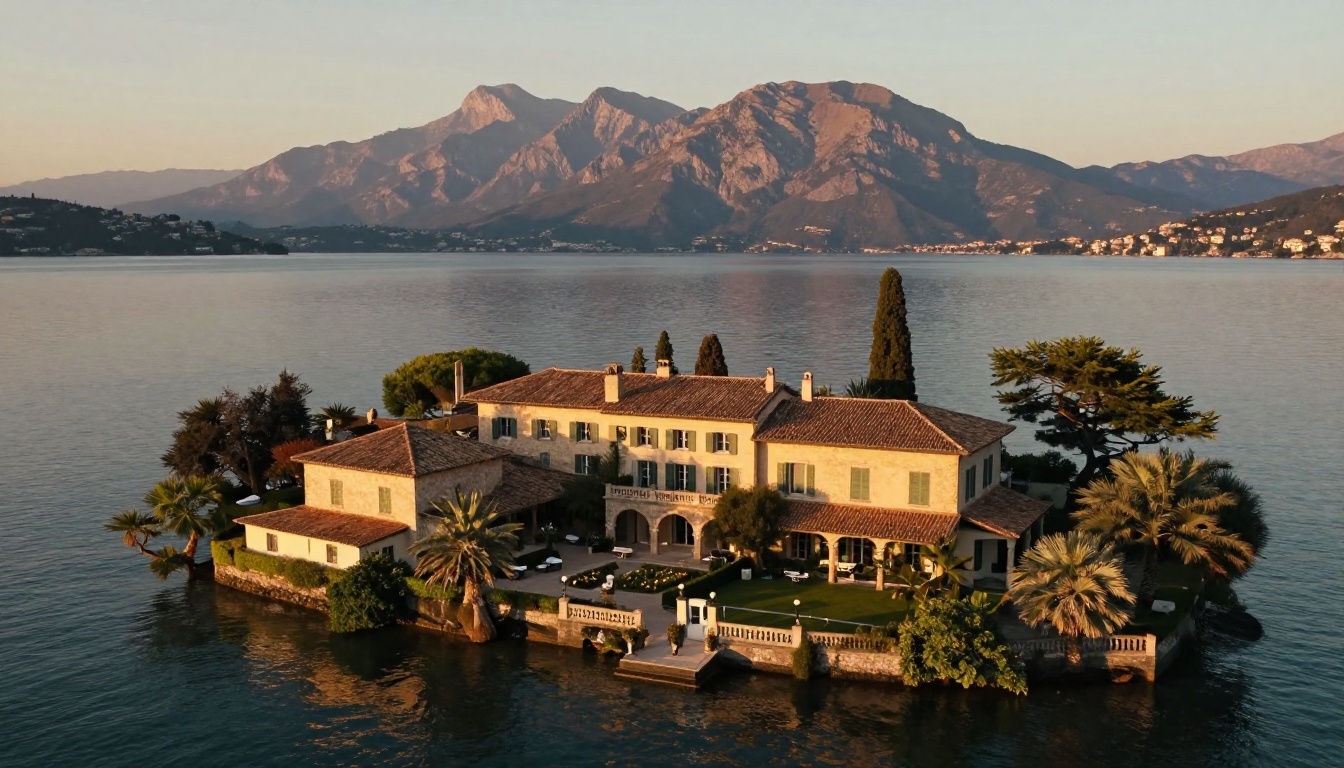
Nobody buys on Lake Como because the numbers make sense. They buy because they have stood on a terrace in Bellagio at sunset, watched the light turn the mountains gold, and decided that this is where they want to spend their summers. Five million dollars buys a historic villa with 2,500 to 4,000 square feet, landscaped gardens, and direct lake access, though the best properties with private docks and original frescoes start closer to $8 million.
Italian property transaction costs are reasonable: roughly 9-10% for non-residents, including registration tax and notarial fees. Annual property taxes (IMU) on a second home are modest. The real cost is maintenance. Stone villas built in the 1700s require constant attention, and finding reliable contractors in a lakeside community that operates on Italian rural time is its own project.
The lifestyle is specific. Lake Como is quiet. The nearest major airport is Milan Malpensa, about 90 minutes by car. Restaurants close early. The social scene is seasonal. For a primary residence, it would feel isolating for most people. As a retreat from a life based elsewhere, it is difficult to match.
Where the Money Goes Furthest
Value Rankings: Best to Least Space per Dollar
| Rank | City | Approx. Sq Ft | Transaction Costs | Annual Costs | Overall Value |
|---|---|---|---|---|---|
| 1 | Lisbon | 3,500-5,500 | 7% | $7,500 | Best |
| 2 | Dubai | 3,500-5,000 | 4% | $11,500 | High |
| 3 | Lake Como | 2,500-4,000 | 9.5% | $14,000 | High |
| 4 | Tokyo | 2,000-2,800 | 6.5% | $15,000 | High |
| 5 | Miami | 2,500-3,500 | 3% | $45,000 | Medium |
| 6 | Sydney | 2,000-2,800 | 14% | $37,500 | Medium |
| 7 | London | 1,400-1,800 | 17% | $32,500 | Low |
| 8 | Paris | 1,200-1,500 | 7.5% | $11,500 | Medium |
| 9 | Singapore | 1,200-1,600 | 64% | $20,000 | Low |
| 10 | Manhattan | 1,200-1,600 | 3% | $100,000 | Low |
Pure value is only one variable. Nobody chooses between Lisbon and Manhattan solely on square footage. Manhattan's carrying costs are punishing, but its liquidity, professional ecosystem, and cultural density remain unmatched. London's stamp duty is painful, but the legal infrastructure and global connectivity justify a premium for many buyers. Tokyo offers remarkable value, but the language barrier and distance from Western business centers limit its appeal for some.
The Questions That Actually Matter
Before comparing price per square foot across continents, the more useful questions are these:
- Primary or secondary residence -- A primary home needs to work for daily life: commute, schools, social infrastructure. A secondary home optimizes for lifestyle and should not demand constant attention.
- Capital preservation or lifestyle -- Manhattan and London are defensive plays. Lisbon and Dubai are lifestyle-forward with more variable returns.
- Tax residency implications -- Buying in some cities (particularly Dubai, Singapore, and Portugal) can restructure your entire tax picture. This matters more than the property price for high earners.
- Currency exposure -- A yen-denominated property looked like a steal in 2023 and looks even cheaper in 2026. That same currency weakness can work against you on the exit.
- Total cost of ownership -- Manhattan's annual costs can equal the price of a month-long stay at the world's finest hotels. At some point, renting and investing the difference becomes the more rational play.
The best $5 million property purchase is not the one with the most square footage. It is the one that aligns with how you actually live, how often you will be there, and whether the carrying costs justify ownership over renting.
Five million dollars is enough to buy a home in any city on earth. It is not enough to buy a great home in every city on earth. The gap between those two facts is where the real decisions happen.
Looking for luxury brands, stores, and services? Browse our curated directory: