Most car reviews of grand tourers spend three paragraphs on the engine note, two on cornering grip, and exactly zero on what the seats feel like after six hours on the A7. This is a problem, because grand touring cars exist for a single purpose: covering enormous distances in comfort, speed, and style. A GT that handles well on a track but leaves its driver hobbling into a hotel lobby has failed at its primary job.
The GT segment is arguably the most misunderstood in the automotive world. Reviewers test these cars on circuits and mountain passes — environments that account for perhaps 2% of actual ownership. The other 98% involves motorway cruising, predawn departures, cross-country hauls with luggage, and the kind of sustained high-speed driving that separates a genuine grand tourer from a sports car with a larger fuel tank. Six current models claim the GT title. Not all of them deserve it.
What Actually Matters on an 800-Mile Day
Before evaluating individual cars, it helps to establish what grand touring demands. Track performance, 0-60 times, and lateral g-forces are largely irrelevant. What matters is a different set of criteria entirely.
- Seat comfort beyond hour four — Most seats feel adequate for the first ninety minutes. The test is hour five, when lower back support, thigh bolster length, and cushion density reveal themselves. Heating and ventilation are not luxuries here; they are necessities.
- NVH at sustained highway speed — Wind noise, tyre roar, and engine drone at a steady 70-80 mph determine whether conversation flows naturally or requires raised voices.
- Fuel range — Stopping every 200 miles turns an eight-hour drive into a ten-hour one. A genuine GT should manage 400+ miles between fills.
- Trunk capacity — Two people, one week, proper luggage. Not soft bags shaped to fit awkward spaces.
- Ride quality — The ability to absorb expansion joints, patched tarmac, and Belgian pave without transmitting them through the seat and steering column.
- Driver aids and cruise systems — Adaptive cruise, lane keeping, and head-up display reduce fatigue measurably on long stints.
The Six Contenders
These are the six cars that currently define the GT segment at the upper end. Each starts above $100,000; each promises to make long distances feel short. The reality is more nuanced.
Grand Tourer Specifications at a Glance
| Model | Starting Price | Power (hp) | Trunk (liters) | Fuel Range (miles) | Weight (kg) |
|---|---|---|---|---|---|
| Bentley Continental GT | $238,000 | 659 | 358 | 430 | 2,244 |
| Aston Martin DB12 | $245,000 | 680 | 262 | 370 | 1,685 |
| Porsche Panamera Turbo | $180,000 | 630 | 405 | 390 | 2,155 |
| Mercedes-AMG GT 63 4-Door | $175,000 | 585 | 461 | 400 | 2,090 |
| Ferrari Roma | $272,000 | 620 | 272 | 360 | 1,570 |
| Lexus LC 500 | $101,000 | 471 | 172 | 380 | 1,935 |
Bentley Continental GT
The is the car that most reviewers reach for when defining the segment, and for good reason. The seats are the single best in any car currently in production — diamond-quilted, 20-way adjustable, with a cushion depth that eliminates pressure points even on transcontinental runs. Owners consistently report that the Continental GT is the only car where seven hours feels like four.
The W12 (and now the Ultra Performance Hybrid in the latest generation) provides effortless overtaking power without ever feeling frantic. Cabin noise at 70 mph is genuinely library-quiet, measured by independent reviewers at around 63 dB — the lowest in this group. The trunk, at 358 liters, swallows two large rolling cases with room for coats and bags. The trade-off is weight: at 2,244 kg, the Continental GT feels its mass through tight villages and multi-story car parks. But on the motorway, that weight becomes an asset, lending a planted, unflappable stability.
Aston Martin DB12
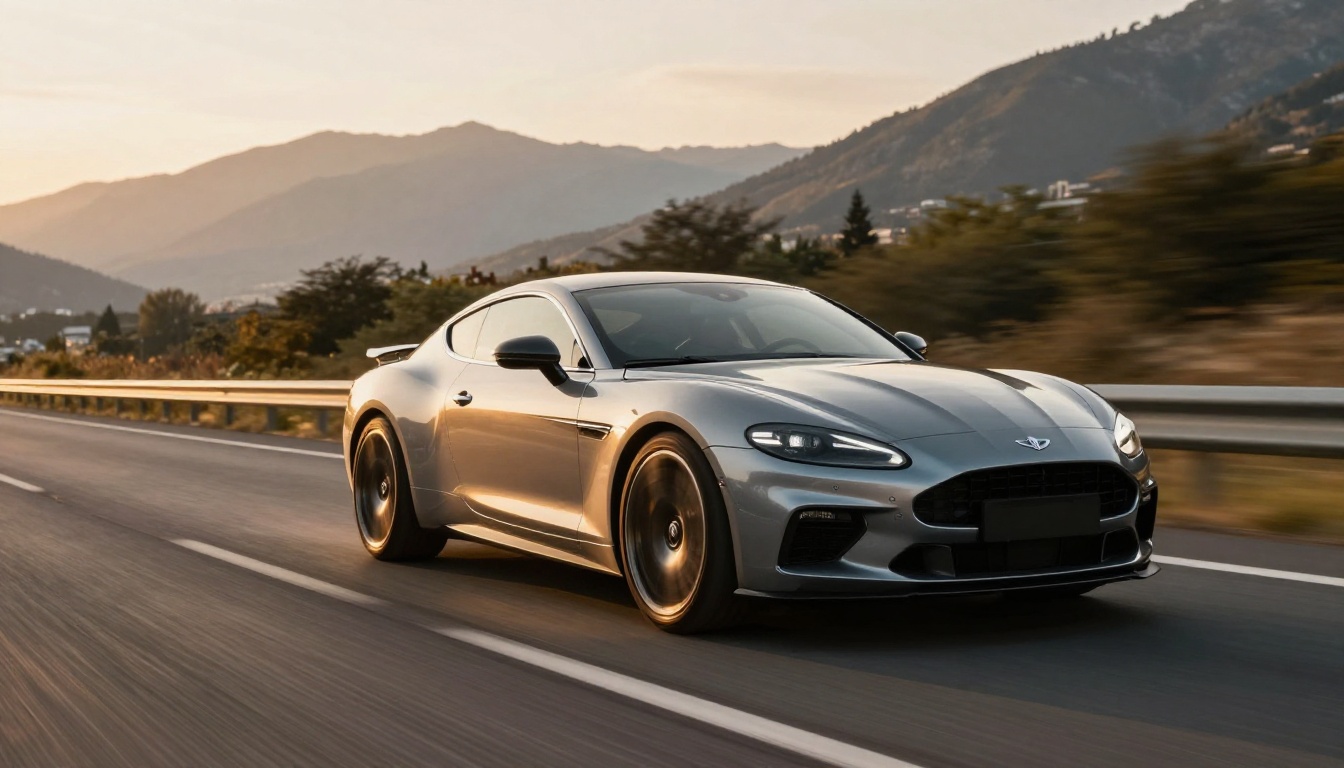
The is the most beautiful car on this list, and beauty counts on a grand tour — the arrival matters as much as the journey. The twin-turbo V8 produces 680 hp, the interior has been substantially upgraded from the DB11, and the driving dynamics are sharper than any Aston Martin in recent memory.
But the DB12 makes compromises that matter over distance. The trunk is small at 262 liters, and its shallow, oddly shaped opening means hard-sided luggage requires creative packing. The ride, while improved, remains firmer than ideal over broken surfaces. Most critically, the infotainment system — now a Mercedes-sourced unit — is a marked improvement but still a step behind what Porsche and Mercedes offer natively. For a 300-mile weekend, the DB12 is superb. For a 1,000-mile day, it asks for more tolerance than a GT should.
Porsche Panamera Turbo
The Turbo may be the most complete car in this comparison, which makes it all the more puzzling that it receives less attention than the Continental GT or Roma. The 630-hp twin-turbo V8 is responsive without being aggressive. The adaptive air suspension, with its three-chamber system, delivers a ride quality that approaches the Bentley while remaining composed through corners the Continental GT would rather avoid.
The trunk — 405 liters with the rear seats up, over 1,200 with them folded — is the most practical here by a wide margin. Rear seat space is genuine; an adult can sit behind a six-foot driver without complaint. The 18-way sport seats with memory foam inserts are superb through hour six. Where the Panamera falls short of the Bentley is in perceived occasion. It remains, fundamentally, a large Porsche sedan. There is nothing wrong with that, but a grand tourer should make the driver feel that the journey itself is the event. The Panamera sometimes feels like a tool — a brilliant one, but a tool nonetheless.
Mercedes-AMG GT 63 4-Door
The AMG GT 4-Door takes a different approach to grand touring. It is the most technologically advanced car here, with the best infotainment system (MBUX with augmented reality navigation), the most capable driver assistance suite, and a cabin that wraps its occupants in materials and screens that feel genuinely futuristic. The 461-liter trunk is the largest in this group.
The 4.0-liter twin-turbo V8 produces 585 hp — the least powerful here — but the nine-speed automatic is seamless and the power delivery is smooth enough that the deficit is invisible in real-world driving. The ride on air suspension is composed, though road reviewers note it lacks the last degree of isolation the Bentley provides. The real issue is character. The AMG GT 4-Door is exceptional at everything, distinctive at nothing. It does the 1,000-mile day with ruthless efficiency, but it does not make the drive feel like anything more than efficient transport. For some buyers, that is precisely the point. For others, it misses what grand touring is about.
Ferrari Roma
The Roma is the controversial entry. Ferrari built it explicitly as a GT — the name references the dolce vita era of effortless Roman elegance — and on paper, the combination of 620 hp, mid-front engine placement, and that extraordinary silhouette should make it the most desirable car here. For drives under three hours, it might be.
The problem is sustained comfort. The Roma’s seats are thin by GT standards, with limited adjustment compared to the Bentley or Porsche. The trunk, at 272 liters, handles a weekend bag per person but struggles with a week’s worth of proper luggage. The ride, while more compliant than a 296 GTB, transmits surface imperfections that the Continental GT simply swallows. And the fuel range — roughly 360 miles — is the shortest here, partly because the temptation to use the V8’s full capability is harder to resist than in any other car on this list. The Roma is a sports car wearing a GT’s evening clothes. That is not a criticism — it is a classification.
Lexus LC 500
The LC 500 is here because it represents something the other five cars have largely abandoned: a naturally aspirated engine. The 5.0-liter V8 produces 471 hp and one of the finest engine notes in production today. At $101,000, it costs less than half the price of the Ferrari Roma and roughly 40% of the Bentley.
The trade-offs are real, though. The trunk is genuinely small at 172 liters — enough for two soft overnight bags and little else. The ten-speed automatic, while improved, hunts between gears on motorway inclines in a way the Porsche PDK and Bentley’s dual-clutch never do. The seats are comfortable but not in the same league as the top three here. What the LC 500 does offer is remarkable build quality and long-term reliability that makes the European competition look fragile. Lexus’s depreciation curve is also notably gentler than the segment average, which matters when you consider total cost of ownership over five years.
The Numbers That Matter
Three metrics separate genuine grand tourers from sports cars with GT badges: how far they go on a tank, how much they carry, and how quiet they are at cruise. The charts below make the hierarchy clear.
Fuel Range (miles)
Trunk Capacity (liters)
Cabin Noise at 70 mph (dB)
The Bentley leads on range and noise; the Mercedes and Porsche lead on practicality. The Ferrari and Aston Martin, predictably, ask owners to sacrifice the most for the privilege of looking at them in the hotel car park.
The Driving Roads Question
A grand tourer that never leaves the motorway is a waste. The point of covering 1,000 miles in a day is that the route can include a two-hour detour through something worth driving — a mountain pass, a coastal road, a stretch of empty tarmac through the Highlands. Here, the ranking reshuffles.
The Ferrari Roma and Aston Martin DB12 come alive on roads with corners, where their lighter weight and sharper turn-in transform from irrelevant to essential. The Panamera Turbo splits the difference better than any car here, remaining genuinely entertaining through hairpins without punishing passengers on the motorway segments before and after. The Bentley, magnificent on the straight, asks for patience through tight switchbacks. It can do them, but it would rather not.
The Lexus LC 500 deserves mention here as well. That naturally aspirated V8, combined with a relatively light 1,935 kg kerb weight, makes it more rewarding on a back road than the spec sheet suggests. It is not a Porsche, but it is not trying to be.
Cost of the Grand Tour
Purchase price tells only part of the story. A car built for 1,000-mile days accumulates mileage, and mileage affects value. The Continental GT and Panamera hold value reasonably well in this segment; the AMG GT 4-Door and LC 500 depreciate more steeply in the first three years. The Ferrari Roma, paradoxically, holds its value best — partly because Ferrari controls supply, and partly because most Roma owners do not actually drive them very far.
Estimated 3-Year Running Costs (15,000 miles/year)
| Model | Depreciation (3yr) | Fuel Cost (3yr) | Service/Tires (3yr) | Total 3yr Cost |
|---|---|---|---|---|
| Bentley Continental GT | $65,000 | $14,500 | $9,500 | $89,000 |
| Aston Martin DB12 | $72,000 | $13,800 | $11,000 | $96,800 |
| Porsche Panamera Turbo | $52,000 | $12,500 | $7,500 | $72,000 |
| Mercedes-AMG GT 63 | $58,000 | $12,000 | $7,000 | $77,000 |
| Ferrari Roma | $35,000 | $14,000 | $12,500 | $61,500 |
| Lexus LC 500 | $30,000 | $13,500 | $4,500 | $48,000 |
The Lexus and Ferrari bookend this table for opposite reasons. The LC 500 costs the least to own because it is the cheapest to buy, the cheapest to service, and Lexus reliability is not a cliche — it is an engineering commitment. The Roma costs the least in depreciation because it is a Ferrari, and Ferraris exist in a different market reality.
The Panamera Turbo emerges as the strongest value proposition when total cost is weighed against capability. The Bentley, predictably, asks the most — but also delivers the most complete grand touring experience.
The Verdict, by Use Case
There is no single best grand tourer. But there is a best GT for each type of driver.
- For the pure long-distance driver — The Bentley Continental GT. Nothing else in production makes 800 miles feel as effortless. The seats, the silence, the range, the sense of occasion. This is the benchmark.
- For the driver who wants everything — The Porsche Panamera Turbo. It sacrifices the least across every criterion. Comfort, practicality, dynamics, technology, and running costs all land in the top two. It is the rational choice — and it is better than that sounds.
- For the driver who values arrival — The Aston Martin DB12. No car on this list makes a better first impression. The compromises in luggage space and long-haul comfort are real, but some drivers will accept them for the way the DB12 looks parked outside a country house hotel.
- For the technology-first driver — The Mercedes-AMG GT 63. The best screens, the best driver aids, the most spacious interior. It is a business-class cabin that happens to have 585 hp.
- For the enthusiast on a different timeline — The Lexus LC 500. That naturally aspirated V8 will not be available much longer. The LC 500 is a future collectible being sold as a current GT, and it costs less than half its competition.
- For the driver who does not actually drive 1,000-mile days — The Ferrari Roma. If grand touring means a three-hour drive to the coast twice a month, the Roma is magnificent. If it means London to the Cote d’Azur in a single push, look elsewhere.
A grand tourer’s job is to make you want to add another hundred miles to the route, not to make you wish you had flown. By that measure, the Bentley and the Panamera stand apart.
The Segment’s Future
Electrification is coming for the GT segment, and it brings both promise and problems. The electric powertrain question is particularly acute for grand tourers: the silence and torque of an EV are ideal for motorway cruising, but current battery range and charging infrastructure make a genuine 1,000-mile day impossible without significant planning and stops. The Bentley Continental GT’s new Ultra Performance Hybrid, with its plug-in hybrid system, may represent the most honest near-term answer — preserving range while adding electric refinement.
For now, though, the internal combustion grand tourer remains the definitive tool for covering serious distance in serious comfort. The segment is small, often overlooked, and routinely tested against criteria that miss the point entirely. These six cars exist to turn geography into pleasure. The best of them — the Bentley, the Panamera, and on its best days, the DB12 — achieve something no other type of car can: making the journey the destination.