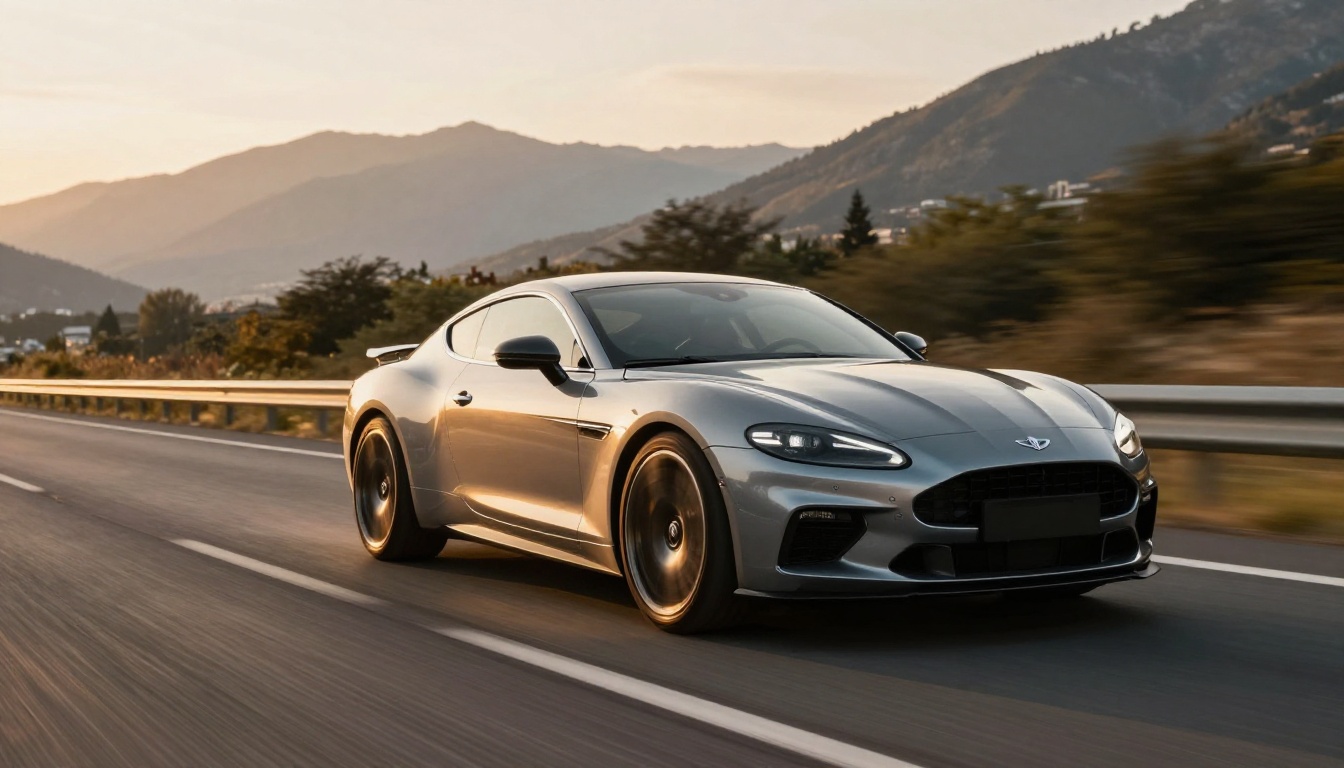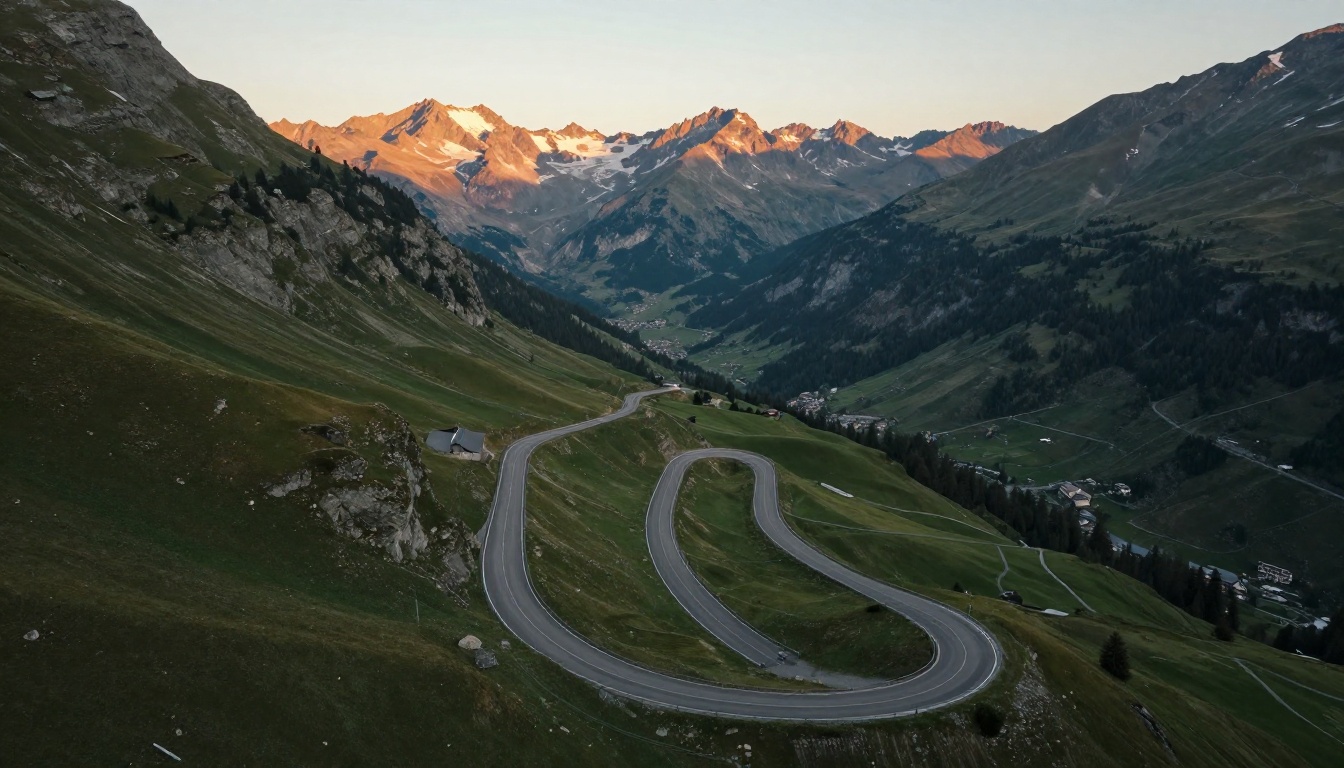
The Stelvio Pass has 48 numbered hairpin turns, each painted on a low stone wall in a font that looks borrowed from a 1930s grand prix poster. At 2,757 meters, the air is thin enough that a naturally aspirated engine loses noticeable power. None of this matters. You will still want to drive it, and you should — but only if you time it right and pick the correct car.
Most "best driving roads" lists read like brochure copy. They tell you a road is spectacular, then move on. This is not that. These are six routes that justify building a trip around them, with specific advice on when to go, what to rent, where to sleep, and which roads deserve their reputation — and which are coasting on it.
Stelvio Pass, Italy
The Stelvio is the second-highest paved mountain pass in the Alps, and it earns its place at the top of this list through sheer relentlessness. The eastern ascent from Prad am Stilfserjoch delivers 1,871 meters of elevation gain over 24.3 kilometers. Every turn is tight, every gradient is steep, and the surface is better than most people expect — the Italians resurfaced long sections in 2024.
The problem is traffic. Between late July and mid-August, the Stelvio is overrun with motorcycles, campervans, and cyclists training for amateur races. The road was not designed for any of these in volume. Go in mid-June, the week after the pass opens for the season, or in late September before the first snowfall closes it. Weekdays only.
Where to rent: Pick up from Milan Malpensa. Hertz Italy and Sixt both stock the in their premium fleet — it is the right car for this road. Rear-engine weight distribution and a short wheelbase make it precise through the hairpins. A large GT will feel clumsy here. Budget EUR 350-500 per day.
Where to stay: Hotel and Spa Falkensteinerhof in Valles is 90 minutes from the pass and a far better base than Bormio, which gets overcrowded. Alternatively, the town of Merano offers more restaurants and a good sense of the South Tyrolean wine scene — try Sissi or Sigmund for dinner.
Combine with: The Passo dello Spluga and Passo del Bernina are within a day's drive. String all three together over a long weekend and you have the finest 72 hours of driving in Europe.
Transfagarasan Highway, Romania
Jeremy Clarkson called this "the best road in the world" on Top Gear in 2009, and the resulting tourism boom has been both a blessing and a curse. The road is genuinely remarkable — 90 kilometers of engineered switchbacks carved through the Fagaras Mountains by Ceausescu's military in the 1970s, climbing to 2,042 meters through a tunnel at Balea Lake. The southern ascent is the better drive: steeper, tighter, more dramatic.
The honest assessment: the Transfagarasan is a better road to look at than to drive quickly. Sections are narrow, the surface is inconsistent, and the speed limit is strictly enforced. Romanian police set up regular checkpoints, especially on the northern descent. This is a road to savor at 60 km/h, not to attack. If you want a track-day pace, look elsewhere.
Where to rent: Fly into Bucharest and rent from the airport. The options are limited compared to Western Europe — expect a or similar from Autonom or Klass Wagen, the better local agencies. International chains stock mostly diesels. Budget EUR 80-150 per day.
Where to stay: The town of Curtea de Arges on the southern approach has a handful of decent guesthouses. For something more refined, Sibiu — 90 minutes north of the pass — is one of Romania's most handsome cities. The Hilton Sibiu is competent if unremarkable; the boutique Casa Luxemburg has more character.
Best season: The road opens in late June and closes in late October, weather dependent. September is ideal — the Fagaras beech forests turn amber and the summer crowds thin out.
Pacific Coast Highway (Big Sur), California
Highway 1 through Big Sur is the most photographed road in America, and the most frustrating to drive. The section between Carmel and San Simeon — roughly 145 kilometers — is undeniably beautiful. The Pacific drops away to your left in sheer, fog-wrapped cliffs. Bixby Creek Bridge is as photogenic as any piece of roadway engineering in the world.
But this is not a driver's road in the European sense. It is a two-lane highway with a 55 mph speed limit, frequent blind corners, cyclists, RVs pulling over at every turnout, and — crucially — a steady stream of tourists who have never driven a mountain road before. The scenery is the point. The driving itself is secondary.
Where to rent: San Francisco or Los Angeles. The convertible is the obvious call — a from an outfit like Turo or Enterprise Exotic lets you hear the ocean and smell the cypress trees. Drive south to north for the ocean-side lane. Budget USD 250-400 per day for something worth driving.
Where to stay: Post Ranch Inn is the classic Big Sur address, with rates starting around USD 1,200 per night for the cliff-house rooms. It is worth the money precisely once. Ventana Big Sur is the alternative, slightly less dramatic but better dining. For a more grounded base, the town of Carmel-by-the-Sea has La Playa Hotel, which puts you ten minutes from the start of the route.
Honest take: Drive it for the views, not for the corners. If you have limited time and want a better California driving experience, the road from Ojai to Maricopa via Highway 33 is a revelation that almost nobody talks about — no traffic, perfect tarmac, and 80 kilometers of sweeping curves through the Los Padres National Forest.
Grossglockner High Alpine Road, Austria
The Grossglockner often gets overlooked in favor of its Italian neighbor, the Stelvio. This is a mistake. Austria's highest mountain pass road climbs to 2,504 meters, and the toll road — EUR 42 per car — means the campervans and casual tourists are filtered out. What remains is 48 kilometers of immaculate tarmac, 36 hairpin turns, and views of the Grossglockner glacier that justify every superlative.
The road surface is exceptional. Austria maintains it to a standard that makes Italian passes feel agricultural. The corners are wider, the sightlines better, and the gradient more forgiving. This is the pass where you can actually drive at a rhythm without worrying about a campervan appearing around a blind bend.
Where to rent: Salzburg is the logical starting point, a 90-minute drive to the northern gate at Fusch. Munich works too, at about three hours. Sixt in Salzburg regularly stocks performance cars that hold their value, including the BMW M2 and Porsche Cayman — both excellent choices for this road.
Where to stay: The town of Zell am See, 30 minutes from the pass entrance, has the Grand Hotel Zell am See overlooking the lake. In winter, this area transforms into one of the Alps' quieter ski regions, but in summer it is a calm, walkable town with good restaurants.
Best season: Opens May, closes October. Early June and late September offer the best balance of clear weather and thin traffic. The road closes during heavy rain or snow, so check conditions the morning you plan to drive.
NC500 (North Coast 500), Scotland
Scotland's answer to Route 66 traces 830 kilometers around the northern Highlands, starting and ending in Inverness. The landscape is raw and often bleak — peat bogs, single-track roads, stone walls disappearing into cloud. On a clear day, the coast between Durness and Lochinver is as dramatic as anything in Scandinavia.
The NC500 is not a fast road. Large sections are single-track with passing places, meaning you pull into a layby every time a Land Rover comes the other direction. This is part of its charm, but anyone expecting the Nurburgring will be disappointed. The Applecross Pass (Bealach na Ba) — the highest road climb in Britain — is the one section that genuinely rewards a performance car, with a tight, steep ascent through hairpins before dropping to a sea view that earns every meter of elevation.
Where to rent: Inverness Airport. The selection is thin — Arnold Clark or Enterprise will have a mid-range saloon. For something more interesting, Edinburgh-based agencies like Kippax can deliver a car to Inverness. The roads here punish low-profile tires and stiff suspension, so a GT car works better than a sports car. Budget GBP 150-350 per day.
Where to stay: The Torridon Hotel on the west coast is the standout — a Victorian hunting lodge with views over Loch Torridon and a kitchen that takes local ingredients seriously. Further north, the Tongue Hotel is modest but well-positioned. Allow five days for the full loop; three is rushed.
Best season: May or September. Scottish midges — tiny biting insects — are brutal from June through August, especially on the west coast. They will ruin an open-air lunch by the roadside. September brings autumn color and fewer tourists, though daylight hours shorten fast this far north.
The Roads That Are Overhyped
Some legendary driving roads do not live up to the reputation. A few that belong on the "skip" list:
- Amalfi Coast, Italy — Gorgeous to look at from a photograph. Nightmarish to drive. The road between Positano and Amalfi is barely two cars wide, choked with tour buses, and the constant horn-honking at blind corners turns what should be a scenic cruise into a stress test. Take a boat instead.
- Route 66, USA — Long stretches of dead-straight highway through flat desert, interrupted by gift shops selling Route 66 merchandise. The mythology far exceeds the driving experience. If you want an American road trip, the Blue Ridge Parkway in Virginia and North Carolina is a better drive in every measurable way.
- Col de Turini, France — Famous from the Monte Carlo Rally, but in reality it is a narrow, poorly surfaced road that is only exciting in a competition car at competition speeds. In a rental, it is 20 minutes of moderate interest followed by a long drive back to Nice.
Logistics: Renting the Right Car in Europe
European driving road trips live or die on the rental car. A few practical notes:
- Manual transmission — Most European premium rentals default to automatic now, but if you can get a manual, take it. The engagement on a mountain pass is incomparably better.
- Insurance — Decline the rental company's CDW and use a standalone policy from a provider like Insurance4CarHire. The savings on a week-long rental typically cover the cost of a car class upgrade.
- Cross-border fees — Driving a rental from Italy to Austria to Switzerland incurs country surcharges with most agencies. Sixt is generally the most transparent about these. Budget EUR 50-100 per border.
- Tolls and vignettes — Austria requires a vignette (EUR 9.90 for ten days). Switzerland requires one too (CHF 40 for the year). Italy charges per-kilometer tolls on the autostrada. The Grossglockner toll is separate and paid at the gate.
- Tire check — Before leaving the lot, check the tire brand and tread depth. Continental or Michelin Pilot Sport tires are the benchmark for a reason. If the rental has budget tires, ask for a different car. On a wet Alpine pass, this is not a detail — it is a safety issue.
Route Comparison at a Glance
| Route | Country | Length | Best Season | Car Budget (Per Day) | Difficulty |
|---|---|---|---|---|---|
| Stelvio Pass | Italy | 24.3 km | Jun / Sep | EUR 350-500 | High |
| Transfagarasan | Romania | 90 km | Sep | EUR 80-150 | Moderate |
| Pacific Coast Hwy | USA | 145 km | Apr-May / Oct | USD 250-400 | Easy |
| Grossglockner | Austria | 48 km | Jun / Sep | EUR 200-350 | Moderate |
| NC500 | Scotland | 830 km | May / Sep | GBP 150-350 | Moderate |
Planning the Trip
The temptation is to stack multiple passes into a single week. Resist it slightly. Two or three great roads in a five-day trip is better than six roads driven in a rush. Each pass deserves at least two runs — one for reconnaissance, one for rhythm. Add a rest day between driving days for the towns, the food, and the kind of aimless wandering that turns a car trip into an actual holiday.
For a first Alpine driving trip, the combination of Stelvio and Grossglockner is hard to beat. Fly into Milan, drive north to South Tyrol, cross into Austria, and drop the car in Salzburg. Five days, two world-class passes, and enough time for a proper dinner in Merano and a lake swim in Zell am See.
If you are considering buying a classic car, these roads are also the best test of whether you actually want to live with one. Nothing reveals the charms and frustrations of a vintage vehicle faster than a week in the mountains.
The best driving roads are not the ones with the most hairpins or the highest altitude. They are the ones that make you want to turn around at the bottom and drive them again. Every road on this list passes that test — even the ones where you need to slow down and let the scenery do the work.
Looking for luxury brands, stores, and services? Browse our curated directory: