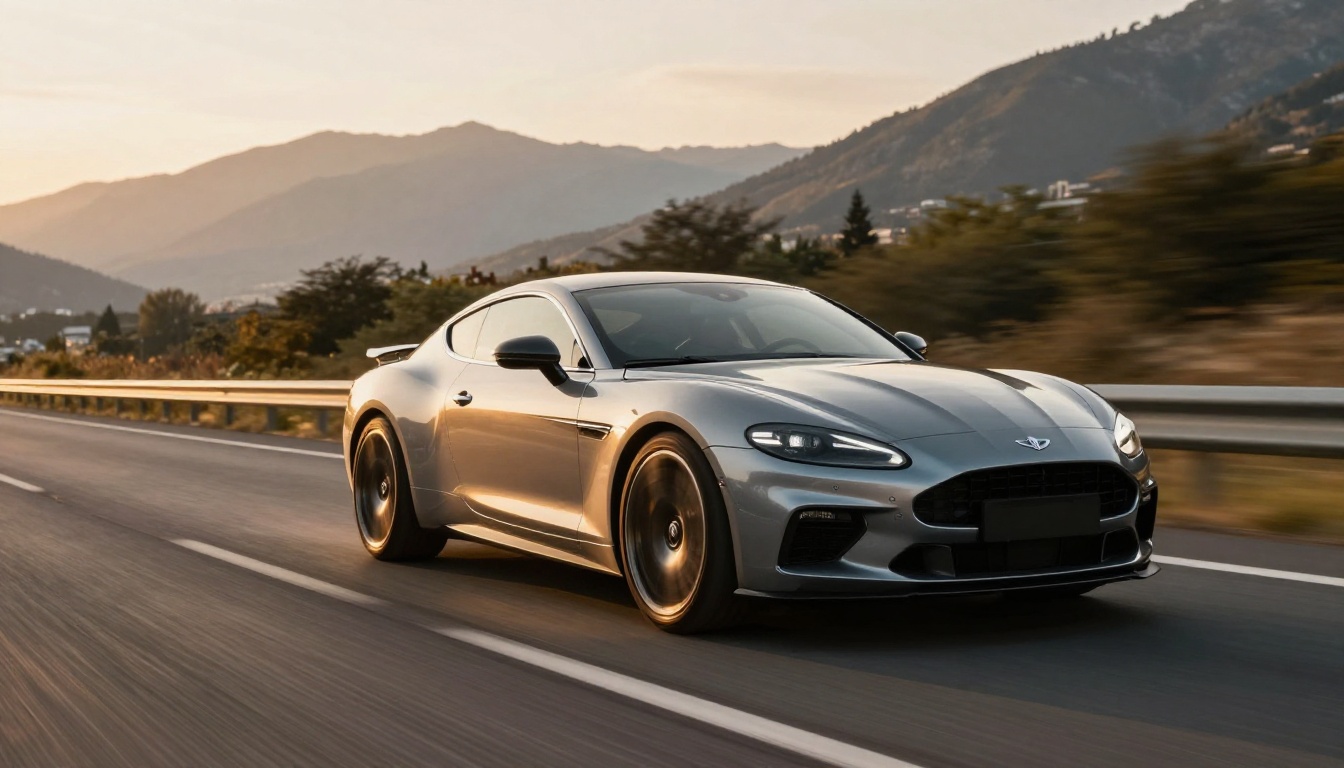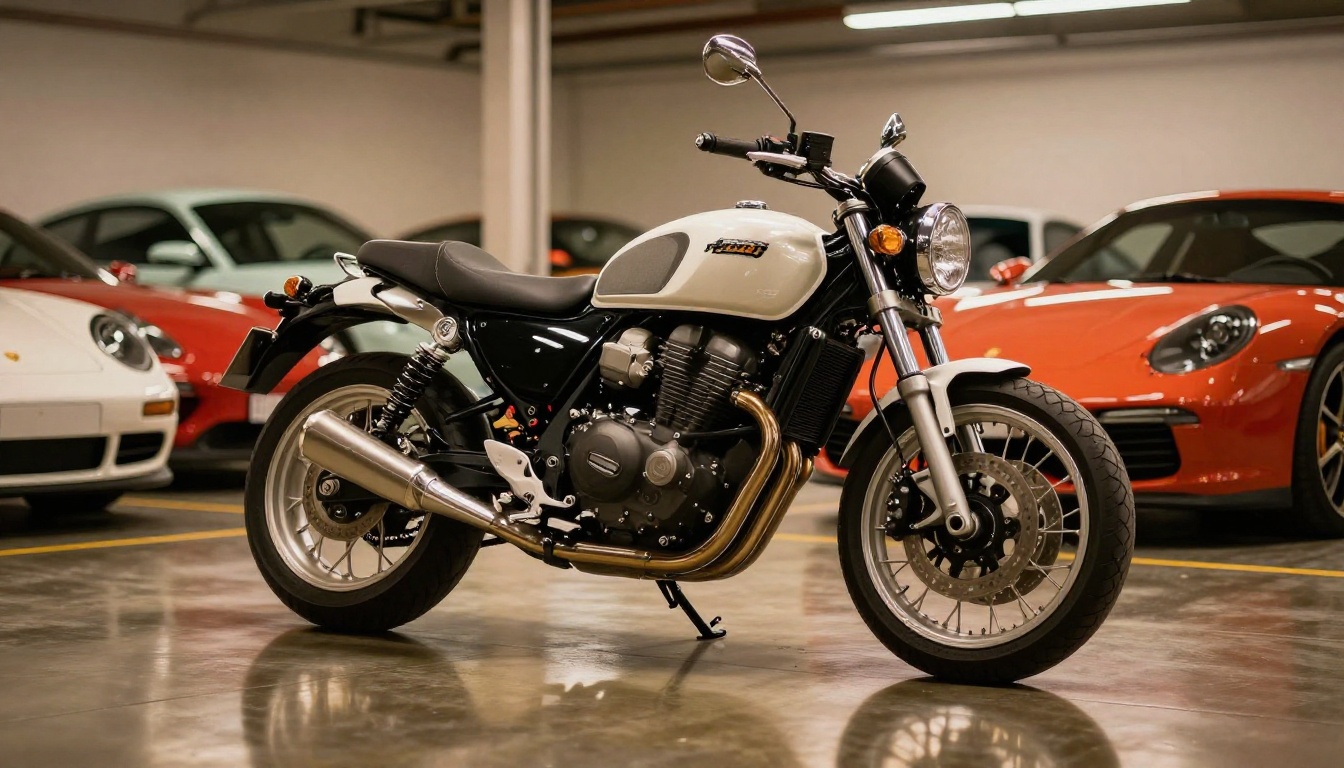
Most car enthusiasts arrive at the same realization eventually. The GT is dialed in, the SUV handles school runs and ski trips, and the weekend car sits in the garage looking magnificent. Something is still missing. Not more horsepower or more cylinders — a fundamentally different relationship with the road. That is the case for a motorcycle.
The argument is not that two wheels replace four. A motorcycle cannot haul luggage to the airport or shelter passengers from rain. But it offers something no car at any price point can replicate: an unmediated connection to speed, lean angle, and road surface that makes a 45-mph canyon road feel as engaging as a 150-mph straightaway in a supercar. For collectors who already own a proper grand tourer and a performance SUV, the right motorcycle fills the last gap in a driving life.
The Learning Curve Nobody Skips
Before specs and shortlists, a frank admission: motorcycling carries risk that no amount of money eliminates. A Ducati Panigale V4 S does not come with crumple zones, side-impact airbags, or traction control that can override physics at lean. Rider training is non-negotiable, and the Motorcycle Safety Foundation's advanced courses — or the European equivalent at facilities like the BMW Performance Center — are where experienced car drivers should start, not on YouTube.
The transition from four wheels to two typically takes 6-12 months of regular riding before confidence becomes genuine competence. Owners who track cars report that the mental model translates surprisingly well — lines, braking zones, and throttle discipline all carry over — but the physical demands are entirely different. A full day on a sport bike is as taxing as a half-marathon.
Six Machines Worth Considering
The motorcycles below span four distinct categories: grand touring, modern classic, track-adjacent sport, and heritage collectible. Each fills a different role, and the right choice depends on how — and how often — the bike will be ridden.
The Grand Tourer: BMW R 1250 RT
The is the motorcycle equivalent of a long-distance GT car. Its 1,254cc boxer twin produces 136 hp and, more importantly, 105 lb-ft of torque that arrives low and stays flat across the rev range. Heated grips, a powered windscreen, cruise control, and panniers that swallow a weekend bag per side make 500-mile days not just possible but comfortable. At roughly $20,000, it is also the most rational machine on this list.
The trade-off is weight. At 604 lbs wet, the RT demands respect in parking lots and tight U-turns. Riders coming from sports cars may find it initially unwieldy at walking speed. But on a motorway or a sweeping A-road, it covers ground with a composure that embarrasses machines costing twice as much.
The Sport Tourer: Ducati Multistrada V4 RS
Where the BMW prioritizes comfort, the prioritizes performance wrapped in a touring silhouette. Its 1,158cc V4 Granturismo engine — derived from the Panigale's Desmosedici Stradale — produces 180 hp, and the semi-active Ohlins suspension adapts to road conditions in real time. Radar-assisted cruise control maintains following distance automatically.
At $36,000, the Multistrada V4 RS sits at the top of the adventure-sport segment. Ducati positions it as a track-capable tourer, and dyno results confirm the claim — but the service intervals and valve-check costs reflect Italian engineering at its most demanding. Expect $800-1,200 for a major service versus $400-600 for the BMW.
The Modern Classic: Triumph Speed Twin 1200
Not every motorcycle needs to make a technological statement. The exists for riders who want clean lines, a manageable 100 hp, and a riding position that works for an hour-long blast through back roads without requiring a chiropractor afterward. At $13,000, it costs less than a set of carbon-ceramic brakes on a Porsche.
The Speed Twin's 1,200cc parallel twin has a distinctive character — a low, purposeful exhaust note and enough midrange torque to make overtakes effortless without ever touching the redline. The absence of electronic rider aids beyond ABS and traction control is deliberate. This is a motorcycle that rewards smooth inputs over digital intervention, and for experienced riders, that directness is the entire point.
The Track Weapon: Ducati Panigale V4 S
The Panigale V4 S is the motorcycle that most closely mirrors the supercar experience: extreme performance, aggressive ergonomics, and a price tag that reflects its racing pedigree. The 1,103cc Desmosedici Stradale V4 produces 214 hp, channeled through a quickshifter and Ohlins Smart EC 2.0 semi-active suspension that adjusts damping 300 times per second.
At $28,000, the Panigale V4 S delivers a power-to-weight ratio that no road car under $500,000 can match. The caveat: this motorcycle is not designed for commuting, touring, or casual weekend rides. Its clip-on handlebars put significant weight on the wrists, and the engine generates enough heat in traffic to become genuinely uncomfortable. It exists for canyon roads and track days. Owners who accept that limitation find nothing else compares.
The Heritage Play: Norton Commando 961
Norton's history is turbulent — receivership, ownership changes, and quality inconsistencies that would sink most brands. But the Commando 961, now produced under TVS Motor Company's ownership, represents something rare: a genuine British parallel twin with hand-finished details, a 961cc air-cooled engine producing 80 hp, and the kind of visual presence that stops conversations at a Cars and Coffee meet.
At approximately $18,000 (pricing varies by market and specification), the Commando 961 is not the fastest, most comfortable, or most reliable motorcycle on this list. It is, however, the one most likely to appreciate in value. Early production models from the pre-TVS era already command premiums of 30-50% over their original retail prices, and limited production numbers — a few hundred per year — suggest this trend will continue.
The Collector's Statement: Arch KRGT-1
Co-founded by Keanu Reeves and Gard Hollinger, Arch Motorcycle builds roughly 50 to 80 machines per year, each one a hand-assembled American V-twin cruiser with a 2,032cc S&S engine producing 122 hp and 130 lb-ft of torque. Every KRGT-1 is built to the buyer's measurements — seat height, handlebar reach, and peg position are all adjusted before fabrication begins. This is one of the few motorcycles where the word bespoke applies literally.
At $85,000, the KRGT-1 occupies a price bracket shared with entry-level Porsches. The justification is not performance — any Ducati on this list is faster — but craft, exclusivity, and the unlikely combination of a Hollywood origin story and genuine engineering substance. Depreciation data is limited because so few trade hands on the secondary market, but the machines that do appear tend to sell at or above their original price.
The Numbers
Purchase price alone tells an incomplete story. The chart below shows what each machine costs to acquire, followed by how much of that investment remains after three years of typical ownership.
Purchase Price (MSRP)
Estimated 3-Year Depreciation
The Arch and Norton hold value best because scarcity drives their secondary markets. The BMW and Triumph depreciate in line with their Japanese competitors — roughly 30-35% over three years — while the Ducatis fall somewhere between, cushioned by strong brand loyalty but hurt by frequent model-year updates that push used prices down faster. Anyone familiar with how depreciation works in the car world will recognize the same dynamics at play.
Ownership Comparison
| Model | MSRP | Engine | HP | Weight (wet) | Annual Insurance | Major Service Cost |
|---|---|---|---|---|---|---|
| Triumph Speed Twin 1200 | $13,000 | 1,200cc P-Twin | 100 | 434 lbs | $600-900 | $300-500 |
| Norton Commando 961 | $18,000 | 961cc P-Twin | 80 | 419 lbs | $700-1,100 | $400-700 |
| BMW R 1250 RT | $20,000 | 1,254cc Boxer | 136 | 604 lbs | $700-1,000 | $400-600 |
| Ducati Panigale V4 S | $28,000 | 1,103cc V4 | 214 | 436 lbs | $1,200-2,000 | $800-1,400 |
| Ducati Multistrada V4 RS | $36,000 | 1,158cc V4 | 180 | 481 lbs | $1,000-1,600 | $800-1,200 |
| Arch KRGT-1 | $85,000 | 2,032cc V-Twin | 122 | 534 lbs | $1,500-2,500 | $500-800 |
Insurance, Storage, and the Costs Nobody Mentions
Motorcycle insurance for riders over 30 with clean driving records is surprisingly affordable relative to the machines' performance — except at the extremes. A Triumph Speed Twin runs $600-900 annually in most U.S. markets. A Ducati Panigale V4 S, classified as a supersport, can reach $2,000 or more depending on the state and rider history. For context, insuring a Porsche 911 GT3 costs roughly the same as insuring the Panigale, despite the Porsche costing three times as much.
Storage is simpler than car storage but not negligible. A motorcycle needs a climate-controlled space, a quality battery tender (the Optimate 4 or CTEK MXS 5.0 are industry standards), and ideally a paddock stand to keep tires off cold concrete during winter. For owners who already maintain a proper car storage setup, adding a motorcycle requires minimal additional infrastructure — one more power outlet and roughly 30 square feet of floor space.
Tires deserve special mention. High-performance motorcycle tires last 3,000-6,000 miles depending on riding style and compound. A set of Pirelli Diablo Rosso IVs for the Panigale runs $350-400 installed, and aggressive riders will go through two or three sets per season. Budget $1,000-1,500 annually for tires alone on a sport bike, or $400-600 for a touring machine ridden at a more moderate pace.
Which One, Then
The answer depends on what the existing collection lacks. If long-distance travel is the goal — and the right roads make all the difference — the BMW R 1250 RT or Ducati Multistrada V4 RS will cover continents in comfort. If the garage already holds a GT car that handles distance duties, the Triumph Speed Twin 1200 offers the purest riding experience for the least commitment, financial or otherwise.
The Panigale V4 S is for riders who already know they want a track-capable sport bike and are willing to accept the ergonomic trade-offs. The Norton and Arch occupy different corners of the collector space — one is a heritage investment with genuine historical weight, the other is a modern statement piece built in numbers small enough to ensure it stays distinctive.
A motorcycle does not improve a car collection. It changes the owner's relationship with driving entirely — and once that shift happens, the garage door opens for a different reason.
The practical advice: start with the Speed Twin or the BMW. Ride for a full season. The second motorcycle — and there will almost certainly be a second — can be chosen with the confidence that only comes from knowing exactly what kind of rider you are.