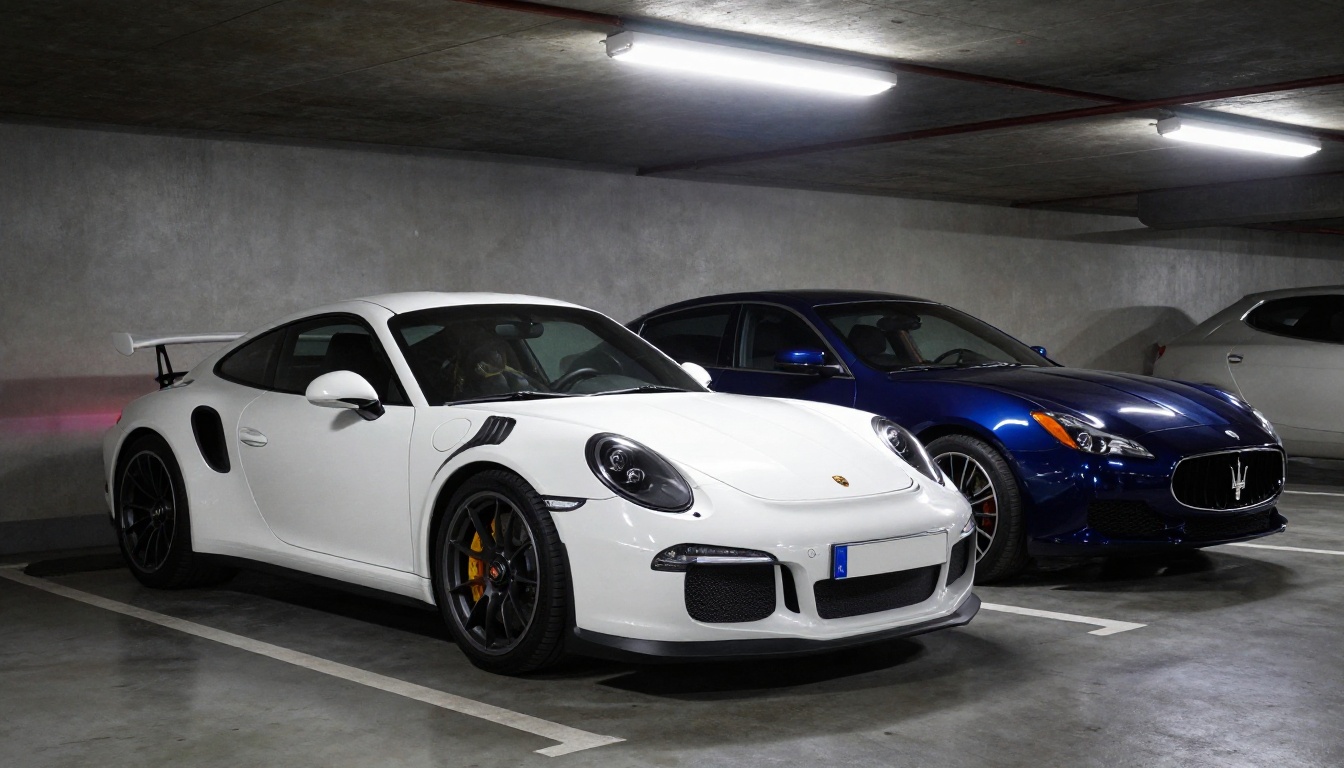
A new Mercedes S-Class loses roughly $40,000 in value during the time it takes you to drive it home and put it in the garage. That is not a metaphor. The moment a luxury car becomes "pre-owned," the market reprices it with a severity that would make a stock trader wince. Three years later, many six-figure cars trade for half their original sticker price.
But not all of them. Some luxury cars hold value with a stubbornness that defies the category. A few actually appreciate. Understanding the pattern is not just an intellectual exercise. It is the difference between spending $150,000 on a car that costs you $20,000 per year to own and spending $150,000 on a car that costs you $3,000 per year to own. Both drive well. Only one respects your money.
The Numbers: Three-Year Depreciation by Model
The data below uses average transaction prices at purchase and current market values for three-year-old examples with typical mileage (30,000-45,000 km). Sources include Hagerty, AutoTrader wholesale data, and dealer auction results through early 2026.
Three-Year Depreciation: The Full Picture
| Car | New Price | Value at 3 Years | Depreciation | Annual Cost to Own |
|---|---|---|---|---|
| Mercedes S 580 | $118,000 | $62,000 | -47% | $18,700/yr |
| BMW 760i xDrive | $115,000 | $58,000 | -50% | $19,000/yr |
| Bentley Continental GT | $235,000 | $138,000 | -41% | $32,300/yr |
| Maserati Quattroporte | $125,000 | $52,000 | -58% | $24,300/yr |
| Range Rover Autobiography | $145,000 | $78,000 | -46% | $22,300/yr |
| Porsche 911 Carrera S | $135,000 | $115,000 | -15% | $6,700/yr |
| Porsche Cayenne Turbo GT | $195,000 | $162,000 | -17% | $11,000/yr |
| Ferrari Roma | $245,000 | $220,000 | -10% | $8,300/yr |
| Porsche 718 Cayman GT4 | $108,000 | $105,000 | -3% | $1,000/yr |
| Toyota Land Cruiser | $90,000 | $82,000 | -9% | $2,700/yr |
| Mercedes G 63 AMG | $185,000 | $165,000 | -11% | $6,700/yr |
The pattern is immediately clear. Large luxury sedans depreciate catastrophically. Sports cars from Porsche and Ferrari barely move. The Maserati Quattroporte loses 58% of its value in three years, which means a $125,000 car costs its owner $24,300 per year just in depreciation, before fuel, insurance, or maintenance. A Porsche 718 Cayman GT4 costs its owner roughly $1,000 per year in depreciation. Both are enjoyable to drive. One is a financial event. The other is essentially free.
Why Sedans Collapse and Sports Cars Hold
The explanation is mechanical and psychological. Luxury sedans compete with each other on technology: screens, sensors, driver assistance, connectivity. Technology ages faster than engineering. A three-year-old S-Class has a three-year-old infotainment system, three-year-old driver assistance, and a general air of yesterday. The new model sitting in the showroom has a better screen and a longer feature list, which makes the older car feel dated in ways that a purely mechanical car never does.
A Porsche 911 competes on driving dynamics. Driving dynamics do not have firmware updates. A three-year-old 911 drives identically to the day it left the factory, and the flat-six engine will sound the same in thirty years. The car is not a technology platform; it is a mechanical object, and mechanical objects age on a different timeline.
Supply control matters enormously. Ferrari famously produces fewer cars than the market demands. You cannot walk into a Ferrari dealer and buy a Roma. You must have a relationship, a purchase history, and patience. This constraint on new supply props up used prices because buyers who cannot get a new allocation turn to the secondary market. Porsche is less restrictive but still manages demand on GT models carefully. BMW and Mercedes face no such constraint. They will sell you as many 7-Series as you want, and the secondary market prices reflect that abundance.
The single most reliable predictor of resale value is not the badge, the horsepower, or the leather. It is whether the manufacturer will sell one to anyone who asks.
The Exceptions Worth Knowing
The Mercedes G-Class defies its own brand's depreciation curve. While the S-Class and E-Class shed value like leaves in autumn, the G 63 holds at roughly 89% after three years. The explanation is cultural rather than mechanical: the G-Class has become a status symbol with demand that consistently exceeds the production capacity of the Graz factory in Austria. It functions more like a Porsche GT car in the market than like a Mercedes sedan.
The Toyota Land Cruiser appears on a luxury depreciation list because it has become one. The 2024 Land Cruiser returned to a simpler, more utilitarian formula, and the market responded by trading used examples at or above MSRP for the first eighteen months. At $90,000, it is not cheap. At 91% value retention after three years, it is the most cost-effective vehicle on this list by a significant margin.
How to Buy Smart at Every Price Point
Depreciation Strategy by Budget
| Budget | Buy New | Buy Used (3 Years Old) | Savings |
|---|---|---|---|
| $80,000-$100,000 | Porsche 718 Cayman GT4 | BMW 760i xDrive (was $115,000) | $57,000 buying used BMW |
| $100,000-$150,000 | Porsche 911 Carrera S | Bentley Continental GT (was $235,000) | $97,000 buying used Bentley |
| $150,000-$200,000 | Mercedes G 63 AMG | Ferrari Roma (was $245,000) | $25,000 buying used Ferrari |
| $200,000+ | Ferrari Roma (allocation permitting) | Two Porsche GT4s and a Land Cruiser | You win either way |
The savviest buyers in the luxury car market do one of two things. They either buy new from brands that control supply (Porsche GT models, Ferrari, certain Land Rover special editions) and hold the value themselves. Or they buy three-year-old examples of cars that depreciate heavily (S-Class, 7-Series, Bentley Continental GT) and let the original owner absorb the loss.
A three-year-old Bentley Continental GT for $138,000 is one of the best cars available at any price. It has a 6.0-litre W12, a cabin trimmed in leather and wood that no competitor matches, and a ride quality that makes long motorway journeys feel like a form of rest. The original owner paid $235,000. You pay $138,000. The car does not know the difference.
Whatever you buy, understand this: the purchase price of a car is not what it costs. What it costs is the purchase price minus what you sell it for, divided by the years you owned it. By that measure, a $135,000 Porsche 911 that you sell for $115,000 after three years cost you $6,700 per year. A $52,000 BMW 3-Series that you sell for $28,000 after three years cost you $8,000 per year. The Porsche was cheaper to own than the BMW. Price is what you pay. Cost is what you lose.
Looking for luxury brands, stores, and services? Browse our curated directory: