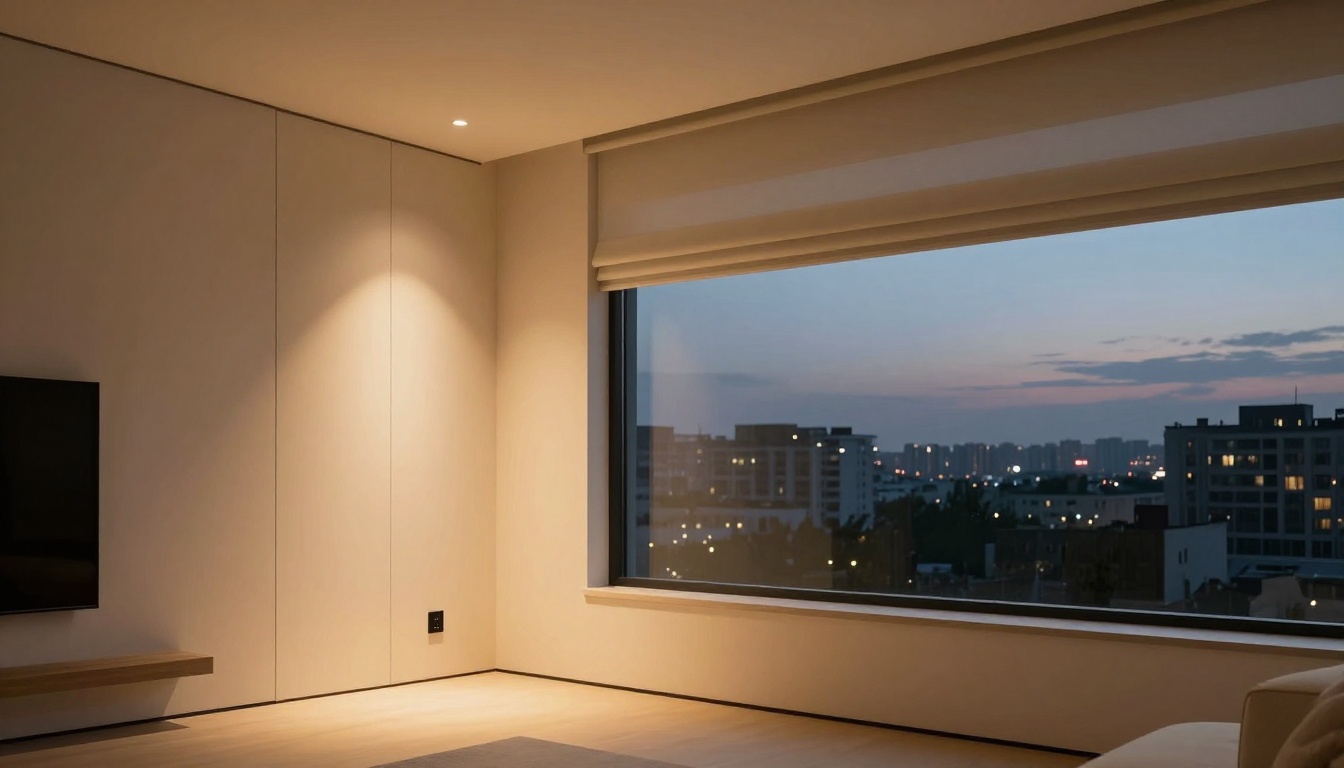
The light switch on the wall of a well-designed Crestron home looks exactly like any other light switch. That is the point. Architectural-grade home automation exists to disappear — no glowing pucks on the counter, no voice assistant misinterpreting dinner conversation, no app that crashes mid-party. The technology works because nobody thinks about it.
This tier of home automation starts at roughly $50,000 for a modest home and climbs past $200,000 for a large residence with full AV, climate, security, and motorized shade integration. The gap between consumer smart home gear and these systems is not incremental. It is structural — different hardware, different wiring, different business model. And the trade-offs are real: ecosystem lock-in, dealer dependency, and ongoing costs that manufacturers rarely advertise.
What Architectural-Grade Actually Means
Consumer systems — Google Home, Amazon Alexa, Apple HomeKit — are designed for self-installation. Buy a smart bulb, download an app, connect to Wi-Fi. It works until it does not, which is often enough to be maddening in a home with forty zones of lighting and a dozen automated shades. Wi-Fi congestion, cloud dependency, and firmware updates that break automations are features of the consumer tier, not bugs.
Architectural-grade systems from Crestron, Savant, Control4, and Lutron take a fundamentally different approach. Hardwired connections replace Wi-Fi wherever possible. Local processors handle automation logic without cloud dependency. Dedicated keypads replace tablet-mounted controls. The system runs on its own network backbone, isolated from the household internet traffic that consumer devices compete for.
The distinction matters most during failure. When a consumer hub loses its internet connection, half the house stops responding. When a Crestron processor loses internet, the lights, shades, and climate still work — only remote access and firmware updates are affected.
The Four Major Platforms Compared
Four companies dominate the architectural-grade market. Each has a distinct philosophy, dealer network, and cost structure. None is perfect.
Crestron
The platform is the legacy heavyweight — the system architects and custom integrators have specified for two decades. Crestron hardware is overbuilt by consumer standards: rack-mounted processors, dedicated control networks, and keypads that cost $300-$800 each. Programming is done in proprietary software by certified dealers, which means the homeowner cannot tweak a scene without calling their integrator.
That dependency is Crestron's greatest strength and most significant weakness. A well-programmed Crestron system is remarkably stable. A poorly programmed one is a nightmare that only the original dealer can untangle. The quality of the installation depends entirely on the dealer, and the gap between a good Crestron dealer and a mediocre one is vast.
Savant
The platform runs on Apple infrastructure — Mac Mini processors, iOS-based interfaces — and it shows. The user interface is the most polished in the category, with a home screen that displays lighting scenes, climate, music, and security in a single view. Savant acquired GE Lighting in 2021, giving it a vertically integrated lighting line (Savant by GE) that simplifies spec sheets.
The downside is cost. Savant systems typically run 15-25% more than equivalent Crestron or Control4 installations, partly because Savant positions itself as a premium brand and partly because the dealer network is smaller, which reduces competitive pressure. The Apple-based architecture also introduces a dependency: when Apple discontinues a Mac Mini generation, older processors need replacement sooner than a purpose-built controller would.
Control4 (now Snap One)
The platform, now under the Snap One umbrella, occupies the middle ground. It was designed from the start for the custom-install channel but at a lower price point than Crestron. Control4 systems are typically 30-40% less expensive than Crestron for comparable scope, and the programming interface is more standardized, which means switching dealers is less painful.
The trade-off is polish. Control4 keypads and touchscreens do not feel as refined as Crestron's or Savant's. The user interface is functional but dated compared to Savant's. For a home where the automation needs to be invisible — where the keypad on the wall should look like it belongs in a $5 million interior — Control4 hardware can feel like a compromise.
Lutron HomeWorks QSX
The system deserves separate mention because it does one thing exceptionally well: lighting and shade control. Lutron does not try to be a full automation platform. There is no native AV switching, no security integration, no intercom. HomeWorks QSX handles lights, motorized shades, and temperature control with a reliability that the full-suite competitors struggle to match.
Many high-end homes run Lutron for lighting and shades alongside Crestron or Savant for AV and whole-home integration. This layered approach adds cost and complexity but eliminates the weakest link in most automation systems — the lighting controls that get used fifty times a day.
Architectural-Grade Smart Home Platforms Compared
| Feature | Crestron | Savant | Control4 | Lutron HomeWorks |
|---|---|---|---|---|
| Primary Strength | Deepest integration | Best user interface | Value for scope | Lighting reliability |
| Typical System Cost (3,000 sq ft) | $75,000-$120,000 | $90,000-$140,000 | $50,000-$80,000 | $30,000-$55,000 |
| Typical System Cost (5,000 sq ft) | $120,000-$180,000 | $140,000-$210,000 | $80,000-$130,000 | $50,000-$85,000 |
| Typical System Cost (8,000+ sq ft) | $180,000-$300,000+ | $200,000-$350,000+ | $120,000-$200,000 | $75,000-$130,000 |
| Dealer Dependency | High | High | Moderate | Moderate |
| Cloud Required | No (local processing) | No (local processing) | Partial | No |
| AV Integration | Comprehensive | Comprehensive | Good | None (pair with others) |
| Shade Control | Via Lutron or native | Savant shades or Lutron | Via Lutron or native | Industry-leading |
| Annual Maintenance | $2,000-$5,000 | $2,000-$6,000 | $1,000-$3,000 | $500-$1,500 |
What the Money Actually Buys
A $100,000 whole-home automation budget for a 4,000-square-foot residence typically breaks down into five categories. The proportions vary by platform, but the structure is consistent.
Typical Budget Breakdown: $100K Whole-Home System
| Category | Percentage | Approximate Cost | What It Covers |
|---|---|---|---|
| Lighting Control | 25-30% | $25,000-$30,000 | Keypads, dimmers, relay panels, shade motors |
| AV Distribution | 20-25% | $20,000-$25,000 | Matrix switches, amplifiers, in-wall/ceiling speakers |
| Control Infrastructure | 15-20% | $15,000-$20,000 | Processors, network switches, rack equipment |
| Labor & Programming | 20-25% | $20,000-$25,000 | Wiring, installation, system programming, commissioning |
| Touchscreens & Interfaces | 5-10% | $5,000-$10,000 | Wall-mounted panels, handheld remotes, app licensing |
The labor and programming line is where budgets most often surprise homeowners. A Crestron system for a large home can require 200-400 hours of programming time at $125-$200 per hour. That is $25,000-$80,000 just to write the code that makes everything work together — before anyone touches a wire.
The hardware is the minority of the cost. Programming, wiring, and commissioning typically account for 40-50% of the total budget. Any integrator who quotes hardware costs alone is hiding the real number.
System Costs by Home Size
The relationship between home size and automation cost is not linear. A 5,000-square-foot home does not cost twice as much as a 2,500-square-foot home — it costs roughly 1.5 times as much, because the core infrastructure (processor, network backbone, rack) is a fixed cost. What scales is zones: more rooms mean more keypads, more speakers, more shade motors, more programming hours.
Full System Cost by Home Size
These figures assume full integration: lighting, shades, multi-room audio, distributed video, climate, and security monitoring. Stripping out AV distribution — using standalone sound bars and individual room solutions instead — can reduce the total by 20-25%.
The Installation Timeline Nobody Warns You About
Architectural-grade automation is not a weekend project. The process begins during the architectural design phase — ideally before walls are framed — and continues through final commissioning weeks after the family has moved in.
Typical Installation Timeline
Total elapsed time from design to handover: 20-30 weeks for new construction, assuming the project stays on schedule. Retrofit installations — threading wire through finished walls — add 30-50% to both cost and timeline. Low-voltage contractors universally report that retrofit Crestron and Savant work is the most margin-compressed job they take, because the wiring labor eats the budget.
The critical mistake is starting late. A system designed after drywall is hung means surface-mounted conduit, wireless bridges in place of hardwired connections, and compromises that degrade reliability for the life of the home. The best integrators will walk away from a project where the builder refuses to coordinate pre-wire timing.
The Costs Nobody Mentions
The sticker price of the system is the beginning, not the end. Three ongoing costs catch homeowners off guard.
Annual Maintenance Contracts
Most dealers offer (and strongly encourage) annual service contracts ranging from $1,500 to $6,000 per year. These cover firmware updates, remote troubleshooting, and a set number of on-site service visits. Without a contract, a single service call runs $150-$300 per hour with a typical two-hour minimum. Systems this complex need at least one firmware update cycle per year, and something will inevitably drift — a shade motor that loses its limits, a lighting scene that stops triggering correctly, a touchscreen that freezes after an update.
Software and Licensing Fees
Savant charges an annual cloud services fee for remote access and monitoring. Crestron's .AV Framework requires a license per room for its latest AV-over-IP distribution. Control4's 4Sight remote access service runs $100 per year — modest, but it is the gateway to remote troubleshooting. These recurring costs are rarely disclosed during the initial sales conversation.
Technology Refresh Cycles
Processors, touchscreens, and network hardware have a useful life of 7-12 years before they fall behind current integration capabilities or lose manufacturer support. A mid-life refresh — new processors, updated touchscreens, reprogramming for the new platform — typically costs 30-40% of the original system price. For a $150,000 installation, that is $45,000-$60,000 around year eight.
The Lock-In Problem
Every architectural-grade system creates vendor lock-in. The degree varies, but the dynamic is the same: the programming that makes the system work is proprietary, the keypads are platform-specific, and switching platforms means replacing most of the visible hardware and all of the software.
Crestron lock-in is the most severe. The programming language (SIMPL and SIMPL#) is proprietary. The programming files are often password-protected by the installing dealer. Horror stories of homeowners held hostage by their integrator — unable to change a lighting scene without paying for a service call — are common enough to have spawned a secondary market of Crestron programmers who specialize in taking over orphaned systems.
Control4 mitigates this somewhat through its standardized programming environment. A new Control4 dealer can pick up an existing system more easily than a new Crestron dealer can. Lutron HomeWorks falls in between — the programming is proprietary but simpler, and the dealer network is large enough that finding a replacement technician is straightforward.
Before signing any contract, confirm in writing that the programming files will be provided to the homeowner upon project completion. Any integrator who refuses this is a red flag.
What a Good Integrator Looks Like
The quality of an architectural-grade smart home has more to do with the integrator than the platform. A mediocre Crestron installation is worse than a well-executed Control4 one. Here is what separates serious firms from glorified electricians.
- Manufacturer certifications at the highest tier — Crestron Masters, Savant Certified, Lutron HomeWorks QSX. These require ongoing training and minimum project volumes.
- A dedicated programmer on staff — not a subcontractor, not the same person pulling wire. Programming is specialized work. Firms that treat it as a side task deliver systems that feel unfinished.
- A proper showroom — not a conference room with a touchscreen, but a functioning demo space where lighting scenes, shade automations, and AV distribution can be experienced. The best integrators in major metros operate showrooms that function as working living rooms.
- References from architects and interior designers — the professionals who coordinate with integrators on every high-end project. If the architects in your market have not heard of the firm, reconsider.
- Transparent pricing — a detailed line-item proposal, not a single lump sum. Hardware, labor, programming, commissioning, and annual maintenance should each be broken out.
CEDIA (the Custom Electronics Design and Installation Association) maintains a directory of certified firms, but certification alone does not guarantee quality. The best due diligence is calling three to five completed clients and asking one question: when something breaks, how quickly does the integrator respond?
When Not to Go Architectural-Grade
Not every home justifies a six-figure automation system. Several scenarios favor the consumer tier or a lighter approach.
Rental properties and homes that will be sold within five years rarely recoup automation investment. Unlike a well-executed bathroom renovation, whole-home automation adds limited resale value because buyers either do not understand the system, do not trust it, or plan to rip it out and install their own.
Homes under 2,500 square feet hit diminishing returns quickly. The fixed infrastructure costs — processor, rack, network backbone — do not scale down proportionally, which means the per-room cost in a smaller home is disproportionately high.
Homeowners who want to tinker should look at Home Assistant, Hubitat, or Apple Home with Thread-enabled devices. These platforms sacrifice the polish and reliability of architectural-grade systems but offer flexibility and direct control that the dealer-dependent platforms cannot match.
The Integration That Matters Most
Ask any experienced integrator what single system justifies the cost of architectural-grade automation, and the answer is almost always the same: motorized shading with automated lighting scenes.
Shades that track the sun — adjusting throughout the day based on orientation, time, and season — eliminate glare, protect furnishings from UV damage, and manage solar heat gain in a way that reduces HVAC load by 10-15%. Paired with tunable lighting that shifts color temperature from warm in the evening to cool in the morning, it creates a home environment that responds to natural light cycles without anyone touching a switch.
The rest — multi-room audio distribution, video matrix switching, security camera integration — adds convenience, but shading and lighting deliver the only genuinely transformative daily experience. If the budget forces prioritization, start there.
The Honest Recommendation
For new construction with a budget above $75,000, Lutron HomeWorks QSX for lighting and shades combined with Crestron or Savant for AV and whole-home control is the approach that most top-tier integrators now recommend. It pairs the most reliable lighting platform with the deepest integration capabilities, at the cost of running two parallel systems.
For homes where budget matters more than brand prestige, Control4 handles the full scope at 30-40% less than Crestron or Savant, with the added benefit of easier dealer transitions down the line. The hardware does not feel as refined on the wall, but behind the wall — where reliability actually lives — Control4 has closed the gap considerably.
Whichever platform enters the home, the technology should be the last thing anyone notices. The lights come on at the right level, the shades follow the sun, and the music fills the room without a visible speaker. That absence of friction — the feeling that the house simply knows — is what $100,000 or more in automation is actually buying. Everything else is a spec sheet.