Most People Are Listening to Music Through a Straw
A pair of AirPods or a Sonos soundbar connected to Spotify delivers roughly the same fidelity as watching a sunset through a dirty window. You get the general idea. You miss almost everything that matters. The warmth of a cello section, the spatial separation between instruments in an orchestra, the decay of a piano note hanging in a room — all of it compressed, flattened, and piped through drivers designed for convenience, not accuracy.
The good news: building a home audio system that reveals what your music actually sounds like is more accessible than the audiophile community wants you to believe. The bad news: it is also easier to waste money on this than almost any other home investment. The hi-fi world is thick with pseudoscience, overpriced cables, and gear that looks impressive but sounds identical to something at half the price.
This is a guide to three tiers of home audio — roughly $5,000, $15,000, and $50,000 and above — with specific recommendations at each level. More importantly, it is a guide to what actually matters for sound quality, what is marketing, and where diminishing returns hit hard.
The Signal Chain: Understanding What You Are Paying For
Every home audio system is a chain with four links: source, DAC, amplifier, and speakers. The source is where your music lives (Spotify, Tidal, vinyl, CD). The DAC (digital-to-analog converter) translates digital files into an analog signal. The amplifier powers the speakers. The speakers move air in your room.
The single most important link in this chain is the speakers. They account for roughly 60-70% of what you hear. The room itself — its dimensions, furnishings, and acoustic treatment — accounts for another 20%. The DAC and amplifier together account for the remaining 10-20%. This ratio is worth memorizing, because the hi-fi industry spends most of its marketing budget convincing you otherwise.
Speaker cables that cost $500 per meter will not sound meaningfully different from well-made cables at $5 per meter. A $3,000 DAC will not sound dramatically different from a $300 DAC, assuming both are competently designed. But a $3,000 speaker will sound radically different from a $300 speaker, and placing those speakers in the right position in a treated room will change them again.
Tier One: $5,000 — The System That Ruins Everything Else
At this level, you are buying your first serious hi-fi system. The goal is accurate reproduction with enough detail to hear things in familiar recordings you have never noticed before. This is the tier where most people realize they have been missing half their music.
Start with the speakers. The is the benchmark at this price point, and has been since the original LS50 launched over a decade ago. The Meta version uses a metamaterial absorption technology in its Uni-Q driver that reduces distortion in ways you can actually hear — specifically, a cleaner midrange and more precise stereo imaging. At around $1,600 per pair, they are the foundation of this system.
For amplification, the at roughly $1,300 is a strong choice. It delivers 80 watts per channel into 8 ohms, which is more than enough for the LS50 Metas in a typical living room. It also includes a competent built-in DAC, which at this budget tier saves you from buying a separate unit. The alternative is the Marantz Model 40n, which adds streaming capability and a warmer tonal character, though at a higher price.
Spend the remaining budget on a dedicated streamer — the Bluesound Node at around $600 handles Spotify, Tidal, Qobuz, and Roon — and decent speaker stands (roughly $200-300). The stands are not optional. Bookshelf speakers on a bookshelf sound measurably worse than the same speakers at ear height on rigid stands, positioned at least two feet from the rear wall.
Tier One: ~$5,000 System
| Component | Recommendation | Approximate Price |
|---|---|---|
| Speakers | KEF LS50 Meta | $1,600 |
| Integrated Amplifier | Cambridge Audio CXA81 | $1,300 |
| Streamer | Bluesound Node | $600 |
| Speaker Stands | Atacama Nexus 6i or similar | $250 |
| Speaker Cable | QED XT25 (3m pair) | $80 |
| Interconnects | AudioQuest Evergreen RCA | $60 |
| Acoustic Panels (2-4) | GIK Acoustics 242 | $500-700 |
| Total | $4,500-4,700 |
The acoustic panels in that table are not decorative. Two to four panels at first reflection points — the spots on your side walls where sound bounces from speaker to listening position — will do more for your system than any single component upgrade. GIK Acoustics makes panels that look acceptable in a living room, not just a recording studio. This is where most beginners leave money on the table.
Tier Two: $15,000 — Where Diminishing Returns Begin (But Are Still Worth It)
The jump from $5,000 to $15,000 should go almost entirely into better speakers and room treatment. This is the point where floorstanding speakers make sense, and where a separate DAC starts to matter.
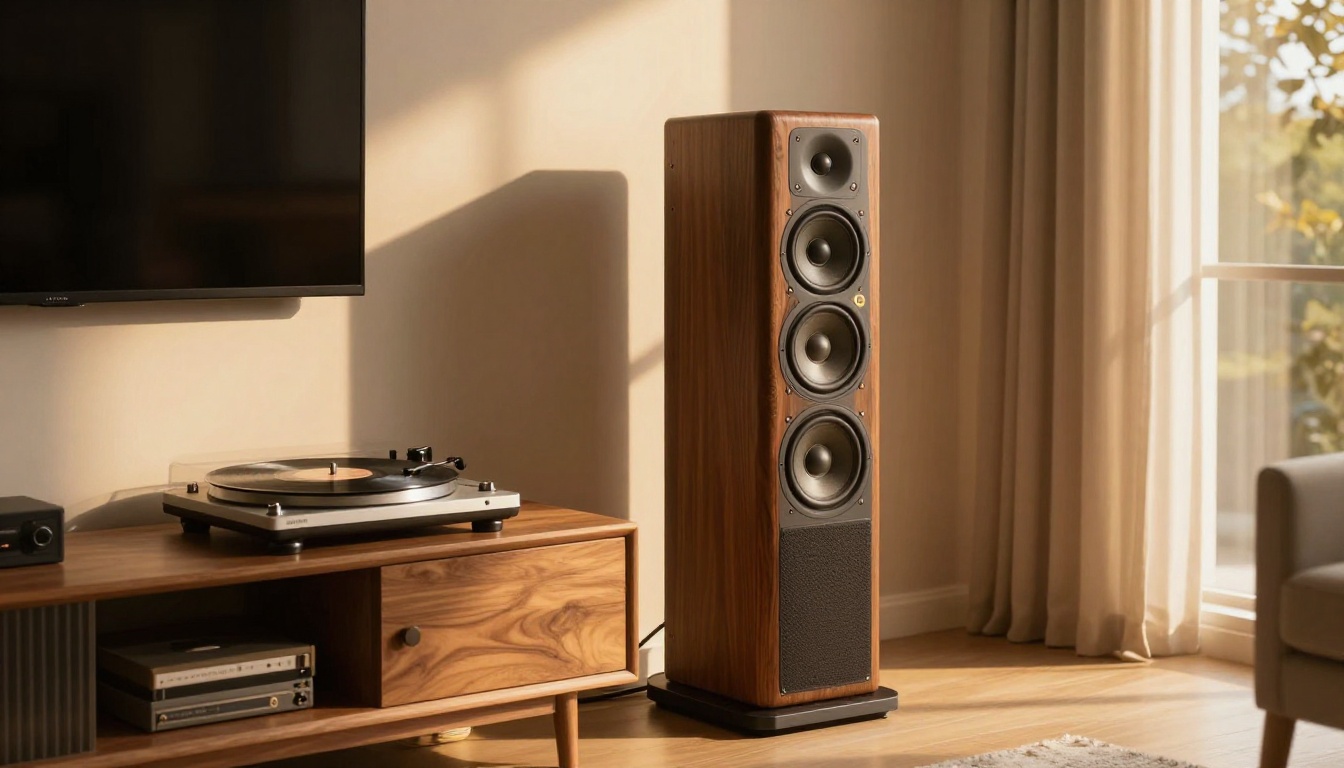
The floorstanding speakers at around $5,500 per pair are a meaningful step up from any bookshelf speaker. The three-way design handles bass, midrange, and treble through dedicated drivers, which means each driver works within its optimal range. The result is a more effortless, full-range presentation — you hear the bottom octave of a pipe organ or the sub-bass in electronic music without needing a subwoofer. The Focal Aria 936, at roughly $4,000 per pair, is a credible alternative with a more forward, lively character that some listeners prefer.
For amplification, move to separates. A dedicated preamp and power amp outperform integrated units at this level because the power supply for amplification is isolated from the more sensitive preamp circuits. The Hegel H120 integrated amplifier at around $3,500 bridges the gap well if separates feel like overkill — its internal DAC is genuinely good and its 75 watts per channel drive most speakers comfortably.
Add a dedicated DAC. The Denafrips Ares 12th-1 at around $800 uses a resistor ladder (R-2R) design rather than the more common delta-sigma chip, producing a slightly warmer, more analog-sounding output that particularly benefits vocal and acoustic recordings. Pair it with a Wiim Ultra streamer ($350) and you have a source chain that extracts everything your streaming service can deliver.
The remaining budget goes to serious room treatment — bass traps in corners, broadband absorption panels, and possibly a measurement microphone and software like REW (Room EQ Wizard, which is free) to identify and address specific problem frequencies. A room with parallel walls, hardwood floors, and minimal soft furnishing will fight you at every price point. If your home setup includes a dedicated listening room, treating it properly is the single best investment in this entire guide.
Tier Two: ~$15,000 System
| Component | Recommendation | Approximate Price |
|---|---|---|
| Speakers | Bowers & Wilkins 702 S3 | $5,500 |
| Amplifier | Hegel H120 (integrated) | $3,500 |
| DAC | Denafrips Ares 12th-1 | $800 |
| Streamer | Wiim Ultra | $350 |
| Speaker Cable | Chord Company Clearway X (3m) | $250 |
| Interconnects | Chord Company C-line RCA | $100 |
| Room Treatment | GIK Acoustics full package | $2,000-3,000 |
| Power Conditioner | Furman Elite-15 PFi | $800 |
| Total | $13,500-14,500 |
A note on power conditioners: they are not snake oil, but their benefits are often overstated. If you live in a building with clean, stable power, a Furman or similar unit protects your gear from surges but may not audibly improve sound quality. If you live in an older building with noisy electrical circuits — dimmer switches, refrigerators, and HVAC systems sharing the same line — a conditioner can reduce an audible noise floor. It is worth trying before committing.
Tier Three: $50,000 and Above — The Point of Absolute Returns
At this level, you are no longer buying better sound in the way Tier One and Two deliver better sound. You are buying refinement — subtle improvements in texture, decay, spatial accuracy, and the sense that instruments exist in a three-dimensional space rather than between two speakers. These differences are real, but they require focused listening to appreciate. Background music while cooking will sound the same through a $50,000 system as a $15,000 one.
The speaker choice defines this tier. The at roughly $16,000 per pair produces a sound that is warm, detailed, and musical in a way that few speakers at any price can match. The cabinet is real walnut over a constrained-layer-damped structure that eliminates resonance. The leather baffle is not decorative — it reduces diffraction around the drivers. Every detail serves a purpose. For a more analytical, reference-grade presentation, the Focal Sopra No.2 at around $14,000 reveals more detail at the cost of some warmth.
At the top of this range, the Wilson Audio Sasha DAW ($38,000 per pair) or Magico A5 ($24,000 per pair) represent genuine state-of-the-art transducer design. The Magico uses a fully sealed, machined aluminum enclosure that is acoustically inert — zero cabinet coloration. What you hear is entirely the drivers and nothing else. Whether that level of precision justifies three to four times the price of the Sonus Faber is a question only your ears and your priorities can answer.
Amplification at this tier moves to dedicated monoblocks or high-end integrated units. The Pass Labs INT-250 integrated amplifier ($15,000) runs in Class A for its first 15 watts, switching to Class AB above that. Class A amplification produces lower distortion and a more linear frequency response, though it also generates significant heat. Plan for ventilation. The McIntosh MA12000 ($16,000) is the alternative for those who want the aesthetic — the blue meters, the glass faceplate, the American-made cachet — alongside genuinely capable performance.
For the DAC, the Chord Electronics Hugo TT2 ($6,000) or the Denafrips Terminator II ($7,500) represent the ceiling of meaningful performance gains. Beyond this price point, DAC improvements become vanishingly small. The Chord uses a proprietary FPGA-based filter design that produces measurably better transient response than most chip-based DACs, translating to a sense of speed and precision in complex passages.
Tier Three: $50,000+ System
| Component | Recommendation | Approximate Price |
|---|---|---|
| Speakers | Sonus Faber Olympica Nova V | $16,000 |
| Amplifier | Pass Labs INT-250 | $15,000 |
| DAC | Chord Electronics Hugo TT2 | $6,000 |
| Streamer/Transport | Aurender N200 | $5,500 |
| Speaker Cable | Chord Company Signature XL | $1,500 |
| Interconnects | Chord Company Signature RCA | $800 |
| Room Treatment | Custom acoustic design | $5,000-8,000 |
| Power Conditioning | AudioQuest Niagara 3000 | $3,000 |
| Total | $53,000-56,000 |
The Vinyl Question
Vinyl is not automatically better than digital. This needs to be said clearly because the audiophile world has turned the format into an identity rather than a technology.
A well-mastered vinyl record played on a properly set up turntable through a quality phono preamp produces a sound that many listeners prefer. The analog warmth is not imaginary — it results from harmonic distortion characteristics and the way vinyl's frequency response rolls off at the extremes, which can sound more natural and less fatiguing than digital. But a poorly pressed record, a misaligned cartridge, or a dusty stylus will sound worse than a well-mastered 24-bit/96kHz digital file streamed through a $300 DAC.
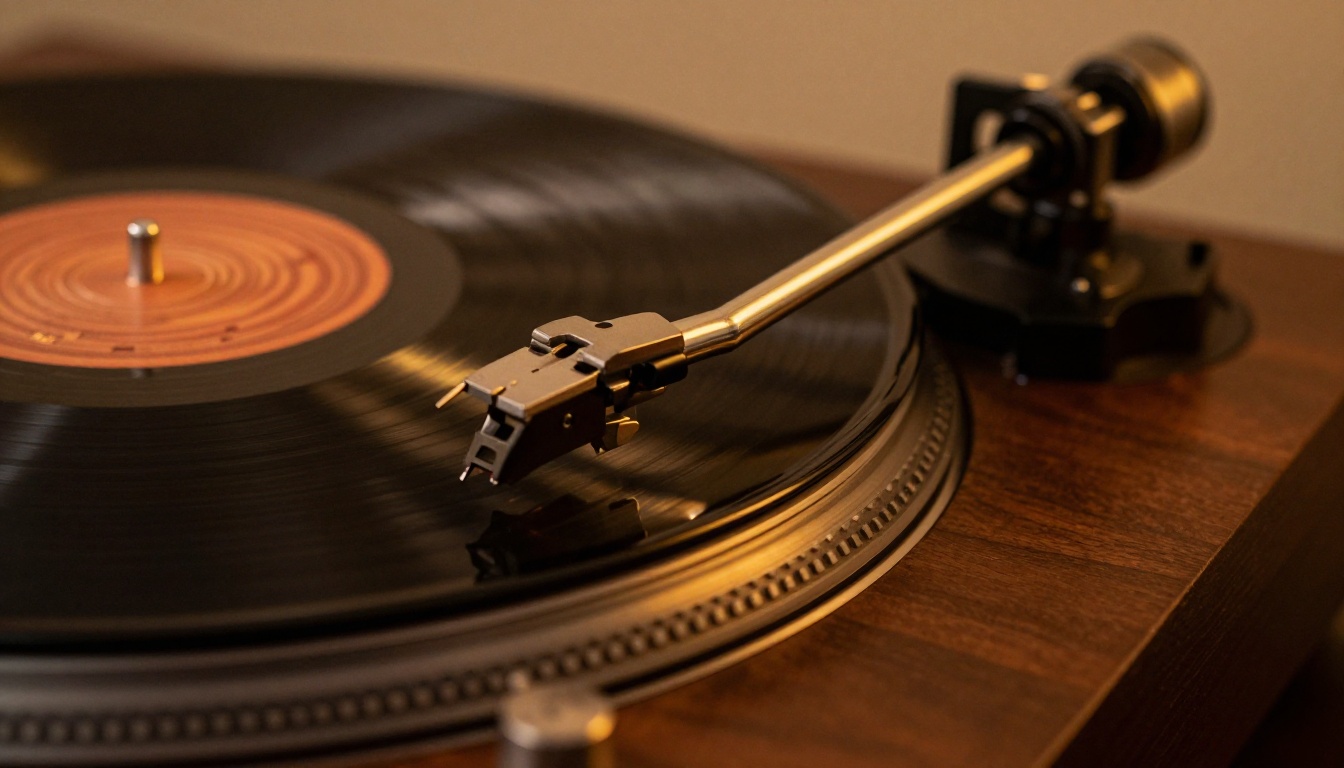
If you want to add vinyl to any of these systems, budget accordingly. A credible turntable setup starts at around $1,500 for the deck, cartridge, and phono preamp together. The Rega Planar 3 with an Elys 2 cartridge ($1,200) plus a Rega Fono MM MK5 phono stage ($250) is a proven combination that extracts most of what vinyl has to offer without the fussiness of more exotic setups. At Tier Three, the Technics SL-1200GR2 ($2,200) with an Ortofon 2M Black cartridge ($800) and a Parasound JC3 Jr phono preamp ($1,500) is where the format genuinely competes with high-resolution digital.
The honest case for vinyl is not about superior sound quality. It is about engagement. Choosing a record, cleaning it, placing the needle, and sitting for an uninterrupted album side is a different mode of listening than hitting shuffle on a playlist. That ritual has value. But it is a lifestyle choice, not a technical one.
What Actually Matters (and What Does Not)
After years of listening, measuring, and upgrading, the hierarchy of what moves the needle on sound quality is consistent and well-documented. This list is ordered by impact.
- Speakers — The single largest determinant of what your system sounds like. Spend 30-40% of your total budget here.
- Room acoustics — A great speaker in a bad room sounds worse than a decent speaker in a treated room. First reflection panels, bass traps, and correct speaker placement are not optional.
- Speaker placement — Free, but most people skip it. Speakers should form an equilateral triangle with the listening position, toed in slightly, at ear height, and pulled at least two feet from walls.
- Amplification — Matters, but less than you think. Any competently designed amplifier that provides enough power for your speakers and room will perform well. Chasing watts is pointless for most home applications.
- Source quality — Spotify Premium at 320kbps OGG is good enough for the vast majority of listeners, even through a $50,000 system. Tidal or Qobuz lossless is measurably better, and trained ears can detect the difference in a blind test. MQA is a proprietary format that claims to be better but has been widely criticized for its lossy encoding. Skip it.
- DAC — Modern DACs are remarkably good even at low prices. Above $500-800, improvements become subtle.
- Cables — Use well-constructed cables of appropriate gauge. Beyond that, spending more money produces no measurable or reliably audible improvement. This is the hill the audiophile industry will fight you on, and the data is not on their side.
If your existing home already features a serious display setup, integrating a dedicated two-channel audio system alongside it is worth the effort. Home theater receivers do many things competently but dedicated stereo listening is not one of them.
Where to Actually Buy
Buying hi-fi equipment online is fine for streamers, DACs, and cables. For speakers and amplifiers, find a dealer who lets you audition in a proper listening room. Most cities have at least one or two dedicated hi-fi shops, and the good ones will let you bring your own music, spend an hour comparing speakers, and offer in-home trials.
The used market is also worth exploring. Speakers depreciate roughly 40-50% the moment they leave the shop, which means a pair of three-year-old B&W 702 S3s in good condition can be found for $3,000-3,500 rather than $5,500. Amplifiers hold their value slightly better but still depreciate 30-40%. Sites like Audiogon, US Audio Mart, and the Hifi Shark aggregator are the best resources. As with quality furniture, well-made audio equipment lasts decades with proper care.
One genuine advantage of buying from a dealer: room measurement and setup services. A dealer who measures your room, positions your speakers optimally, and dials in the system will extract 20-30% more performance from the same equipment than a self-install. This service typically costs $200-500 and is the best money you can spend in this hobby.
The Honest Bottom Line
A $5,000 system in a treated room, with properly placed speakers, will outperform a $20,000 system thrown into a corner of an untreated living room. That is not opinion — it is physics. Sound is waves, and waves interact with surfaces. No amount of equipment spending overcomes a room that works against you.
Start at Tier One. Live with it for six months. Learn what your ears respond to. Then upgrade the speakers first, treat the room second, and upgrade electronics last. This is the opposite of what most people do, which is why most expensive home audio systems sound disappointing to their owners.
The goal is not perfection. The goal is a system that makes you sit down, close your eyes, and hear something you have never heard in a recording you have listened to a hundred times. At $5,000, that is not just possible — it is the entire point.
Looking for luxury brands, stores, and services? Browse our curated directory: