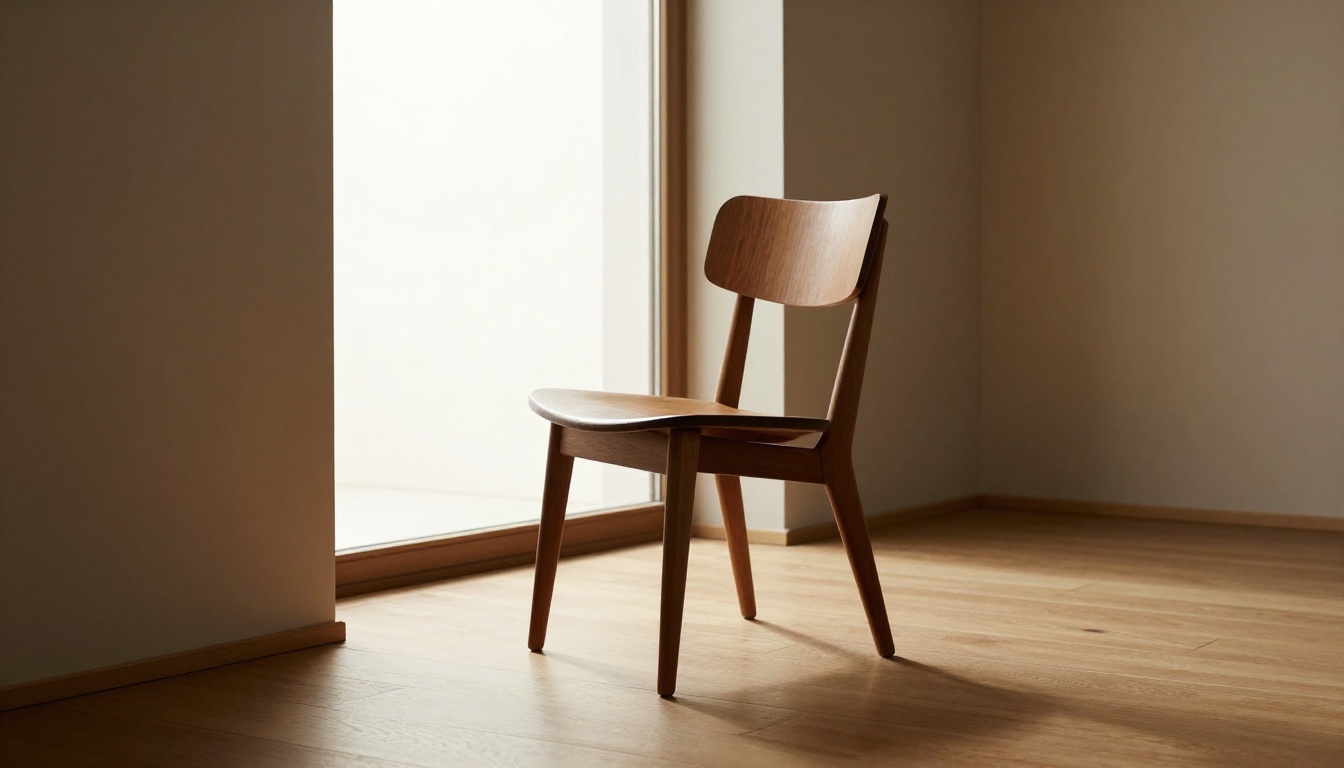
There is a particular kind of regret that comes from furnishing an entire room at once on a moderate budget. Everything matches. Everything is fine. And within five years, everything looks dated, feels tired, and starts falling apart at the joints. The alternative — buying fewer, better pieces over time — requires more patience but produces rooms that actually improve with age.
The furniture worth owning for decades shares a few qualities: structural integrity that survives daily use, materials that develop character rather than decay, and design restrained enough to work across changing tastes. What follows are specific pieces that have proven this over 50, 60, even 70 years of continuous production.
Why One Great Piece Beats a Room Full of Good Enough
A single Hans Wegner Wishbone Chair costs roughly what you would spend on an entire dining set from a mid-range retailer. That comparison stops most people cold. But run the math over 15 years: the mid-range set gets replaced once, maybe twice. The Wishbone is still there, its oak frame darkened to honey, its paper cord seat developing the patina of actual use.
This is not an argument for spending recklessly. It is an argument for spending deliberately. A room with one or two remarkable pieces and a few well-chosen affordable ones looks and feels better than a room where everything cost the same moderate amount. The eye needs something to land on. The body needs at least one chair that was actually engineered for comfort rather than shipping efficiency.
The Real Cost of Replacement Furniture
Most mass-produced furniture is designed to last 3-7 years. The frame is particleboard or soft pine, the joints are stapled rather than doweled, and the upholstery fabric pills within two seasons. When it breaks — and it will — you cannot repair it because there is nothing solid to attach a repair to. You throw it away and buy another one.
A well-made piece, by contrast, can be re-upholstered, re-finished, and tightened at the joints indefinitely. The frame outlasts the fabric by decades. This is how families end up with 80-year-old sofas that have been recovered three times and still feel solid.
The Pieces That Have Earned Their Reputation
Not every "design classic" is worth the price. Some are famous for being famous — museum pieces that look striking in a gallery but terrible in a living room. The following pieces have earned their status through daily use in real homes, not just placement in design exhibitions.
Enduring Furniture Pieces and Their Track Records
| Piece | Designer | Year | Current Price Range | Why It Lasts |
|---|---|---|---|---|
| Wishbone Chair (CH24) | Hans Wegner | 1949 | $600-$900 | Steam-bent solid wood, replaceable paper cord seat, no fasteners to loosen |
| Eames Lounge and Ottoman | Charles and Ray Eames | 1956 | $6,000-$7,500 | Molded plywood shells, replaceable leather cushions, all-metal hardware |
| PK22 Lounge Chair | Poul Kjaerholm | 1956 | $4,500-$6,000 | Matte chrome spring steel frame, minimal components, ages gracefully |
| Arco Floor Lamp | Achille Castiglioni | 1962 | $2,500-$3,000 | Carrara marble base, stainless steel arc, nothing to break |
| USM Haller Shelving | Fritz Haller | 1963 | $1,500-$8,000+ | Chrome-plated steel, infinitely reconfigurable, replaceable panels |
Hans Wegner's Wishbone Chair
The CH24, produced by Carl Hansen since 1949, is arguably the most successful dining chair ever designed. It weighs less than 8 pounds, supports well over 200, and the steam-bent frame distributes stress so evenly that examples from the 1950s are still structurally sound. The paper cord seat — hand-woven from 120 meters of cord — is the only component that wears out, and Carl Hansen will re-weave it. Current wait time is about 6-8 weeks.
The trade-off: the seat height and depth suit most adults, but if you are over 6'2" or under 5'4", try before you buy. The Y-back splat also collects dust in ways that flat-backed chairs do not, though that is a minor annoyance.
The Eames Lounge Chair
Herman Miller has produced the 670/671 continuously since 1956. The design — molded rosewood (now walnut) plywood shells cradling leather cushions on a cast aluminum base — looks as contemporary now as it did during the Eisenhower administration. That visual longevity alone justifies the investment.
Practically, the Eames Lounge is one of the most comfortable chairs in production. The recline angle, lumbar support, and headrest height were derived from the posture of a baseball catcher's mitt — relaxed but supportive. The leather cushions can be replaced individually through Herman Miller when they eventually wear, which typically takes 15-20 years of regular use.
The honest downside: it is large. The chair and ottoman together occupy roughly 40 by 33 inches of floor space. In rooms under 200 square feet, it dominates. And the authentic version from Herman Miller costs significantly more than the dozens of reproductions available, though none of the reproductions match the material quality or the 12-year warranty.
Jean Prouve's EM Table
Prouve was an engineer first and a furniture designer second, which is exactly why his pieces endure. The EM , now produced by Vitra, uses sheet steel legs and a solid wood or laminate top. The engineering is visible — exposed bolts, bent metal, no attempt to hide the structure. This honesty about construction is what keeps it from ever looking dated. It cannot go out of style because it was never styled in the first place.
It is also genuinely practical. The angled legs clear the way for chairs at every position. The top is replaceable. And because the base is steel, it does not develop the wobble that plagues four-legged wooden tables after a few years of being dragged across floors.
How to Buy Smart: New, Vintage, or Reproduction
The secondary market for design classics is mature and liquid. A vintage Eames Lounge in good condition typically sells for 60-80% of the new retail price, sometimes more for rare editions. This means your purchase holds value in a way that mass-produced furniture never will.
Buying Channels Compared
| Channel | Pros | Cons |
|---|---|---|
| Authorized Dealer (New) | Full warranty, verified authenticity, current materials | Highest price, long lead times for some pieces |
| Vintage/Secondary Market | Lower entry price, patina, discontinued finishes | No warranty, risk of undisclosed repairs, condition varies |
| Licensed Reproductions | Legitimate alternatives at lower price points | Limited to pieces whose patents have expired, variable quality |
| Unlicensed Copies | Lowest price | Inconsistent quality, no warranty, ethical concerns |
For vintage purchases, the key verification points are: original manufacturer labels or stamps, consistency of hardware with the production era, and condition of structural joints (cosmetic wear is acceptable; structural weakness is not). Dealers like 1stDibs, Wright Auctions, and established local mid-century shops typically authenticate pieces before listing. Estate sales and online marketplaces require more diligence.
The Case for Mixing Price Points
The most livable interiors are not furnished exclusively with museum pieces. A Prouve table surrounded by affordable bentwood chairs works beautifully. An Eames Lounge in a corner of a room with an IKEA Billy bookcase across the way is fine — the bookcase recedes, the chair commands attention, and the room has a clear point of view without an absurd budget.
The strategy is simple: spend on the pieces you touch and sit in every day. Invest in what bears weight and takes abuse. Go affordable on storage, side tables, and anything that functions primarily as surface area. Nobody has ever regretted buying a better sofa. Plenty of people have regretted buying a more expensive coffee table.
Building a Room Over Time
The instinct to furnish a room in one shopping trip is understandable but counterproductive. A room assembled over two or three years, as budget allows and taste clarifies, develops a coherence that rooms furnished in a single weekend never achieve. Each piece is chosen with full knowledge of what is already there. Nothing is a placeholder.
Start with seating — the piece you will use most and that anchors the room's scale. Add lighting next, because it transforms how everything else looks. Tables and storage can come later. Art should come last, once you understand the room's character in different light throughout the day.
This patience-based approach has a financial benefit too. Spreading major purchases across a year or two means you can buy the quality you actually want rather than compromising everything to fit a single month's budget. A $7,000 chair is unreasonable as part of a $15,000 room budget. It is entirely reasonable as a standalone annual purchase that you will use for the next 30 years.
The furniture that outlasts trends does so because it was never designed to follow them. These pieces solve physical problems — how to support a human body, how to hold objects at a useful height, how to illuminate a room — with such precision that fashion becomes irrelevant. That is what you are paying for: not a brand name or a design pedigree, but the quiet confidence of something made to last.
Looking for luxury brands, stores, and services? Browse our curated directory: