Somewhere in a $4 million house in Atherton, a homeowner is standing in their kitchen at 11 PM, unable to turn off the living room lights. The Crestron system that controls everything — lighting, shades, HVAC, audio — has frozen after a firmware update, and the integrator won't be available until Thursday. The wall switches have been replaced with keypads that do nothing without the processor running. So the lights stay on.
This is not a rare story. It is the predictable outcome of a specific type of smart home installation: one that prioritizes automation over reliability, and complexity over usability. The technology itself is often remarkable. The implementations are frequently terrible.
The Systems Worth Knowing
Four companies dominate the high-end residential automation market: Crestron, Savant, Control4 (now Snap One), and Lutron. They are not interchangeable, and choosing the wrong one for your situation is an expensive mistake.
Major Smart Home Platforms Compared
| Platform | Typical Install Cost | Best For | Biggest Weakness |
|---|---|---|---|
| Crestron | $80,000–$300,000+ | Large estates, custom programming | Requires expert programmer; steep learning curve |
| Savant | $50,000–$200,000 | Apple-household aesthetic; AV focus | Smaller dealer network; less flexible than Crestron |
| Control4 | $20,000–$80,000 | Mid-range homes; good value | Less polished UI; integration limits |
| Lutron (lighting only) | $15,000–$60,000 | Lighting and shades specifically | Does not control AV or HVAC natively |
Lutron RadioRA 3 or HomeWorks QSX. If you do nothing else, install Lutron. This is the one recommendation that applies to nearly every home renovation or new build. Lutron's lighting and shade control is the most reliable smart home technology available, full stop. It uses a proprietary wireless protocol (Clear Connect) that doesn't compete with your Wi-Fi network, and it has physical switches that work even if the processor fails. HomeWorks QSX is the flagship system for larger homes. RadioRA 3 covers most houses under 5,000 square feet at roughly half the cost.
Crestron. The most powerful and most dangerous option. A well-programmed Crestron system in a large home is genuinely impressive — unified control of every subsystem, custom interfaces, rock-solid performance. A poorly programmed one is a nightmare that only the original installer can fix, assuming they're still in business. Crestron's strength is unlimited customization. Its weakness is that it demands an excellent programmer, and excellent Crestron programmers are not easy to find.
Savant. Gained significant market share by offering a more approachable interface than Crestron with comparable functionality for most homes. The Savant Pro app is genuinely well-designed, and their hardware integration continues to tighten. Best suited for homes where the primary user values a clean, intuitive interface over maximum customization.
Control4 (Snap One). The value play. Does 80% of what Crestron does at 40% of the cost. The dealer network is enormous, which means competitive pricing and easier service. The trade-off is a less polished user experience and occasionally clunky integrations with third-party equipment. For a 3,000-square-foot home that wants solid whole-house audio, lighting scenes, and basic automation, Control4 is often the right answer.
What Actually Works Well
After watching dozens of smart home installations age over five to ten years, a clear pattern emerges. Some categories of automation deliver consistent, lasting value. Others create ongoing frustration.
Lighting Control
This is the single highest-value smart home investment. Properly programmed lighting scenes — morning, cooking, entertaining, movie, goodnight — transform daily life in a way that sounds trivial until you experience it. Press one button as you leave the bedroom and every light in the house adjusts to morning settings. Press one button at bedtime and everything turns off except the hallway path lights.
Lutron does this better than anyone. But the key word is "programmed." You need an integrator who will sit with you and design scenes that match your actual routines, then adjust them after you've lived with the system for a month. The hardware is the easy part. The programming is what makes it work.
Motorized Shades
Second-highest value. Lutron Palladiom or Sivoia QS shades, programmed to adjust with time of day and sun position, manage heat gain, protect furniture from UV exposure, and eliminate the visual clutter of manual blinds. They are expensive — $800 to $2,500 per window depending on size and fabric — but they're one of the few smart home technologies that improve with age as you refine the schedules.
Whole-House Audio
Distributed audio has matured considerably. Sonos remains the simplest option for most homes and sounds genuinely good with their architectural speakers. For a step up, Savant's audio distribution or a dedicated system from Autonomic paired with higher-end speakers (Sonance, Origin Acoustics, James Loudspeaker) delivers a noticeable improvement. The important thing is ceiling speaker placement — hire an AV designer, not just an electrician, during the wiring phase.
What Will Ruin Your Week
Over-Automated HVAC
Smart thermostats (Ecobee, Nest) work fine for a single-zone house. The problems start when an integrator ties your multi-zone HVAC system into the automation processor. Now temperature adjustments require the smart home system to be operational. When it goes down — and it will go down occasionally — you can't adjust your own thermostat. Worse, automated HVAC logic that tries to "learn" your patterns often fights with manual adjustments, creating a thermostat that seems to have its own agenda.
Keep your HVAC controls independent. A good thermostat with its own scheduling (even a basic Honeywell) is more reliable than routing climate control through Crestron.
Motorized Everything
Motorized shades: worthwhile. Motorized curtains, motorized TV lifts, motorized art frames that conceal televisions, motorized kitchen cabinet doors — each of these adds a mechanical failure point, a noise source, and a maintenance item. The TV lift that seemed clever at the design meeting becomes the mechanism that breaks the week your in-laws visit. Every motor is a future service call.
Network-Dependent Door Locks
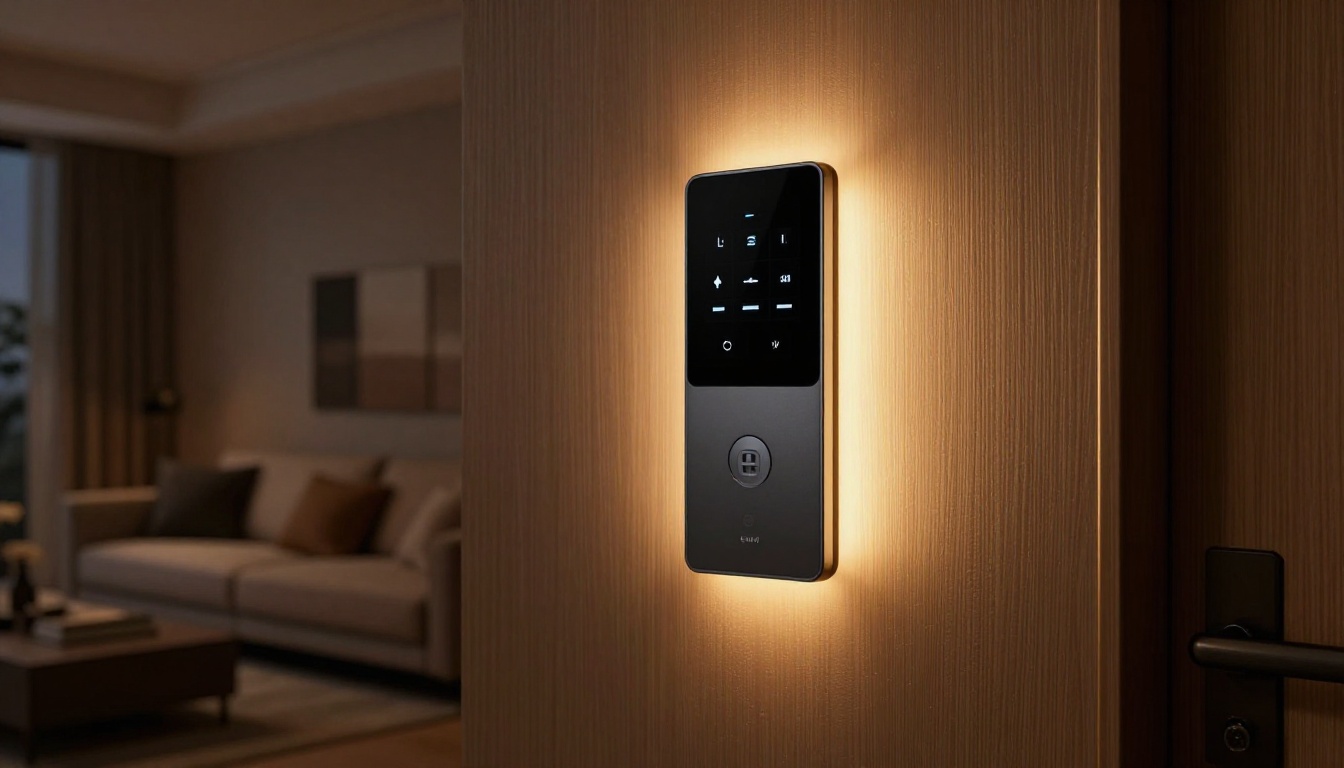
Smart locks that require Wi-Fi or a hub to function are a security liability, not a convenience. If your network goes down, you need a backup plan for entering your own home. The better approach: a high-quality mechanical lock (Schlage, Baldwin) with a standalone smart lock that stores codes locally and doesn't depend on cloud connectivity.
Voice Control as Primary Interface
Alexa and Google Assistant integration sounds appealing in a demo. In practice, voice control is a secondary interface at best. It fails with background noise, fails with guests who don't know the command syntax, and fails when you need something done quickly. Physical keypads and a well-designed app should be the primary controls. Voice is a nice-to-have, not a foundation.
Smart Home Features: Worth It vs. Skip It
| Feature | Verdict | Why |
|---|---|---|
| Lutron lighting scenes | Worth it | Reliable, daily impact, ages well |
| Motorized shades | Worth it | Energy savings, UV protection, convenience |
| Whole-house audio | Worth it | Mature technology, reasonable cost |
| Centralized AV switching | Worth it | One remote for everything, if done right |
| Motorized TV lifts | Skip | Mechanical failure point, slow, noisy |
| Smart HVAC integration | Skip | Creates dependency, overcomplicates heating/cooling |
| Voice-only controls | Skip | Unreliable primary interface |
| Smart locks (cloud-dependent) | Skip | Security risk when network fails |
The Real Cost Nobody Mentions
The purchase price of a smart home system is not the full cost. Annual service contracts from reputable integrators run $1,500 to $5,000 per year. You will need them. Firmware updates, network changes, new streaming services, and equipment replacements all require a technician who understands your specific installation.
The less-discussed cost is vendor lock-in. A Crestron system programmed by Integrator A may be difficult for Integrator B to service if the original company closes or you part ways. Control4 is the most portable platform; Savant falls in the middle. Switching integrators on a complex system often means reprogramming from scratch — a $10,000 to $30,000 proposition.
Before signing with any integrator, ask three questions: Can I get a copy of all programming files? Do you use documented, standard programming practices? And what happens if your company closes? If the answers are vague, find a different integrator.
The Approach That Works
The best smart homes are not the most automated ones. They are the ones where the technology disappears into the background and the house simply works the way you expect it to.
Start with Lutron for lighting and shades. Add whole-house audio during construction or renovation when wiring is accessible. Choose one platform (Savant for simplicity, Crestron for maximum control, Control4 for value) and let an experienced integrator design the system around your actual daily patterns, not a wish list of features you saw at a trade show.
And keep the manual overrides. Every automated system should have a physical fallback. If the processor crashes at midnight, you should still be able to turn off every light in your house from a switch on the wall. The technology that respects that principle is the technology worth installing.
Looking for luxury brands, stores, and services? Browse our curated directory: