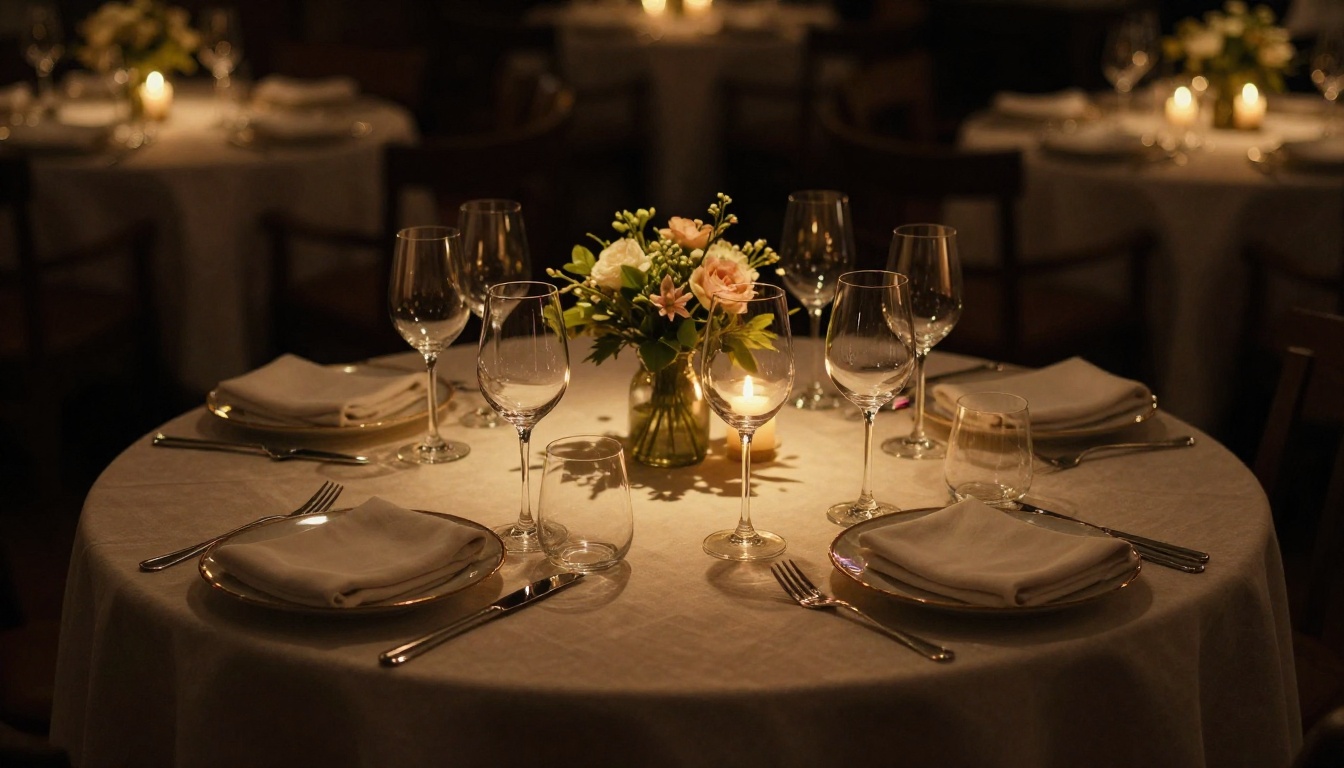
The Meal Is the Least Important Part
The best dinner party you have ever attended — the one you still bring up at other dinner parties — probably did not feature the most technically impressive food. You might not even remember the main course. What stayed with you was the feeling: the room was warm, the conversation was sharp, the wine kept appearing without anyone thinking about it, and the whole evening felt like it had been shaped by someone who understood pacing.
That is what separates a dinner party from dinner. The food matters, but it is the architecture of the evening — the decisions about light, sound, guest chemistry, timing, and flow — that determines whether people leave at 10:30 or stay until 1 a.m. talking about nothing and everything.
This is a guide to the structural choices that make an evening memorable. Not recipes. Not table linens ranked by thread count. The decisions that most hosts get wrong or never think to make at all.
The Guest List Is Your Most Important Decision
Six to eight people is the number. Below six, a single quiet guest creates dead air. Above eight, the table fractures into side conversations that never recombine into a single thread. Eight is the upper limit of a group that can sustain one shared conversation — which is the whole point of sitting down together.
The composition matters more than the headcount. You need at least one person who talks easily, one who asks good questions, and ideally one mild contrarian. Couples are fine, but more than three couples and the evening starts to feel like a rehearsal for someone else’s wedding. Mix professions. A table of six people who all work in finance will talk about finance. A table with a chef, a novelist, and an architect will talk about everything.
The one rule that never fails: do not invite anyone who needs managing. If you spend the evening worrying about whether someone is comfortable, or whether they will say something regrettable, you have already lost as a host.
Light and Sound Before Anything Else
Lighting is the single most neglected element of home entertaining. Overhead lights flatten a room and flatten the mood. Every ceiling fixture in the dining area should be off or dimmed to roughly 30% — enough to see the person across from you, not enough to read a contract.
Candles are not optional. They are structural. Place them low — below eye level — so they illuminate faces from below without creating a barrier between guests. Tapered candles in holders are more effective than pillar candles, which tend to pool wax and demand attention. Six to ten candles for a table of eight. Unscented, always. Diptyque makes a handsome dinner taper, but any quality dripless candle in cream or ivory works.
Music should be present from the moment the first guest arrives and should never, at any point, be noticeable. The moment someone says “what is this playlist?” you have it too loud or too distracting. Jazz trios, bossa nova, ambient instrumentals — the genre matters less than the energy. Keep the tempo moderate during the meal. Nothing with lyrics that compete with conversation. Sonos or a comparable multi-room system lets you set it and forget it, which is the goal.
If your guests are aware of the music, it is too loud. If they are aware of the lighting, it is too bright. The best atmosphere is one nobody consciously registers.
The Table: Set It Like You Mean It
A well-set table signals that the evening is an event, not an accident. This does not require a fleet of charger plates and crystal stemware. It requires intention.
The basics, done well: a cloth tablecloth (linen, not polyester — guests can feel the difference), proper napkins folded simply, a water glass and at least two wine glasses per setting. If you are serving both white and red, set both glasses. Asking “does anyone want white?” mid-meal breaks the rhythm.
Essential Table Setting for 8 Guests
| Item | Quantity | Notes |
|---|---|---|
| Linen tablecloth | 1 | Iron it. Wrinkled linen looks lazy, not relaxed |
| Cloth napkins | 8-10 | Two spares for emergencies |
| Dinner plates | 8 | White or cream. Patterns compete with the food |
| Side plates | 8 | For bread. Skip if no bread course |
| Water glasses | 8 | Sturdy tumblers work better than stemware |
| Wine glasses (white) | 8 | Zalto or Gabriel-Glas if you want one versatile glass |
| Wine glasses (red) | 8 | Larger bowl. Riedel Vinum is a reliable standard |
| Tapered candles | 6-10 | Unscented, cream or ivory |
| Salt and pepper | 2-3 sets | One per 3 guests. Table salt in a cellar, not a shaker |
Flowers: low and loose, never tall enough to block sightlines. A few stems of seasonal flowers in a low vase, or scattered greenery, is better than a centerpiece that makes people lean sideways to talk. If you are not confident with flowers, skip them entirely rather than getting it wrong. A few well-placed candles and a clean table are enough.
The Flow of the Evening
A dinner party has three acts, and most hosts only plan for the second one.
Act One: The Arrival (30-45 minutes). Guests arrive, drinks appear immediately, and there is something to eat that requires zero explanation. Olives, marcona almonds, a few pieces of aged cheese, crostini with something simple on top. This is not the meal — it is the social lubricant. Champagne or a single pre-selected cocktail works better than a full bar setup, because it removes decision fatigue and gets everyone drinking the same thing, which creates a shared starting point. A bottle of Champagne from a grower like Pierre Gimonnet or Egly-Ouriet sets the tone without the cliche of Dom Perignon.
Act Two: The Meal (90-120 minutes). Three courses is the sweet spot. Fewer feels casual; more than four and the evening starts to feel like a marathon. A first course already plated when guests sit down eliminates the awkward wait. The main should be something that can hold — a braise, a roast, a tagine — not a steak that dies if it sits for three minutes while you clear plates. Dessert should be simple and sweet, literally. A tart, a panna cotta, a cheese course with good honeycomb. Nothing that requires last-minute assembly.
Act Three: The After (open-ended). This is where good parties become great ones. Clear the table, move to a different space if you have one, and shift the drinks. A digestif — amaro, calvados, aged rum — signals that the evening has entered a new, looser phase. This is when the real conversations happen, and it only works if you have stopped fussing in the kitchen.
Wine Service Without the Performance
Serve two wines with dinner: one white for the first course, one red for the main. Buy more than you think you need — two bottles per wine for eight guests is the minimum, three is safer. Running out of wine mid-dinner is a hosting failure that no amount of charm can fix.
Open reds 30-60 minutes before dinner. Decanting anything younger than ten years old is worth the minor effort. Pour for your guests before they need to ask — this is the host’s primary job during the meal. Keep an eye on glasses. A guest with an empty glass feels forgotten.
You do not need to spend heavily. A well-chosen Cru Beaujolais or a Langhe Nebbiolo at $30-50 will outperform a lazy $100 Napa Cabernet every time. If you have been building a cellar, a dinner party is exactly the occasion to open something you have been holding. Wine that never gets drunk is a collection, not a cellar.
Wine Planning for 8 Guests
| Course | Style | Bottles Needed | Budget per Bottle |
|---|---|---|---|
| Arrival | Champagne or sparkling | 2 | $40-80 |
| First course | White (Burgundy, Loire, or Riesling) | 2-3 | $25-60 |
| Main course | Red (Burgundy, Piedmont, or Rhone) | 3 | $30-80 |
| After dinner | Digestif (amaro, calvados) | 1-2 | $30-60 |
| Total for the evening | 9-10 bottles | $300-600 |
A note on glassware: if you own one good set of wine glasses, use them. The is the best all-purpose wine glass on the market — thin-lipped, beautifully balanced, and versatile enough for white, red, and champagne if you are short on stems. They are fragile and expensive to replace, which is a real consideration when eight people are drinking freely. The is a sturdier alternative at half the price.
When to Hire Help — and When It Kills the Room
This is the question that separates a dinner party from a catered event, and most people get it wrong in both directions.
Hire help if you are cooking a multi-course meal for more than six and you want to actually sit at your own table. A single person — someone to plate, clear, pour wine, and manage the kitchen — transforms the experience. They do not need to be a trained server. A culinary student, a catering freelancer, even a capable friend who is not on the guest list can fill this role. Pay them well: $200-400 for the evening is standard in most cities.
Do not hire a full team. Two servers and a kitchen hand for eight guests creates a restaurant dynamic that kills intimacy. The presence of staff in matching attire makes people perform rather than relax. One helper, dressed normally, who moves quietly and anticipates needs — that is the ideal.
If you want the food handled entirely, a private chef is the right call. But understand the trade-off: a chef takes over your kitchen and often your menu. You gain consistency and freedom from cooking. You lose the personal touch that comes from serving something you made yourself. For most hosts, cooking the main course personally and hiring someone to handle service and cleanup is the better balance.
Managing Conversation Without Managing Conversation
The host sets the conversational tone in the first fifteen minutes. If you launch into a monologue about work, the table will follow. If you ask a genuine question — not “so what do you do?” but something with texture, like “what is the best meal you have had this year?” — the evening tilts toward the personal and interesting.
Seat strategically. The two most socially confident people should not sit next to each other — they will create a gravitational pull that leaves the rest of the table as an audience. Separate couples. Put the quieter guest next to you, where you can draw them in. Place the natural storyteller across from the person most likely to ask follow-up questions.
The hardest skill: redirecting a conversation that has stalled on politics, property prices, or someone’s children without being obvious about it. The technique is simple — wait for a natural pause, then ask someone else a direct question about something unrelated. “That reminds me — David, you just got back from Japan. Where did you eat?” It works every time, and nobody notices the pivot.
The Details That Separate Good from Memorable
- Temperature — Keep the room slightly cool at the start of the evening. Eight people, candles, a working kitchen, and wine will warm it up. If guests arrive to a warm room, it will be stifling by dessert.
- Coats and bags — Have a plan. A bedroom with space, not a pile on a chair. This tiny detail signals that you thought about their arrival, not just the meal.
- Water — Still and sparkling, on the table, accessible without asking. Refill water glasses as often as wine glasses. Your guests will thank you the next morning.
- Timing the cheese — If you serve cheese, serve it before dessert (the French way) or instead of dessert. Never after, when people are already full and reaching for their coats. A considered selection of three cheeses with good bread and quince paste is a course in itself.
- The goodbye — Walk people to the door. Do not start cleaning up while guests are still leaving. The last impression is as important as the first.
What Not to Do
A short list of choices that reliably undermine an evening:
- Asking guests to take off their shoes. Nothing deflates a well-dressed guest faster than padding around in socks. If your floors are precious, accept the trade-off or host elsewhere.
- Plating restaurant-style. Twelve components micro-placed with tweezers looks impressive on Instagram and adds forty minutes to service. Serve family-style or plate simply. The food is not the show — the evening is.
- Background television. Even on mute. Even “just for ambiance.” A screen in the room splits attention in a way that music never does.
- Seating cards for fewer than twelve. For a table of eight, just tell people where to sit as they approach the table. Printed place cards at an intimate dinner feel corporate.
- Apologizing for the food. “This did not turn out exactly how I wanted” is a confession that makes everyone uncomfortable. Serve it with confidence. They will not know what you intended.
The Real Secret
The dinner parties people remember are never the ones where everything was perfect. They are the ones where the host was present — relaxed, attentive, and visibly enjoying themselves. If you are stressed, your guests feel it. If you are in the kitchen for the entire main course, you have prioritized the food over the people, which is the fundamental error.
Cook something you have made twenty times. Set the table an hour early. Open the wine before anyone arrives. And then, when the doorbell rings, be the person who greets their guests with a glass already poured — not the person still frantically reducing a sauce.
The architecture of a great evening is simple: remove every reason for you, the host, to be anywhere other than at the table with your guests. Everything in this guide — the lighting, the flow, the help, the wine plan — serves that single purpose. Get that right, and the evening takes care of itself.
Looking for luxury brands, stores, and services? Browse our curated directory: