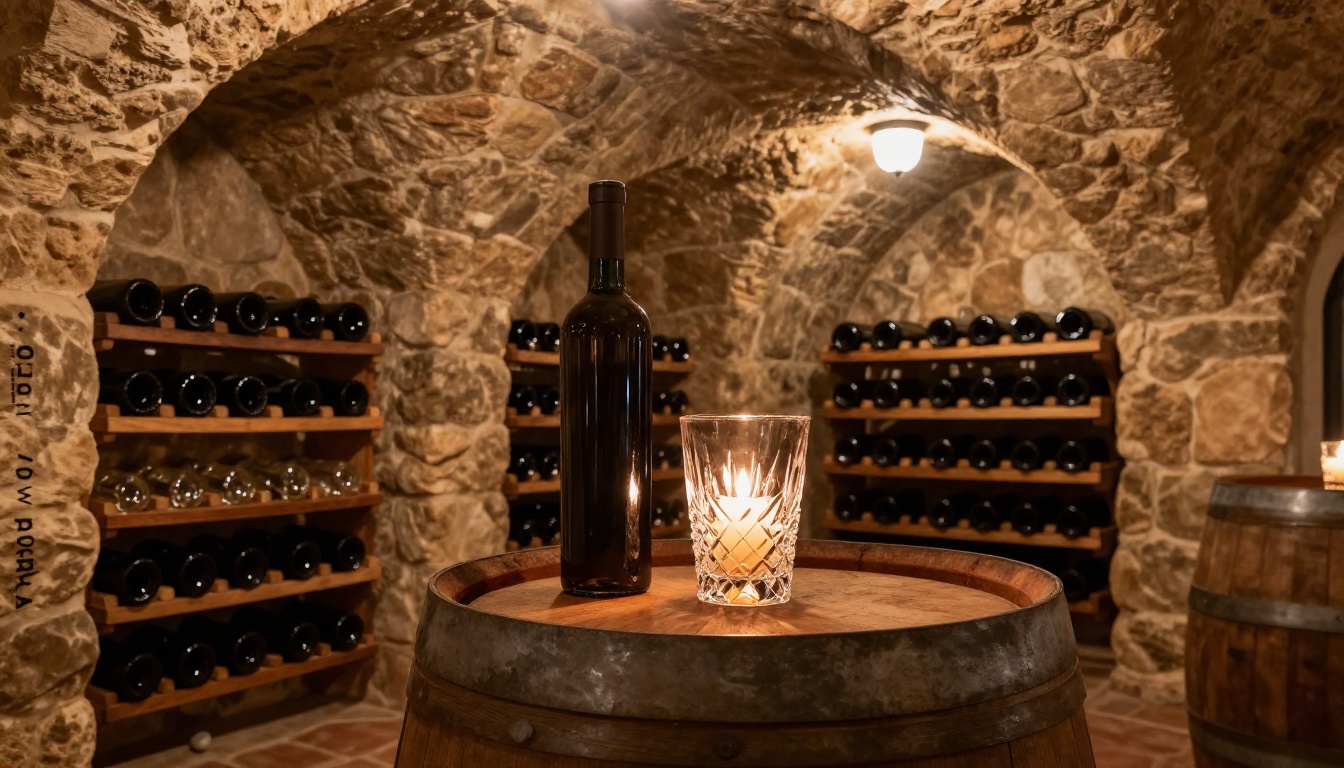
Most wine collections fail for one of two reasons. Either the owner buys cases of trophy bottles they never open, turning a cellar into an expensive storage locker, or they drink everything too young, never experiencing what proper aging does to a great vintage. The solution is simple: structure your cellar so you're always drinking, always aging, and always holding a few bottles that appreciate while you're not thinking about them.
What follows is a practical framework for building a wine collection from scratch — where to buy, what to collect, how to store it, and how to insure it once the value climbs past what your homeowner's policy covers.
The 60/30/10 Rule: Structure Before Shopping
Before you spend a dollar, decide what your cellar is actually for. The most functional approach divides your collection into three tiers: 60% drinking wines, 30% aging wines, and 10% investment wines. This ratio keeps your cellar alive — bottles rotate in and out, you're actually opening wine with dinner, and a small slice builds long-term value without turning you into a speculator.
The 60% drinking tier is wine you plan to open within five years. These are your Tuesday night bottles, your dinner party selections, your weekend discoveries. Spend $20 to $80 per bottle here. Good Côtes du Rhône, Cru Beaujolais, Chianti Classico, Oregon Pinot Noir, and Champagne from grower producers all belong in this tier. This is where you learn what you actually like to drink, which matters more than any critic's score.
The 30% aging tier is wine you'll hold for five to fifteen years. These bottles reward patience — they develop complexity, soften their tannins, and become something fundamentally different from what they were at release. Budget $80 to $500 per bottle. Classified Bordeaux, Premier Cru Burgundy, top Barolo, aged Champagne, and the best Napa Cabernets all fit here.
The 10% investment tier is wine you hold indefinitely, either drinking at peak maturity or selling when the market rewards your patience. These are First Growth Bordeaux, Grand Cru Burgundy from top domaines, and prestige Champagne. Prices start around $500 and climb steeply. The critical point: only buy investment wine through channels that maintain provenance, because without a documented chain of custody, resale value collapses.
Where to Buy: Merchants, Auctions, and Futures
En primeur is the Bordeaux futures market, and it's how serious collectors access top châteaux at release prices. You're buying wine 18 to 24 months before it's bottled, based on barrel samples and early reviews. The risk is real — you're betting on a vintage before the final scores land. The reward can be substantial. The 2010, 2015, and 2016 Bordeaux vintages bought en primeur are worth two to four times their release prices today. Berry Bros. & Rudd , Justerini & Brooks, and Farr Vintners are the blue-chip merchants for futures. If you're spending serious money en primeur, work with an established house that has direct allocations from the châteaux.
Auction houses — Christie's, Sotheby's, and Hart Davis Hart — are the primary market for older vintages with documented provenance. The premium for buying at auction is 20 to 25 percent on top of the hammer price, so factor that into your math. Auctions are especially useful for back-vintage Burgundy and mature Bordeaux that no longer exist on the primary market. Study the catalog, check the storage history, and never bid on lots where provenance is vague or absent.
Retail merchants are your best path for Burgundy, where allocations drive everything. Getting on the right merchant's waiting list matters more than the size of your budget. Berry Bros. & Rudd in London, K&L Wines in California, Flatiron Wines in New York, and Hedonism in London all carry serious Burgundy allocations. For Champagne and everyday drinking wines, a good local retailer with knowledgeable staff will serve you better than chasing famous names online.
Direct from wineries sounds appealing, but access varies wildly. Some California estates — Screaming Eagle, Harlan, Opus One — maintain mailing lists with years-long waits. In Burgundy, Domaine de la Romanée-Conti does not sell direct; allocation flows exclusively through merchants. If a winery offers direct purchase, it's often worth joining their list, but don't expect it to be your primary buying channel for the most sought-after producers.
What to Collect: A Region-by-Region Framework
Bordeaux is the foundation of most serious cellars, and for good reason. It produces wine in large enough quantities to actually collect, it ages for decades, and the pricing structure — while high — is transparent. First Growths (Lafite Rothschild, Margaux, Latour, Mouton Rothschild, Haut-Brion) run $500 to $2,000 or more per bottle for great vintages. But the real value sits one tier below. Super Seconds like Léoville-Las Cases, Pichon Lalande, and Cos d'Estournel cost $100 to $300 and deliver comparable quality in many vintages. If you're building a cellar on a budget, Super Seconds are where you start.
Burgundy is the most expensive and allocation-dependent wine region on earth. Grand Cru from top producers — Domaine de la Romanée-Conti, Leroy, Armand Rousseau, Georges Roumier — starts at $500 per bottle and can reach $20,000 or beyond. For most collectors, Premier Cru from excellent producers is the smarter entry point. Domaines like Dujac, Roulot, and Coche-Dury produce Premier Cru wines at $100 to $500 that age beautifully and represent some of the finest winemaking anywhere.
The difference between a $200 Premier Cru Burgundy and a $5,000 Grand Cru from the same producer is real but not proportional. The Premier Cru gets you 80% of the experience at 4% of the price. For drinking wine — as opposed to trophy wine — that math is hard to argue with.
Champagne is often overlooked as a cellar candidate, which is a mistake. Prestige cuvées — Dom Pérignon , Krug Grande Cuvée, Salon, and Louis Roederer Cristal — age magnificently over 15 to 20 years. At $200 to $500 per bottle, they're also remarkably affordable compared to top Bordeaux and Burgundy. Aged Champagne develops a toasted, nutty complexity that bears no resemblance to the young fizz most people associate with the region.
Italy rounds out a well-built cellar. Barolo from producers like Giacomo Conterno and Bruno Giacosa demands a decade of patience but rewards it with some of the most complex red wine made anywhere. Brunello di Montalcino from Biondi-Santi and Soldera is similarly built for the long haul. For your drinking tier, Amarone della Valpolicella delivers immediate satisfaction — rich, concentrated, and ready to enjoy within a few years of release.
Storage: Temperature, Humidity, and the Professional Option
Wine is a perishable product, and poor storage destroys value faster than any market downturn. The fundamentals are non-negotiable: temperature between 12 and 14 degrees Celsius (around 55 degrees Fahrenheit), humidity between 60 and 70 percent, no vibration, and no direct light. Deviating from these conditions doesn't ruin wine overnight, but it ages it prematurely and unevenly.
A home cellar is the most satisfying option if you have the space. A proper wine cellar installation — including insulation, vapor barrier, climate control, and racking — costs $10,000 to $50,000 or more depending on capacity and finish. Spiral cellars installed beneath a kitchen floor are increasingly popular in urban homes, typically holding 1,500 to 1,800 bottles in a surprisingly small footprint.
Professional storage is the better choice for investment-grade wine. Facilities like London City Bond and Octavian in the UK, or Domaine in New York, maintain perfect conditions and provide documented storage history that protects provenance for resale. Expect to pay roughly $15 to $20 per case per year, with insurance typically included. If you plan to sell wine through auction or private sale, professional storage is effectively mandatory — buyers won't pay top prices for bottles that lived in someone's basement.
Wine refrigerators work well for 50 to 200 bottles of drinking wine. Brands like EuroCave and Liebherr make dual-zone units that keep reds and whites at different temperatures. But wine fridges are not designed for long-term aging or investment storage. They're a convenience appliance, not a cellar replacement.
Insurance and Tracking: Protecting What You've Built
Standard homeowner's insurance policies cap wine coverage at $2,500 to $5,000 — a figure that becomes laughable once your cellar holds anything of real value. You need a separate fine art and wine policy. Chubb, AIG, and PURE are the primary carriers for high-value wine collections. Premiums typically run $0.50 to $1.00 per $100 of insured value annually. For a cellar worth $100,000, that means roughly $500 to $1,000 per year — a reasonable cost to protect an irreplaceable collection.
If your cellar is worth insuring, it's worth cataloging. No insurer will pay a claim for bottles you can't document. Keep records of every purchase: receipts, auction invoices, merchant confirmations. Photograph labels and cork conditions. This isn't obsessive — it's basic risk management.
For tracking, CellarTracker is the industry standard and it's free. The community-driven database covers virtually every wine in production, with tasting notes, drinking windows, and market pricing. Log every bottle with the producer, vintage, purchase price, storage location, and projected drink window. InVintory is a premium alternative with insurance integration and a cleaner interface, worth considering if your collection exceeds a few hundred bottles.
The discipline of tracking pays off beyond insurance. You'll know exactly what's ready to drink, what needs more time, and what's approaching peak value for sale. A well-documented cellar is a working system, not a collection of forgotten bottles gathering dust in a dark room.
Starting Smart: Your First Year
Don't try to build a complete cellar in twelve months. Start with a case each of drinking Bordeaux, Burgundy, and Champagne. Add a case of Barolo or Brunello. That's 48 bottles and probably $3,000 to $6,000 — a manageable foundation that covers the major regions and gives you wine to drink while you learn what your palate actually prefers.
In your second year, begin buying en primeur if Bordeaux interests you, and get on allocation lists with merchants who carry the Burgundy producers you've come to admire. By year three, you'll have a clear sense of your own taste, and your buying will sharpen accordingly. The collectors with the best cellars aren't the ones who spent the most money — they're the ones who drank the most wine along the way and let that experience guide every purchase after.
Looking for luxury brands, stores, and services? Browse our curated directory: