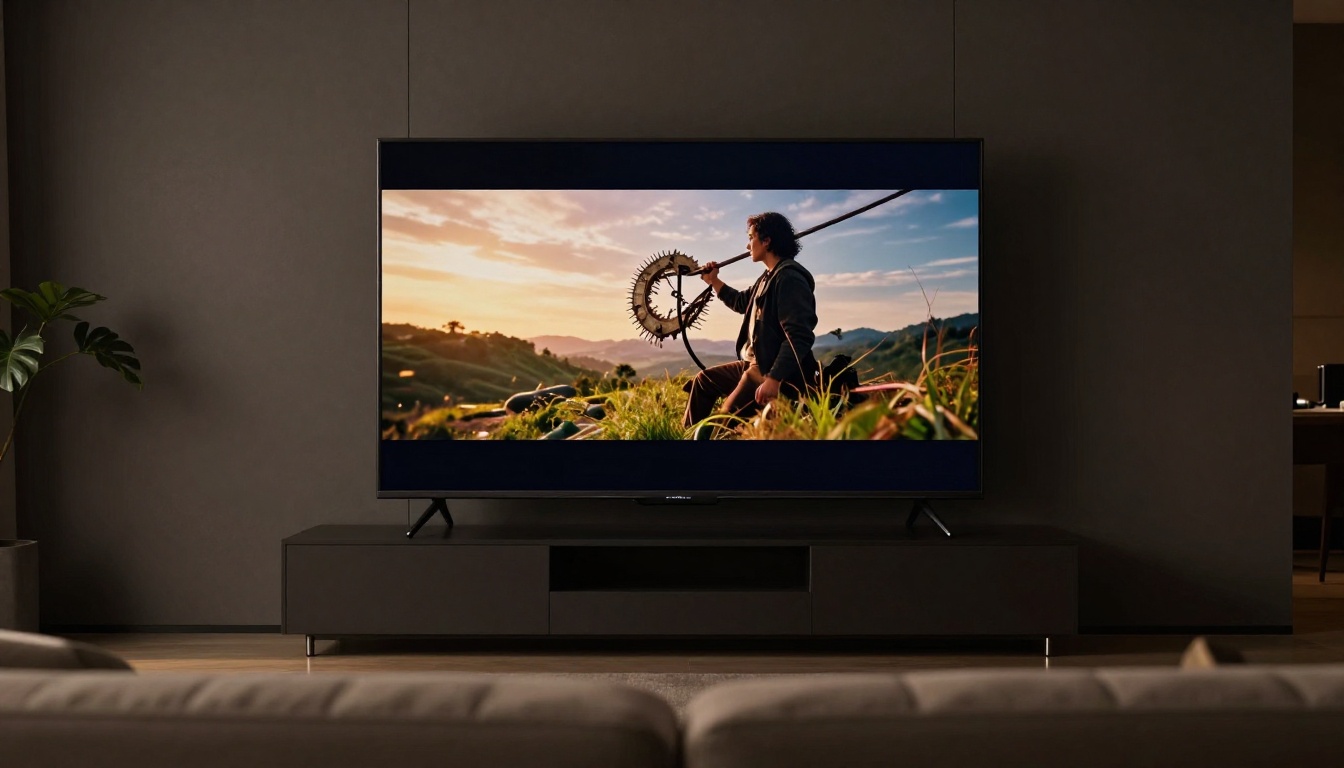
Samsung’s 89-inch MicroLED wall retails for around $80,000. LG’s 97-inch M-series OLED hovers near $30,000. Sony’s Bravia 9 Mini LED, one of the most critically praised televisions ever made, tops out around $5,500 for the 85-inch model. The question that nobody in the display industry wants you to ask is straightforward: sitting on your sofa eight feet away, can you actually see the difference between a $25,000 television and one that costs a fifth of that price?
The answer is more complicated than the spec sheets suggest.
What You Are Actually Paying For at the Top End
The flagship television market in 2026 is split across three competing display technologies. OLED, which LG and Sony have refined over the past decade, produces per-pixel lighting with true blacks and wide viewing angles. Mini LED, used by Samsung, Sony, and TCL, packs thousands of dimming zones behind a traditional LCD panel to approximate OLED-level contrast at lower cost. And MicroLED, still almost entirely a Samsung play at consumer scale, puts self-emissive diodes directly on the panel with no color filters, no burn-in risk, and theoretically limitless brightness.
MicroLED is the technology that commands the most staggering prices, and the reasons are partly engineering and partly manufacturing yield. Each display requires millions of microscopic LEDs transferred onto a substrate with near-perfect precision. A single dead pixel cluster means the panel fails quality control. Samsung has been shipping MicroLED since 2022, but production volumes remain low, and prices reflect that scarcity more than they reflect a proportional improvement in picture quality.
Flagship TV Technologies Compared (2026)
| Technology | Top Model | Size | Approx. Price | Peak Brightness | Burn-In Risk |
|---|---|---|---|---|---|
| MicroLED | Samsung MNA | 89" | $80,000 | 4,000+ nits | None |
| OLED (MLA) | LG M4 Signature | 97" | $30,000 | 2,100 nits | Low |
| QD-OLED | Samsung S95F | 77" | $3,500 | 2,000 nits | Low |
| Mini LED | Sony Bravia 9 | 85" | $5,500 | 3,000 nits | None |
| Mini LED | Hisense U9N | 85" | $2,800 | 3,500 nits | None |
What stands out in the numbers is how competitive the sub-$6,000 tier has become. The Hisense U9N, a television that costs less than a round-trip business class ticket to Tokyo, produces peak brightness figures that rival or exceed sets costing ten times more. Sony’s processing engine in the Bravia 9 handles motion, upscaling, and tone mapping with a sophistication that makes raw specs almost beside the point.
The 8K Question
Every major manufacturer still sells 8K televisions, and every honest reviewer will tell you the same thing: there is almost no native 8K content to watch on them. Streaming services cap at 4K. Blu-ray discs cap at 4K. Most cinematic content is mastered at 2K or 4K. The 8K sets upscale everything, and the best of them do it remarkably well. But you are paying a premium for a resolution advantage that, at normal viewing distances on screens under 100 inches, the human eye cannot resolve.
The math is unforgiving. At eight feet from an 85-inch screen, the angular resolution difference between 4K and 8K falls below the threshold of 20/20 vision. You would need to sit closer than five feet, or buy a screen larger than 100 inches, for 8K to deliver a perceptible improvement in detail. This is not a controversial claim. It is physiology.
Where 8K panels do sometimes outperform their 4K counterparts has nothing to do with resolution. The flagship 8K models tend to get the best processing chips, the brightest backlights, and the most advanced anti-reflection coatings. You are paying for the halo features that happen to come packaged with an unnecessary pixel count.
Where Expensive TVs Genuinely Win
There are real, visible differences between a $3,000 television and a $25,000 one. They are just not the differences the marketing emphasizes.
Screen size and room presence. An 89-inch or 97-inch panel transforms a room in a way that a 65-inch set simply cannot. The immersive effect of a properly large screen at the right viewing distance is the single most impactful upgrade in home entertainment. If you have the wall space and the viewing distance, bigger genuinely is better, and bigger costs more.
HDR highlight detail. MicroLED and the best Mini LED sets can push past 3,000 nits of peak brightness, which means specular highlights in HDR content carry a punch and dimensionality that lower-brightness panels cannot match. Sunlight on water, neon signs, explosions: all gain a sense of depth that 1,000-nit panels miss. This is visible. It is not subtle in a side-by-side comparison. Whether you notice it when you are watching a film and not actively looking for it is another matter.
Build and integration. LG’s M-series uses a wireless transmitter box, meaning the panel itself has a single power cable. Samsung’s MicroLED is designed as a permanent architectural installation with no bezel. These are legitimate engineering achievements that simplify installation and improve aesthetics, and they carry real cost.
Where They Do Not
Color accuracy on a well-calibrated $2,500 OLED is, for all practical purposes, identical to a $30,000 one. Both cover the DCI-P3 gamut. Both produce colors that exceed what your streaming content is mastered in. The idea that a more expensive panel will show you colors you are missing on a cheaper one is, in most cases, marketing.
Motion handling is more about the processor than the panel technology. Sony’s XR processor in its mid-range sets often outperforms competitors at twice the price. Samsung’s motion processing has historically been aggressive with interpolation in ways that many viewers find artificial.
What You Can and Cannot See From 8 Feet
| Feature | Visible Difference? | Notes |
|---|---|---|
| Screen size (65" vs 89"+) | Yes, dramatically | Single biggest visual impact |
| 4K vs 8K resolution | No | Below human acuity threshold at normal distance |
| OLED vs good Mini LED contrast | Subtle | Mainly in dark scenes, off-angle viewing |
| HDR peak brightness (1,000 vs 3,000 nits) | Yes, in HDR content | Specular highlights, sunlit scenes |
| Color gamut (DCI-P3 coverage) | No | All flagship panels cover it adequately |
| Motion processing quality | Yes | Varies by processor, not price |
The Practical Recommendation
If you have $25,000 to spend on a television and a room that can accommodate 85 inches or more, the LG G4 OLED at 83 inches ($4,500) paired with a proper calibration ($300-500) and a high-end sound system will deliver a viewing experience that is, from a seated position, within striking distance of anything on the market. Put the remaining $20,000 into acoustics, seating, and light control, and you will have a better home theater than someone who spent the full amount on the panel alone.
If money genuinely is not the constraint and you want the largest possible screen with the fewest compromises, Samsung’s MicroLED is the only technology that scales past 100 inches without projection, and it does so with zero burn-in risk and extraordinary brightness. It is a remarkable piece of engineering. It is not twenty times better than a television that costs one-twentieth as much.
The display industry’s most interesting story right now is not happening at the top of the price range. It is happening in the $2,000-$5,000 bracket, where QD-OLED and advanced Mini LED sets have made the performance gap between mid-range and flagship narrower than it has ever been. The $25,000 television exists because it can. Whether it should is a question your eyes, not the spec sheet, should answer.
Looking for luxury brands, stores, and services? Browse our curated directory: