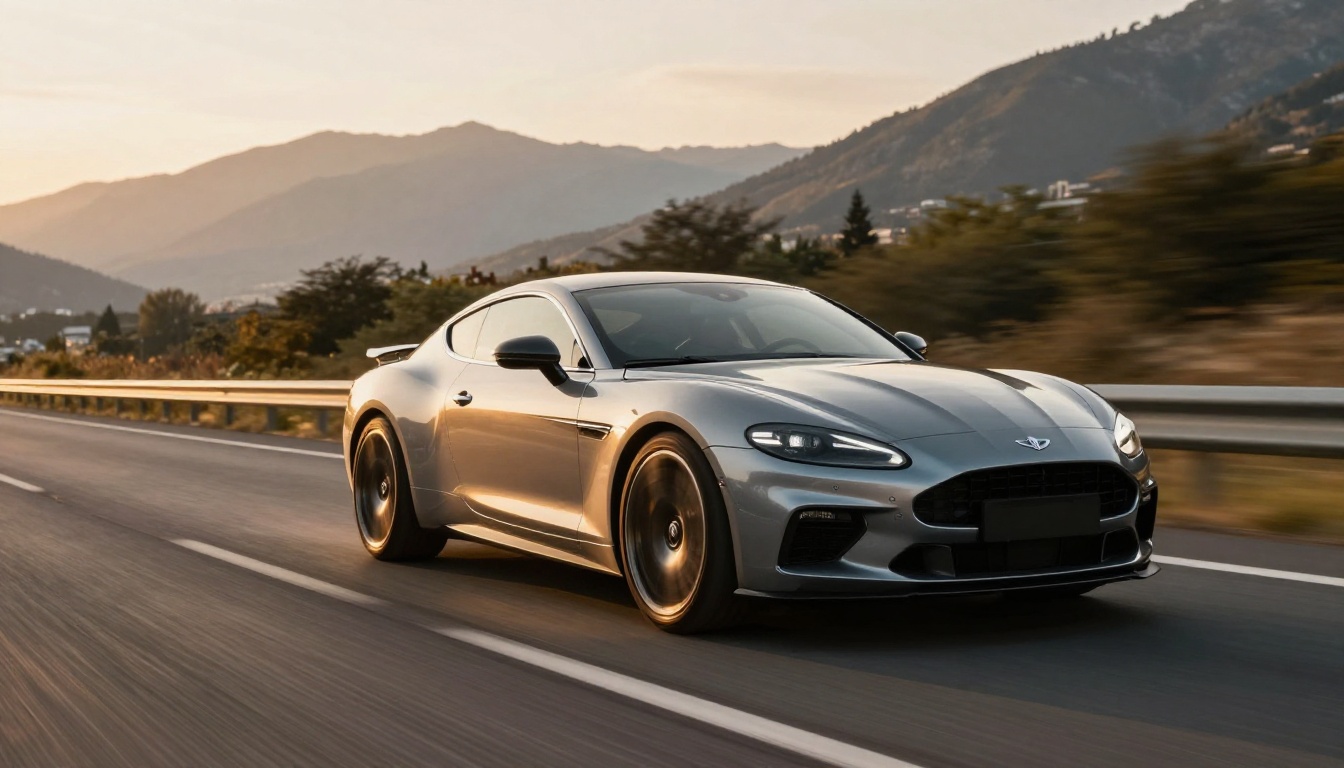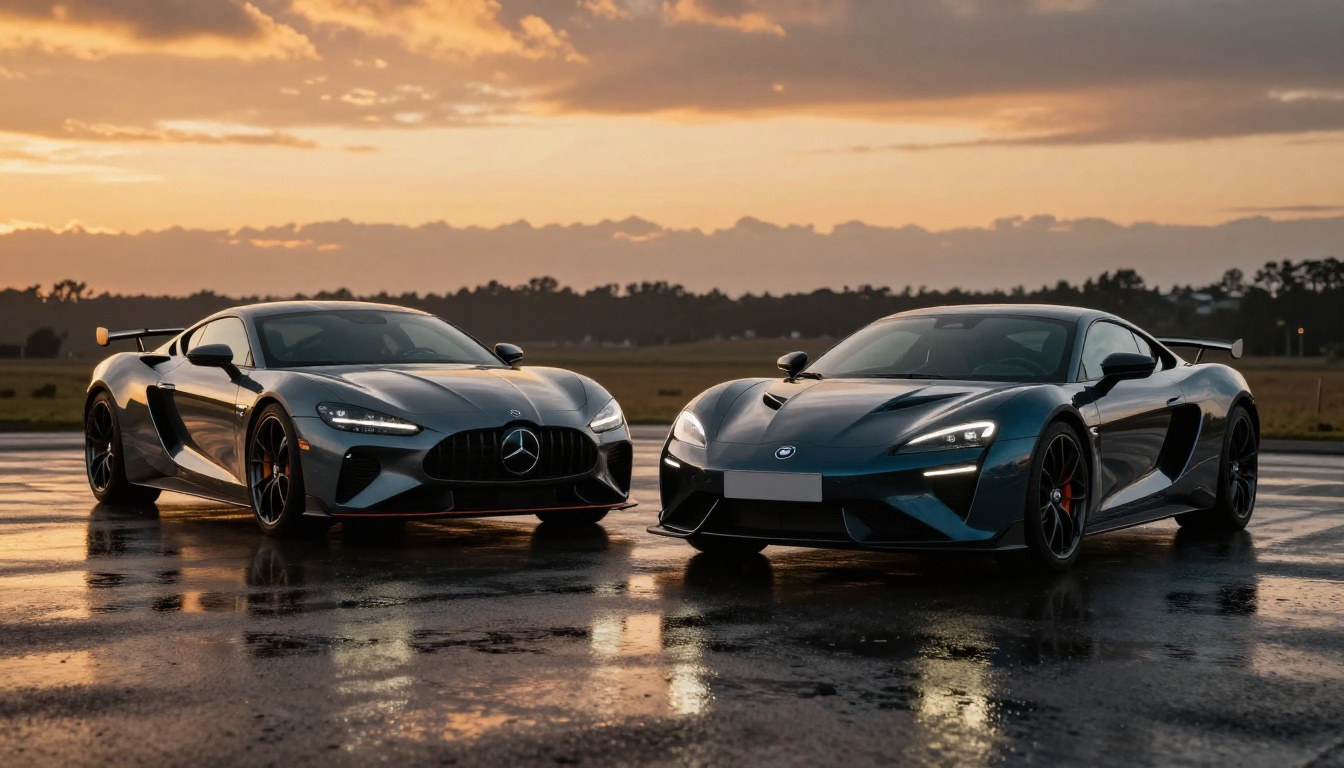
A Porsche Taycan Turbo GT will hit 60 mph in 2.1 seconds, corner with the precision of a car half its weight, and cost you roughly $230,000. A 911 Turbo S will do 60 in 2.6, sound like a mechanical symphony through three alpine tunnels, and run you about $230,000. They share a badge. They share almost nothing else about what it feels like to own one for a year.
That tension — same price bracket, fundamentally different ownership — plays out across every major marque now. Porsche, Mercedes, and BMW each sell an electric flagship and a combustion equivalent at or near $150,000. The marketing says they are both the future. The spreadsheet says something more nuanced. After a year of living with cars from both sides of this divide, here is what the numbers and the daily experience actually reveal.
The Three Matchups
To keep this honest, each pair comes from the same manufacturer, sits at a similar price point, and targets the same buyer. No comparing a track-focused EV against a touring sedan.
The Head-to-Head Lineup (2026 Model Year)
| Matchup | Electric | MSRP | Combustion | MSRP |
|---|---|---|---|---|
| Sports Car | Porsche Taycan Turbo GT | $230,000 | Porsche 911 Turbo S | $230,000 |
| Flagship Sedan | Mercedes EQS 580 4MATIC | $130,000 | Mercedes S 580 4MATIC | $125,000 |
| Executive Sedan | BMW i7 M70 xDrive | $170,000 | BMW M760e xDrive | $165,000 |
The prices cluster tightly enough that the decision is rarely about money upfront. It is about what happens after you sign.
Where Electric Genuinely Wins
The First Ten Seconds
No combustion car, at any price, matches the initial shove of the off the line. The torque is instantaneous, relentless, and repeatable. Launch it ten times in a row and the eleventh pull is identical to the first — no heat soak, no clutch wear, no waiting for the turbochargers to wake up. The 911 Turbo S is devastatingly fast by any standard, but its power delivery has a narrative arc: boost builds, the flat-six howls, the PDK snaps through gears. The Taycan just detonates.
The tells a similar story. Its 650 horsepower arrives with a silence that makes 60 mph feel like 30. The M760e, with its plug-in hybrid setup, is quick by sedan standards but feels like it is negotiating between its electric motor and its V8 in a way the i7 never does.
Refinement at Low Speed
Every EV on this list is a better car in city traffic. The technology integration in modern EVs extends to how they handle the mundane: one-pedal driving in stop-and-go, near-silence at parking-lot speeds, and the absence of a transmission hunting for the right gear during urban crawl. The is perhaps the most dramatic example. At 30 mph, it is quieter than most living rooms. The S 580 is remarkably refined, but it is still a machine with a combustion engine, and at low speeds, you know it.
Running Costs (With a Caveat)
Charging at home costs roughly a third of what premium fuel does per mile. Over 15,000 miles a year, that is $2,000-3,000 in annual fuel savings. Brake wear is minimal thanks to regenerative braking. Oil changes do not exist. The maintenance schedule on an EV is almost comically sparse compared to a twin-turbo flat-six that wants fresh fluid every 10,000 miles.
The caveat: public DC fast charging erodes this advantage significantly. Charging at an Electrify America station can cost $0.40-0.60 per kWh, which brings per-mile costs uncomfortably close to gasoline. If your daily routine depends on public infrastructure, do the math honestly before assuming savings.
Where Combustion Still Has the Edge
Range and Refueling Freedom
The carries a 16.9-gallon tank. Fill it in four minutes, drive 300 miles, fill it again. No planning, no apps, no anxiety about whether the charger at your destination is occupied, broken, or inexplicably slower than advertised. The Taycan Turbo GT offers roughly 260 miles of EPA range — respectable on paper, closer to 200 in spirited driving or cold weather. And replenishing those miles, even at a 270 kW fast charger, takes 20-25 minutes for an 80% charge.
For the sedans, the gap is less dramatic but still present. The EQS 580 manages about 340 miles of range, which covers most daily use without issue. But the S 580 will do 450 miles on a tank and refuel in the time it takes to buy a coffee. For long road trips — the kind where you leave at 6 a.m. and want to arrive by lunch — combustion remains meaningfully more convenient.
The Sound Question
This is not nostalgia. It is about sensory engagement. The 911 Turbo S has one of the great automotive soundtracks: a flat-six turbo bark that sharpens under load, pops on overrun, and communicates mechanical effort in a way that no synthesized EV sound will replicate. You feel connected to the machine through your ears as much as through the steering wheel.
The Taycan counters with a synthetic "Electric Sport Sound" that Porsche has tuned carefully. It is not embarrassing — credit to Porsche for that — but it is a simulation of excitement rather than a byproduct of it. Some owners love the silence. Others find it isolating, particularly on a winding road where auditory feedback helps gauge speed and grip.
Resale and Depreciation
This is where combustion currently wins by a significant margin, and it is the factor most buyers underestimate. The data through early 2026 is consistent with broader depreciation trends: EVs shed value faster than their combustion equivalents, sometimes dramatically so.
Estimated 3-Year Depreciation (Based on 2023-2026 Trends)
| Model | Purchase Price | Est. 3-Year Residual | Depreciation % |
|---|---|---|---|
| Porsche 911 Turbo S | $230,000 | $170,000 | 26% |
| Porsche Taycan Turbo GT | $230,000 | $140,000 | 39% |
| Mercedes S 580 | $125,000 | $72,000 | 42% |
| Mercedes EQS 580 | $130,000 | $58,000 | 55% |
| BMW M760e | $165,000 | $90,000 | 45% |
| BMW i7 M70 | $170,000 | $78,000 | 54% |
The EQS takes the hardest hit. A $130,000 car losing more than half its value in three years is a $72,000 depreciation expense — roughly $2,000 a month in value evaporating from your driveway. The S 580 depreciates too, as all Mercedes sedans do, but at a pace that feels normal rather than alarming. The 911 Turbo S, meanwhile, holds value with the stubbornness Porsche sports cars are known for.
Why do EVs depreciate faster? Rapid technology cycles are part of it — a 2023 EV feels meaningfully older than a 2026 model in ways that a three-year-old combustion car does not. Battery degradation anxiety, whether justified or not, suppresses used prices. And manufacturer price cuts on new EVs (Mercedes slashed EQS pricing twice in two years) crater the secondhand market overnight.
Daily Livability: The Stuff That Actually Matters
Spec sheets miss the textures of ownership. Here is what a year of living with these cars reveals:
Cabin space: The EQS has more rear legroom than the S-Class, thanks to its flat floor and long wheelbase. The i7 and 7 Series are virtually identical inside. The Taycan’s rear seats are tight for adults — tighter than the 911’s, which is saying something for a car that is technically a four-door.
Winter performance: Cold weather cuts EV range by 20-30%. A Taycan rated at 260 miles might manage 180 on a January morning in Connecticut. The 911 does not care what the temperature is. This is not a minor inconvenience — it requires genuine planning adjustments for four to five months of the year in northern climates.
Charging infrastructure at home: If you have a garage and can install a Level 2 charger ($500-2,000 installed), the EV ownership experience improves enormously. You wake up every morning with a full charge. If you live in a condo or apartment without dedicated parking, EV ownership remains a genuine hassle in 2026. The infrastructure is better than it was, but “better” is not the same as “solved.”
Road trips: A weekend drive from New York to Vermont in an S 580 requires zero planning. The same trip in an EQS requires checking charger locations, building in a 30-minute stop, and hoping the single DC fast charger in rural Vermont is operational. For cars that cost six figures, the combustion experience is still less encumbered.
The Verdict, Model by Model
Porsche: Taycan Turbo GT vs. 911 Turbo S
The 911 Turbo S is the better all-around car. It is faster in the real world (where top speed and sustained performance matter more than 0-60 launches), more emotionally engaging, holds its value far better, and has none of the range constraints. The Taycan Turbo GT is a remarkable piece of engineering — arguably the most capable EV chassis ever built — but the 911 remains the benchmark for a reason. Buy the 911 unless you specifically want the EV experience and can absorb the steeper depreciation.
Mercedes: EQS 580 vs. S 580
The S-Class wins, and it is not particularly close. The S 580 rides better (air suspension without the penalty of a 5,600-pound curb weight), depreciates at a more predictable rate, and offers the same level of technology and cabin refinement. The EQS is whisper-quiet and its Hyperscreen is a genuine showpiece, but the overall ownership experience — factoring in range, resale, and the reality of long-distance travel — favors the S-Class clearly. Buy the S 580.
BMW: i7 M70 vs. M760e
This is the closest call of the three. The M760e is a plug-in hybrid, which means it offers 30 miles of electric-only range for daily commuting and a V8 for everything else. It is a genuine best-of-both-worlds proposition — silent in the city, powerful on the highway, and free of range anxiety entirely. The i7 M70 is faster in a straight line and more technologically ambitious, but the M760e’s hybrid flexibility makes it the more practical car for most buyers. The M760e is the smarter purchase, though the i7’s back-seat theater experience is worth test-driving before you decide.
The Bigger Picture
The honest answer in 2026 is that electric cars are better in specific, measurable ways — acceleration, low-speed refinement, running costs — and worse in others that matter just as much: range flexibility, resale value, and the freedom to drive without planning. The gap is closing. Battery technology improves every model year. Charging networks are expanding. Depreciation curves will stabilize as the used EV market matures.
But today, with $150,000 to spend, combustion still offers the more complete ownership experience in two of three matchups. The exception is if your daily driving is under 200 miles, you have home charging, and you value the long-term collectibility of first-generation performance EVs — though that is a speculative bet, not a guarantee.
At $150,000, you are not choosing between good and bad. You are choosing between two different philosophies of what a car should be. The combustion car is a refined expression of a century of engineering. The electric car is a declaration that the next century will be different. Both are worth owning. Neither is worth owning without understanding exactly what you are trading away.
For buyers who want to understand how these cars fit into a broader ownership cost picture — including insurance, storage, and the hidden expenses that come with six-figure vehicles — our breakdown of private aviation ownership models offers a similar cost-versus-convenience framework for a different category entirely.
Looking for luxury brands, stores, and services? Browse our curated directory: