The $9,000 Question
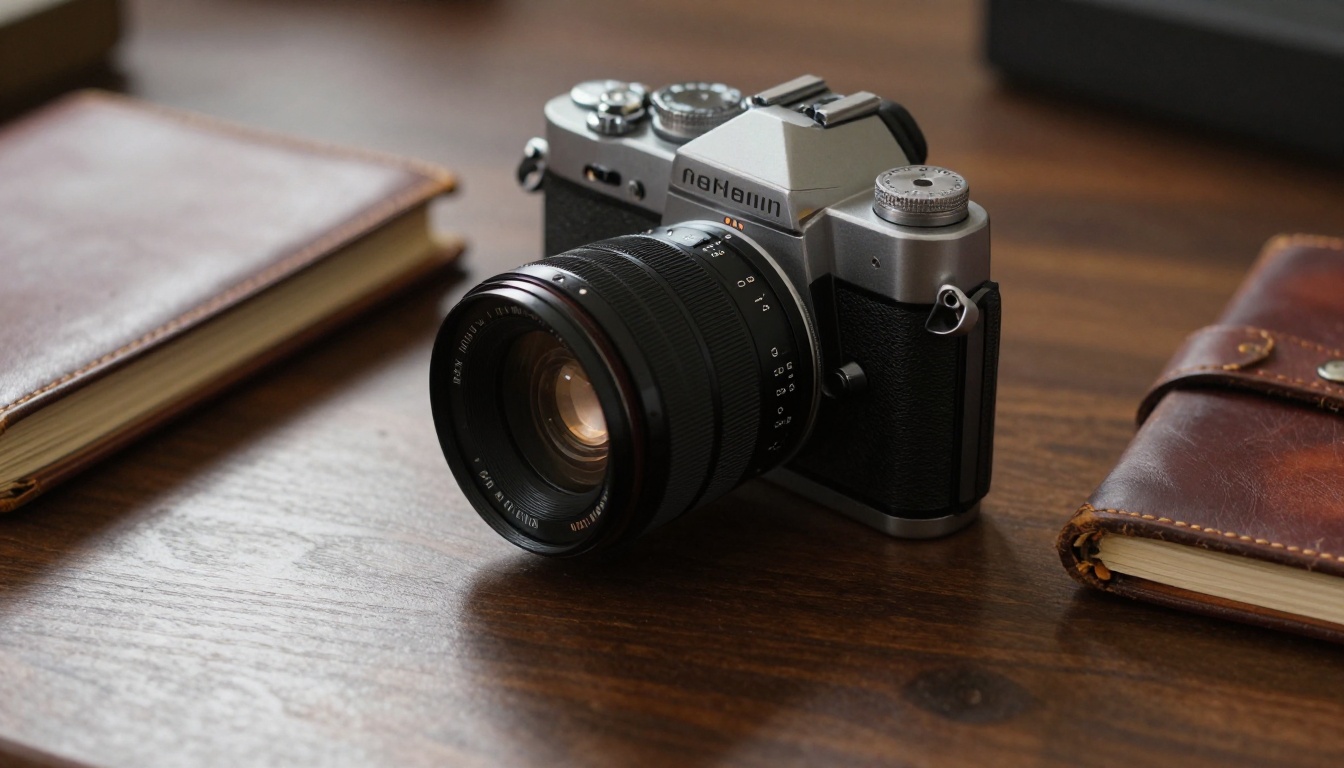
The Leica M11 body costs $8,995. No lens. No strap. No memory card. For that money, you could buy a with a Zeiss Batis 40mm f/2, a spare battery, and still have enough left for a weekend in Vienna to actually use it. The Sony has 61 megapixels to the Leica's 60, superior autofocus with real-time subject tracking, in-body image stabilization, 4K 60fps video, and a fully articulating screen. On paper, it is the better camera in every measurable dimension.
And yet the M11 sells out. Waitlists form. Used M-mount lenses from the 1960s trade for more than they cost new. Something is happening here that specifications cannot explain, and dismissing it as "brand tax" misses the point as badly as arguing that a $200 quartz watch keeps worse time than a mechanical piece costing fifty times more. Both statements can be true. Neither tells the whole story.
The Honest Case for Leica
The Rangefinder as Discipline
A rangefinder is not a viewfinder. The Leica M system uses a separate optical window with a superimposed focusing patch, meaning you see the scene with both eyes open, beyond the frame lines, in real time with no electronic delay. This is not just a different experience from a mirrorless EVF. It imposes a fundamentally different way of seeing. You cannot zoom. You cannot rely on autofocus to decide what matters. You must pre-visualize the focal length, manually focus through the rangefinder patch, and commit to a composition before the moment passes.
For street photography, documentary work, and candid portraiture, this constraint is the point. The mechanical focus tab on an M lens can be set to a zone distance — say, 2.5 meters at f/8 — and fired without looking through the viewfinder at all. Henri Cartier-Bresson did not shoot decisive moments by half-pressing a shutter button and waiting for green squares. He pre-focused and shot from the hip. The M system still allows this in a way no autofocus camera does.
The counterargument: you can manually focus any mirrorless camera. True. But the experience through an EVF — with focus peaking overlays, magnification assists, and a digitally rendered image — is a categorically different relationship with the subject. Whether that matters depends on whether you view the camera as a tool or a collaborator.
Build Quality That Outlasts Generations
The body is machined from solid aluminum and brass. The top plate is a single piece of milled metal, not stamped or cast. The shutter has been tested to 400,000 actuations. There are M3 bodies from 1954 — seventy-two years old — still in daily use by working photographers. The same cannot be said of any electronic camera made in the last two decades.
This is not abstract durability for its own sake. It means a Leica M purchased today will, with basic servicing, outlast every Sony, Canon, and Nikon body currently on the market. It means M-mount lenses bought in the 1970s mount directly on the M11 without adapters. The system has maintained mechanical compatibility across seven decades. That is not marketing — it is engineering commitment of a kind that recalls old-world manufacturing philosophy, where longevity is designed in rather than planned out.
The Rendering Character
This is where the argument gets subjective, and where Leica partisans lose credibility by reaching for mysticism. So let us be precise. Leica M lenses, particularly the Summilux 35mm f/1.4 and Summicron 50mm f/2, produce a specific optical signature: smooth transitions between in-focus and out-of-focus areas, relatively low micro-contrast compared to modern Zeiss or Sony GM glass, and a way of rendering skin tones that many portrait and documentary photographers prefer.
Is this worth $3,000-5,000 per lens? For photographers whose income depends on a recognizable visual style — possibly. The Summilux 35mm FLE, at around $5,595, produces images that look measurably different from a Sony 35mm f/1.4 GM at $1,398. Whether "different" means "better" is entirely a matter of taste and intention. But dismissing optical character as imaginary is as lazy as claiming it is self-evidently superior.
The Honest Countercase
You Are Paying an Enormous Brand Premium
The Leica M11-P, which adds a red dot deletion and content credentials, costs $9,795. The Leica M11-D, which removes the rear screen entirely, costs $9,195 — more than the M11, for fewer features. The Summilux-M 50mm f/1.4 ASPH costs $4,595. A Leica M11 kit with two prime lenses runs $18,000-20,000 before a single accessory.
Camera System Cost Comparison (Body + 35mm + 50mm Equivalent Setup)
| System | Body | 35mm Lens | 50mm Lens | Total |
|---|---|---|---|---|
| Leica M11 | $8,995 | $5,595 (Summilux 35) | $4,595 (Summilux 50) | $19,185 |
| Sony A7R V | $3,898 | $1,398 (GM 35/1.4) | $1,298 (GM 50/1.4) | $6,594 |
| Nikon Z8 | $3,997 | $1,397 (Nikkor 35/1.4) | $647 (Nikkor 50/1.8 S) | $6,041 |
| Fujifilm X-T5 | $1,699 | $799 (XF 35/1.4 R) | $449 (XF 50/2 R WR) | $2,947 |
The Leica system costs roughly three times the Sony equivalent and six times the Fujifilm. For that multiplier, you get no autofocus, no image stabilization, no video capability worth discussing, and a 3-inch fixed rear screen. In pure capability terms, the value proposition is indefensible. You are paying for heritage, optical character, build quality, and the experience of shooting — things that matter enormously to some photographers and not at all to others.
Autofocus Is Not a Crutch
The romantic notion that manual focus produces more intentional images does not survive contact with a toddler, a moving subject, or fading light. Sony's real-time eye autofocus tracks a subject across the frame with sub-centimeter precision at f/1.4. A Leica rangefinder at f/1.4 has a depth of field so thin that manual focus success rates drop significantly in dynamic situations. For event photography, sports, wildlife, or any scenario involving unpredictable movement, the M system is not charming — it is handicapped.
Professional photojournalists who once relied on Leica Ms have largely moved to mirrorless systems precisely because autofocus reliability is not vanity. It is the difference between getting the shot and missing it.
The Used Market Is a Trap for New Buyers
Leica bodies depreciate less than competitors, but they still depreciate. An M11 purchased new for $8,995 sells used for roughly $6,500-7,000 after a year. That is a $2,000 loss. A Sony A7R V purchased for $3,898 sells for around $2,800 after the same period — an $1,100 loss. In percentage terms the depreciation is similar, but the absolute dollar exposure with Leica is significantly higher.
M-mount lenses hold value better, particularly the classic focal lengths. A used Summicron 50mm f/2 V5 can be found for $1,800-2,200 and will resell for roughly the same in five years. This is genuinely remarkable, and arguably the strongest financial case for the M system — the kind of considered purchase that costs more upfront but less over a lifetime.
The Fujifilm Problem
The camera that should worry Leica's boardroom is not the Sony A7R V. It is the .
At $1,599, the X100VI offers a fixed 23mm f/2 lens (35mm equivalent) with Fujifilm's celebrated film simulation modes, a hybrid optical-electronic viewfinder, competent autofocus, 6.2K video, and a retro design language that explicitly channels rangefinder aesthetics. It is perpetually sold out. Waitlists stretch months. The secondary market prices it at $2,000-2,400. It has become the camera that non-photographers buy because they want to take more deliberate photos — the exact aspiration that Leica has monetized for decades.
The X100VI does not compete with the M11 on image quality, build longevity, or optical rendering. But it competes ferociously for the same emotional territory: the idea that a camera can be a beautiful object that changes how you see. For every potential Leica buyer under forty, the X100VI is the gateway drug — and for many, it proves to be enough.
Leica M11 vs. Fujifilm X100VI: The Overlap
| Feature | Leica M11 | Fujifilm X100VI |
|---|---|---|
| Price | $8,995 (body only) | $1,599 (with lens) |
| Sensor | 60MP full-frame | 40.2MP APS-C |
| Lens | Interchangeable M-mount | Fixed 23mm f/2 (35mm equiv.) |
| Viewfinder | Optical rangefinder | Hybrid OVF/EVF |
| Autofocus | Manual only | Phase-detect AF |
| Video | Basic 4K | 6.2K 30fps |
| Film Simulations | None | 20 modes |
| IBIS | No | No |
| Weight | 530g (body) | 521g (with lens) |
| Build | Brass/aluminum, made in Germany | Aluminum, made in Japan |
Fujifilm has also expanded the system upward. The GFX 100S II, at $4,999 with a medium-format 102MP sensor, produces images with a tonal quality and detail that rivals anything in the M system — and it has autofocus. For landscape, studio, and architectural work, the GFX increasingly presents the more rational choice.
Who Should Actually Buy a Leica M
After years of shooting both systems, the honest answer is narrower than Leica's marketing suggests and broader than its critics admit.
- Street and documentary photographers — who shoot primarily at 28mm, 35mm, or 50mm, who want a silent shutter and an unobtrusive body, and who value the rangefinder discipline as a creative tool rather than a limitation.
- Collectors and enthusiasts — who appreciate mechanical precision the way others appreciate fine art or mechanical watches, and who derive genuine satisfaction from owning and using a deliberately crafted object.
- Photographers with a specific aesthetic — who have tested M-mount glass and confirmed, through their own work rather than forum consensus, that the rendering suits their style.
Who should not buy a Leica M: anyone who shoots video, anyone who needs reliable autofocus, anyone buying it primarily for the red dot, and anyone who would need to finance the purchase. A camera that costs more than many people's monthly rent should be bought from discretionary funds, not debt.
The Verdict, Without Mysticism
The Leica M11 is a remarkable camera that is also a poor value by any conventional measure. It does fewer things than its competitors, does them more slowly, and costs three to six times as much. Its lenses are superb but not categorically superior to modern alternatives from Sony, Nikon, or Sigma. Its build quality is genuinely in a class of its own. Its rangefinder experience is irreplaceable — nothing else on the market replicates it.
The question is not whether the M11 is "worth it." That framing assumes a single axis of value. The real question is whether the specific things a Leica does differently — the shooting discipline, the mechanical satisfaction, the optical character, the multigenerational durability — matter enough to you to justify the premium. For a small but committed group of photographers, the answer has been yes for seventy years. For everyone else, the Sony and Fujifilm ecosystems offer more capability, more flexibility, and more room to grow.
The best camera is not the one you have with you. It is the one that makes you want to go outside and use it. For some photographers, that will always be a Leica. For most, it no longer needs to be.
If the M system interests you but the price gives pause, consider entering through the used lens market. A pre-owned Summicron 50mm f/2 on a Sony body via a Leica-to-E adapter costs around $2,000 total and gives you a genuine taste of M-mount rendering without the five-figure commitment. It is the most honest way to test whether the Leica difference is real — for you.
Looking for luxury brands, stores, and services? Browse our curated directory: