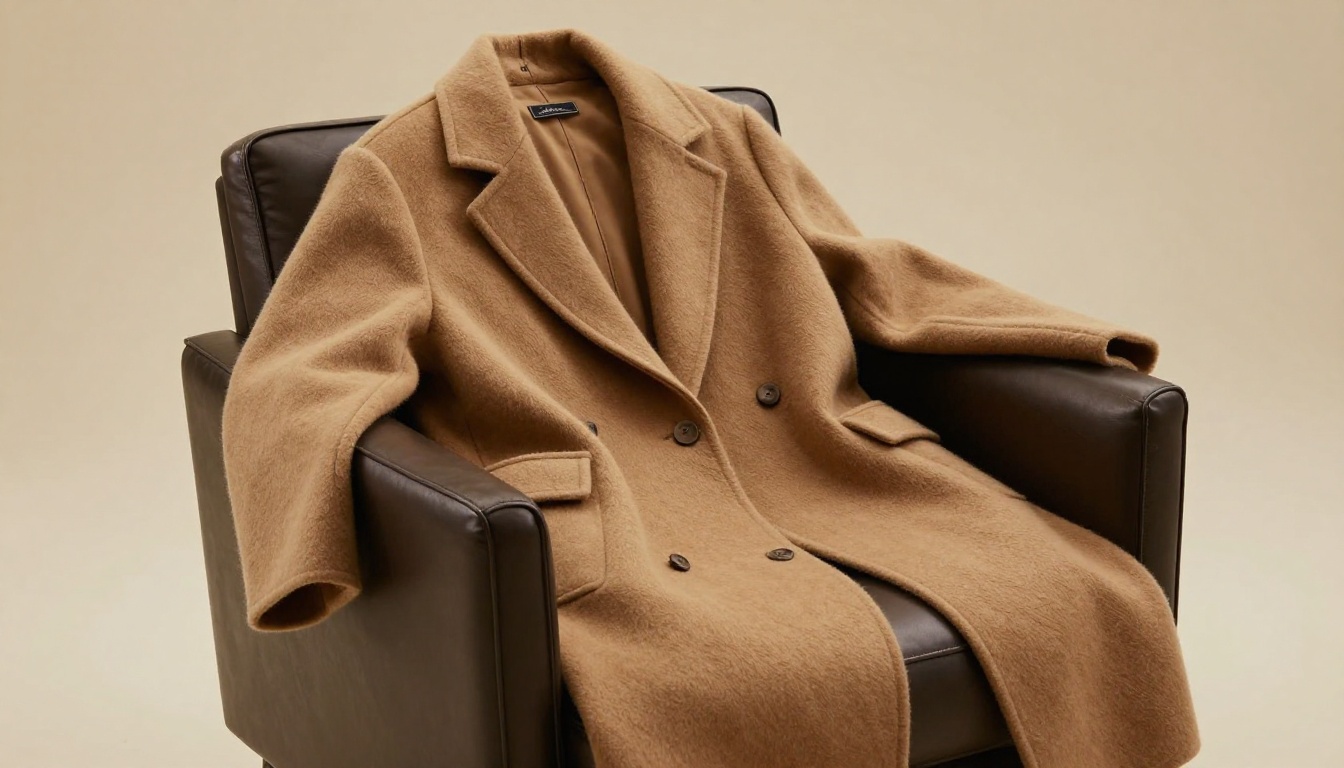
You are standing in a Loro Piana boutique, running your hand across a coat that costs more than some used cars. The sales associate has already mentioned the words "baby cashmere" twice. The coat next to it, visually almost identical, costs a third of the price. You cannot tell them apart by looking. But you can absolutely tell them apart by touching — and that gap only widens over years of wear.
The difference between a $500 cashmere coat and a $10,000 one is not marketing. It is biology, geography, construction, and obsessive quality control at every stage. Here is what you are paying for.
The Fiber: Why "100% Cashmere" Means Almost Nothing
All cashmere comes from the undercoat of cashmere goats, but the similarities end there. The fiber is graded by micron count — the diameter of each individual hair. Standard commercial cashmere runs 16 to 19 microns. Premium sits between 14 and 15.5 microns. Anything under 14 microns is baby cashmere, combed from kids under one year old, and it is vanishingly rare. A single adult goat produces around 150 grams of usable fiber per year. A baby goat produces roughly 30 grams — barely enough for a scarf.
Geography matters enormously. Mongolian cashmere, particularly from the Alashan region, is widely considered the finest in the world. The goats live above 3,000 meters where winters hit minus 40 degrees. The harsher the climate, the finer and denser the undercoat grows. Chinese cashmere — roughly 70% of global production — varies wildly. The best rivals Mongolian. The commodity-grade stuff in $200 department store coats is coarse, short-stapled, and pills aggressively within weeks.
This is the fundamental deception of cheap cashmere. "100% cashmere" tells you the species of goat, not the grade of fiber. It is like saying a wine is "100% grape" — technically true and completely useless. One is a Burgundy Grand Cru; the other is boxed table wine.
Supply Chain Control
Brands like Loro Piana and Brunello Cucinelli do not buy fiber on the open market. They maintain direct relationships with herding cooperatives in Mongolia and pay premiums for first-pick fiber. Loro Piana has worked with the same Mongolian families for decades, selecting and sorting fiber at origin rather than at the mill. This vertical control is expensive, but it is the only way to guarantee consistent quality across every garment, every season.
The Construction: Where the Money Becomes Invisible
A cheap cashmere coat is cut from pattern pieces and assembled on industrial machines in roughly the same way as a polyester jacket. A coat at the $8,000-plus range is a different object entirely.
Start with the fabric itself. Premium cashmere cloth is woven and then finished through a process of washing, brushing, and pressing that can take days. The goal is to raise the nap — coaxing the surface fibers into a soft, even bloom — without weakening the underlying weave. Cheap finishing does this mechanically and quickly. High-end finishing does it slowly, often by hand, sometimes with natural teasel brushes that have been used in Italian textile mills since the Renaissance.
Tailoring Details That Add Up
Then there is the cut. A Kiton or Colombo coat is cut from a single bolt so the grain, color, and texture match perfectly across every panel. Mass-produced coats piece together fabric from different bolts, creating subtle inconsistencies you notice subconsciously as the coat ages. The seams on a $10,000 coat are virtually invisible — the tailor matched the nap direction at every join and finished each seam by hand.
Internal construction separates price tiers even more starkly. A quality coat uses a floating canvas interlining — horsehair blended with wool, stitched (not glued) to the outer shell. This gives the coat its drape and shape while allowing it to move with the body. Fused interlinings, where a synthetic layer is heat-bonded to the fabric, are cheaper but delaminate over time, creating bubbling and stiffness. You will never find a fused interlining in anything from Colombo or Kiton.
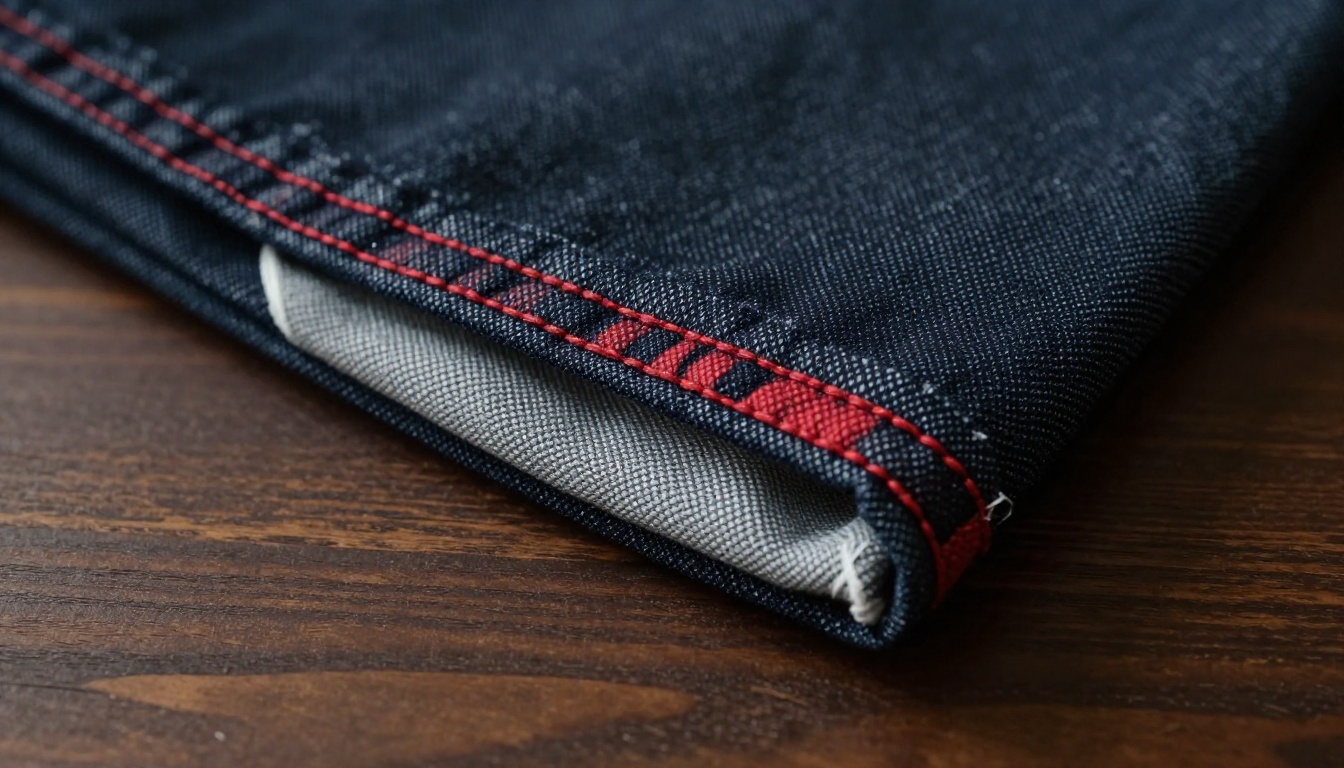
The small details accumulate: buttonholes stitched by hand at 20 or more stitches per centimeter. Buttons attached with a thread shank so they sit slightly raised, reducing stress on the cloth. Hems rolled and slip-stitched rather than machine-folded. None of these things are visible from three feet away. All of them affect how the coat feels, hangs, and ages.
The paradox of truly expensive clothing is that the craftsmanship is designed to be invisible. You are paying thousands for details no one will see — except you, every time you put it on.
The Brands Worth Knowing
Loro Piana ($5,000–$15,000) — The standard against which everything else is measured. They own the entire pipeline: sourcing, spinning, weaving, finishing, and retail. Their baby cashmere coats use fiber at 13.5 microns or finer. If you want one brand and zero ambiguity about what you are getting, this is it.
Brunello Cucinelli ($4,000–$12,000) — Based in Solomeo, Umbria, Cucinelli runs perhaps the most ethical luxury operation in fashion. Artisans work regulated hours, earn well above industry standard, and profits are reinvested into the village. The cashmere is excellent — not quite at Loro Piana's fiber level, but the construction and finishing are superb. You buy Cucinelli partly for the coat and partly because you agree with how it was made.
Colombo ($6,000–$20,000) — The brand most people have never heard of, and the one insiders often prefer. Founded in 1937, Colombo specializes in precious fibers: cashmere, vicuna, baby camel. Their hand is arguably the softest in the business. They supply fabric to other luxury houses, so buying their own label means cutting out the middleman.
Kiton ($8,000–$25,000) — A Neapolitan tailoring house that applies suit-making precision to outerwear. A Kiton cashmere coat is constructed like a blazer: working buttonholes, hand-set sleeves, and a softness of shoulder that cheaper brands cannot replicate. The price is steep, but the tailoring is among the best in the world.
The Row ($3,000–$6,000) — The Olsen twins' label has earned genuine respect for its minimalist approach. Precise cuts, clean silhouettes, serious quality. The cashmere grade is a step below the Italian houses — typically 15 to 16 microns — but the design and construction justify the price. A strong option if your priority is a modern, pared-back aesthetic.
The Smart Mid-Range Pick
Max Mara ($2,000–$4,000) — The 101801 coat has been in continuous production since 1981 for good reason. It is not baby cashmere, it is not hand-finished, and the fiber grade sits in the 16 to 17 micron range. What it offers is excellent industrial construction, a proven silhouette, and durability that stretches across decades. For many people, this is the right answer — a well-made coat at a price that does not require justification.
How to Care for a Cashmere Coat
Expensive cashmere requires less maintenance than you think, but the maintenance it does require is non-negotiable. Dry clean sparingly — twice a year at most, ideally once at the end of the season before storage. Frequent dry cleaning strips the natural oils from cashmere fiber and accelerates degradation. Between cleanings, air the coat out after wearing and use a soft brush to remove surface dust and lint.
Storage is critical. Fold the coat — never hang it. Cashmere stretches under its own weight, and months on a hanger will distort the shoulders permanently. Store in a breathable garment bag with cedar blocks or lavender sachets. Moths are cashmere's mortal enemy, and prevention is the only reliable strategy.
Pilling in the first year is normal, not a defect. Loose surface fibers work free through friction and form small balls. Use a cashmere comb and gently stroke in one direction. Never use a lint roller or fabric shaver on high-grade cashmere. After the initial pilling phase, the surface stabilizes and only gets softer.
A well-maintained cashmere coat should last fifteen to twenty years. The price per wear on a $10,000 coat, worn three months a year for fifteen years, works out to roughly $22 per wear. Not cheap, but not irrational either.
The Honest Verdict
The jump from a $500 cashmere coat to a $2,000 one is enormous. The fiber is dramatically better, the construction is tighter, and the coat will last five times as long. This is the upgrade that makes the most tangible difference per dollar spent. If you are wearing a department-store cashmere coat and wondering whether spending more is justified — it is, emphatically.
The jump from $2,000 to $10,000 is real but operates on a steeper curve of diminishing returns. You are getting finer fiber, hand finishing, superior internal construction, and a garment that drapes and ages differently. You can feel it. Whether you can justify it depends on how much those tactile and structural differences matter to you personally.
Above $10,000, you are paying for provenance, rarity, and the knowledge that your coat was made from fiber hand-combed from a specific breed of goat at 4,000 meters altitude. The quality difference between $10,000 and $20,000 is real but marginal. You are in collector territory — buying the story as much as the garment.
If forced to pick one coat at one price, it would be Loro Piana in the $7,000 to $9,000 range. That is where you get baby cashmere, full supply chain integrity, and hand finishing without crossing into purely aspirational pricing. But a Max Mara 101801 at $3,000 will keep you warm, look sharp, and last a decade with proper care. There is no wrong answer in that range — only different definitions of what "worth it" means to you.
Looking for luxury brands, stores, and services? Browse our curated directory: