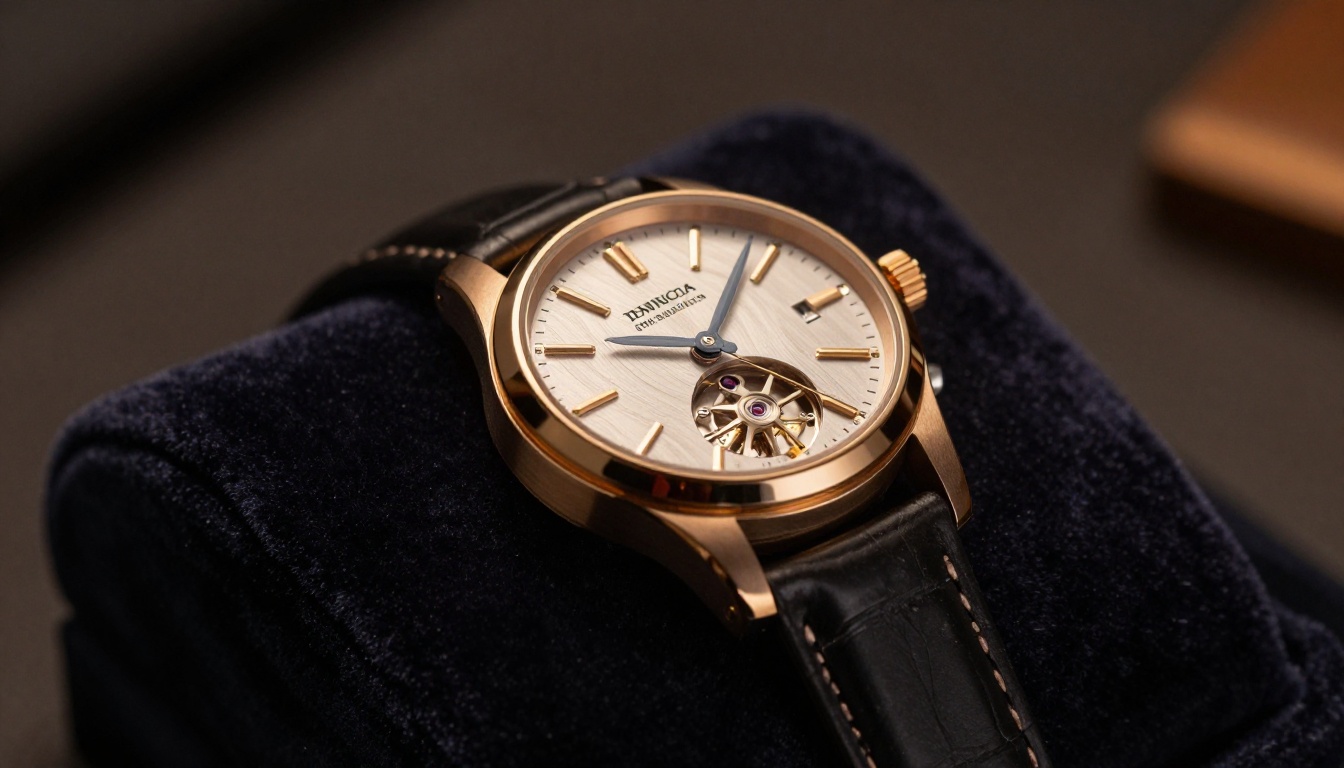
Patek Philippe makes roughly 70,000 watches per year. Rolex makes about a million. Audemars Piguet sits somewhere around 70,000 as well. But only Patek has turned restricted supply into something closer to a philosophical position. The Geneva manufacture doesn't just limit production — it has built an entire ecosystem where the act of purchasing a watch requires more effort than the act of making one.
The Allocation Game and How It Actually Works
Walk into an authorized Patek Philippe dealer and ask to buy a Nautilus 5811/1G. The salesperson will smile, take your name, and explain that there is no waitlist — because Patek officially doesn't do waitlists. What they won't tell you directly is that the watch will go to a client with a documented purchase history, typically someone who has spent six figures at that specific boutique over several years.
This is the allocation game, and it operates on unwritten rules that every serious collector understands. Authorized dealers receive limited quantities of the most desirable references. They distribute them based on relationship depth, purchase history, and a client's perceived commitment to the brand. Buy three Calatravas and a Golden Ellipse, wear them, don't flip them, and you might eventually get the call for something with a waiting list measured in years rather than months.
The retails around $35,000. The sits at roughly $22,000. These aren't throwaway purchases — they're substantial watches in their own right. But within the Patek ecosystem, they function partly as credentials. Proof that you're a collector, not a speculator.
The real price of a Nautilus isn't printed on any tag. It's the years of relationship building and six-figure spend history that precede the phone call.
Dealers themselves are caught in a bind. Patek monitors where watches end up. If a dealer's allocated pieces start appearing on the secondary market shortly after sale, that dealer's allocation gets cut. Everyone in the chain — from Geneva to the boutique floor — has a financial incentive to keep watches on wrists rather than auction blocks.
Secondary Market Premiums and the Nautilus Effect
Before Patek discontinued the Nautilus 5711/1A in 2021, the stainless steel sports watch with a retail price of roughly $30,000 was trading on the secondary market for $80,000 to $130,000 depending on the dial variant. The olive green dial 5711/1A-014, one of the final editions, peaked above $200,000. A watch made of steel, trading at precious metal multiples.
The successor, the in white gold, retails around $35,000. On the secondary market, it trades north of $80,000. The material upgrade to gold didn't close the gap — it merely shifted the baseline. The premium persists because the fundamental equation hasn't changed: demand radically outstrips supply, and Patek has no intention of correcting the imbalance.
This dynamic extends beyond the Nautilus. The Aquanaut 5167A, a more accessible sports reference at $22,000 retail, trades between $35,000 and $45,000 on the grey market. Even relatively available complicated pieces carry premiums. The market has priced in scarcity as a permanent feature, not a temporary condition.
The most dramatic expression of this phenomenon came in December 2021, when a one-of-one Nautilus 5711/1A with a Tiffany Blue dial sold at Phillips auction for $6.5 million. The proceeds went to charity, but the number sent a signal that reverberated through the entire watch market. A steel Patek, regardless of its uniqueness, had entered territory previously reserved for vintage minute repeaters and enamel masterpieces.
The Stern Family Advantage
Patek Philippe has been privately owned by the Stern family since 1932, when Charles and Jean Stern — dial manufacturers who supplied Patek — acquired the company during the Great Depression. Thierry Stern, the current president, represents the fourth generation. This matters more than most collectors realize.
LVMH, which owns TAG Heuer, Hublot, and Zenith, is publicly traded. Richemont, parent of Cartier, IWC, and Jaeger-LeCoultre, answers to shareholders. Both companies face quarterly earnings pressure. When demand surges, the incentive for a public company is to increase production and capture revenue. When demand falls, the pressure is to cut costs and protect margins.
The Stern family faces neither pressure. Thierry Stern has publicly stated that he would rather make fewer watches and maintain quality than expand production to meet demand. This isn't marketing — it's a structural advantage of private ownership. The family can think in decades while competitors think in quarters.
When your competitors answer to shareholders every ninety days, the ability to say "no" to more revenue becomes its own form of competitive advantage.
Consider the contrast with Rolex, which is owned by the Hans Wilsdorf Foundation. Rolex has steadily increased production over the past decade, opening new facilities and expanding capacity. The strategy works — Rolex remains the dominant Swiss watch brand by revenue. But Patek has chosen a different path entirely, one where constraint is the strategy rather than an obstacle to overcome.
"You Never Actually Own a Patek Philippe"
The slogan was conceived by the advertising agency Leagas Delaney in 1996. "You never actually own a Patek Philippe. You merely look after it for the next generation." It was meant to communicate heritage and permanence — a watch as heirloom, passed from parent to child.
Three decades later, the tagline has acquired an unintended second meaning. You never actually own a Patek Philippe because you can't get one. The most desirable references are functionally unavailable at retail. The secondary market offers access, but at premiums that transform a luxury purchase into something closer to an investment decision. The slogan's poetry has been overtaken by market reality.
This isn't entirely accidental. Patek understands that unavailability is itself a form of brand equity. Every person who walks into a boutique and gets told "not available" leaves with a heightened sense of the brand's desirability. The rejection reinforces the mythology. When you finally do receive the call — after years of patience and significant spend — the watch means more precisely because it was difficult to obtain.
What Scarcity Actually Costs
There are genuine downsides to this model. New collectors with significant means but no existing dealer relationships are effectively locked out. The system rewards tenure over enthusiasm and favors established wealth over new money. A thirty-year-old tech founder worth $50 million will have a harder time buying a Nautilus than a sixty-year-old industrialist who has been shopping at the same boutique for two decades.
The grey market fills this gap, but at a cost that some collectors find philosophically troubling. Paying $80,000 for a $35,000 watch means accepting that roughly half your money is buying access rather than craftsmanship. Whether that premium is worth it depends on how you value the intangible — the Gerald Genta design lineage, the 26-330 SC movement, the particular way light catches a horizontally embossed dial.
Patek's answer, implicit in everything the brand does, is that the premium is the point. Scarcity isn't a bug in their system. It's the entire architecture. The Stern family has bet the company on the idea that a watch you can't easily buy is worth more than one you can. Three decades of market data suggest they're right.
The question isn't whether Patek's strategy is sustainable. It's whether any other watchmaker could replicate it. The answer, almost certainly, is no. You'd need ninety years of family ownership, a willingness to leave revenue on the table, and the discipline to tell wealthy clients "not yet" — indefinitely. In an industry increasingly driven by hype cycles and limited editions, Patek's version of scarcity is the real complication.
Looking for luxury brands, stores, and services? Browse our curated directory: