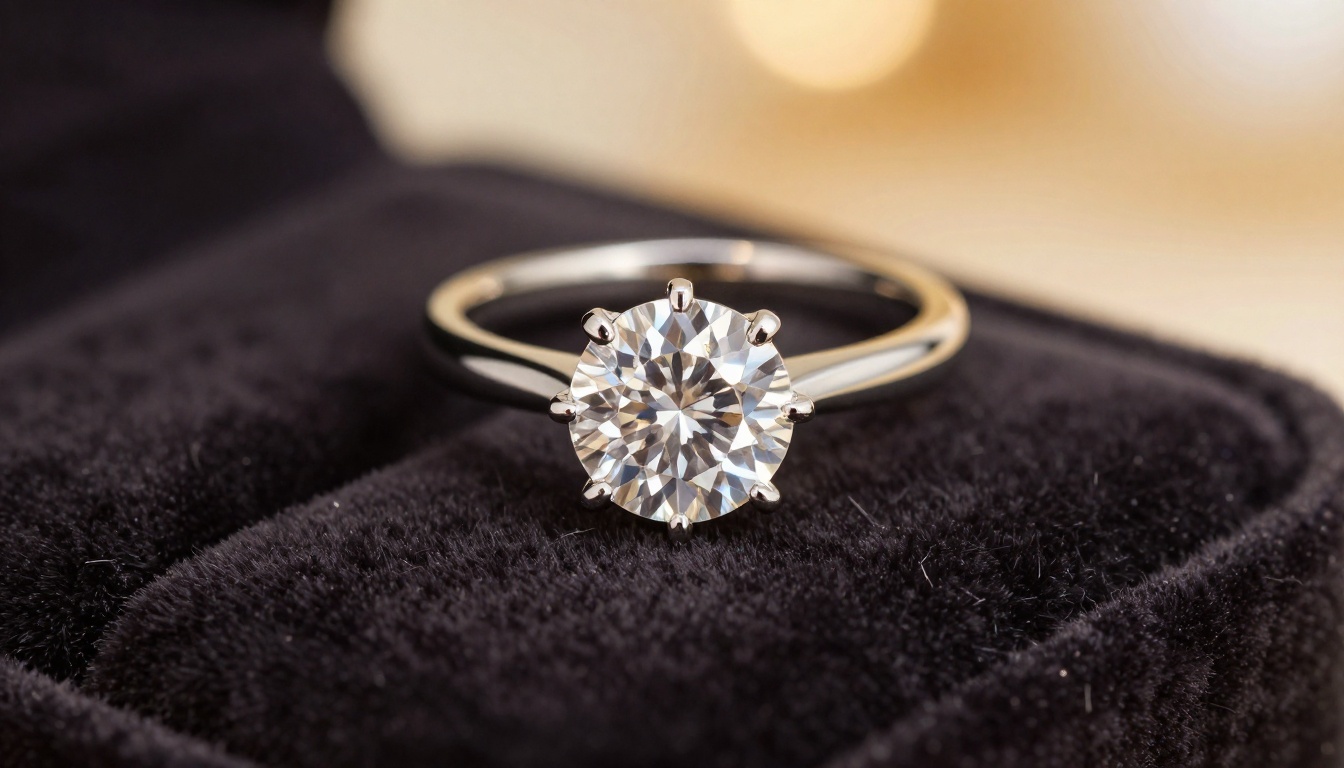
A man walked into Graff's New Bond Street salon last spring with a budget, a deadline, and no idea what he wanted beyond "something she would love." Three hours later, he left with a 3.2-carat emerald-cut diamond in a platinum micro-pave setting, having spent roughly the price of a new Porsche Cayman. He also left knowing more about diamonds than most jewelers at mall stores. That education, as much as the stone, is what this guide is about.
Buying an engagement ring at the high end is not the same experience as walking into a chain store and pointing at a case. The houses that matter — , , , Tiffany, and a handful of independent ateliers — operate differently from one another, and the decisions you face at $15,000 are fundamentally different from those at $150,000. This is a practical guide to navigating that landscape without overpaying, under-buying, or choosing something she will quietly wish were different.
The 4Cs, Addressed Honestly
You have heard about cut, color, clarity, and carat. Every jeweler will recite them. But the way the industry presents these four factors is designed to upsell you on specifications that may not matter to the naked eye, while underplaying the one that does.
Cut is everything. A well-cut 1.5-carat diamond will outperform a poorly cut 2-carat stone in brilliance, fire, and visual size. Cut determines how light moves through the stone, and it is the single factor most responsible for that moment when someone across the table notices the ring and cannot stop looking at it. At the high end, always prioritize Excellent or Ideal cut grades. This is non-negotiable.
Color matters less than you think above G. The GIA grades color from D (colorless) to Z (light yellow). The difference between D and F is virtually invisible once a stone is set in a ring and worn on a hand in natural light. The difference between D and F in price, however, can be 20-30% for the same carat weight. A well-cut G-color stone in a white gold or platinum setting will face up white. Save the D-color premium for stones above 3 carats, where subtle warmth becomes more visible.
Clarity is about what you cannot see. VS1 and VS2 (Very Slightly Included) are the sweet spot. The inclusions in these grades are invisible to the naked eye and only detectable under 10x magnification. Jumping to VVS1 or Internally Flawless adds thousands to the price for a difference that exists only on the grading report. The exception: emerald cuts and Asscher cuts, where the large, open facets act like windows. For these shapes, aim for VS1 or better, since inclusions are easier to spot.
Carat is a measurement of weight, not size. A deep-set 2-carat round brilliant can appear smaller face-up than a well-proportioned 1.8-carat stone. Focus on the millimeter dimensions and spread, not just the carat number. Two stones of identical carat weight can look dramatically different on the finger.
Diamond Quality: Where to Spend and Where to Save
| Factor | Recommended Grade | Why | Price Impact |
|---|---|---|---|
| Cut | Excellent / Ideal | Determines brilliance and visual size | 10-15% premium over Very Good |
| Color | F-G | Invisible difference from D once set | Saves 20-30% vs D-E |
| Clarity | VS1-VS2 | Eye-clean; no visible inclusions | Saves 30-40% vs VVS/IF |
| Carat | Personal preference | Focus on spread, not just weight | Exponential pricing above 2ct |
Diamond Shapes: What Each Says and Costs
The round brilliant accounts for roughly 75% of engagement ring diamonds sold worldwide, and for good reason — it is engineered to maximize light return. But at the high end, shape becomes a more personal choice, and the price differences between cuts are significant enough to influence strategy.
Round brilliant commands a 25-40% premium over fancy shapes at equivalent quality. This is partly because cutting a round brilliant from rough diamond produces the most waste, and partly because demand drives pricing. If she loves rounds, pay the premium. If she is open to other shapes, you can get meaningfully more stone for the same money.
Emerald cut is the choice for people who prefer architecture to sparkle. The long, clean lines and hall-of-mirrors effect create a different kind of beauty — less fire, more presence. An emerald cut looks larger per carat than a round, and the shape suits longer fingers particularly well. Graff does exceptional emerald cuts, as does Harry Winston.
Oval has become the most popular fancy shape in the past five years, which means two things: the best ovals are now harder to find at reasonable premiums, and you need to be careful about the "bow-tie effect" — a dark shadow across the center of poorly proportioned ovals. Always view an oval in person before committing.
Cushion, pear, and marquise each have their moments. A cushion cut splits the difference between round and square, offering warmth and fire. Pear shapes are dramatic and elongating. Marquise cuts are rare at the high end but can be striking in the right setting. The key with any fancy shape is symmetry — minor asymmetry that looks fine in a photograph becomes obvious on the hand.
Beyond Diamonds: The Case for Colored Stones
Diamonds are the default. They are not the only option worth serious money, and at the very top of the market, certain colored stones outperform diamonds in rarity, beauty, and long-term value.
Sapphires remain the most popular alternative, and not just because of the Princess Diana ring. A fine Kashmir sapphire — deep cornflower blue, with that characteristic velvety quality — is rarer and more valuable per carat than most diamonds. Sri Lankan and Burmese sapphires occupy the next tier. At the high end, expect to pay $10,000-$50,000 per carat for untreated stones with strong color. Heat-treated sapphires are significantly less expensive and still beautiful, but disclosure matters, and any reputable house will be transparent about treatment.
Emeralds are for people who are comfortable with imperfection. Almost every natural emerald contains inclusions — the trade calls them "jardin" (garden) — and a completely clean emerald would be either synthetic or suspiciously expensive. Colombian emeralds from the Muzo and Chivor mines set the standard for color: a deep, saturated green with a hint of blue. Zambian emeralds tend toward a cooler, bluer green. Emeralds are softer than diamonds (7.5-8 on Mohs vs. 10), so protective settings matter. A bezel or halo setting reduces the risk of chipping during daily wear.
Rubies from Burma (Myanmar) — specifically the Mogok Valley — represent the pinnacle of colored stone collecting. A fine "pigeon blood" Burmese ruby above 3 carats is genuinely one of the rarest things money can buy. But the ethical considerations around Burmese mining are real and worth investigating before purchase. Mozambican rubies offer an alternative with strong color and fewer sourcing concerns.
A well-chosen colored stone says something a diamond does not: that the buyer thought about who she is, not just what the market expects.
The Houses: Where to Buy and What Each Does Best
Not all high-end jewelers are interchangeable. Each house has a character, a specialty, and a price positioning that reflects what you are actually paying for.
Graff is where you go for stones. Laurence Graff built his business on sourcing and cutting the world's finest diamonds, and the company's in-house cutting facility means exceptional light performance. Graff's settings tend toward the classic and the clean — the stone is the star. Expect to pay a premium for the name, but the stone quality justifies much of it. A 2-carat D/VVS1 round from Graff will start around $80,000-$100,000.
Harry Winston pioneered the cluster setting and remains the reference for ring designs that make stones appear larger and more luminous than they are. The "Winston Cluster" is recognizable from across a room. Harry Winston also has strong provenance in important colored stones. Settings start around $8,000; expect $40,000-$150,000+ for their signature engagement rings with center stones.
Van Cleef & Arpels brings a distinctly French sensibility — more poetic, more design-forward, less about the sheer size of the stone. Their Perlee and Bridal collections emphasize the setting as much as the center stone. If design matters as much as carat weight, Van Cleef is a strong choice. Pricing sits between Tiffany and Graff.
Tiffany & Co. remains the most recognized name in engagement rings globally. The Setting — that six-prong solitaire — is genuinely a design landmark, as relevant today as it was when Charles Lewis Tiffany introduced it in 1886. Since LVMH's acquisition, Tiffany has pushed upmarket with higher-quality stones and more ambitious high jewelry. A strong choice for the classic solitaire; less distinctive for more creative designs. Expect to pay a 15-20% premium over equivalent independent stones for the blue box.
Independent ateliers are where the most interesting work happens. Jessica McCormack, working from her Carlos Place townhouse in London, makes engagement rings that feel personal rather than institutional — hand-engraved settings, Georgian-inspired collet work, and a willingness to work with unusual stones. Nadia Morgenthaler in Paris creates architectural settings that frame stones like small sculptures. These makers offer something the major houses cannot: a ring that could not have come from anywhere else.
High-End Engagement Ring Houses Compared
| House | Strength | Starting Price (with stone) | Best For |
|---|---|---|---|
| Graff | Exceptional stone quality | $30,000+ | Diamond purists |
| Harry Winston | Setting design, colored stones | $40,000+ | Statement rings |
| Van Cleef & Arpels | French design sensibility | $25,000+ | Design-conscious buyers |
| Tiffany & Co. | Classic solitaire, brand recognition | $15,000+ | The traditional choice |
| Jessica McCormack | Artisanal, one-of-a-kind settings | $20,000+ | Distinctive taste |
Bespoke vs. Ready-Made: When Custom Is Worth It
Every major house offers some degree of customization — choosing a center stone for a pre-designed setting. True bespoke, where the ring is designed from scratch around a specific stone and a specific hand, is a different process entirely.
A bespoke commission typically works like this: you meet with a designer, discuss preferences (hers, not yours — if you do not know them, find out before the appointment), and look at reference images. The designer produces hand-drawn or CAD renderings. You approve a design, select or source a stone, and the ring goes into production. From first meeting to finished ring, expect 8-16 weeks at most ateliers, and up to six months at houses with long waitlists.
The cost of bespoke varies less than you might expect. At independent ateliers, the design and fabrication fee for a custom ring typically adds $3,000-$8,000 to the cost of the stone — sometimes less than the brand premium you would pay at a major house for a stock setting. Where bespoke costs more in real terms is time and attention: multiple fittings, decisions about gallery height, prong style, band width, and engraving. If you enjoy that process, it is worth every hour. If it sounds exhausting, a well-chosen ready-made ring from a house whose aesthetic matches hers is a perfectly sound decision.
One practical note: if commissioning a bespoke ring, always buy the stone independently from the setting. This gives you the flexibility to source the best stone at the best price, and it separates the markup on the stone from the craftsmanship fee. Any reputable independent jeweler will welcome this approach. Major houses, by contrast, typically require you to purchase the stone through them.
Lab-Grown vs. Natural: The High-End Perspective
Lab-grown diamonds have improved dramatically in quality. A well-cut lab-grown stone is chemically and optically identical to a mined diamond, and costs 70-85% less at equivalent specifications. For a buyer at the $5,000-$15,000 range, lab-grown represents genuine value — you get a noticeably larger, higher-quality stone for the same budget.
At the high end, the calculus is different. Lab-grown diamonds have lost value rapidly on the secondary market as production scales up. A natural 3-carat D/VVS1 round brilliant purchased today will retain 50-70% of its value over a decade, assuming stable market conditions. The same specifications in lab-grown may retain 10-20% or less, as production costs continue to fall. For context on how certain luxury purchases hold value versus others, the same dynamics apply across categories — watches and even handbags follow similar patterns where scarcity and brand control drive resale.
There is also a perception issue. The major houses — Graff, Harry Winston, Van Cleef, Cartier — do not use lab-grown stones. If the ring comes from one of these houses, it is natural by definition. If the ring is from an independent maker, the choice is yours, but be aware that a lab-grown stone removes the ring from the world of fine jewelry collecting and resale entirely.
The honest advice: if the budget is $10,000 and you want visual impact, lab-grown is a rational choice. If the budget is $50,000+, natural is the better investment. If she has strong feelings about the ethics of mining, a lab-grown stone from a skilled independent jeweler paired with a recycled-metal setting is a coherent, thoughtful choice regardless of budget.
What to Expect at Each Price Point
Price ranges in engagement rings are less transparent than almost any other luxury category. Here is what your money actually buys at the high end.
Engagement Ring Price Guide: What Each Budget Gets You
| Budget | Natural Diamond (Round Brilliant) | Colored Stone Alternative | Setting Options |
|---|---|---|---|
| $10,000-$20,000 | 0.8-1.2ct, G-H color, VS1-VS2 | Fine sapphire 1-2ct, heated | Stock settings from mid-tier houses |
| $20,000-$50,000 | 1.2-2.0ct, F-G color, VS1-VS2 | Unheated sapphire 2-3ct, fine emerald | Custom from independents, stock from majors |
| $50,000-$100,000 | 2.0-3.0ct, D-F color, VVS2-VS1 | Kashmir sapphire, Colombian emerald | Full bespoke, major house settings |
| $100,000-$250,000 | 3.0-5.0ct, D-E color, VVS1-IF | Museum-quality colored stones | Harry Winston, Graff signature designs |
| $250,000+ | 5.0ct+, investment-grade | Exceptional Burmese ruby, rare origin | One-of-a-kind high jewelry commissions |
A few realities about pricing. Diamond prices increase exponentially at carat thresholds — a 2.01-carat stone costs meaningfully more per carat than a 1.99-carat stone of identical quality. Smart buyers look for stones just below these thresholds (0.9, 1.4, 1.9 carats) where the visual difference is negligible but the savings are real. At the high end, this strategy can save $5,000-$15,000.
Certification matters. GIA (Gemological Institute of America) remains the gold standard for diamond grading — their reports are the most consistent and conservative. For colored stones, Gubelin and SSEF (Swiss Gemmological Institute) are the most respected laboratories. Any serious purchase above $10,000 should come with a report from one of these three institutions.
Practical Considerations Most Guides Skip
Ring size. Getting this wrong is surprisingly common and surprisingly disruptive. Borrow a ring she wears on her ring finger (right hand rings work — they are typically a half-size larger than the left). If borrowing is not possible, most jewelers can resize within one size up or down after the proposal, but some settings — particularly eternity bands and tension settings — cannot be resized at all. Know this before you commit to a design.
Insurance. Any ring above $10,000 should be insured immediately. Specialist jewelry insurers like Jewelers Mutual typically charge 1-2% of the appraised value annually. Standard homeowner's policies often have sublimits of $1,500-$5,000 for jewelry, which is meaningless for a serious ring. Get a standalone policy with agreed-value coverage, not replacement-cost coverage — the difference matters if a rare stone is lost.
Lifestyle fit. A 3-carat solitaire with a high cathedral setting catches on cashmere, complicates glove-wearing, and demands awareness during gym sessions and cooking. A lower-profile bezel setting or a flush-set band is more practical for active lifestyles. This is not about compromise — it is about choosing a ring she will actually wear every day without anxiety.
The proposal timeline. If you are commissioning a bespoke ring, start the process 3-6 months before you plan to propose. If you are buying ready-made from a major house, most engagement rings are available within 2-4 weeks, though popular designs at Tiffany and Cartier can have wait times during peak season (November through February). If you are sourcing a stone independently and having it set by an independent jeweler, budget 6-8 weeks minimum for the setting work.
The Decision That Matters Most
After two decades of watching people buy engagement rings — some brilliantly, some disastrously — one pattern is clear. The rings that are most loved ten years later are not the ones with the largest stones or the most prestigious brand names on the box. They are the rings where the buyer understood what she actually values: design over size, or statement over subtlety, or heritage over novelty.
If she gravitates toward vintage jewelry, a Georgian-inspired collet setting from Jessica McCormack will mean more than a modern solitaire from Tiffany, regardless of carat weight. If she collects color, a fine unheated sapphire will bring more daily joy than a D-flawless diamond. If she values tradition and recognizability, the Tiffany Setting exists for a reason and has been making people happy since 1886.
The ring is not about you, and it is not really about the stone. It is about knowing her well enough to choose something she would have chosen for herself — and then having the confidence to commit to it.