The window displays at Place Vendôme tell one story about fine jewelry. The private ateliers scattered across Munich, Paris, Mumbai, and New York tell a very different one. While Cartier and Tiffany command the largest share of conversation and retail space, the most compelling work in contemporary jewelry is being produced by independent houses operating at a scale that makes mass production impossible.
These are not "emerging designers" in the fashion sense. Several have been working for decades, commanding prices that rival or exceed the major maisons. What they share is an unwillingness to repeat themselves and a client base that prefers anonymity to brand recognition.
JAR: The Reluctant Legend
Joel Arthur Rosenthal, known simply as JAR, operates a single shop on Place Vendôme with no sign on the door. You cannot browse. You cannot walk in. You need an appointment, and getting one typically requires a referral from an existing client. This is not a marketing strategy. It is the natural result of a jeweler who produces roughly 70 to 80 pieces a year, each one made entirely by hand in his Paris workshop.
What makes JAR's work distinctive is his treatment of pavé setting. Where most jewelers use pavé as a surface technique, Rosenthal packs stones so tightly and at such varied angles that the finished piece appears to have an internal light source. His butterfly brooches, in particular, achieve a depth of color that photographs consistently fail to capture. The stones seem to shift between hues depending on ambient light.
At auction, JAR pieces have become serious markers of value. A pair of JAR ear clips sold at Christie's Geneva for over $4.3 million. His camellia brooches routinely exceed pre-sale estimates by two to three times. The secondary market performance matters here because it demonstrates something important: scarcity rooted in genuine craft limitation, not artificial restriction, holds value.
Hemmerle: Where Engineering Meets Artistry
The Hemmerle family has been making jewelry in Munich since 1893, but their current work bears almost no resemblance to their early output. Under Christian and Yasmin Hemmerle, the house has developed a visual language that combines unusual materials — iron, copper, wood, even recycled aluminum — with traditional precious stones in ways that challenge what fine jewelry is supposed to look like.
A Hemmerle ring might pair a 15-carat sapphire with a band of patinated iron. Their signature ear clips combine old-mine diamonds with copper settings that develop a natural patina over time. The effect is deliberate: these are pieces that reject the polished-to-perfection finish of conventional high jewelry in favor of something more textural and grounded.
The engineering behind each piece is remarkable. Hemmerle's workshop, staffed by roughly 30 artisans, has developed proprietary techniques for joining materials that traditional jewelers would consider incompatible. Their hinges, clasps, and invisible settings represent genuine mechanical innovation, not just aesthetic novelty.
Independent Jewelers: Key Comparisons
| House | Location | Annual Output | Starting Price | Signature Approach |
|---|---|---|---|---|
| JAR | Paris | 70-80 pieces | $50,000+ | Extraordinary pavé and color density |
| Hemmerle | Munich | 200 pieces | $20,000+ | Unconventional material combinations |
| Bhagat | Mumbai | 100 pieces | $30,000+ | Art Deco revivalism with Indian stones |
| Suzanne Kalan | Los Angeles | Larger, still independent | $2,000+ | Geometric baguette-cut arrangements |
| Cindy Chao | Taipei/Paris | 80 haute joaillerie/yr | $40,000+ | Sculptural, organic wax-carved forms |
Bhagat: Bridging Two Centuries of Design
Viren works from a modest studio in Mumbai, producing pieces that look as if they were unearthed from a particularly refined Art Deco vault — except the craftsmanship is unmistakably contemporary. His work draws on the geometric vocabulary of Cartier's 1920s Indian-influenced period but pushes it further, using traditional Indian gemstones like Golconda diamonds and Burmese rubies set in platinum with a precision that borders on architectural.
Bhagat's pieces are consistently praised by experts at auction houses for their stone quality. He is known to reject stones that other jewelers would consider exceptional, waiting months or years for exactly the right color, clarity, and cut. A single Bhagat necklace might take two years from conception to completion, not because the metalwork is slow but because sourcing stones to his standard takes that long.
This patience shows up at auction. Bhagat's pieces at Christie's and Sotheby's regularly sell for multiples of their estimates, with collectors treating them as both wearable art and appreciating assets. His client list is small and intensely loyal.
Suzanne Kalan: Geometry as a Signature
Suzanne Kalan occupies a different position on the spectrum. Working from Los Angeles, her production volume is larger than the other houses mentioned here, and her entry price point is more accessible. But her approach to design — specifically her use of baguette-cut diamonds arranged at irregular angles — has created a genuinely recognizable visual identity without relying on a logo or monogram.
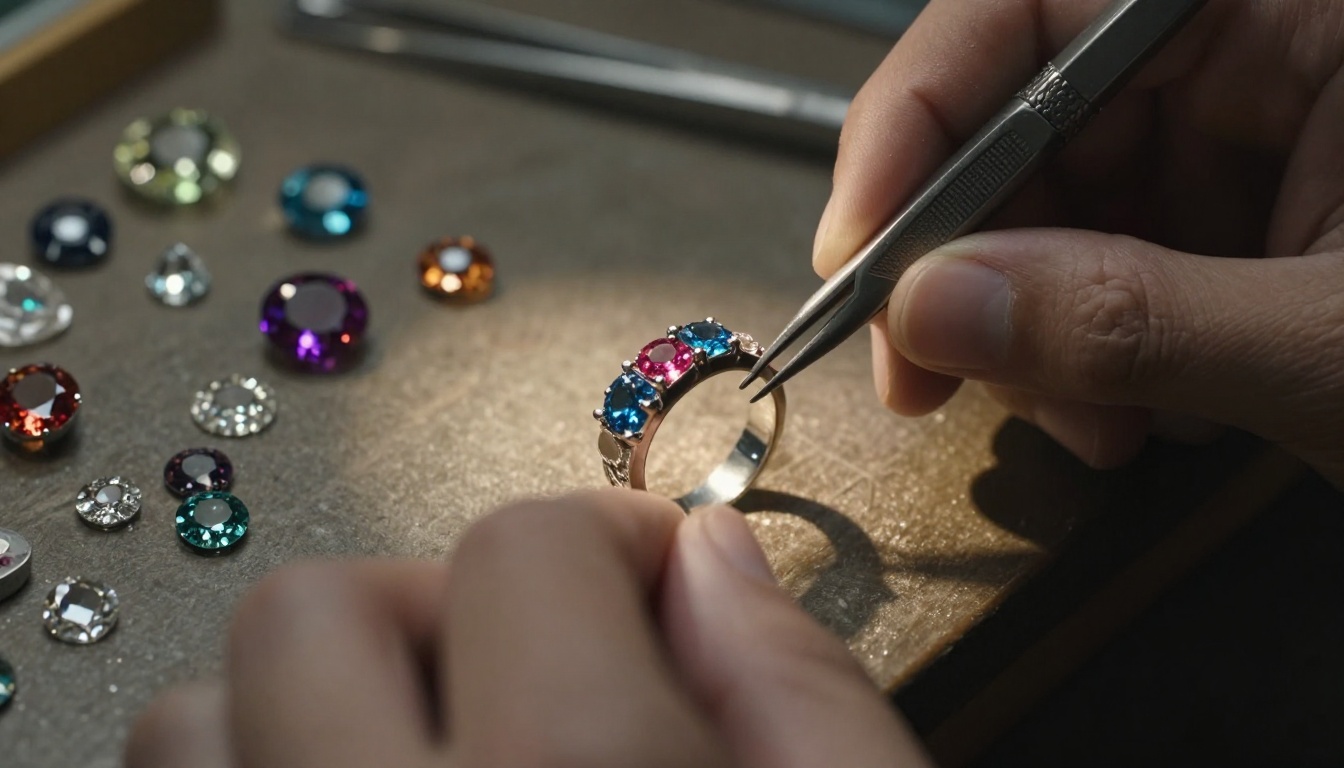
Her "Fireworks" settings, where baguette-cut stones radiate outward at seemingly random angles, solve a problem that has long plagued baguette settings: they tend to look rigid and architectural. Kalan's arrangement gives them movement. The technical challenge is significant. Each stone must be individually set at a precise angle to maintain structural integrity while appearing spontaneous.
The trade-off with Kalan's wider availability is that her pieces are less rare than a JAR brooch or a Bhagat necklace. But for buyers looking for distinctive design backed by genuine craftsmanship at a price below six figures, she represents a strong entry point into independent jewelry.
What Independent Jewelers Offer That the Maisons Cannot
The major houses have real advantages: global service networks, consistent resale markets, and brand recognition that functions as a social shorthand. A Cartier Love bracelet communicates something immediately legible. That legibility has value, and dismissing it would be dishonest.
But the independent houses offer something the large brands structurally cannot: genuine scarcity and design risk. When you buy from JAR or Hemmerle, you are acquiring a piece that exists in a single-digit edition or, more likely, as a unique object. The designer was also the decision-maker. No committee approved the design. No market research shaped it.
Auction Performance: Independent vs. Major Houses (Select Results, 2023-2025)
| Piece | House | Estimate | Realized Price | Multiple |
|---|---|---|---|---|
| Butterfly Brooch | JAR | $300,000-500,000 | $1,200,000 | 2.4-4x |
| Sapphire and Iron Ear Clips | Hemmerle | $80,000-120,000 | $195,000 | 1.6-2.4x |
| Diamond Necklace | Bhagat | $500,000-700,000 | $1,800,000 | 2.6-3.6x |
| Tutti Frutti Bracelet | Cartier | $1,200,000-1,800,000 | $1,500,000 | 0.8-1.25x |
| Schlumberger Brooch | Tiffany | $150,000-250,000 | $220,000 | 0.9-1.5x |
The auction data tells a consistent story. Independent makers whose output is genuinely constrained by workshop capacity tend to outperform estimates more dramatically than pieces from major houses, where production volumes are higher and secondary market supply is correspondingly larger.
How to Start Collecting
The practical barrier to entry varies enormously. Suzanne Kalan pieces are available through authorized retailers and her own website, starting around $2,000 for simpler designs. Hemmerle maintains a presence at TEFAF and deals with clients directly from Munich. Bhagat works almost exclusively through Christie's and Sotheby's private sales or through a small network of referrals.
JAR remains the most inaccessible. If you want a JAR piece, your most reliable path is the auction market, where pieces appear several times a year at the major houses. Expect to pay a significant premium over what the original client paid, but also expect the piece to continue appreciating.
For anyone accustomed to walking into a boutique on Bond Street and leaving with a box, the process of acquiring independent jewelry requires more patience and more homework. The reward is owning something that no amount of money can simply replicate — because the hands that made it are already committed to the next singular piece.
Looking for luxury brands, stores, and services? Browse our curated directory: