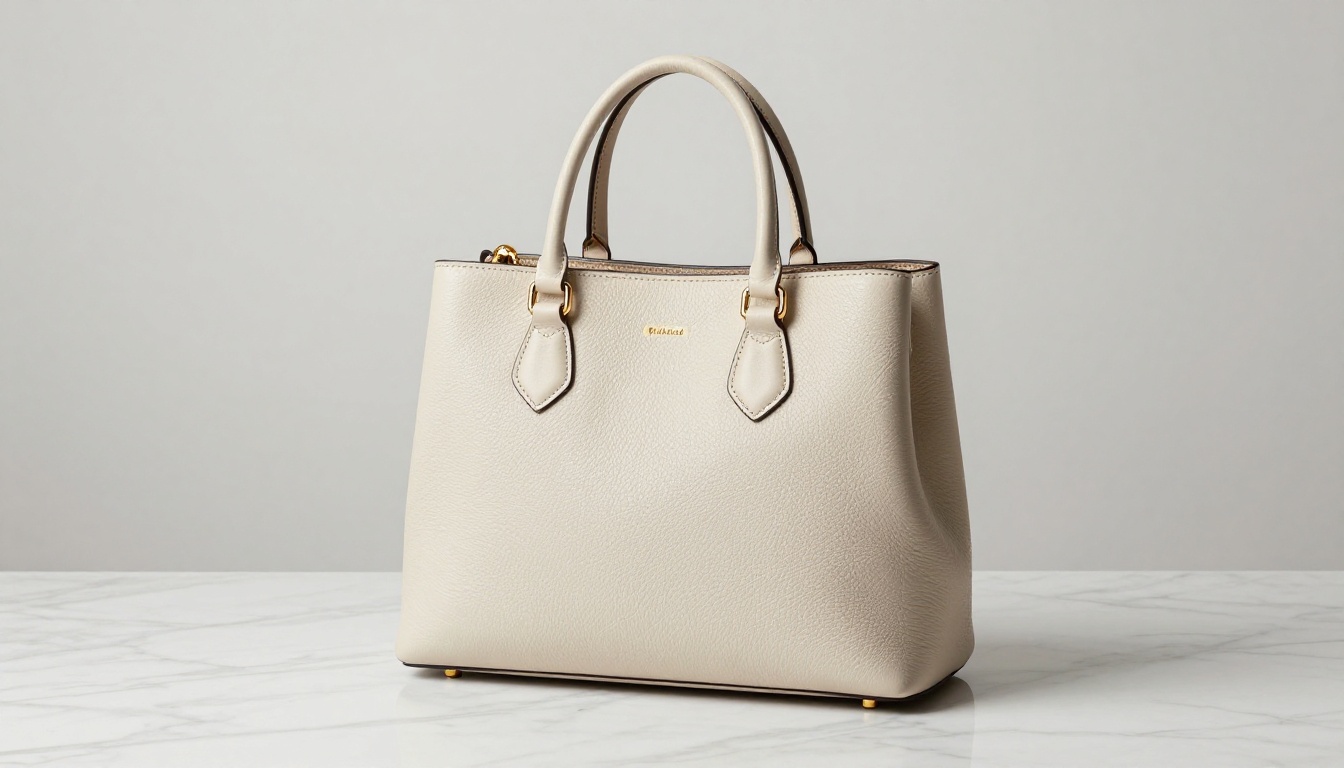
Jane Birkin spilled her datebook on a plane in 1984, and Jean-Louis Dumas sketched a bag on a sick bag. You know the story. What matters now, four decades later, is what the Birkin has become: a financial instrument that happens to hold lipstick. The secondary market for these bags operates with the discipline of a commodities exchange, complete with price discovery, speculation, and arbitrage opportunities that would make a hedge fund analyst nod approvingly.
A standard in Togo leather retails for approximately $10,900 at an Hermès boutique. That same bag, unworn with receipt, sells for $15,000 to $20,000 on the secondary market within days of purchase. That's a 40-80% markup with zero holding period. No other consumer good in any category delivers that kind of instant return.
The Secondary Market Is a Real Market
Christie's established a dedicated handbag department in 2014. Sotheby's followed. Both now run multiple annual sales exclusively for bags, and the results have been staggering. A matte white Himalaya Niloticus crocodile Birkin 30 with 18k white gold and diamond hardware sold at Christie's Hong Kong for $437,330 in 2022. That's not a record anomaly — it's a data point on a consistent upward curve.
Exotic leather Birkins occupy a different pricing universe entirely. A Niloticus crocodile Birkin in a desirable colorway starts at $40,000 on the resale market and climbs past $200,000 at auction depending on size, hardware, and condition. Ostrich leather bags typically trade between $20,000 and $50,000. The spread between retail and resale on exotics is even wider than on standard leathers, partly because Hermès allocates them even more sparingly.
The Knight Frank Luxury Investment Index, which tracks alternative asset performance across categories, has shown handbags outperforming classic cars, fine wine, colored diamonds, and art over the past decade. Between 2013 and 2023, the handbag index rose 108%. Cars managed 25%. Wine posted 39%. These aren't cherry-picked figures — they're compiled from realized auction results across thousands of transactions.
A Birkin 25 in Togo leather retails for $10,900 and resells for $15,000-20,000. No other consumer product delivers a 40-80% premium with zero holding period.
The Allocation Game: What It Actually Costs to Buy a Birkin
Hermès does not sell you a Birkin. Hermès allows you to purchase one, if you've demonstrated sufficient commitment to the brand. The allocation system is unwritten, officially denied, and universally understood by anyone who has navigated it. You cannot walk into a boutique, point at a Birkin, and leave with it. The waitlist was officially dissolved years ago. What replaced it is more opaque and more expensive.
The process works like this: you establish a purchase history at a specific Hermès boutique, building a relationship with a dedicated Sales Associate (SA). You buy scarves, shoes, home goods, jewelry, fragrances, and ready-to-wear. You are pleasant. You are patient. Over months or years, your SA may offer you a Birkin when one arrives in your preferred size and color. The offer is the product. Everything before it is the price of admission.
Industry estimates and community reports suggest the spend-to-bag ratio varies dramatically by location. Flagship stores in Paris, New York, and Tokyo may require $50,000 to $100,000 or more in ancillary purchases before an allocation materializes. Smaller boutiques in secondary markets sometimes move faster, with ratios closer to 1:1 or 2:1 against the bag's retail price. None of this is guaranteed. The system is deliberately ambiguous, which is precisely the point — Hermès maintains scarcity without ever having to publish a price list for access.
The Antitrust Question
In March 2024, two California consumers — Tiffany Lam and Mark Glinoga — filed a class-action lawsuit against Hermès in the Central District of California, alleging the allocation system constitutes an illegal tying arrangement under federal and state antitrust law. The complaint argues that Hermès conditions the purchase of a desired product (the Birkin or Kelly) on the prior purchase of unrelated products (scarves, home goods, cosmetics), which violates Section 1 of the Sherman Act.
The case, Lam v. Hermès International, survived an initial motion to dismiss in June 2024, with the court finding the plaintiffs had plausibly alleged that Hermès possesses market power in the Birkin/Kelly market — a significant threshold. Hermès has denied the allegations. If the case proceeds to discovery, it could force unprecedented transparency about internal allocation practices. For now, the system remains intact, and the secondary market continues to price in the cost of the journey.
Colorways and the Premium Hierarchy
Not all Birkins appreciate equally. The bag's investment potential depends on a matrix of leather type, color, hardware, size, and condition. Understanding the hierarchy is essential if you're approaching this as an allocation strategy rather than a shopping trip.
At the top sits the — a gradient Niloticus crocodile that fades from smoky grey to pearlescent white, fitted with palladium hardware set with diamonds. Fewer than a handful are produced annually. Auction records consistently place these above $300,000, with exceptional examples crossing $400,000. It is the single most valuable handbag in the world by any measure.
High-Demand Colorways
Below the Himalaya, certain colors command persistent premiums. Rose Sakura — a soft pink available intermittently — trades at 2-3x retail in Epsom or Swift leather. Blue Électrique, a saturated royal blue, maintains strong demand particularly in the Birkin 25 and 30 sizes. Noir (black) in any leather is the most liquid Birkin on the secondary market: it sells fastest and holds value most reliably, making it the conservative play for a first allocation. Gold and Étoupe — muted neutrals — follow a similar pattern with slightly softer premiums.
Seasonal and limited colors create their own micro-markets. A Vert Cypress or Bleu Nuit that appears for one production cycle can spike on the resale market once supply dries up. Tracking upcoming color releases through Hermès community forums and reseller intelligence reports has become its own cottage industry. The information asymmetry between someone who knows a color is being discontinued and someone who doesn't is worth thousands of dollars.
Investment Calculus: Should You Actually Do This?
The bull case is straightforward. Hermès controls supply with more discipline than any other luxury house. Demand grows annually, driven by new wealth in Asia, the Middle East, and increasingly Africa. The brand has raised retail prices by 5-7% per year for over a decade, which lifts the floor on secondary values. And unlike art or wine, a Birkin requires no specialized storage — no humidity controls, no insurance riders beyond standard homeowner's coverage for most values.
The bear case deserves attention too. The allocation system means your cost basis is not $10,900 — it's $10,900 plus whatever you spent to earn the offer. If you dropped $60,000 on scarves and tableware to secure one Birkin, your effective cost is $70,900, and your return on the resale spread shrinks dramatically. Some of those ancillary purchases hold value (jewelry, certain leather goods), but most don't (fragrances, silk scarves bought at retail lose 40-60% immediately).
The allocation system means your true cost basis isn't the retail price — it's retail plus every scarf, every pair of shoes, and every ounce of patience spent earning the offer.
There's also concentration risk. The entire thesis depends on Hermès maintaining its current production discipline. A change in corporate strategy, a shift in consumer taste, or regulatory intervention following the Lam lawsuit could alter the supply-demand equation. These are low-probability scenarios, but they're not zero-probability, and anyone treating Birkins as a serious asset class should price them in.
The most rational approach for most buyers is to treat the Birkin as a store of value rather than a speculative position. Buy what you'll carry. Choose classic leathers and neutral or high-demand colors. Keep the box, the dust bag, the receipt, and the lock hardware in original condition. If the bag appreciates, you've been paid to own something you used. If it holds flat, you've owned a well-made bag at zero net cost. That's not a bad trade by any standard.
Looking for luxury brands, stores, and services? Browse our curated directory: