Most home gyms fail. Not mechanically — the equipment works fine. They fail because the person who built them stops showing up. The rowing machine becomes a towel rack by March. The adjustable dumbbells collect dust behind a growing wall of Amazon boxes. And the $12,000 Peloton Tread sits in a basement corner, its screen dark, a monument to good intentions and poor self-knowledge.
Before you spend $30,000 to $80,000 converting a spare room or garage into a training space, you need to answer one question honestly: do you actually need this, or do you just like the idea of it?
The Honest Math on Home Gyms
A premium gym membership — Equinox, Lifetime, or a well-run independent club — runs $200 to $350 per month. Add a personal trainer twice a week and you're looking at $1,500 to $2,500 monthly, or roughly $18,000 to $30,000 per year. That sounds like a lot until you price out a properly equipped home gym.
A serious setup — not a Bowflex and a yoga mat, but equipment you'll actually use for years — starts around $15,000 for the basics and climbs past $60,000 once you factor in flooring, ventilation, mirrors, and installation. And that number assumes you already have the space.
Home Gym Cost Breakdown (Realistic)
| Component | Budget | Mid-Range | Premium |
|---|---|---|---|
| Power Rack + Platform | $1,500 | $3,500 | $6,000+ (Eleiko) |
| Barbell + Weight Set | $800 | $2,000 | $4,500+ (Eleiko) |
| Cardio (Rower or Bike) | $900 (Concept2) | $2,500 | $8,000+ (Technogym) |
| Dumbbells (5–80 lb set) | $1,200 | $2,500 | $5,000+ (Hock) |
| Flooring (200 sq ft) | $600 | $1,500 | $3,500 |
| Ventilation + Climate | $500 | $2,000 | $5,000+ |
| Cable Machine | $1,500 | $4,000 | $10,000+ (Technogym) |
| Total | $7,000 | $18,000 | $42,000+ |
That premium column doesn't include structural work, soundproofing, or the interior design touches that keep the space from looking like a storage unit with rubber mats. A fully designed home gym in a new construction or major renovation easily reaches $60,000 to $100,000.
The Equipment That Actually Matters
If you do build, buy fewer pieces of better equipment. The fitness industry thrives on selling you machines you'll use three times. Here's what earns its square footage.
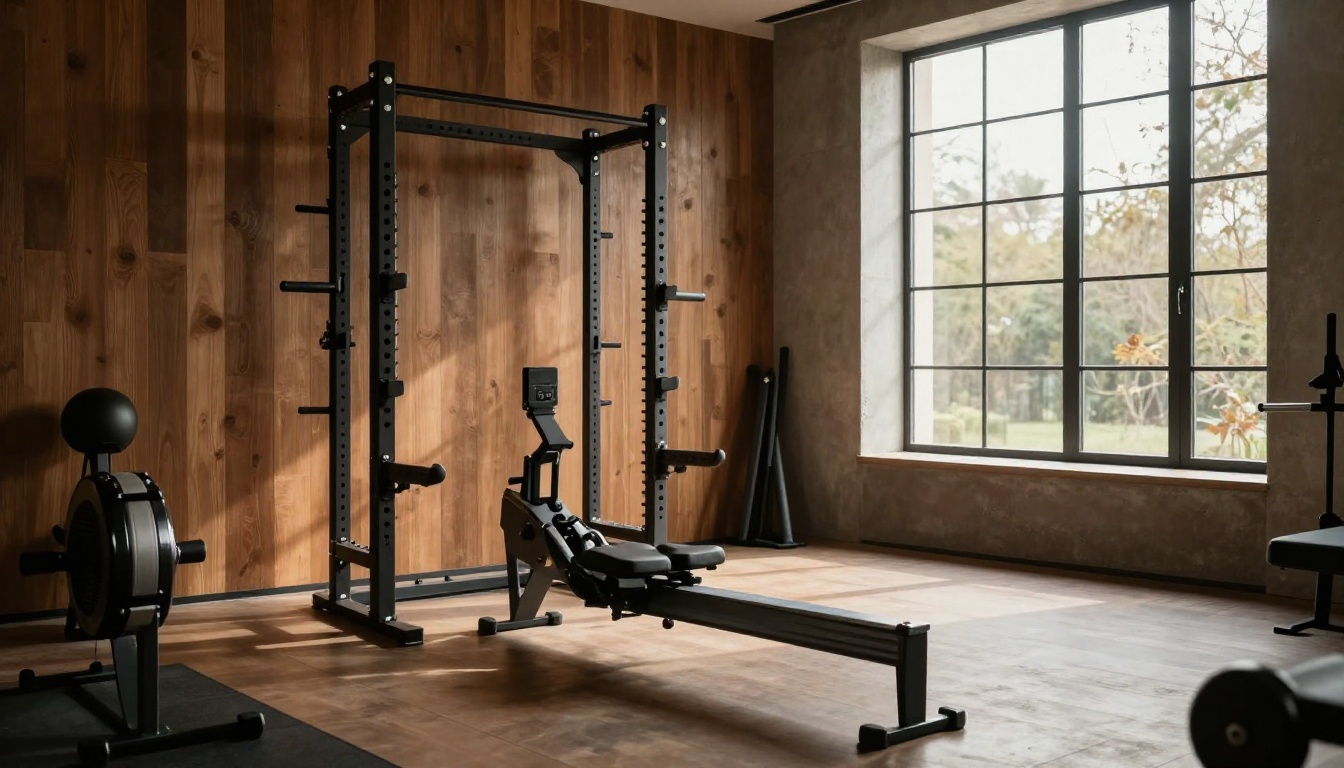
Concept2 RowErg. Around $900. The single best piece of cardio equipment ever made. Bombproof construction, accurate performance tracking, folds upright for storage. There is no reason to buy anything else for rowing, and no serious argument for a more expensive alternative. The Concept2 used by Olympic rowers is the same one you can order online.
Eleiko barbells and plates. Swedish-made, competition-grade, and genuinely worth the premium if you plan to squat, bench, and deadlift regularly. The knurling is precise, the spin is consistent, and the calibration is dead accurate. A full set runs $3,000 to $5,000. Rogue is the more cost-effective alternative and still excellent.
A quality power rack. Rogue Monster Lite or Rep Fitness PR-5000 for most people. Sorinex if budget is no concern. Skip anything that folds against the wall — the engineering compromises make them less stable, and you won't actually fold it.
Technogym Skillmill or Skillrow. Beautiful machines with genuinely good engineering. But they cost four to eight times what a Concept2 does, and the performance gap doesn't justify the price unless aesthetics matter more than function. In a home gym integrated into a living space, Technogym's design language earns its premium. In a garage, it doesn't.
What to Skip
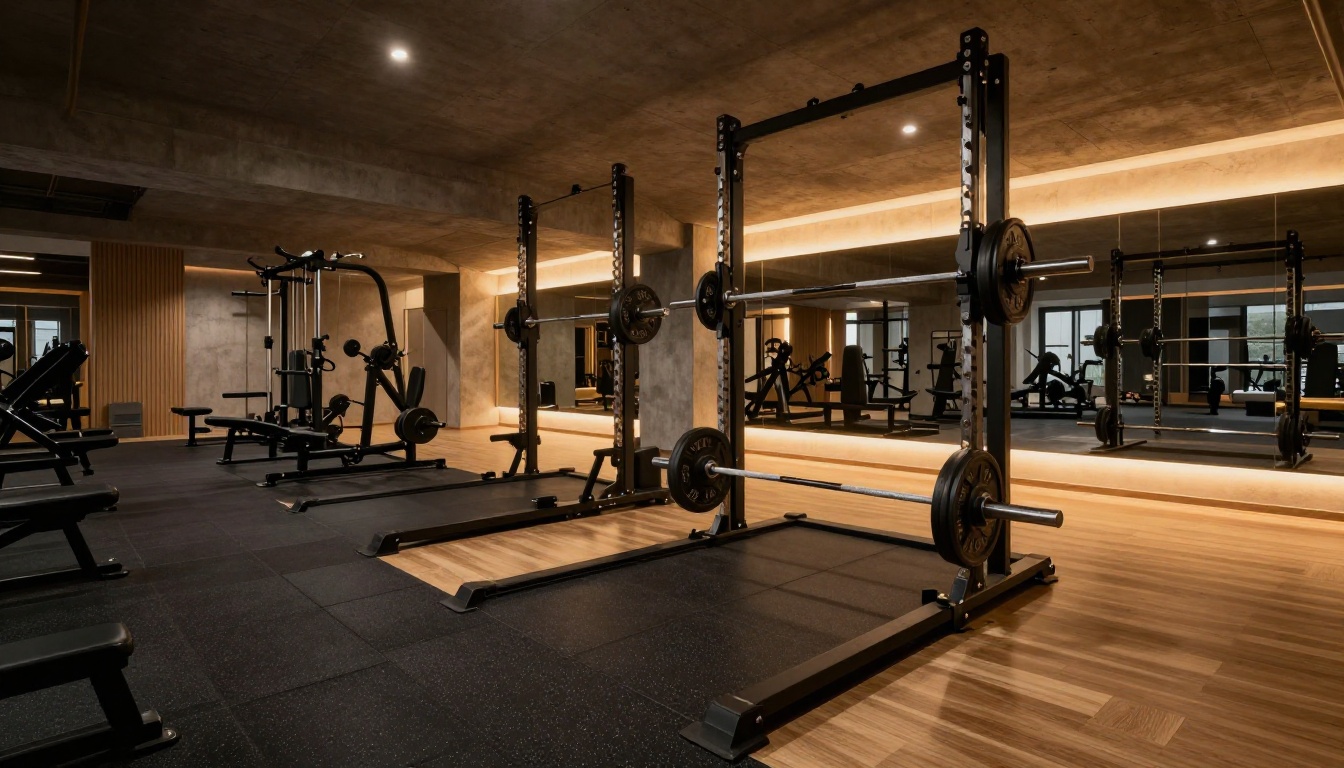
Smith machines. They take up enormous space and lock you into fixed movement patterns. A power rack with a barbell is more versatile in half the footprint.
Connected fitness screens. The Peloton, Tonal, Mirror, and their competitors sell you a subscription disguised as hardware. The content quality varies wildly, the hardware depreciates fast, and a $10/month YouTube Premium subscription gives you access to more programming than you could use in a lifetime.
Leg press machines. Unless you're recovering from a specific injury, squats and lunges in a power rack cover the same territory without dedicating 30 square feet to a single exercise.
The Space You Actually Need
A functional home gym requires a minimum of 150 square feet — roughly 10 by 15 feet. That's tight. You can fit a rack, a bench, and a rower, but you'll be moving equipment between sets. A comfortable setup that allows you to superset exercises without rearranging the room needs 250 to 400 square feet.
Ceiling height matters more than most people realize. Overhead pressing in a power rack requires at least 9 feet. Pull-up bars need clearance above them. If your basement has 7.5-foot ceilings, your exercise selection is immediately limited.
Space Requirements by Setup
| Setup Type | Min. Square Feet | Min. Ceiling Height | Best Location |
|---|---|---|---|
| Minimal (rack + cardio) | 150 sq ft | 9 ft | Garage, basement |
| Full strength training | 250–300 sq ft | 9 ft | Dedicated room |
| Strength + cardio + stretch | 350–500 sq ft | 10 ft | Converted garage |
| Integrated wellness suite | 600+ sq ft | 10 ft | Purpose-built |
Ventilation is the most overlooked detail. A basement gym without proper airflow becomes unbearable within 20 minutes of hard training. Budget $2,000 to $5,000 for a dedicated mini-split or upgraded HVAC zone.
When a Home Gym Is Actually Worth It
The case for building comes down to three scenarios.
You already train consistently. If you've maintained a four-to-five-day training habit for at least two years, a home gym removes the friction of commuting to a facility. The 45-minute round trip to Equinox becomes a 30-second walk downstairs. Over a year, that's 150+ hours reclaimed. For someone billing $300 or more an hour, the math works quickly.
Your schedule is genuinely unpredictable. Surgeons, new parents, and anyone whose windows for training shift daily benefit from a gym that's open at 4:30 AM and doesn't require a 20-minute drive. The flexibility is the value, not the equipment.
You want privacy. Some people simply train better alone. No waiting for equipment, no ambient gym culture, no performance anxiety. This is a legitimate reason, and it doesn't require justification.
When You Should Just Join a Gym
If you've never maintained a consistent training habit for more than six months, a home gym won't fix that. The problem isn't access — it's motivation, programming, or accountability. Spend the money on a good trainer instead. A skilled coach at $150 per session, three times a week, costs roughly $23,000 per year and delivers results that no amount of equipment can replicate on its own.
If you're motivated primarily by the social environment of a gym, training alone at home will feel isolating within weeks. The energy of other people working hard is a real performance driver for many athletes, and there's no substitute for it.
And if your interest is primarily aesthetic — you want the gym to look good in your home more than you want to train in it — save yourself the trouble. A well-designed room with a Peloton and some Technogym pieces photographs beautifully and functions as very expensive furniture.
The Bottom Line
A home gym is a tool, not a lifestyle statement. If you train seriously, value your time, and have the space, it's one of the best investments you can make in your daily quality of life. If you're hoping the equipment will create the habit, you're buying a very expensive lesson in self-deception.
Start with a Concept2 rower and a set of adjustable dumbbells. Use them consistently for six months. If you're still showing up every morning, build the room. If they're gathering dust, you have your answer — and it only cost you $1,200 to learn it.
Looking for luxury brands, stores, and services? Browse our curated directory: