The high-end wellness industry has a credibility problem. Most retreats charging $1,500 to $3,000 per night deliver some combination of juice cleanses, crystal healing, infrared saunas marketed as detoxification, and vague promises about "resetting" your body. The science behind these claims ranges from thin to nonexistent. But a small number of medical wellness facilities operate on an entirely different model — one built on diagnostic testing, physician oversight, and protocols with published evidence behind them. They cost roughly the same as the pseudoscience resorts. They just happen to work.
What Separates Medical Wellness from Spa Wellness
The distinction is straightforward. A spa wellness retreat designs its program around how an experience feels. A medical wellness facility designs its program around measurable outcomes — blood markers, body composition, cardiovascular fitness, metabolic function — and uses the experience to make the process tolerable.
That difference shows up on day one. At a credible medical facility, you begin with a comprehensive intake: blood panels, body composition analysis, sometimes cardiac stress testing or abdominal ultrasound. A physician reviews the results and builds a program around what the data says, not what a brochure promises. At a spa retreat, you fill out a questionnaire about your "wellness goals" and get handed a schedule of classes.
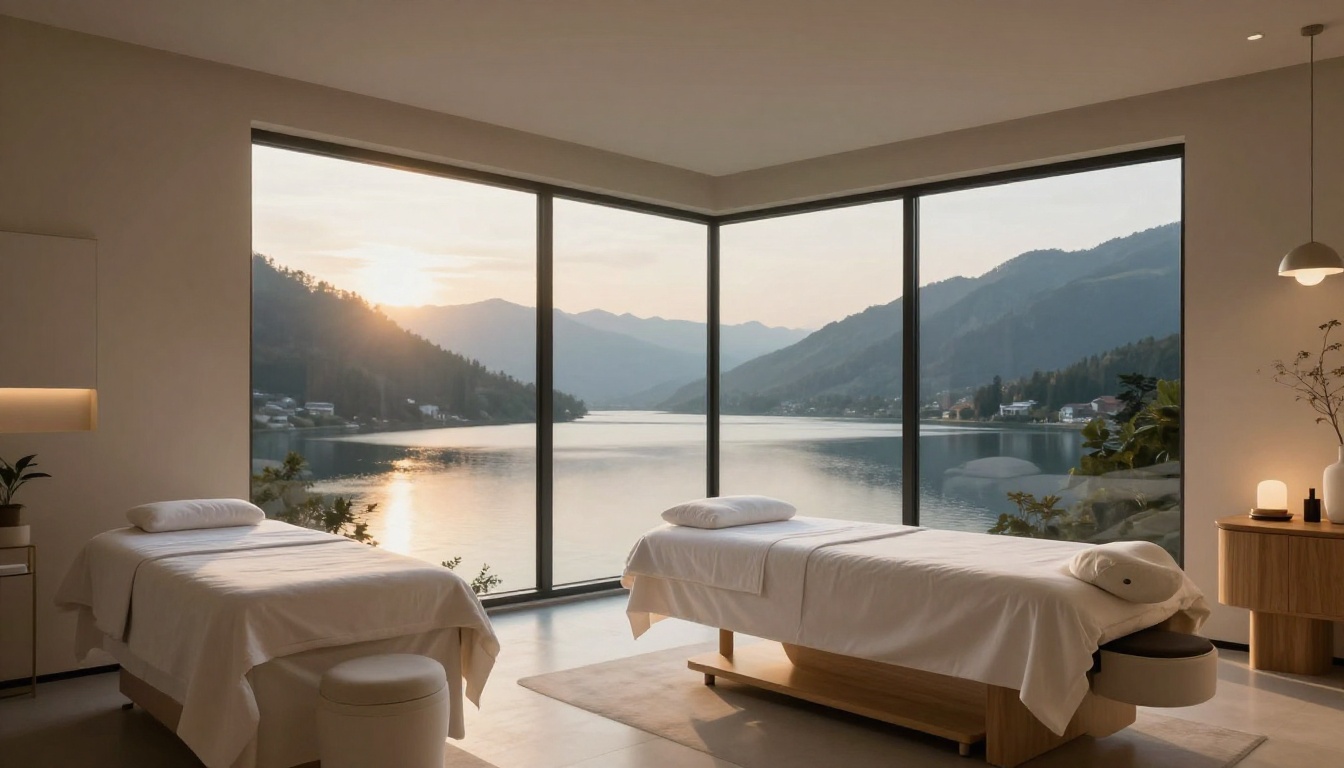
This is not to say ambiance and comfort are irrelevant. The best medical wellness facilities understand that if the environment feels clinical, compliance drops. The ones worth visiting have solved this — they deliver serious medicine inside settings that feel like high-end hotels.
Buchinger Wilhelmi: The Fasting Standard
operates two clinics — the original on Lake Constance in Germany and a newer facility in Marbella, Spain. Founded in 1953, it is the most studied therapeutic fasting clinic in the world, with peer-reviewed research published in journals including PLOS ONE and the Journal of Nutritional Science. A 2019 study of over 1,400 patients documented consistent improvements in weight, blood pressure, blood lipids, and markers of metabolic health after medically supervised fasting programs.
The standard program runs 10 to 21 days. You fast — genuinely fast, on roughly 250 calories per day from broths, juices, and honey — under daily medical supervision with blood monitoring. The facility pairs this with movement therapy, hydrotherapy, and psychological support. It is not comfortable, particularly on days two through four. But the results are measurable before and after, and for many guests, the metabolic reset persists for months when followed by a structured refeeding protocol.
Buchinger Wilhelmi at a Glance
| Detail | Lake Constance | Marbella |
|---|---|---|
| Minimum Stay | 10 days | 10 days |
| Cost per Night | $500-$900 | $600-$1,100 |
| Medical Staff | Physicians, nurses, nutritionists | Physicians, nurses, nutritionists |
| Key Protocols | Therapeutic fasting, hydrotherapy | Therapeutic fasting, hydrotherapy |
| Published Research | Yes (multiple peer-reviewed studies) | Yes (same protocols) |
| Setting | Lakeside, traditional European | Coastal, contemporary |
The trade-off is time. Buchinger's programs require a minimum of 10 days, and the full benefit comes from stays of two weeks or longer. A four-day visit is not offered because four days is not enough to complete a medically meaningful fasting cycle. This alone separates it from retreats that promise transformation over a long weekend.
Lanserhof: Diagnostics-First Medicine
operates facilities in Austria (Lans), Germany (Tegernsee and Sylt), and London (at The Arts Club). Its approach is built on the Mayr method — a digestive-health protocol developed by Austrian physician Franz Xaver Mayr — combined with modern diagnostic medicine. The Tegernsee location, designed by architect Christoph Ingenhoven, is arguably the most architecturally remarkable medical facility in Europe.
What sets Lanserhof apart is the diagnostic depth at intake. Beyond standard bloodwork, guests undergo detailed functional testing: gut microbiome analysis, food intolerance panels, cardiovascular assessments, and in some cases imaging studies. The program is then individualized by a physician team, not a wellness coordinator.
The Mayr method itself centers on digestive rest and retraining — a modified diet of alkaline foods, specific chewing protocols, and manual abdominal therapy. It sounds unusual, and the chewing component strikes many guests as eccentric at first. But the underlying principle — reducing inflammatory load on the gut and improving digestive function — is supported by a growing body of research on the gut-systemic health axis. Lanserhof has been publishing its own clinical outcome data, tracking improvements in inflammatory markers, metabolic panels, and subjective well-being scores across patient populations.
The cost is significant. A week at Lanserhof Tegernsee runs approximately $7,000 to $12,000 depending on room category and the scope of diagnostic testing. The London location offers outpatient consultations and diagnostics for those who cannot commit to a residential stay.
SHA Wellness Clinic: The Broadest Program
in Alicante, Spain, takes a different approach from the European fasting tradition. It combines Western medical diagnostics with what it calls "natural therapies" — a term that would normally trigger skepticism, except that SHA is unusually transparent about which components are evidence-based and which are complementary.
The medical side is genuine. SHA employs board-certified physicians across specialties including internal medicine, cardiology, dermatology, and cognitive health. Guests begin with a comprehensive medical checkup — blood chemistry, genetic testing options, body composition, cardiovascular assessment — and the resulting program can include everything from sleep architecture optimization to hormonal balancing based on lab results.
Where SHA gets more speculative is in its complementary offerings: traditional Chinese medicine, energy healing, and macrobiotic-leaning nutrition. The facility is upfront about the distinction, and guests can stick to the evidence-based medical track while ignoring the rest. This makes SHA more accessible to skeptics than it first appears.
Three Leading Medical Wellness Facilities Compared
| Factor | Buchinger Wilhelmi | Lanserhof | SHA Wellness |
|---|---|---|---|
| Location | Germany / Spain | Austria / Germany / London | Spain |
| Core Method | Therapeutic fasting | Mayr digestive protocol | Integrative medicine |
| Minimum Stay | 10 days | 5-7 days | 4 days |
| Cost Range (per week) | $4,000-$7,000 | $7,000-$12,000 | $5,000-$10,000 |
| Diagnostic Depth | High | Very high | High |
| Published Research | Extensive | Growing | Moderate |
| Best For | Metabolic reset, weight management | Digestive health, comprehensive diagnostics | Broad health optimization |
What These Places Have in Common
All three facilities share characteristics that distinguish them from the wider wellness market. First, they employ licensed physicians who direct treatment — not wellness coaches with weekend certifications. Second, they measure outcomes with lab work at intake and discharge, giving guests objective data on what changed. Third, they require minimum stays long enough for their protocols to produce physiological effects, rather than packaging feel-good experiences into three-day retreats.
They also share a willingness to be boring. Much of what happens at these facilities is not photogenic. Blood draws, dietary restrictions, early bedtimes, abdominal palpation — these do not make compelling social media content. The retreats that thrive on Instagram tend to be the ones with the weakest clinical foundations. The correlation is not accidental.
Red Flags in the Wider Market
When evaluating any high-end wellness facility, a few indicators reliably separate substance from marketing. Be skeptical of any retreat that uses the word "detox" without specifying what substance is being removed and by what mechanism — the liver and kidneys handle detoxification, and no juice or infrared session improves their function in a clinically meaningful way. Be wary of programs that emphasize subjective feelings ("you'll feel transformed") over objective measures (bloodwork, body composition, functional testing). And question any facility that does not employ physicians or that keeps its medical staff in a supporting role to wellness practitioners.
The price alone tells you nothing. A $2,500-per-night resort in Tulum with IV vitamin drips and sound baths is not delivering more value than a $600-per-night clinic on Lake Constance that has published its outcomes in peer-reviewed journals. The market has made it fashionable to conflate spending with wellness. The facilities worth visiting have made it clinical.
Who Should Actually Go
Medical wellness retreats are not vacations. If you want to relax by a pool for a week, book a hotel. These programs are most valuable for people dealing with specific, measurable health concerns — metabolic syndrome, chronic inflammation, digestive dysfunction, stress-related cardiovascular risk — who want an intensive intervention supervised by physicians in a setting that does not feel like a hospital.
They are also worth considering for anyone who wants a comprehensive health baseline. The diagnostic testing alone — which would take months to coordinate through conventional healthcare — has value independent of the treatment program. Many guests return annually for the checkup as much as the protocol.
The honest assessment: these facilities are expensive, they require time, and the benefits depend on what you do after you leave. A two-week fast at Buchinger followed by a return to old eating patterns will produce temporary results. The guests who get the most from these programs are the ones prepared to change something permanently.
Looking for luxury brands, stores, and services? Browse our curated directory: