The Hourly Rate Is Just the Starting Point
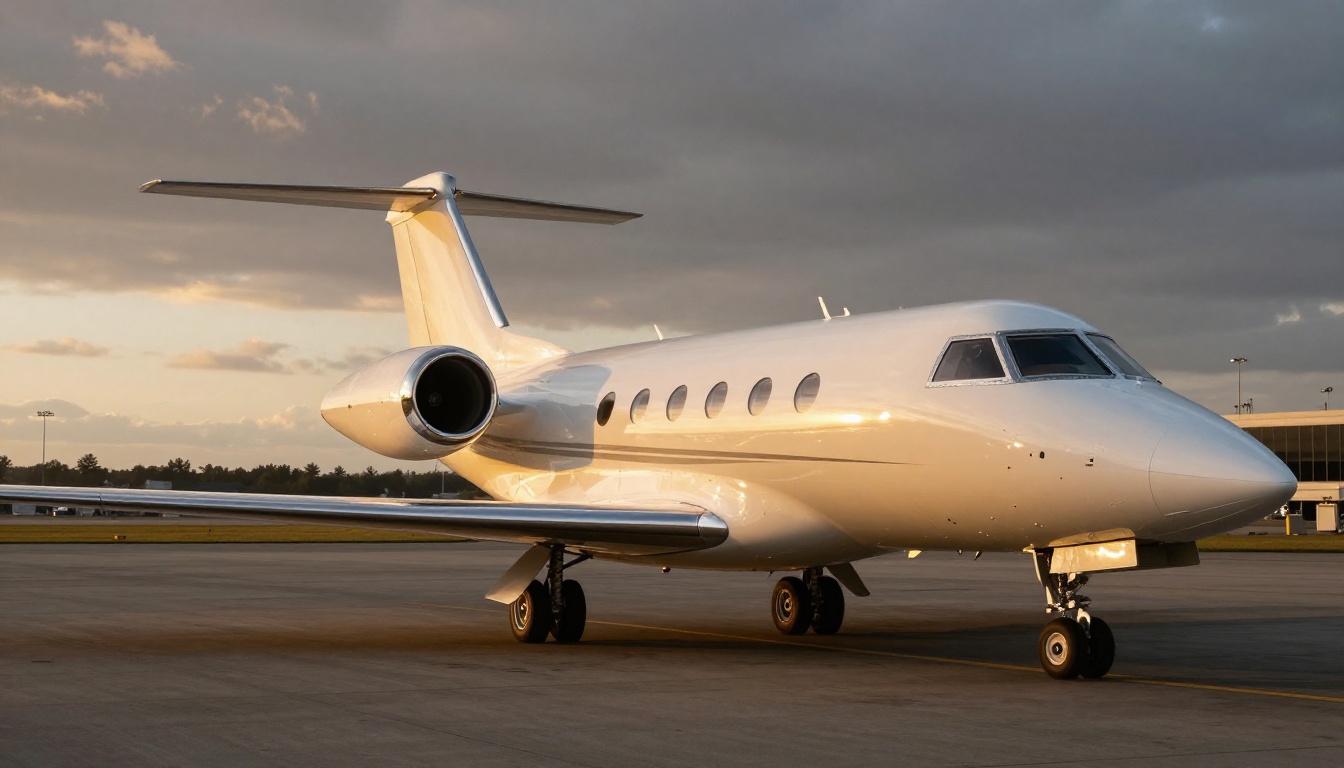
Every private jet charter company leads with the hourly rate. It's clean, it's simple, and it makes the math feel approachable. A light jet like a Citation CJ3 or Phenom 300 quotes between $3,500 and $5,500 per hour. Step up to a midsize cabin — a Citation Latitude or Challenger 350 — and you're looking at $5,500 to $8,500 per hour. Heavy iron like a or commands $10,000 to $16,000 or more per flight hour.
These numbers are real, but they're incomplete. The hourly rate typically accounts for 60 to 70 percent of your final invoice. The rest is a collection of fees, taxes, surcharges, and operational costs that add up fast. If you're considering your first charter — or trying to figure out whether a jet card makes more sense — you need to understand what's actually on that bill.
This isn't about scaring anyone off. It's about walking into the conversation informed, so you're not surprised when the invoice arrives three days after you land.
The Hidden Costs That Double Your Bill
Positioning Fees
The jet you're chartering probably isn't sitting at your departure airport. If it's based two hours away, the operator flies it to you empty — and bills you for those two hours at the full hourly rate. On a light jet at $4,500/hour, that's $9,000 before you even board. Some operators absorb partial positioning costs, but most don't. Always ask where the aircraft is based.
Federal Excise Tax and Segment Fees
On domestic US flights, the IRS collects a 7.5% Federal Excise Tax on the charter cost. That's not a rounding error — on a $20,000 charter, it's $1,500. On top of that, there's a $4.50 per passenger per segment fee. Small by comparison, but it's there on every invoice.
Fuel Surcharges
Jet-A fuel prices fluctuate significantly. Most operators quote an hourly rate based on a baseline fuel cost, then add a surcharge reflecting current market prices. This can add 10 to 20 percent to your total, sometimes more during periods of high oil prices. A $20,000 charter can easily pick up an extra $2,000 to $4,000 in fuel surcharges alone.
Landing and Handling Fees
Every airport charges landing fees, and private terminals (FBOs) charge handling fees for parking, ground power, and passenger services. At smaller regional airports, expect $200 to $500. At busy hubs like Teterboro, Van Nuys, or any major international airport, fees run $1,000 to $2,000 or more. These are non-negotiable — every flight touches down somewhere.
Overnight Crew Costs
If your trip requires the crew to stay at the destination — anything beyond a quick turnaround — you're covering their hotel, meals, and per diem. Budget $500 to $1,500 per night depending on location. A long weekend trip means three or four nights of crew expenses added to your bill.
International Fees
Cross a border and the costs escalate. Overflight permits, customs handling, international arrival and departure fees, and handler coordination can add $5,000 to $15,000 on transatlantic routes. Flying from New York to London isn't just the hourly rate times seven — it's the hourly rate times seven, plus a small mountain of international operational charges.
Catering, De-icing, and Wi-Fi
Catering ranges from a $500 cold platter and beverages to $2,000 to $5,000 for a full hot meal service with wine pairings. De-icing in winter months runs $1,000 to $5,000 depending on aircraft size and conditions. Wi-Fi, which you'd assume would be standard by now, is often billed separately at $500 to $2,000 per flight. These line items add up quietly.
The hourly rate gets you in the air. Everything else — positioning, taxes, fuel, landing, crew, catering — determines what you actually pay. Budget 30 to 40 percent above the quoted flight time cost, and you'll land close to the real number.
Charter vs. Membership vs. Fractional: Which Model Fits
On-Demand Charter
If you fly privately fewer than 25 hours per year, on-demand charter is the most practical option. You pay per trip with no long-term commitment. The per-hour cost is the highest of the three models, but there's no capital tied up in deposits, shares, or annual commitments. Brokers like Avinode-connected operators, Magellan Jets, and Sentient Jet can source aircraft for specific trips.
The downside is availability. During peak periods — holidays, major sporting events, Art Basel — aircraft get scarce and prices spike. You're also subject to whatever aircraft happens to be available, which means less consistency in cabin experience.
Jet Cards and Memberships
For 25 to 100 hours per year, jet cards lock in fixed hourly rates and guarantee availability with shorter lead times. sells cards starting at 25 hours with buy-ins from around $175,000. VistaJet requires a $150,000 or higher deposit against their global fleet. XO and Flexjet offer similar programs at varying price points and aircraft categories.
The value proposition is predictability. You know what each hour costs before you book. Most programs guarantee aircraft availability within 24 to 48 hours. Some include catering and Wi-Fi in the hourly rate, which simplifies budgeting. The trade-off is the upfront capital commitment and the fact that unused hours may expire or carry over at reduced value.
Fractional Ownership
At 100-plus hours per year, fractional ownership starts making financial sense. You buy a 1/16 to 1/2 share of a specific aircraft — typically $1 million to $15 million or more depending on the share size and aircraft type. On top of that, you pay a monthly management fee and an occupied hourly rate that's lower than charter or card rates.
NetJets and Flexjet dominate the fractional market. You get guaranteed access to your aircraft type, consistent cabin configuration, and the ability to build equity (though aircraft depreciate). It's the closest thing to owning a jet without the full operational burden. The monthly management fees, however, run $15,000 to $40,000 regardless of whether you fly that month.
Think of it as a spectrum: charter trades cost certainty for flexibility, jet cards trade capital for rate predictability, and fractional ownership trades liquidity for the lowest per-hour operating cost. Match the model to your actual flying patterns, not your aspirations.
Empty Legs: The Budget Hack That Actually Works
When a jet charters one-way, it often needs to reposition to its next booking or home base. That empty flight — called an empty leg or deadhead — can be purchased at 25 to 75 percent below standard charter rates. Apps and platforms like XO, PrivateFly, and Victor list available empty legs in real time.
The discounts are genuine. A midsize jet that normally charters at $6,500 per hour might be available for $2,500 to $3,500 per hour on an empty leg. For popular routes — New York to Florida, Los Angeles to Las Vegas, London to Nice — there's consistent inventory.
The catch is flexibility. You're flying on someone else's schedule. Departure times are fixed, routes are fixed, and cancellations happen when the primary charter changes plans. Empty legs work best for travelers who can adapt their timing to match available flights, not the other way around.
A Real Trip, Line by Line
Let's price out a concrete example: New York (Teterboro) to Miami, party of four, on a midsize jet like a Challenger 350.
Flight time is roughly three hours. At $6,500 per hour, the base cost is $19,500. Federal Excise Tax at 7.5% adds $1,462. The fuel surcharge, based on current Jet-A prices, adds approximately $2,000. Landing and handling fees at both Teterboro and Opa-Locka total around $800. Add $1,200 for a solid catering spread — charcuterie, salads, sandwiches, and a decent wine selection. The total comes to roughly $25,000 one-way.
Split four ways, that's about $6,250 per person. For context, a first-class ticket on Delta for the same route runs around $800 per person. You're paying nearly eight times the commercial price. What you're buying is time savings (no security lines, no connections, 15 minutes from car to wheels-up), privacy, schedule control, and the ability to land at a closer airport to your final destination.
Round-trip doubles it to roughly $50,000 for the group, assuming no positioning fees. If the jet needs to reposition from, say, White Plains, add another $3,000 to $4,000 each way.
Making the Decision
Private aviation makes financial sense for a narrow set of use cases: when time savings translate directly to revenue, when commercial routing adds hours or overnight stays, when you're traveling with a group that splits the cost, or when the privacy and flexibility justify the premium for personal reasons.
For everyone else, it's a luxury purchase — and there's nothing wrong with that, as long as you go in with clear eyes on the actual cost. The hourly rate is the headline. The final bill tells the full story. Ask for an all-in quote on every trip, compare it against commercial alternatives, and decide based on real numbers rather than brochure pricing.
The private aviation market rewards informed buyers. Operators respect clients who understand the cost structure and ask the right questions. That knowledge doesn't just save money — it gets you better service, better aircraft, and better terms over time.
Looking for luxury brands, stores, and services? Browse our curated directory: