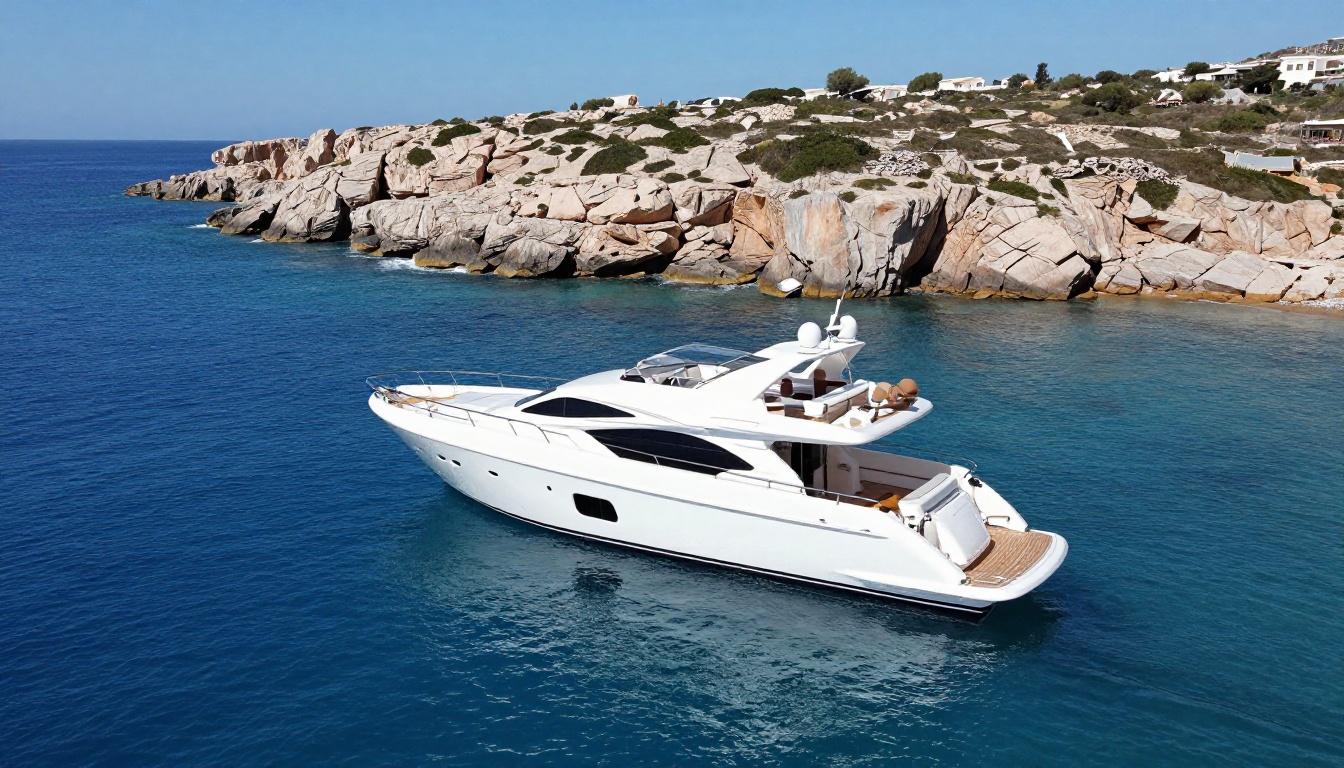
The Charter Fee Is Not the Final Number
You've seen the listings: a gleaming 40-meter motor yacht, crew of nine, four decks, yours for $120,000 a week in the Greek Islands. That figure is real. It's also deeply incomplete. The charter fee — what the industry calls the base rate — typically represents 55 to 65 percent of what you'll actually spend. The rest is a stack of legitimate but poorly disclosed costs that catch first-timers off guard every season.
A 30 to 50-meter motor yacht charters between $50,000 and $200,000 or more per week. A 20 to 30-meter sailing yacht runs $20,000 to $80,000 per week. These ranges shift based on age, crew quality, flag state, and whether you're booking high season or shoulder season. But the base rate is just the starting line.
The APA and Other Costs That Actually Set the Price
Advance Provisioning Allowance
The APA is the single biggest hidden cost in yacht chartering, and it's not technically hidden — it's just never emphasized. It's a cash advance, typically 30 to 35 percent of the charter fee, paid upfront before you board. It covers fuel, food, drinks, port fees, marina costs, and water toy fuel.
On a $100,000 weekly charter, your APA runs $30,000 to $35,000 — on top of the charter fee, due before departure. The captain manages the budget and presents an accounting at the end. Any unused portion is refunded; if you overspend, you settle the difference.
Fuel is the wild card inside the APA. A 40-meter motor yacht burns 200 to 500 liters of diesel per hour at cruising speed. If you want to island-hop aggressively, you'll chew through fuel faster than most people expect. Sailing yachts are far more economical, but you sacrifice speed and interior space.
Crew Tip
The industry standard for crew gratuity is 10 to 20 percent of the charter fee. For a $100,000 week, that's $10,000 to $20,000 in cash, in an envelope, handed to the captain on the last evening. Fifteen percent is the norm for good service. This is not optional — the crew's compensation structure assumes gratuities, and the yachting community is small. Your reputation follows you.
Delivery Fees and Insurance
If your chosen yacht is based in Antibes and you want to start your charter in Dubrovnik, the yacht needs to reposition. That transit — called a delivery — can cost $10,000 to $50,000 depending on distance, and you're paying for it. Smart brokers help you choose yachts already positioned near your starting port.
VAT in EU waters varies by flag state. A yacht flagged in the Cayman Islands or Marshall Islands may have different tax implications than one flagged in France or Italy. Your broker should handle this, but expect VAT charges in the range of 6 to 21 percent depending on jurisdiction. Charter-specific insurance is usually included in the base rate, but confirm it covers your intended cruising grounds.
Add it all up for a realistic $100,000 weekly charter: $100,000 base fee, $32,000 APA, $15,000 crew tip, plus VAT. Your actual spend is closer to $160,000 to $170,000. That's the real number. Plan around it.
Why You Need a Broker and How to Find a Good One
Use a broker. This is not a suggestion — it's the single best piece of advice for a first-time charterer. A good charter broker represents you, the client, not the yacht owner. Their commission is paid by the owner's side. It costs you nothing, and what you get in return is access, vetting, and protection.
The top-tier brokers are Burgess , Fraser, Camper & Nicholsons , Y.CO, and Edmiston. These firms have decades of relationships with yacht owners and management companies. They know which yachts photograph better than they sail, which captains run a tight ship, and which crews deliver the kind of service that makes a charter memorable.
A broker verifies what you cannot: safety certifications, insurance validity, crew qualifications, and regulatory compliance. They negotiate on your behalf, handle contracts, manage the APA, and intervene if anything goes wrong. Think of them as a travel agent, lawyer, and concierge in one.
Never book through a random website or Instagram account. The yacht charter industry has minimal consumer protection. An unverified listing could mean outdated safety equipment, underqualified crew, or an owner who cuts corners. Your broker is your insurance against all of it.
Choosing the Right Yacht for Your Group
Motor vs. Sail
Motor yachts offer more space, faster transit, and climate-controlled comfort. They're the default for first-timers and anyone who prioritizes socializing over seafaring. The trade-off is fuel cost — a motor yacht's APA will be substantially higher.
Sailing yachts are quieter, more fuel-efficient, and the sailing itself becomes part of the vacation. The compromise is space, speed, and weather dependency. If the wind doesn't cooperate, you're motoring anyway in a slower, narrower boat. For a first charter, motor yachts are the safer bet unless your group specifically wants the sailing experience.
Size, Crew Ratio, and Age
Size determines comfort more than anything. Below 24 meters, you feel the sea — rolling at anchor, pitching in open water, limited space for the group to spread out. A 30-meter yacht is comfortable for four to six guests. At 40 meters and above, you can host eight to ten guests with genuine personal space, separate lounging areas, and a tender garage for water toys.
Crew-to-guest ratio is the silent quality indicator. A well-staffed yacht runs at 1:1 or better — ten crew for eight guests on a 40-meter boat means a dedicated chef, stewardesses for every few guests, deckhands on water toys, and a captain focused on seamanship.
Age matters, but refit date matters more. A yacht built in 2012 and refitted in 2023 can feel brand new. Prioritize anything built or refitted within the last five years. Older yachts look stunning in marketing photos and feel tired the moment you step aboard. Your broker can pull maintenance records.
The best charter yacht isn't the biggest or the newest — it's the one correctly matched to your group size, your itinerary's demands, and a crew that actually enjoys their work. A happy crew makes for a transformative week.
Where to Go: Mediterranean Itineraries Compared
French Riviera
Cannes, Saint-Tropez, Monaco — this is the classic Mediterranean charter route and the most expensive. Port fees are steep, restaurant reservations are competitive, and in July and August every anchorage from Cap Ferrat to Pampelonne Beach is packed. It's glamorous, and it delivers on the postcard promise, but you're paying a premium for the address. Best for people who want nightlife, people-watching, and the classic Riviera atmosphere.
Greek Islands
The Cyclades — Mykonos, Santorini, Paros, Milos — and the Saronic Gulf offer the best overall value in the Med. The food is superb, port fees are reasonable, and charter rates run 30 to 40 percent lower than the French Riviera. The Saronic islands near Athens are particularly good for a first charter — short distances, calm waters, and easy airport access.
Croatian Coast
Dubrovnik to Split is the emerging charter corridor. Croatia offers beautiful coastline, clear water, excellent wine, and significantly lower costs than France or Italy. The Dalmatian islands — Hvar, Vis, Korcula, Brac — are genuine discoveries for most first-timers. Infrastructure is still developing, but the value is strong and improving every season.
Italian Coast
The Amalfi Coast and Sardinia's Costa Smeralda are stunning but logistically challenging. Marina berths are limited, port fees in Capri and Portofino are among the Med's highest, and the Amalfi Coast has restricted anchoring zones. Worth doing once, ideally combined with less congested stretches of the Tyrrhenian coast.
Timing
High season is July and August — peak prices, peak crowds, peak heat. The smart money books June or September. Weather is nearly identical, rates drop 20 to 30 percent, anchorages are less contested, and the crew is fresher. September in the Cyclades or the Croatian coast is about as good as Med yachting gets.
The Mistakes First-Timers Make Every Season
The most common mistake is booking too small. People see the daily rate of a 24-meter yacht and think they're being smart. Then six guests spend a week stepping over each other in a salon the size of a hotel room. For a group charter, go one size up from what feels reasonable. The incremental cost buys disproportionate comfort.
Underestimating the APA is the second most expensive mistake. People mentally budget the charter fee and treat the APA as a minor add-on. It's not. A $35,000 APA on a $100,000 charter is the equivalent of a second vacation's worth of spending. Plan for it from the beginning, not as an afterthought.
Failing to communicate dietary preferences before boarding wastes the chef's first day. A good crew sends a preference sheet weeks in advance — fill it out thoroughly. Allergies, dislikes, favorite wines, breakfast habits. The more detail you provide, the better your week from the first morning.
Over-planning the itinerary is a trap. You don't need eight islands in seven days. The captain knows the weather, the sea state, and the best times to move. Give a general sense of what you want — swimming, villages, nightlife, isolation — and let the captain build the daily plan. Flexibility is one of the core advantages of a private yacht. Don't throw it away with a rigid spreadsheet.
Finally, bringing too many guests diminishes the experience. A yacht rated for twelve is comfortable for eight. The extra space transforms everything — dining feels relaxed, the sundeck isn't crowded, and the crew delivers more personalized attention. Fill two-thirds of guest capacity and you'll have a better week than the group that maxed it out.
The Mediterranean is one of the best places on earth to spend a week on the water. Go in with realistic cost expectations, the right broker, and enough flexibility to let the sea set the pace. Get those three things right, and a first charter becomes the beginning of a very good habit.
Looking for luxury brands, stores, and services? Browse our curated directory: