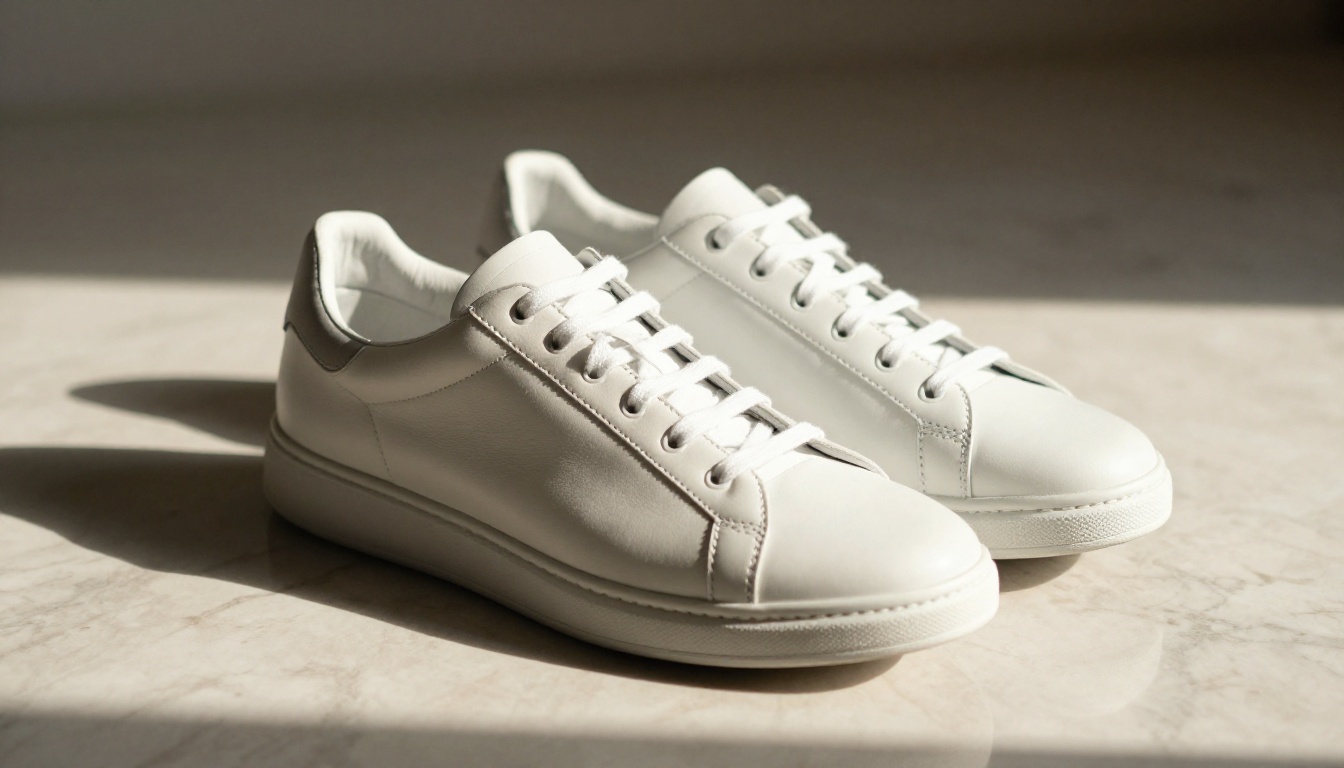
A pair of Loro Piana Nuages costs around $1,100. A pair of Balenciaga Triple S retails for roughly the same. One is made from cashmere-lined deerskin with a Vibram sole assembled in a small Italian factory. The other is a chunky polyester-and-mesh shoe glued to a foam platform, assembled in China. The price tags are nearly identical. The products are not.
The luxury sneaker market has grown into a multi-billion dollar category, but it has also become one of the most distorted segments in fashion. Price no longer signals quality in any reliable way. Some brands charge $1,200 for shoes that genuinely cost hundreds of dollars to produce. Others charge the same amount for shoes that would cost $30 to manufacture if you removed the logo. Understanding the difference requires looking at three things: materials, construction, and what happens to the price after you buy them.
The Sneakers That Justify Their Price
Common Projects Original Achilles ($450-$490)
Common Projects has become the default reference point for minimal luxury sneakers, and for good reason. The Original is made from full-grain Italian Nappa leather in a Marche factory, with a Margom rubber outsole and hand-stitched construction. The leather is sourced from a single tannery and cut with minimal waste. Each shoe goes through a roughly 30-step assembly process.
The result is a shoe that breaks in rather than breaks down. After two years of regular wear, a well-maintained pair develops a patina rather than peeling or cracking. The gold serial number stamped on the lateral side is the only external branding — a restraint that has itself become a signifier, which is an irony Common Projects has never fully resolved.
At resale, lightly worn pairs hold roughly 40 to 55 percent of retail value. Not remarkable, but consistent.
Brunello Cucinelli Knit Sneakers ($850-$1,100)
Cucinelli's sneaker line is an extension of the brand's broader philosophy: use the best available materials, produce in small Italian workshops, and price accordingly. Their knit sneakers use a proprietary wool-blend upper that breathes better than any synthetic mesh and develops a softer hand feel over time. The soles are produced by Vibram to Cucinelli's specifications.
The construction details matter here. The stitching is reinforced at stress points. The insoles are removable and made from genuine leather with cushioning that maintains its shape. The heel counter provides actual structural support rather than just aesthetic bulk. These are functional decisions, not decorative ones.
Loro Piana Nuages ($1,050-$1,200)
Loro Piana approaches sneakers the way they approach everything: through textile obsession. The uses a technical knit upper combined with suede and leather panels, often incorporating the brand's signature cashmere blends in unexpected places like the tongue lining. The Walk sole, developed in-house, is lighter and more flexible than most competitors at this price range.
The downside is durability. Loro Piana's use of delicate natural materials means these shoes require more careful treatment than a typical sneaker. They are not designed for rain, rough terrain, or daily commuting on foot. If you accept them as a refined casual shoe rather than an all-purpose sneaker, the quality is evident at every contact point.
Construction Quality Comparison: Luxury Sneakers
| Brand/Model | Price | Upper Material | Sole | Made In | Key Construction Detail |
|---|---|---|---|---|---|
| Common Projects Achilles | $450-490 | Full-grain Nappa leather | Margom rubber | Italy | Hand-stitched, 30-step assembly |
| Brunello Cucinelli Knit | $850-1,100 | Proprietary wool-blend knit | Vibram (custom) | Italy | Reinforced stress points, leather insole |
| Loro Piana Nuages | $1,050-1,200 | Technical knit, suede, cashmere | Proprietary Walk sole | Italy | Cashmere lining, in-house sole development |
| John Lobb Foundry | $990-1,100 | Calf leather, museum calf | Rubber with leather midsole | England | Goodyear-welted, resoleable |
The Sneakers That Are Just Expensive
Balenciaga Triple S ($1,050)
The Triple S was a genuine design inflection point when Demna Gvasalia introduced it in 2017. It helped launch the "ugly sneaker" category and shifted the silhouette of streetwear for years. As a cultural artifact, it mattered. As a product, it has always been difficult to justify.
The shoe is made primarily from polyester mesh, nylon, and faux leather, bonded to a stacked foam sole. Original production was in Italy; Balenciaga later moved manufacturing to China, which caused controversy but also raised a legitimate question: if the materials and construction methods are fundamentally the same as a mass-market athletic shoe, what exactly is the $1,050 paying for?
The answer is design and brand. That is a valid transaction — people pay for aesthetic innovation and social signaling constantly — but it should be understood as such. You are not buying superior materials or craftsmanship. You are buying a silhouette and a name. Resale values have reflected this reality. Used pairs now sell for 20 to 35 percent of retail, a steep depreciation curve that mirrors fashion trends rather than material value.
Golden Goose Super-Star ($530-$600)
Golden Goose has built an extraordinarily successful brand on a specific premise: pre-distressed sneakers that look as though you have owned them for years. The intentional scuffing, pen marks, and worn-in finishes are applied during manufacturing. The brand calls this "the perfect imperfection."
The materials are decent — genuine leather uppers, rubber soles — but they are not materially different from what you would find in a $150 to $200 sneaker. The distressing treatments that constitute the brand's signature actually reduce the functional lifespan of the shoe, since the finish is already partially degraded when you buy it. You are paying a premium for something to look used, which is a legitimate aesthetic preference but a poor value proposition from a materials standpoint.
Gucci Ace ($730-$850)
The Gucci Ace is a well-made shoe. The leather is genuine, the construction is solid, and the classic tennis-shoe silhouette is clean. The problem is proportional: the quality is roughly equivalent to a $200 to $300 sneaker, and the remaining $500 is paying for the green-and-red web stripe and the interlocking G logo. Gucci is transparent about this. They are a fashion house, not a shoemaker. The Ace is a branding vehicle in sneaker form.
Resale data confirms the pattern. Gucci Aces depreciate to roughly 25 to 40 percent of retail within a year of purchase, tracking closer to fashion-cycle timing than to wear-and-tear patterns.
Resale Value Retention After 12-18 Months
| Sneaker | Retail Price | Avg Resale (Used) | Value Retention | Primary Value Driver |
|---|---|---|---|---|
| Common Projects Achilles | $450-490 | $200-270 | 45-55% | Materials and construction |
| Loro Piana Nuages | $1,050-1,200 | $450-600 | 40-50% | Materials and brand cachet |
| Balenciaga Triple S | $1,050 | $210-370 | 20-35% | Trend cycle and brand |
| Golden Goose Super-Star | $530-600 | $130-200 | 25-33% | Aesthetic trend |
| Gucci Ace | $730-850 | $180-340 | 25-40% | Logo recognition |
| Brunello Cucinelli Knit | $850-1,100 | $380-520 | 45-50% | Materials and discretion |
What the Data Actually Shows
Resale value is not the only measure of a sneaker's worth, but it is a useful proxy for how the market distinguishes between craftsmanship and branding. Sneakers whose value is rooted primarily in materials and construction — Common Projects, Cucinelli, Loro Piana — depreciate along a gradual, predictable curve tied to physical wear. Sneakers whose value is rooted in trend positioning and logo visibility — Balenciaga, Golden Goose, Gucci — depreciate sharply as fashion cycles shift.
This does not mean the second category is worthless. If you buy a Triple S because you genuinely want that silhouette and understand you are paying for design rather than materials, that is a reasonable decision. The problem arises when the price tag implies a level of craftsmanship that the product does not deliver.
A Practical Framework for Buying
Before spending more than $400 on sneakers, three questions are worth asking. First, where is the shoe made, and does the manufacturing location match the price point? Italian and English production costs more for legitimate reasons: higher labor standards, proximity to specialized tanneries and sole manufacturers, and smaller production runs. If a $1,000 sneaker is made in the same factories as a $100 athletic shoe, the markup is going almost entirely to branding.
Second, what are the materials, specifically? "Genuine leather" is a broad term that spans everything from full-grain calf leather to corrected-grain leather that has been sanded and coated to hide imperfections. A good luxury sneaker should specify the type of leather, the origin of the hide, and the tanning process. If the brand cannot or will not answer these questions, that tells you something.
Third, can the shoe be resoled or repaired? This is where brands like John Lobb stand apart. Their Foundry sneaker uses Goodyear welt construction — the same technique used in their dress shoes — which means the sole can be replaced without destroying the upper. A resoleable sneaker at $1,000 has a potential lifespan of a decade. A glued-sole sneaker at the same price has a lifespan of two to three years, regardless of how careful you are.
The luxury sneaker market rewards research and punishes assumptions. Price is the least reliable indicator of what you are actually getting. The stitching, the leather, and the sole construction tell the real story — and they are worth examining before you hand over your credit card.
Looking for luxury brands, stores, and services? Browse our curated directory: