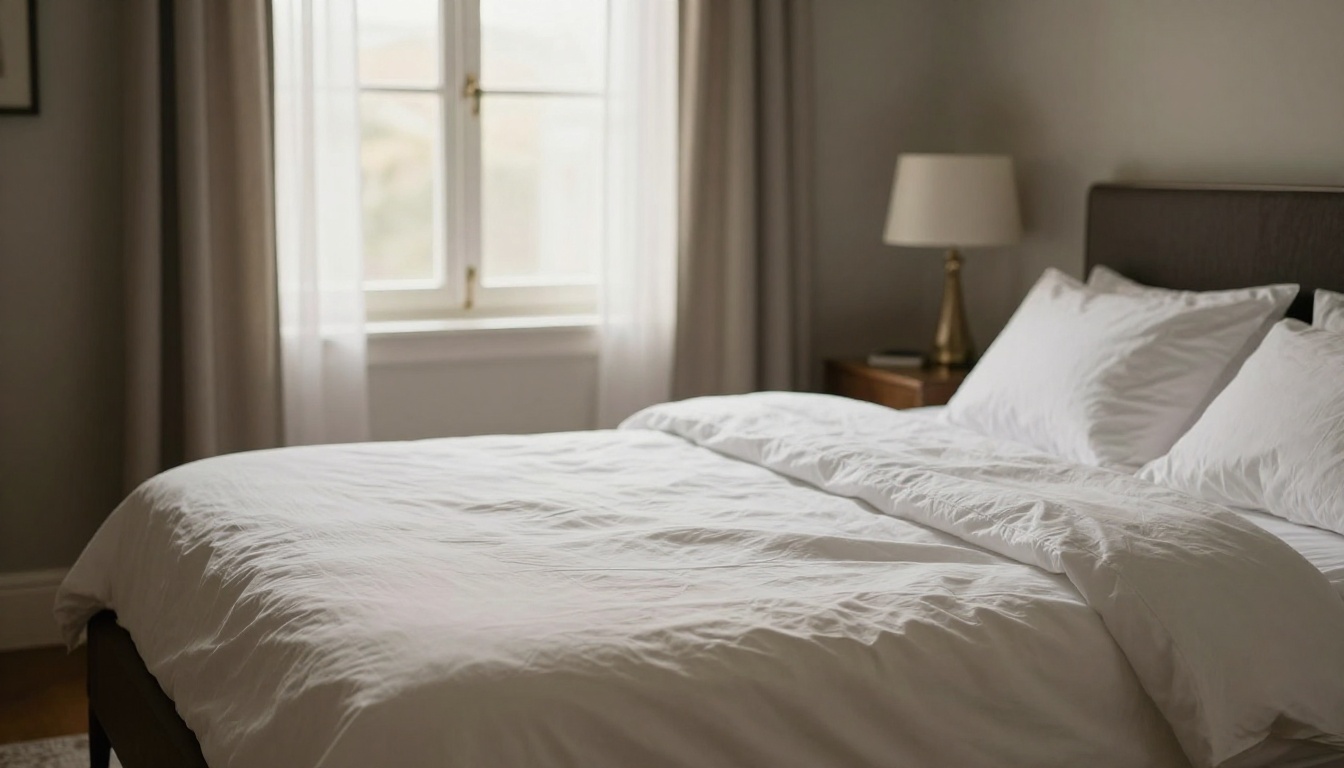
The $30,000 Mattress Question
A Hastens Vividus takes four months to build by hand. Two master craftsmen work on each unit, layering horsehair, cotton, wool, and flax into a wooden frame made from slow-grown Swedish pine. The mattress ships in a custom crate. It costs $44,500 for a king. The obvious question: does anyone actually sleep $40,000 better on it than on a well-made $3,000 mattress?
The honest answer is more complicated than the marketing from either end of the market wants you to believe. After testing premium mattresses across hotel stays, showroom visits, and three personal purchases at wildly different price points, here is what the money actually buys — and where it quietly stops mattering.
The Three Makers Worth Knowing
The premium mattress market has a clear top tier: Hastens, Vispring, and Savoir Beds. Each approaches the problem differently, and understanding their philosophies matters more than comparing spec sheets.
Hastens is the Swedish maker most people encounter first. Their signature blue-check fabric has become a status symbol in itself, which is both the brand's strength and its problem. The core construction is genuinely excellent — layers of natural horsehair act as a temperature regulator and provide a responsive, breathable sleep surface that synthetic foams cannot replicate. The entry-level Marquis starts around $8,500 for a king. The jump from there to the $15,000-20,000 mid-range models (the Eala, the Maranga) delivers a real, noticeable improvement in support distribution. But the leap from a $20,000 Hastens to the $44,500 Vividus? That is largely about craftsmanship heritage, exclusivity, and diminishing returns.
Vispring is the quieter British option, and for many serious sleepers, the better value. Founded in 1901, the company invented the pocket spring and still manufactures everything in Plymouth, Devon. Their Masterpiece Superb — around $15,000-18,000 for a king — uses a double layer of calico-nested pocket springs, each one hand-tied and individually responsive. The sensation is distinctive: firm but yielding, with none of the memory-foam sinkage that plagues cheaper beds. Vispring does not spend on celebrity endorsements or blue-check branding. They spend on springs and horsehair, and the difference is tangible.
Savoir Beds occupies the most rarefied space. Originally the bedmaker for The Savoy hotel in London, they produce roughly 1,000 mattresses a year, each one built to order. Savoir's No. 1 bed starts around $25,000; their most elaborate configurations push past $80,000. The construction is meticulous — eight layers of natural materials, each tuned to the client's weight and sleeping position. Whether that level of customization translates to better sleep than a well-chosen Vispring or Hastens is genuinely debatable. Savoir's strongest argument is longevity: these beds are designed to last 30+ years, and the company will re-card the horsehair and rebuild the layers when they eventually compress.
Premium Mattress Comparison (King Size)
| Brand | Entry Price | Mid-Range | Top Model | Spring Type | Key Material | Origin |
|---|---|---|---|---|---|---|
| Hastens | $8,500 | $15,000-20,000 | $44,500 (Vividus) | Bonnell springs | Horsehair, cotton, flax | Koping, Sweden |
| Vispring | $4,500 | $10,000-15,000 | $30,000+ (Diamond Majesty) | Pocket springs | Horsehair, wool, cotton | Plymouth, UK |
| Savoir | $25,000 | $35,000-50,000 | $80,000+ (No. 1) | Pocket springs | Horsehair, lambswool, cotton | London, UK |
Where the Money Genuinely Matters
Natural materials are the single biggest differentiator. Horsehair, specifically the long, curled tail hair from South American horses, regulates temperature in a way no synthetic can match. It wicks moisture, resists compression, and breathes continuously. A $3,000 mattress with memory foam will sleep hotter than a $6,000 model with horsehair layers — and that gap never closes with gel-infused foam or cooling covers, which are band-aids on a fundamental design limitation.
Spring quality is the second genuine differentiator. Pocket springs that are individually nested in calico (rather than synthetic fabric) respond more precisely to body weight. Vispring's double-spring systems create a supportive base layer with a responsive comfort layer on top — a principle that the best hotels understand, which is why you will find Vispring or Hastens in properties charging $1,000 a night and up.
The third factor is handcrafting versus machine assembly, and this is where honest assessment matters. Hand side-stitching — where a craftsman reinforces the mattress edge with a heavy needle and twine — creates a firm, supportive border that prevents that annoying rolling-toward-the-edge sensation. Machines can approximate this, but the hand-stitched edge on a Vispring or Savoir is measurably firmer and more durable. It is one of the few artisanal details that translates directly to nightly comfort.
Where the Money Stops Mattering
Above roughly $15,000-20,000 for a king-size mattress, you are paying for increasingly marginal improvements. The horsehair is from a specific region. The springs are a proprietary alloy. The cotton is hand-picked. These details are real, but their impact on actual sleep quality is minimal compared to factors most people neglect entirely: room temperature, light control, and what goes on top of the mattress.
The mattress industry — even at the premium end — has a vested interest in keeping you focused on the mattress itself. But sleep researchers consistently point to the same hierarchy: the most impactful variable is room temperature (60-67F / 15-19C), followed by light elimination, then noise management, and only then the sleep surface. A $5,000 mattress in a properly dark, cool room will produce better sleep than a $40,000 mattress in a warm, light-polluted bedroom. This is not opinion. It is borne out in every credible sleep study published in the last decade.
The smartest investment for most people is a genuinely good mattress in the $5,000-15,000 range, combined with $2,000-3,000 spent on blackout solutions, temperature control, and quality bedding. The total outlay is a fraction of a top-tier mattress alone, and the sleep improvement is likely greater.
Sheets: Where Thread Count Becomes Meaningless
Thread count is the most successful piece of marketing misinformation in the bedding industry. Retailers know that consumers associate higher numbers with better quality, so they use multi-ply yarns to inflate counts to 800, 1,000, even 1,200. A single-ply 400-thread-count sheet made from long-staple Egyptian cotton will feel smoother, more breathable, and more durable than a 1,000-thread-count sheet made from short-staple cotton with two-ply yarns. The fiber quality and weave matter far more than the count.
Three sheet makers deserve serious attention.
Frette has supplied linens to grand hotels since 1860. Their hotel collection is what you have slept on at the St. Regis and the Ritz Paris. The flagship Doppio Ajour line — a percale with hemstitch detailing — runs around $1,200-1,500 for a king set. It is crisp, cool, and improves with washing. Frette's quality control is reliable, which matters when you are buying sheets online. The downside: their retail pricing has crept up significantly, and some of the lower-tier collections do not justify the premium over brands like Matouk or Sferra.
Rivolta Carmignani is the connoisseur's choice and the name you will find in the linen closets of the Aman properties and the Four Seasons. They have been weaving in Milan since 1867, and their percale sheets have a weight and hand-feel that is immediately distinguishable from mass-produced alternatives. A king set runs $800-2,000 depending on the line. The cotton is long-staple Egyptian, the weave is dense without feeling heavy, and the fabric develops a soft patina over years — much like quality natural fabrics in clothing. If you can find them (distribution outside hotels is limited), they represent the best value at the top end.
Sferra is the accessible alternative. Italian-designed and manufactured across Italy and India, their Giza 45 percale sheets use some of the finest cotton commercially available. A king set runs $600-1,200. The quality is remarkably close to Frette's mid-range lines at a lower price point. For anyone unwilling to spend $1,500 on sheets — a reasonable position — Sferra is the clear recommendation.
Premium Sheet Comparison (King Set)
| Brand | Price Range | Thread Count | Fiber | Weave | Best For |
|---|---|---|---|---|---|
| Frette | $1,200-1,500 | 300-600 | Egyptian cotton | Percale / Sateen | Hotel-feel consistency |
| Rivolta Carmignani | $800-2,000 | 300-400 | Long-staple Egyptian | Percale | Durability and patina |
| Sferra (Giza 45) | $600-1,200 | 300-400 | Giza 45 Egyptian | Percale | Value at premium quality |
| Matouk | $500-900 | 350-500 | Pima / Egyptian | Percale / Sateen | American-made quality |
Pillows: The Most Neglected Variable
People will spend $15,000 on a mattress and sleep on a $30 polyester pillow. It is baffling. The pillow is the only part of the bed that directly supports your head and neck alignment, and a mismatch here will undermine even the best mattress.
Down pillows remain the gold standard for a reason: they conform to head shape, regulate temperature, and last 5-10 years if properly cared for. The key specification is fill power — a measure of how much space one ounce of down occupies. Anything above 700 fill power is premium; 800+ is exceptional. Hungarian and Polish goose down are considered the finest, though Canadian white goose down is comparable and sometimes easier to source ethically.
For fill weight, side sleepers generally need a firmer, heavier pillow (around 25-32 oz of fill for a standard size), while back sleepers need medium support (18-25 oz), and stomach sleepers need something quite flat (12-18 oz). Most premium pillow makers — Hastens, Sferra, Hanse (the OEM behind several hotel brands) — offer firmness grades. Use them.
The one scenario where down falls short is for hot sleepers. Even high-quality down traps more heat than alternatives like buckwheat hulls (popular in Japan and Korea for temperature neutrality) or latex foam. A wool-and-down blend pillow, like those from the British maker Devon Duvets, offers a reasonable middle ground.
The Environmental Factors That Outperform Any Purchase
Here is where the real returns on sleep investment lie, and where most people — including those who can afford the best of everything — underinvest dramatically.
- Temperature control — A room temperature of 60-67F (15-19C) is backed by decades of research. A dedicated bedroom AC unit or a bed-cooling system like the Eight Sleep Pod (around $2,500-4,000) will improve deep sleep more than any mattress upgrade. This is not a marginal claim. Core body temperature is the primary circadian signal for sleep onset.
- Total darkness — True blackout means eliminating every light source, including LED standby indicators. Custom blackout blinds from a company like The Shade Store ($800-2,000 per window) or simple blackout curtain liners ($50-100) paired with light-blocking tape on electronics make a measurable difference. Even dim light during sleep suppresses melatonin production.
- Sound management — If you live in a city, consider acoustic panels or a white noise machine. The LectroFan produces consistent broadband sound that masks urban noise without the looping artifacts of cheaper machines. Cost: $50.
- Air quality — A HEPA air purifier in the bedroom reduces particulates and allergens. For anyone with even mild dust sensitivities, this improves breathing quality during sleep. Premium options like Blueair or IQAir run $500-1,500 and operate near-silently.
This is the unsexy reality of sleeping well: the room matters more than the bed. The five-star hotels that genuinely prioritize guest wellness understand this, which is why their rooms feature blackout systems, precise climate control, and air filtration alongside the Hastens mattress.
A Practical Spending Framework
If you are building or upgrading a bedroom from scratch, here is how to allocate a budget for the best actual sleep improvement, not the most impressive line items.
Sleep Investment Priority (King Bed Setup)
| Priority | Item | Recommended Spend | Impact on Sleep |
|---|---|---|---|
| 1 | Room temperature control | $500-4,000 | Very High |
| 2 | Light elimination | $200-2,000 | Very High |
| 3 | Mattress | $5,000-15,000 | High |
| 4 | Sheets (2 sets) | $600-2,000 | Medium |
| 5 | Pillows (quality down) | $200-500 | Medium |
| 6 | Duvet (Hungarian goose down) | $500-1,500 | Medium |
| 7 | Mattress topper (optional) | $300-800 | Low-Medium |
| 8 | Air purifier | $300-1,500 | Low-Medium |
Total range: $7,600-27,300. Even at the high end, that is less than a single Savoir No. 1 bed — and it addresses every variable that actually affects sleep quality. The approach is similar to how buying enduring furniture works: spend on what you use daily, buy the best you can at a sensible price point, and stop before you are paying for prestige alone.
The Honest Verdict
A $30,000+ mattress is a remarkable piece of craftsmanship. Watching a Savoir bed being built is genuinely impressive — the skill involved is real, the materials are exceptional, and the finished product is beautiful. But the correlation between mattress price and sleep quality flattens sharply above the $10,000-15,000 range. Beyond that, you are buying heritage, status, and the satisfaction of owning something made with extraordinary care. Those are legitimate reasons to buy. They are just not sleep reasons.
The person who spends $8,000 on a Vispring Herald Superb, $1,500 on Rivolta Carmignani sheets, $400 on quality down pillows, and $3,000 on temperature and light control will almost certainly sleep better than the person who drops $45,000 on a Vividus and leaves the windows uncovered. That is the uncomfortable truth the premium mattress makers would prefer you not think about too carefully.
Sleep well. Spend deliberately.
Looking for luxury brands, stores, and services? Browse our curated directory: