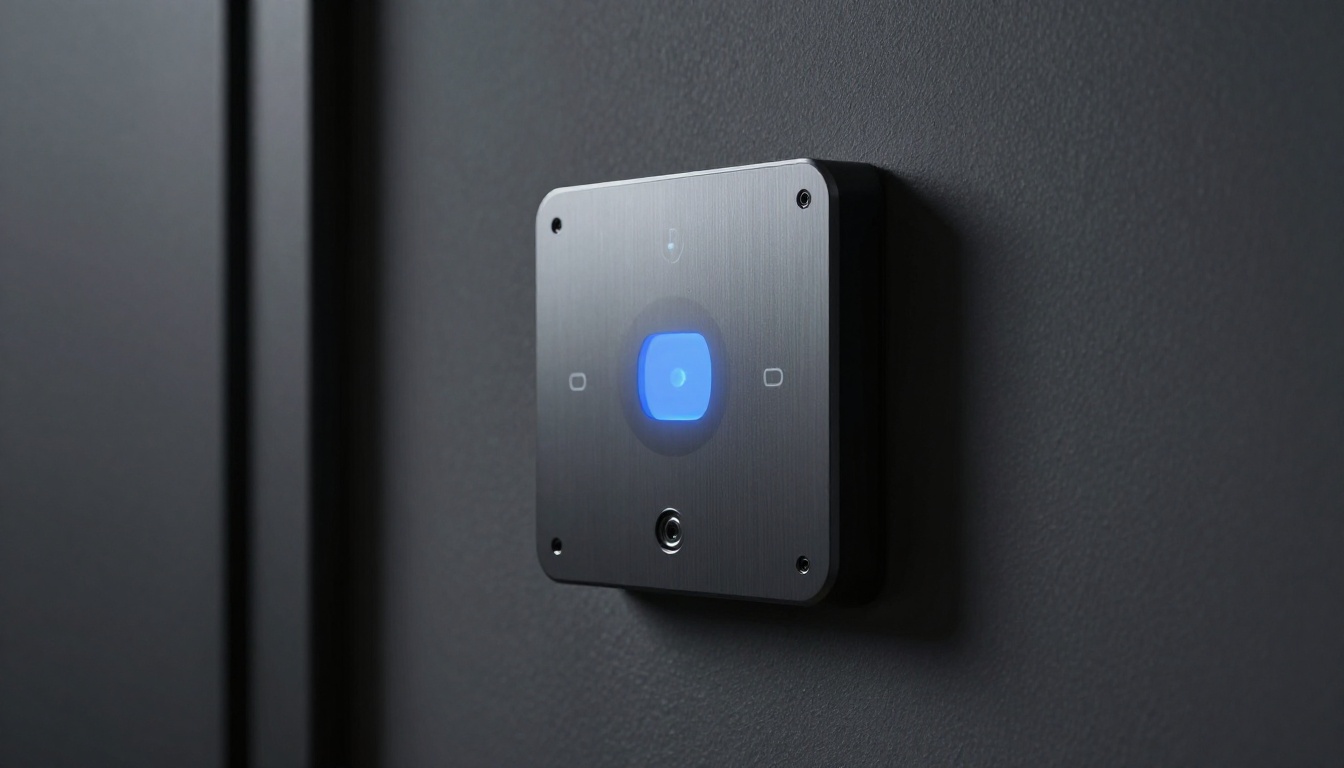
A family office advisor once described the security spending of most clients worth $10M-$100M in two words: random and reactive. A break-in triggers a $40,000 camera installation. A news story about kidnapping leads to a month of executive protection. Then the contract lapses, the cameras go unwatched, and the real vulnerabilities — a teenage daughter's public Instagram, an unlocked guest Wi-Fi network, a predictable daily routine — remain untouched.
The security industry is happy to sell you expensive solutions to problems you may not have. What follows is an honest framework for personal security at the high-net-worth level: what the actual threat landscape looks like, which investments provide real protection, and where the line falls between proportionate caution and expensive paranoia.
The Threat Landscape: What Actually Happens
Before spending a dollar on security, it helps to understand what you are protecting against. For individuals worth $10M-$100M — wealthy by any standard, but not heads of state — the statistical threats are surprisingly mundane. Property crime (burglary, vehicle theft) remains the most common. Social engineering scams, including spear-phishing and impersonation fraud, are rising fast. Kidnapping for ransom, while it dominates the imagination, is exceedingly rare in North America and Western Europe.
The more realistic dangers sit in a middle band: targeted burglary based on publicly available information about your wealth, identity theft enabled by data broker profiles, stalking or harassment (particularly for public-facing individuals), and increasingly, cyber intrusion into poorly secured home networks. A 2025 report from Kroll found that 68% of security incidents affecting private clients in the $10M-$50M range originated from digital vectors — not physical ones.
This matters because the security industry's revenue model is weighted toward physical protection: guards, armored vehicles, panic rooms. The threats have shifted digital. Most security budgets have not.
Tier One: The Baseline Everyone Should Have ($5,000-$25,000/Year)
This is the foundation. If you are worth $10M or more and have not addressed these items, you are leaving obvious gaps.
- Professional security audit — A one-time assessment of your primary residence, digital footprint, and daily routines by a credentialed firm. Expect $3,000-$8,000 for a thorough residential and digital audit. Firms like Kroll, Control Risks, or boutique operators like Pinkerton's private client division do this well. The audit produces a prioritized risk register — a ranked list of vulnerabilities with recommended fixes.
- Residential alarm and camera system — Not a Ring doorbell. A professionally installed, centrally monitored system with hardwired sensors, cellular backup communication, and cameras covering all entry points. and Vivint offer residential monitoring, but for this tier, look at integrators like Alarm.com's dealer network or regional firms that install commercial-grade equipment in residential settings. Budget $5,000-$15,000 for installation, $100-$300/month for monitoring.
- Digital hygiene — Remove your personal information from data broker sites (Spokeo, WhitePages, BeenVerified). Services like DeleteMe or Privacy Duck handle this for $100-$500/year. Separately, lock your credit at all three bureaus, enable two-factor authentication on every account (hardware keys, not SMS), and use a password manager. This costs almost nothing and eliminates the most common digital attack vectors.
- Social media exposure reduction — Audit what your family posts publicly. Geotagged photos, check-ins at your home, images of your property's layout, and travel announcements create a targeting package. This does not require going dark — it requires being deliberate about what is public and what is not.
Most people in this net-worth range stop here, and honestly, most should. The gap between Tier One and the threat profile for a typical $10M-$30M individual is small.
Tier Two: Elevated Protection ($25,000-$100,000/Year)
This tier makes sense for individuals with higher public profiles — business owners whose wealth is visible, people involved in contentious industries or litigation, anyone who has received a credible threat, or families spending significant time in higher-risk locations.
Tier Two Security Components
| Component | Typical Cost | What It Covers |
|---|---|---|
| Residential hardening | $15,000-$50,000 one-time | Reinforced doors/frames, ballistic film on windows, safe room construction, perimeter detection |
| Monitored CCTV with analytics | $10,000-$30,000 + $200-$500/mo | AI-powered cameras that distinguish people from animals, license plate recognition, 30-day cloud storage |
| Travel security consulting | $2,000-$5,000 per trip | Pre-trip intelligence briefing, secure transport arrangements, hotel security assessment, emergency extraction plan |
| Cyber protection package | $5,000-$15,000/yr | Device hardening, encrypted communications, dark web monitoring for leaked credentials, quarterly penetration testing of home network |
| Executive background screening | $1,000-$5,000 per person | Vetting household staff, contractors, and new business associates |
The residential hardening piece deserves attention. A reinforced front door with a commercial-grade frame and multi-point lock costs under $5,000 and is the single most effective physical security upgrade you can make. Most residential burglaries involve kicking in a standard door — a task that takes about ten seconds. A reinforced door turns that into a loud, time-consuming problem that most intruders abandon. Ballistic window film, at $30-$80 per square foot installed, does not stop bullets but does prevent glass from shattering on impact, buying critical seconds.
The cyber protection component is where most wealth managers now focus their concern. A compromised home network can expose financial accounts, private communications, legal documents, and location data. If your smart home system runs on the same network as your personal devices, an attacker who compromises a smart thermostat can potentially reach your laptop. Network segmentation — running IoT devices on an isolated VLAN — is a simple fix that most residential installers overlook.
Tier Three: Executive Protection ($100,000-$500,000+/Year)
Full-time executive protection — what most people call "bodyguards" — is where security spending escalates dramatically and where the cost-benefit analysis gets murkier.
A single trained executive protection agent in the United States costs $800-$1,500 per day, or roughly $250,000-$500,000 annually for full-time coverage. A two-person detail pushes past $500,000. Add an armored vehicle ($80,000-$300,000 to purchase or $3,000-$8,000/month to lease) and a secure driver, and you are approaching seven figures.
Is it worth it? For most individuals in the $10M-$100M range, the honest answer is no — not as a permanent arrangement. The threat level that justifies full-time executive protection is specific: active, credible threats against your person; routine presence in high-risk environments; or a public profile that generates persistent, hostile attention. Being wealthy is not, by itself, sufficient justification.
What does make sense at this tier is event-based protection: hiring EP agents for specific situations where risk is elevated. Attending a high-profile event, traveling to a less stable region, navigating a contentious business dispute, or managing a stalking situation. Firms like Gavin de Becker & Associates, AS Solution, and Pinkerton all offer episodic EP services starting at $2,000-$5,000 per day.
The best executive protection is invisible. If your security detail is conspicuous, it is either poorly trained or solving a different problem — usually the client's desire to appear important.
Digital Privacy: The Overlooked Priority
Physical security gets the budget. Digital privacy gets the lip service. This is backwards for most high-net-worth individuals, whose most valuable assets — financial accounts, legal strategies, business negotiations, personal communications — live on devices and networks.
A proportionate digital privacy setup includes:
- VPN on all devices — is the gold standard for privacy-focused users: no account required, no logging, $5/month. For families, offers easier multi-device management. A VPN does not make you anonymous, but it prevents your ISP and network operators from logging your browsing activity.
- Encrypted messaging — Signal for personal communication. Not WhatsApp (owned by Meta, metadata is collected). Not iMessage (secure, but tied to your Apple ID and backed up to iCloud by default). Signal with disappearing messages enabled is what security professionals actually use.
- Device hardening — Full-disk encryption (enabled by default on modern iPhones and Macs, requires activation on Windows). Biometric unlock disabled at border crossings (you can be compelled to use your face; you cannot be compelled to reveal a passcode in most jurisdictions). Automatic updates enabled. No sideloaded apps.
- Separate devices for sensitive work — A dedicated phone or laptop for financial management and legal matters, kept off social media and casual browsing. This is the digital equivalent of network segmentation, and it is remarkably effective.
- Privacy-focused browser and search — Brave or Firefox with tracker blocking for general browsing. A separate browser profile for financial accounts. Avoid Chrome if privacy is a genuine concern — Google's business model is data collection.
The total cost of this digital layer? Under $500/year for tools, plus $5,000-$15,000 annually if you engage a firm for ongoing monitoring and incident response. Compare that to a single executive protection agent at $250,000/year and the disproportion becomes clear.
Travel Security: What Is Proportionate
Travel is when high-net-worth individuals are most exposed. Routines change, unfamiliar environments reduce situational awareness, and the support systems of home — monitored alarms, familiar staff, controlled access — disappear.
For domestic travel within low-risk countries, proportionate security means: pre-researching your hotel's security features (not all five-star hotels have equally good access control), using a VPN on hotel Wi-Fi, avoiding posting real-time travel updates, and keeping valuables in the hotel safe or using a private aviation option that bypasses commercial terminal exposure.
For travel to elevated-risk destinations — parts of Latin America, sub-Saharan Africa, or regions with active civil unrest — a travel security consultant is worth every dollar. Firms like Global Guardian, WorldAware (now Crisis24), and International SOS provide pre-trip intelligence, in-country support, and emergency evacuation services. Annual memberships run $5,000-$20,000 for individuals, with per-trip consulting at $2,000-$5,000. These services overlap somewhat with what a high-end concierge service provides, but with genuine operational capability behind them rather than restaurant reservations.
Security Spending by Tier
| Tier | Annual Cost Range | Best For | Primary Focus |
|---|---|---|---|
| Baseline | $5,000-$25,000 | $10M-$30M net worth, low profile | Digital hygiene, residential monitoring, data removal |
| Elevated | $25,000-$100,000 | $30M-$100M, moderate visibility | Residential hardening, cyber protection, travel consulting |
| Executive | $100,000-$500,000+ | $100M+, high profile or active threats | Full-time EP, armored transport, 24/7 monitoring |
What Is Paranoid and What Is Prudent
The security industry has an incentive to make you afraid. Fear sells retainers. A good security consultant, paradoxically, is one who tells you what you do not need.
Probably paranoid for most HNW individuals: a full-time bodyguard with no specific threat, a panic room (unless you live in a region with genuine home invasion risk), counter-surveillance sweeps of your home for listening devices (unless you are involved in litigation or government work where this is a known tactic), and armored vehicles for daily use in low-risk cities.
Probably prudent and widely underutilized: removing your home address from public records (many jurisdictions allow this through trust ownership or LLC titling of property), vetting household staff with proper background checks, maintaining separate personal and business digital identities, and having a documented emergency plan that your family actually knows.
One area where the two blur: digital asset security. If you hold significant cryptocurrency or other digital assets, the security considerations compound — physical security (to prevent coercion attacks) intersects with digital security (to prevent remote theft) in ways that traditional wealth does not face.
Choosing a Security Provider
The market for personal security services ranges from former Special Forces operators running legitimate consultancies to mall cops with a new business card. Vetting matters.
Look for firms with ASIS International certifications (CPP, PSP, or PCI designations). Ask for references from family offices or wealth management firms, not from the provider's marketing materials. The best security consultants come from law enforcement intelligence backgrounds or military special operations — but credentials alone are not enough. You want someone who understands threat assessment methodology, not just tactical skills.
Red flags include: firms that recommend maximum-tier solutions before conducting an assessment, providers who cannot articulate your specific threat profile, anyone who uses fear-based sales tactics, and companies that bundle physical and digital security without demonstrating competence in both. Physical and cyber security are genuinely different disciplines. A firm that excels at executive protection may be mediocre at network security, and vice versa.
Budget 2-5% of your annual security spend on an independent audit of your security provider's performance. This is standard practice in corporate security and almost unheard of in the private client space — which is precisely why it matters.
The Bottom Line
For most individuals worth $10M-$100M, the right security investment is less dramatic and less expensive than the industry suggests. A thorough initial audit, a properly installed residential system, rigorous digital hygiene, staff vetting, and trip-specific consulting when warranted will address 90% of realistic threats for under $50,000 annually.
The remaining 10% of risk — the scenarios that require armored vehicles and full-time protection details — applies to a small subset of this population and usually involves specific, identifiable threat factors rather than wealth alone. If you are not sure whether you fall into that subset, you almost certainly do not.
The most cost-effective security measure costs nothing at all: reducing the public visibility of your wealth, your routines, and your family's movements. In an era where social media and data brokers make personal information trivially accessible, the deliberate management of your digital footprint is not paranoia. It is the new baseline.
Looking for luxury brands, stores, and services? Browse our curated directory: