Money buys access. Knowing what to do with it once you're inside — that's something else entirely. Tipping in luxury settings is one of those areas where even wealthy, well-traveled people feel a flicker of uncertainty. Too little and you look cheap, too much and you look like you're compensating.
This is a setting-by-setting breakdown of what to tip, when to tip, and how to do it with quiet confidence. Whether you're checking into an Aman resort, boarding a chartered yacht, or finishing a twelve-course tasting menu in Paris, the numbers below will keep you on solid ground.
Luxury Hotels: Four Seasons, Aman, Ritz-Carlton, Rosewood
Hotels are where tipping gets granular, because so many different people contribute to your stay. The mistake most guests make is saving everything for checkout. Tip as you go, in real time, to the person who actually helped you.
Doorman and bellhop: $5 to $10 per bag when luggage is brought to your room. If the doorman hails you a cab or helps with directions, $2 to $5 is appropriate.
Housekeeping: $10 to $20 per night, left on the nightstand each morning with a note that says "housekeeping." Leave it daily, not as a lump sum at checkout — different staff work different days, and the person who cleaned Tuesday may never see Wednesday's tip.
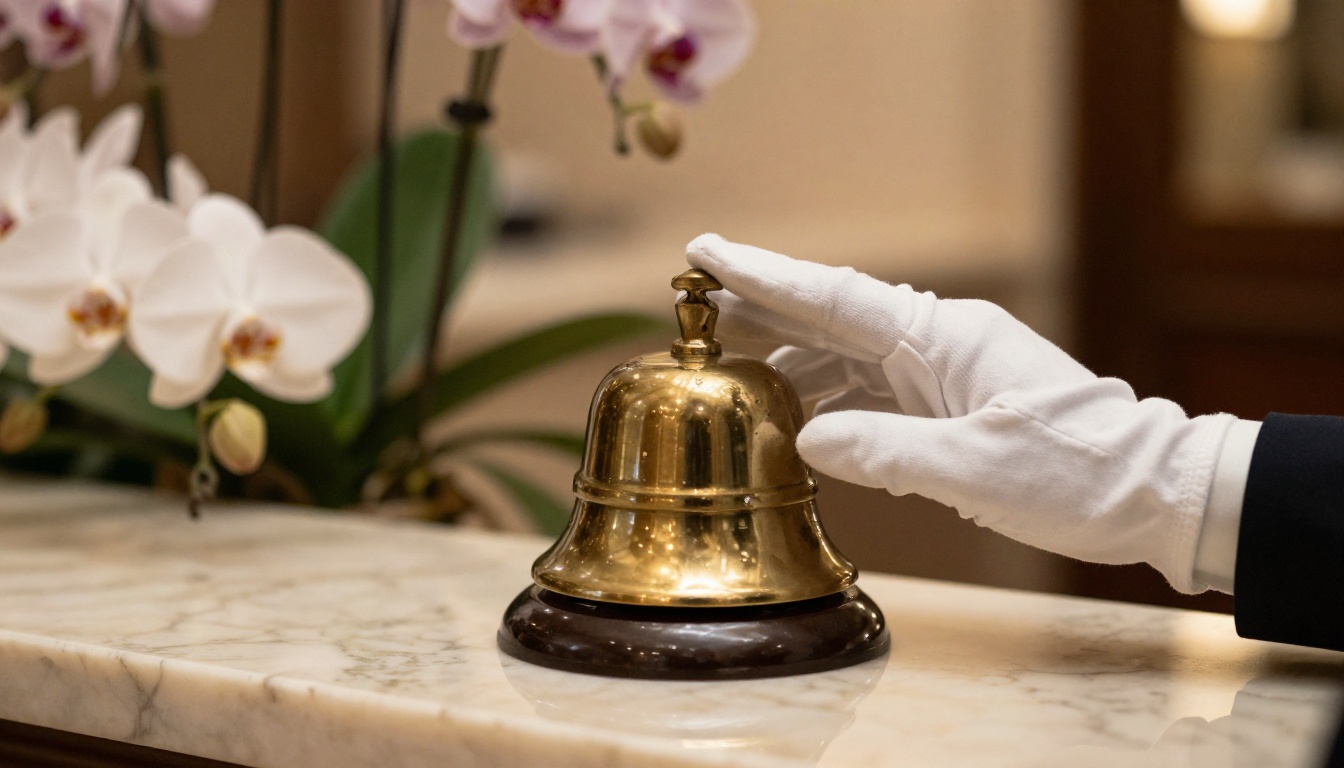
Concierge: For a standard restaurant reservation or theater tickets, $20 to $50 when the confirmation comes through — not when you make the request. For something genuinely difficult — a sold-out show, a last-minute table at a three-star restaurant — $100 or more is warranted. The concierge who knows you tip well and tip promptly will move mountains on the next visit.
Room service: Check the bill first — many luxury hotels add an 18 to 20 percent service charge automatically. If it's not included, tip 18 to 20 percent with a $5 minimum even for a single coffee.
Spa: 15 to 20 percent of the treatment cost, left in the envelope they provide at reception. At properties where a 90-minute treatment runs $300 to $500, that means $45 to $100 for the therapist.
Valet: $5 to $10 each time your car is brought around. Not once at checkout — every single retrieval. If it's raining or the valet sprinted, $10 is the right move.
End-of-stay envelope: Some guests leave $200 to $500 in a sealed envelope addressed to the general manager, with a note asking them to distribute among staff. It's a generous gesture and appreciated, but it's a bonus on top of individual tips throughout your stay — not a replacement for them.
Michelin Stars and Fine Dining Restaurants
Tipping at the highest level of dining varies dramatically by country, and getting it wrong in either direction sends a message you don't want to send. The rules are straightforward once you know them.
United States: 20 percent is the baseline, 25 percent for exceptional service, calculated on the pre-tax subtotal. At a $500-per-person tasting menu, that's $100 to $125 per guest in gratuity. If you're spending $2,000 on a dinner for four and leaving $200 total, you are undertipping and the staff knows it.
Europe: Service is typically included at 12 to 15 percent. In France, "service compris" means the tip is built into the menu price — an additional 5 to 10 percent in cash signals appreciation but is not expected. Leaving €20 to €50 after a memorable meal at a two- or three-star restaurant is a thoughtful touch. In the UK, check for the service charge on the bill; if it's there, you're covered.
Japan: Do not tip — this is not a suggestion or a cultural nuance you can finesse. Tipping in Japan can cause genuine discomfort and offense. A sincere verbal thank-you and a slight bow carry more meaning than cash ever could.
Sommelier: In the US, the sommelier's tip is generally covered by the overall percentage you leave on the bill. But if the sommelier went significantly above and beyond — opened bottles from the reserve list, walked you through a 45-minute pairing, sourced something unusual from the cellar — handing them $50 to $100 in cash directly, with a quiet word of thanks, is a genuinely classy move that most guests never think to make.
The best tippers aren't the ones who leave the most money. They're the ones who make the person receiving it feel respected rather than transactional. A folded bill with eye contact and a specific compliment — "that Barolo recommendation made the evening" — lands differently than a number scrawled on a receipt.
Private Yacht Charters and Aviation
Once you move into the world of private charters — whether on water or in the air — tipping conventions shift. The amounts are larger, the delivery is more formal, and the norms are less widely understood.
Yacht charters: The standard tip is 10 to 15 percent of the base charter fee, not including the advance provisioning allowance. For a $100,000 weekly charter, that's $10,000 to $15,000 in gratuity. Present it in cash, in a sealed envelope, to the captain on the last evening — the captain distributes to the crew. If a particular crew member stood out, mention them by name.
Private aviation — pilots: In the US, tipping pilots is not traditional and many decline. On a long international charter where the crew went above and beyond, $100 to $200 per pilot is a thoughtful acknowledgment. It's optional and should never feel obligatory.
Cabin crew on private flights: $50 to $200 depending on flight length and service level. A four-hour domestic charter with a single attendant warrants $100 to $150. Shorter hops with minimal service, $50 is appropriate.
FBO staff: The fixed-base operator staff who handle your bags and manage the ramp are often overlooked. $20 to $50 per person if they provided hands-on assistance — they remember who tips and who doesn't.
Personal Shoppers, Stylists, and Sales Associates
Retail luxury operates on different currency than hospitality. Cash tips can actually create awkwardness in certain contexts. Knowing the distinction matters.
Department store personal shoppers at Bergdorf Goodman, Harrods, or Neiman Marcus work on commission and are not tipped in cash. What they value is loyalty — returning to them consistently, referring friends, and acknowledging their work with a handwritten note.
Independent stylists who charge a consulting fee should be tipped 15 to 20 percent of that fee, or given a generous gift at the holidays — a bottle of wine they mentioned loving, a gift card to a restaurant they frequent. The relationship is more personal and the tip reflects that.
Hermès, Chanel, and similar luxury house sales associates: Never tip with cash — it may violate store policy and puts them in an awkward position. A box of chocolates or a bottle of champagne at the holidays, and genuine warmth in every interaction, is what keeps you on their list when a rare allocation arrives.
Private Drivers, Chauffeurs, and Ground Transportation
Ground transportation is the area where most people tip, but many still get the amount wrong relative to the level of service they received.
Full-day chauffeur hire: 15 to 20 percent of the total booking cost, with a practical minimum of $50 to $100 for a full day. If the driver handled logistics or navigated a complicated itinerary, err toward 20 percent. Hand the tip directly to the driver, not through the car service company.
Airport transfers: $20 to $50 depending on city and service level. A standard sedan transfer from Manhattan to JFK warrants $20 to $30. A full SUV service with flight monitoring and curbside meet in London or Dubai, $40 to $50.
If you are unsure about local customs anywhere in the world, the single best resource is already waiting in your hotel lobby. Ask the concierge before you head out. They will tell you exactly what's appropriate, and they'll appreciate that you cared enough to ask.
The Rules That Apply Everywhere
Always carry local currency in small denominations. A tip paid in cash reaches the person who earned it. Credit card tips sometimes get pooled, taxed differently, or delayed by weeks. Keep a supply of folded $20s, €20 notes, or the local equivalent whenever you travel.
Tip when the service is delivered, not before. Handing someone money as you make a request turns a tip into a bribe. Tipping afterward, when the job is done well, turns it into recognition. The exception is a hotel concierge, where tipping upon successful delivery of a request — not at the moment you ask — signals that you understand how the system works.
Be discreet. The folded bill passed during a handshake, the envelope left on the nightstand, the quiet "this is for you" with a specific compliment — that's how it's done. Making a visible show of tipping embarrasses the recipient and signals insecurity rather than generosity.
When genuinely uncertain, ask. There is no shame in saying "what's customary here?" to a hotel manager, a charter broker, or a concierge. The question communicates respect and good faith, and it is vastly better than guessing wrong.
Tipping well is not about the amount alone. It is about timing, delivery, and the recognition that the person in front of you is a professional who made your experience better. Get those three things right and the money takes care of itself.
Looking for luxury brands, stores, and services? Browse our curated directory: