A shirt sits closer to the body than almost anything else a man wears. It touches the neck all day, frames the face, and shows above a jacket collar where every other garment hides. Yet shirting is the last thing most well-dressed men consider having made to measure, long after they have commissioned a suit or waited out a shoemaker's order book. The reasons are partly cost and partly confusion about whether the difference is real.
It is real, but it is narrow, and it earns out only under specific conditions. A house like Charvet in Paris or Anna Matuozzo in Naples is not selling a better cotton than you can buy off a peg from a good ready-to-wear maker. The premium pays for fit around an asymmetrical neck and shoulders, for a collar that sits without help, and for construction that survives two hundred launderings. Whether that justifies four to ten times the price of excellent ready-to-wear depends entirely on how badly standard sizing fails you.
What Bespoke Shirting Actually Buys
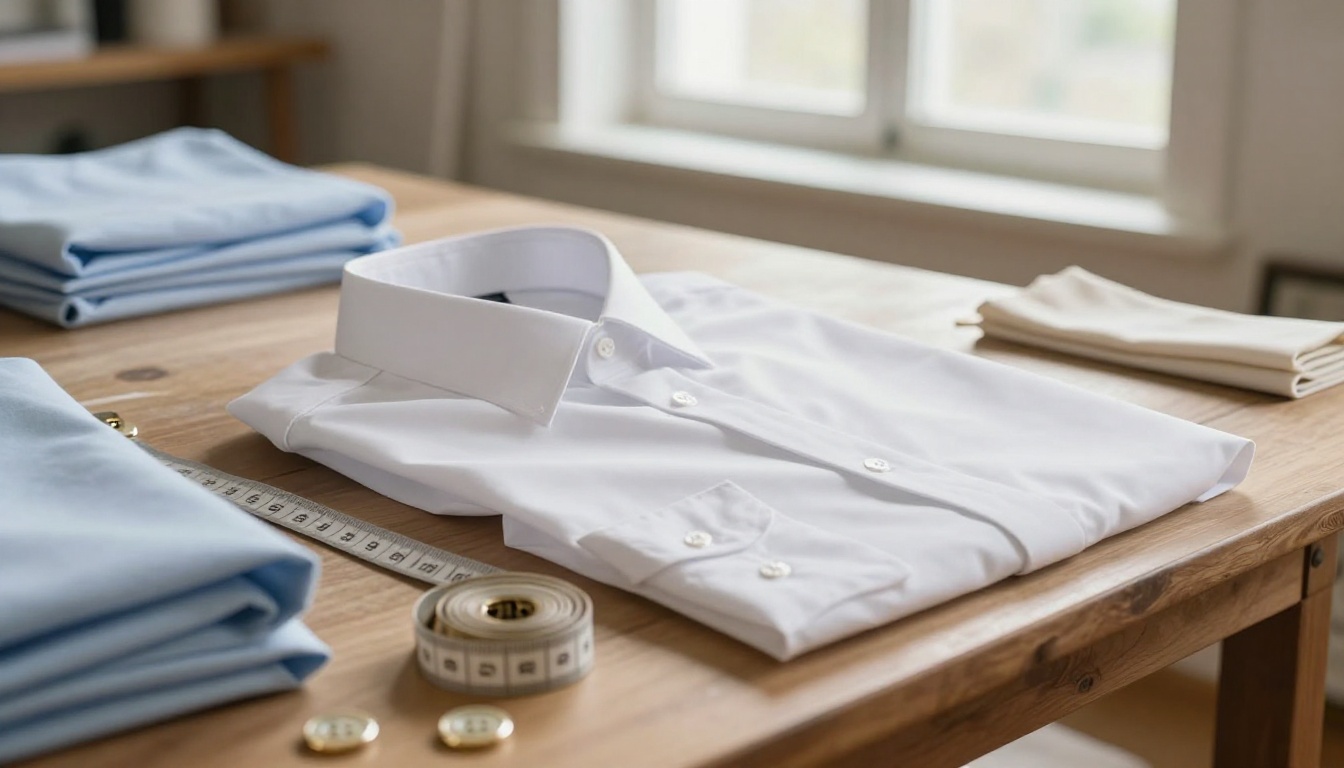
Most men are not a clean size. The neck is rarely a flat 16, the right shoulder usually sits lower than the left, and sleeve lengths differ by a centimeter or more between arms. Ready-to-wear averages these away. A made-to-measure or full-bespoke shirt records them, so the yoke sits square, the cuff breaks at the wrist bone rather than the knuckle, and the collar closes against the throat without gapping when the top button is done up.
The collar is where the money shows. A bespoke collar is cut to the wearer's neck shape and interlined so it holds a roll without fusing, which is why a Neapolitan shirt collar stands up under a jacket lapel even when the top button is open. Hand-attached collars and split yokes that follow each shoulder separately are the structural markers that separate genuine bespoke from a made-to-measure pattern run through a factory.
The fabric conversation matters less than buyers expect. Bespoke houses and serious ready-to-wear makers draw from the same mills: Thomas Mason and David & John Anderson in England, Alumo and Canclini in Italy, Albini across several labels. A 140s two-ply poplin from Alumo is the same cloth whether it reaches you as a finished shirt or a bolt on a cutting table. What changes is how it is cut and sewn, a point worth weighing against the broader cost of luxury fabric before assuming the cloth is where the premium lives.
The fabric is the easy part. Fit around an irregular neck and a hand-rolled collar are what a peg shirt cannot give you, no matter how fine the cotton.
Single-Needle Stitching and the Tells of Hand Construction
Construction is where price tiers separate, and most of it is invisible until the shirt has been worn for a year. Single-needle stitching, which sews each seam in two passes rather than one, produces a flatter, stronger seam that does not pucker after washing. It is slower and costs more, and it is standard on bespoke work and rare below it.
Hand finishing appears in specific places. The collar and cuffs may be attached by hand, the buttonholes hand-sewn so they pull tight around the button, and the side seams felled by hand on the most labor-intensive Neapolitan shirts. Buttons should be Australian mother-of-pearl, thick and cut from the shell rather than thin polished discs, secured with a shanked cross-stitch that survives an aggressive laundry.
- Split yoke — two pieces matched at the center back, letting the maker adjust each shoulder independently. A single-piece yoke cannot follow uneven shoulders.
- Single-needle seams — flatter and more durable than the chain stitching on most ready-to-wear; resists puckering after repeated washing.
- Hand-attached collar — sits and rolls more naturally than a machine-set collar, the clearest tell of Neapolitan handwork.
- Mother-of-pearl buttons — thick shell buttons, hand-shanked, rather than thin pressed plastic or resin.
- Gauntlet button — a small button on the sleeve placket, present on serious shirts and absent on cut-rate ones.
Jermyn Street and the English Houses
London's shirtmaking concentrates on and around Jermyn Street, where the houses share a recognizable handwriting: a slightly fuller cut, a structured collar, and an English preference for poplin and fine twill over the softer Italian voiles. Turnbull & Asser remains the best-known name, with a bespoke order requiring a minimum first run of several shirts and a lead time that stretches across months while the pattern is cut and corrected.
Budd Shirtmakers works in a quieter register from the Piccadilly Arcade, with a house style that favors a higher collar and a more traditional fit, and a following among buyers who want English construction without the louder branding. Emma Willis cuts from a Gloucester workshop using Swiss and Italian cottons, and is among the few English houses where the bespoke and ready-to-wear lines share the same standard of finishing.
The English bespoke route resembles the process of commissioning a suit on Savile Row: a first appointment to take measurements and cut a trial pattern, a fitting in a basted or finished sample, and corrections before the full order is sewn. Expect a minimum order of four to six shirts on a first commission, because the setup cost of cutting an individual pattern only makes sense across a batch.
The French Standard: Charvet
Charvet occupies its own category. The Place Vendôme house has been making shirts since 1838 and holds one of the largest fabric inventories in the trade, with thousands of cottons stocked in-house and a fitting process that other makers treat as the benchmark. A Charvet bespoke shirt is cut individually, sewn with single-needle seams and hand-finished detailing, and priced at the top of the European range.
The house is known for collar work and for color, with a range of poplins and voiles that few competitors keep on hand. The trade-off is access and lead time: bespoke orders run several months, the minimum is meaningful, and the experience is conducted on the house's terms rather than the customer's. For buyers who want the deepest fabric selection in shirting, there is no direct substitute.
Naples: Where Shirting Becomes Handwork
The Neapolitan shirt is a different object. Where English houses build structure, Naples removes it, producing a soft, light shirt with a collar that rolls rather than stands and a high proportion of hand stitching. The same workshops and traditions sit behind the city's hand-cut tailoring, and the shirtmakers carry the approach to its extreme.
Anna Matuozzo is the most decorated of the Neapolitan houses, run as a family workshop where the shirts are largely hand-sewn, including the collar attachment and buttonholes. Luca Avitabile built a reputation on a similarly handwork-heavy shirt and a softer, more contemporary collar, and travels for fittings rather than requiring a trip to Naples. Both work to a long lead time and a meaningful minimum, and both price at or near the level of the European houses despite the smaller scale.
The Neapolitan shirt is not for everyone. The soft collar and lightweight cloth suit a relaxed jacket and warm climate better than a stiff business setting, and the handwork that defines it also makes it more delicate. For a buyer who wears tailoring the way Naples intends, nothing else feels the same; for someone who needs a crisp collar under a suit five days a week, an English house is the better fit.
The Houses Compared
The figures below are approximate per-shirt prices for a first bespoke commission, drawn from what the houses and their clients report. Minimums and lead times move with demand, and travel fittings shift the calculus for buyers outside the maker's home city.
Bespoke shirtmakers compared
| Maker | City | Lead Time | Min. Order | Per Shirt |
|---|---|---|---|---|
| Turnbull & Asser | London | 3-4 months | 4-6 | $450 |
| Budd Shirtmakers | London | 3-4 months | 4-6 | $400 |
| Emma Willis | London / Gloucester | 2-3 months | 4 | $430 |
| Charvet | Paris | 4-6 months | 6 | $650 |
| Anna Matuozzo | Naples | 4-6 months | 4-6 | $500 |
| Luca Avitabile | Naples | 3-5 months | 4-5 | $450 |
| Ascot Chang | Hong Kong | 4-8 weeks | 4 | $300 |
Hong Kong sits outside the European frame but earns a place in the conversation. Ascot Chang has made shirts since 1953, runs trunk shows across the United States and Europe, and turns orders faster than the European houses while holding a high standard of single-needle construction. For buyers who value access and turnaround over the romance of a Jermyn Street fitting room, it is a serious option.
Where the Premium Earns Out
The price gap between excellent ready-to-wear and entry bespoke is wide, and it widens further into Neapolitan handwork. The chart below shows approximate per-shirt figures across the tiers, which makes the diminishing returns visible: the jump from peg to made-to-measure buys fit, while the jump from made-to-measure to full handwork buys finishing and feel that not every wearer will register.
Approximate price per shirt by tier
The honest case for bespoke shirting is narrow and specific. If standard collars gap at the throat, if your shoulders are noticeably uneven, or if you wear shirts hard enough that construction longevity matters over years, the premium earns out. If you fit a stock 15.5 or 16 cleanly and rotate shirts often, a made-to-measure program from a good house captures most of the benefit, and full bespoke becomes a question of preference rather than need.
The order in which to build a wardrobe is also worth stating plainly. A man who has already waited out a shoemaker, as covered in the case for handmade shoes worth the wait, understands the rhythm: commission a small first batch, wear it through a season, and refine the pattern before ordering again. The pattern is the asset, not any single shirt, and a good house keeps it on file for the next decade.
Start with one maker and one collar shape rather than spreading a first order across houses. The point of bespoke is the correction across fittings, and that only happens when a single workshop holds your pattern and learns your body over successive orders. Get that relationship right, and the shirt becomes the quietest, most reliable thing in the wardrobe, which is exactly what a shirt should be.