A cigar collection fails for the same reason most do: the storage is wrong before the contents ever matter. A Padron 1964 Anniversario aged eighteen months in a box holding 55 percent relative humidity is a worse smoke than a mid-tier Nicaraguan kept correctly at 68. Tobacco is agricultural. It dries, it cracks, it loses oils, and it does so quietly while the owner assumes the wooden box on the shelf is doing its job. Most are not.
Cigars sit in the same category as wine and whisky as a collecting pursuit, but the variable that separates competence from waste is narrower and less forgiving. A wine cellar tolerates a few degrees of drift. A humidor that swings between 62 and 72 percent humidity over a week will ruin a year's patience. This is a guide to building the storage first, then the collection that justifies it.
The Humidor Is the Whole Game
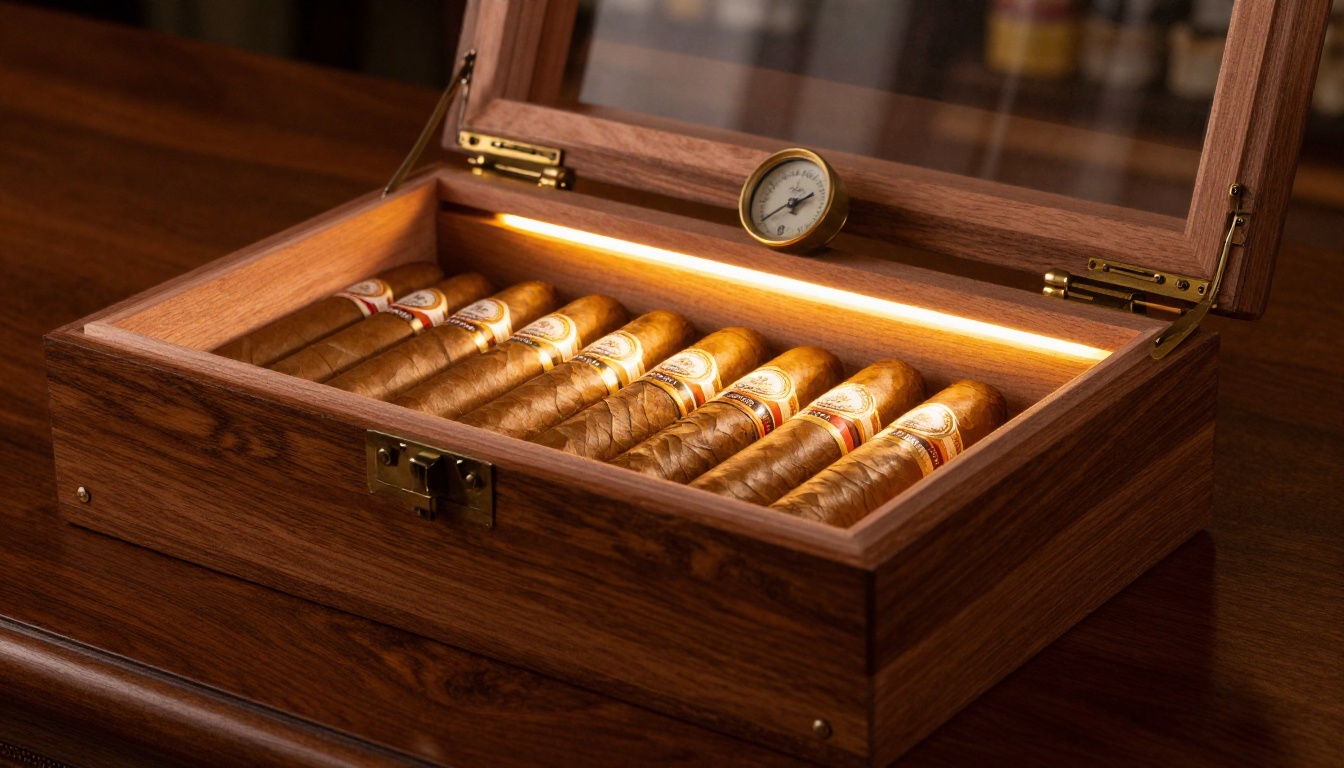
A humidor does one thing: hold a stable relative humidity, ideally 65 to 70 percent, at a temperature near 18 to 21 degrees Celsius. Everything else is cabinetry. The standard target most experienced smokers settle on is roughly 65 percent humidity at 18 degrees, a touch drier and cooler than the old 70/70 rule, because lower humidity reduces the risk of tobacco beetle and gives a cleaner burn.
The interior matters more than the exterior. Spanish cedar (Cedrela odorata, not aromatic American red cedar) is the standard lining because it regulates moisture, repels beetles, and imparts a faint sweetness over time. A beautifully lacquered box lined with cheap plywood is a decorative object, not a humidor. When evaluating any unit, the first question is what the inside is made of and how well the lid seals.
The seal test is simple: open the lid a few inches and let it drop. A well-built humidor closes with a soft thud and a faint cushion of air resistance. A loose rattle means it will never hold humidity, regardless of price.
Desktop, Cabinet, or Cooler
The three honest categories are the desktop box, the furniture-grade cabinet, and the converted cooler (often called a coolerdor or tupperdor). Each suits a different stage and scale.
The desktop humidor holds 25 to 150 cigars and is where nearly everyone starts. A cabinet humidor — think a freestanding piece holding 500 to 2,000 sticks, often with Spanish cedar trays and a French-door front — is a furniture purchase as much as a storage one. The cooler conversion is the least romantic and the most effective per dollar: a sealed insulated cooler with humidity packs holds hundreds of cigars with almost no climate drift, which is why serious agers quietly use them out of sight.
Humidor Types: Capacity, Cost, and Trade-Offs
| Type | Capacity | Typical Spend | Best For |
|---|---|---|---|
| Desktop box | 25–150 | $150–$1,500 | First collection, daily access |
| Cabinet | 500–2,000 | $2,000–$20,000+ | Aging, display, scale |
| Cooler conversion | 200–1,000 | $80–$400 | Bulk aging, climate stability |
| Travel case | 2–10 | $30–$300 | Transport only, not storage |
Where the Money Actually Goes
Humidor pricing is one of the least rational corners of the luxury market, because the same function — a sealed Spanish cedar box — exists at $200 and at $25,000. The premium at the top buys craftsmanship, materials, and name, not better humidity control. A French maker like produces lacquered humidors with sycamore marquetry and palladium hardware that run well into five figures, and they are genuinely beautiful objects built to last generations. They do not, however, keep a cigar fresher than a properly seasoned cooler.
The honest framing is this: below a certain threshold, spend buys real function — a tight seal, true Spanish cedar, a reliable hygrometer. Above it, spend buys craftsmanship and presence, which are legitimate reasons to buy but should not be confused with performance. American maker sits in the middle of that spectrum, with burl and lacquer boxes favored by people who want the object on display rather than hidden in a closet.
Typical Spend by Humidor Tier
The single best upgrade for any humidor at any price is the humidification method. Skip the dry foam puck that ships with most boxes — it overshoots and undershoots constantly. Two-way humidity packs from hold a fixed percentage by absorbing or releasing moisture as needed, and for larger setups, an electronic unit removes the guesswork entirely. A $15 pack does more for cigar quality than a $5,000 lid.
Seasoning, the Step Everyone Skips
A new Spanish cedar humidor is bone dry and will pull moisture out of any cigar placed inside it for the first two to four weeks. Seasoning means bringing the wood up to humidity before storing anything. The wrong method is wiping the interior with distilled water, which raises mold and warps the cedar. The correct method is placing a few high-percentage humidity packs inside a closed, empty humidor for two weeks and letting the wood equilibrate slowly. Owners who skip this routinely report dried-out cigars and blame the box.
Building the Collection Itself
Storage solved, the collection becomes the interesting part. The goal is a range that covers different strengths, sizes, and occasions, with a smaller reserve set aside to age. Aging works: most premium cigars improve over two to five years as the tobaccos marry and harsh ammonia notes fade, with diminishing returns beyond roughly a decade for all but the most full-bodied blends.
A sensible starting spread mixes daily smokes with a few benchmark names worth understanding. The Cuban question shapes any collection: Cuban cigars remain illegal to purchase or import in the United States, so American collectors build around New World tobacco from Nicaragua, the Dominican Republic, and Honduras — which, blind, frequently outperforms the Cuban mystique anyway.
- — The Nicaraguan benchmark for full-bodied, box-pressed cigars; the 1964 and 1926 Anniversary lines are the reference points for cocoa-and-coffee richness.
- — Dominican range spanning everyday Hemingway sizes up to the near-impossible-to-find OpusX, the cigar that proved Dominican-grown wrapper could rival Cuban.
- — The luxury benchmark for refined, medium-bodied smoking; expensive, consistent, and the clearest example of paying for polish rather than power.
- — The most counterfeited name in cigars; the Cuban line is the icon collectors chase, while the separate Dominican-made version sold in the US causes endless confusion.
- Oliva Serie V and My Father — Two Nicaraguan houses that deliver much of the Padron experience and reward anyone building depth rather than just trophies.
Resist the impulse to buy singles of forty different cigars. A collection that teaches you something is built around boxes or fives of a smaller number of blends, smoked across months so the palate registers how each one ages. The same discipline that builds a coherent whisky collection applies here: depth over breadth.
Benchmark Cigars by Profile
| Cigar | Origin | Body | Ages Well |
|---|---|---|---|
| Padron 1964 Anniversary | Nicaragua | Full | Excellent |
| Arturo Fuente Hemingway | Dominican | Medium | Good |
| Davidoff Grand Cru | Dominican | Medium | Moderate |
| Oliva Serie V Melanio | Nicaragua | Full | Excellent |
Counterfeits, Beetles, and the Real Risks
Two failures destroy collections. The first is counterfeiting, concentrated almost entirely on Cuban names sold to tourists and online at prices too good to be real. A genuine box of Cohiba Behikes costs what a genuine box costs; the $90 version on a holiday street corner is sawdust and floor sweepings in a convincing band.
The second is the tobacco beetle, which hatches from eggs already present in the leaf when temperatures climb above roughly 22 degrees Celsius. One infested cigar can bore through an entire box. This is the practical argument for keeping storage cool and slightly dry, and for inspecting new arrivals. A collection lost to beetles is a collection that ran too warm.
Smoking culture rewards the same patience as the rest of this pursuit — the right room, the right glass alongside, and no rush. Many collectors pair a full Nicaraguan with an aged rum or a peated Scotch, the kind of evening that belongs next to a well-stocked home bar rather than a hurried lunch break.
Where to Start
Begin with a quality desktop humidor in the $300 to $900 range with a verified tight seal and true Spanish cedar interior, season it properly over two weeks with two-way packs, and only then buy cigars. Add a converted cooler once the collection outgrows the box — it is the least glamorous and most effective upgrade available. The furniture-grade cabinet and the French atelier piece are worth buying when storage is already solved and the object itself is the point.
The collection that rewards you is not the one with the rarest bands. It is the one stored correctly, built with intention around a handful of blends, and smoked slowly enough to notice what two years of patience actually does to a leaf. Get the box right, and everything inside it gets better on its own.