The 40-Bottle Trap
Most home bars fail the same way. Someone buys a beautiful cart or cabinet, fills it with twenty to forty bottles purchased on impulse or recommendation, and within a year half of them sit untouched, their contents slowly oxidizing. The problem is not a lack of spending. It is a lack of philosophy.
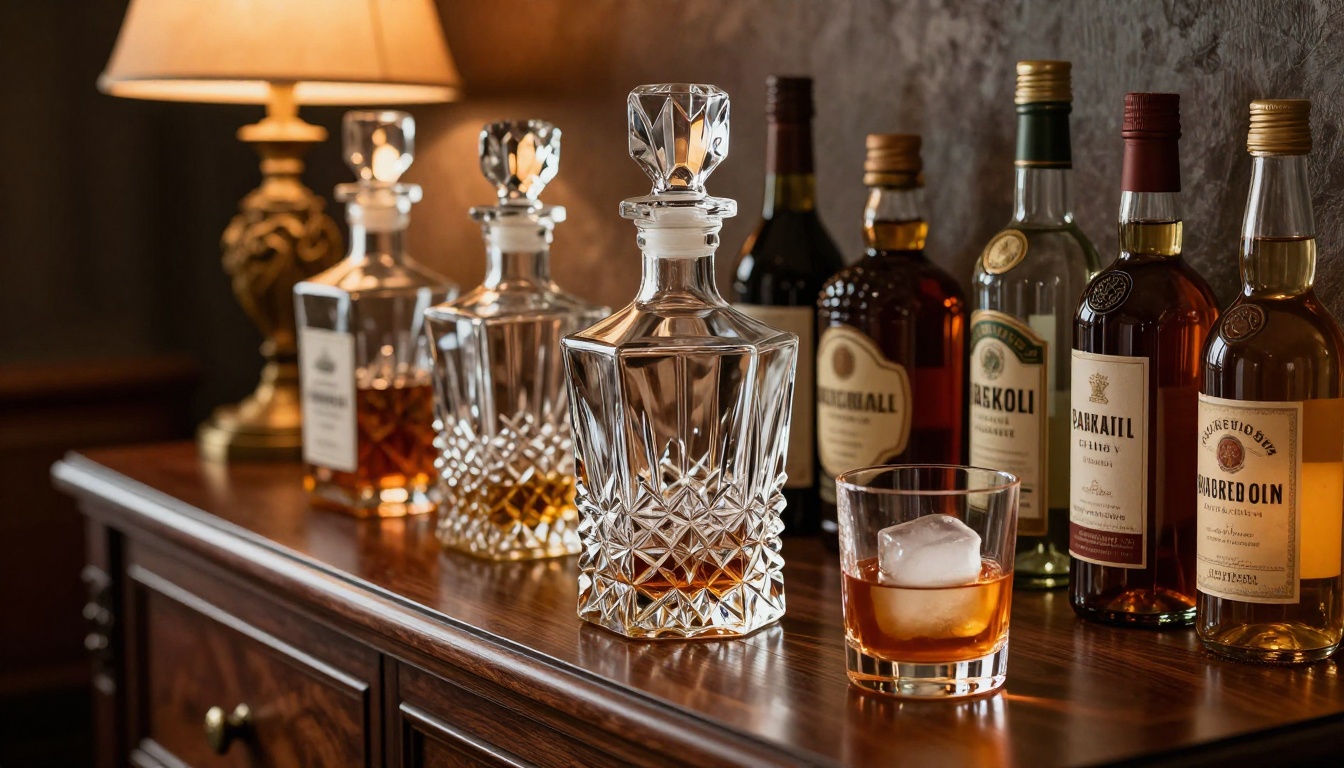
A well-stocked home bar is not a liquor store in miniature. It is closer to a considered whisky collection — deliberate in what it includes and, more importantly, what it leaves out. The goal is twelve to eighteen bottles that cover every serious drink you might want to make, with enough depth in two or three categories to show you actually care.
This guide is built around a simple framework: a core of versatile spirits, a supporting cast of modifiers, and a handful of personal bottles that say something about your taste. No filler. No dusty curiosity purchases. Every bottle earns its shelf space.
The Architecture: Categories That Matter
Before buying a single bottle, decide which spirit categories you genuinely drink. Most people need strong coverage in three or four of the following, and can ignore the rest entirely.
- Whisky — The deepest category. One bourbon, one Scotch, and one rye covers 90% of classic cocktails and neat pours.
- Gin — Essential for martinis and gin-and-tonics. One London dry, one contemporary style.
- Tequila / Mezcal — The category with the steepest quality curve. A good blanco and a reposado handle everything.
- Rum — Often overlooked, but a white rum and an aged rum open up a surprisingly wide range.
- Amaro and Vermouth — The secret weapons. These are what separate a functional bar from a thoughtful one.
- Vodka — Controversial, but honest answer: you need one decent bottle for guests who want it, and it belongs in a Martini if that is your preference.
The mistake is going deep in every category simultaneously. A home bar with eight whiskeys but no vermouth cannot make a proper Manhattan. One with six gins but no amaro has a blind spot that guests will notice.
The Core Twelve: Bottles That Earn Their Place
These twelve bottles, chosen well, let you make virtually any classic cocktail and pour something neat that will hold up to scrutiny. I have organized them into three price tiers — not because expensive always means better, but because in spirits, the jump from the entry tier to the mid tier is where quality leaps happen.
Whisky
The is the most reliable bourbon at its price point: caramel and vanilla with enough backbone for an Old Fashioned, smooth enough to sip. For Scotch, the offers a waxy, coastal complexity that reads as sophisticated without being polarizing. And for rye, Rittenhouse Bottled-in-Bond remains the standard — spicy, structured, and built for Manhattans.
Whisky Recommendations by Price Tier
| Category | Entry ($25-45) | Mid ($50-90) | Top Shelf ($100-250) |
|---|---|---|---|
| Bourbon | Buffalo Trace | Wild Turkey Rare Breed | Maker's Mark Wood Finishing Series |
| Scotch | Clynelish 14 | Talisker Distillers Edition | Springbank 15 |
| Rye | Rittenhouse BiB | Pikesville | WhistlePig 10 |
If you only drink whisky occasionally, the entry column is genuinely all you need. Every bottle there will impress a knowledgeable guest more than a dusty Macallan 12 that has been open for two years.
Gin
Two bottles cover the full spectrum. The is a juniper-forward classic that makes a textbook martini and a crisp G&T. For something more contemporary — citrus-led, floral, with broader botanical range — Ford's Gin or Roku from Japan both deliver at a fair price. If you want a single splurge bottle, Monkey 47 is distinctive enough to justify the premium, though it is almost too complex for mixing.
Gin Recommendations by Price Tier
| Style | Entry ($20-30) | Mid ($30-50) | Top Shelf ($50-80) |
|---|---|---|---|
| London Dry | Tanqueray | Sipsmith | Plymouth Navy Strength |
| Contemporary | Roku | Ford's | Monkey 47 |
Tequila and Mezcal
Tequila has the widest quality gap between bad and good at every price point. The non-negotiable: buy 100% agave, always. Anything labeled "mixto" is industrial product.
For blanco, Fortaleza Still Strength is remarkable — clean, vegetal, with genuine agave character. Tapatio 110 runs close. For reposado, El Tesoro holds up brilliantly in cocktails and neat. And if mezcal interests you, Del Maguey Vida is the right entry point: smoky, affordable, and versatile enough for a Mezcal Negroni or a simple pour with orange slices.
Tequila and Mezcal Recommendations
| Category | Entry ($30-45) | Mid ($50-80) | Top Shelf ($90-180) |
|---|---|---|---|
| Blanco | Tapatio 110 | Fortaleza Still Strength | Terralta Blanco 110 |
| Reposado | Cimarron | El Tesoro | Fortaleza Reposado |
| Mezcal | Del Maguey Vida | Banhez Espadin-Barril | Del Maguey Chichicapa |
A note on anejo and extra anejo: these are sipping spirits, not mixing spirits, and most people buy them before they have a solid blanco on the shelf. Get the blanco right first. The aged expressions can wait.
Amaro, Vermouth, and Modifiers
This is where most home bars have the largest gap and where the most dramatic improvement happens. You cannot make a Negroni without Campari. You cannot make a proper Manhattan or Martini without vermouth. And once you have a few amaros, an entire world of low-ABV drinking opens up — the kind of after-dinner pour that shows more thought than reaching for a bottle of whisky.
The essentials: Campari (no substitute), a dry vermouth (Dolin or Noilly Prat), a sweet vermouth (Cocchi di Torino, the clear winner at its price), and one sipping amaro. For the last slot, the is the crowd-pleaser — honeyed, herbal, and approachable enough that it converts skeptics. Montenegro is the safer pick. Averna runs darker and more bitter, better after a heavy meal.
Essential Modifiers
| Role | Recommended Bottle | Price Range | Notes |
|---|---|---|---|
| Bitter Aperitivo | Campari | $25-30 | Non-negotiable for Negronis |
| Dry Vermouth | Dolin Dry | $12-16 | Refrigerate after opening |
| Sweet Vermouth | Cocchi di Torino | $20-25 | Best value in the category |
| Sipping Amaro | Amaro Nonino Quintessentia | $35-45 | Honeyed, herbal, versatile |
| Orange Liqueur | Pierre Ferrand Dry Curacao | $25-35 | Better than Cointreau for most uses |
| Aromatic Bitters | Angostura | $10 | You will use this constantly |
One critical rule that even experienced hosts ignore: vermouth is wine. It oxidizes. Refrigerate every bottle after opening, and replace it if it has been open longer than six to eight weeks. A warm, three-month-old bottle of Dolin will ruin an otherwise perfect Martini, and your guest who actually knows cocktails will notice immediately.
What to Skip
A home bar says as much through its omissions as its inclusions. Here is what to leave out, and why.
- Flavored vodkas and liqueurs you bought for one recipe. That bottle of Chambord from 2019 is not improving. If you have not opened it in six months, it does not belong on the bar.
- Ultra-premium bottles you are afraid to open. A sealed bottle of Pappy Van Winkle is a conversation piece, not a bar component. If you would not pour it for a guest, it is decoration.
- Cream liqueurs. They expire. They clutter. They signal a bar that prioritizes novelty over craft.
- Pre-made cocktail mixers. Fresh citrus, simple syrup (equal parts sugar and water — it takes three minutes to make), and good spirits will outperform any bottled mix.
- Duplicate bottles in the same role. Three bourbons is fine if you drink bourbon regularly. Three bourbons alongside three Scotches, three ryes, and three Irish whiskeys means you have a whisky collection, not a bar. These are different things, and confusing them leads to shelf bloat.
The Supporting Infrastructure
Bottles are only half the equation. The tools and ingredients around them matter just as much, and this is where many well-stocked bars quietly fail.
Ice matters more than you think. A large-format ice cube (two-inch silicone molds cost $15) chills a spirit slowly without diluting it into water within minutes. It is the single biggest upgrade for anyone who drinks spirits neat or on the rocks.
Fresh citrus is mandatory. Lemons and limes, always on hand. A Daiquiri made with Rose's lime juice is a fundamentally different (and worse) drink than one made with fresh lime, white rum, and simple syrup.
Glassware can be simple. You need a rocks glass, a coupe or nick-and-nora for stirred drinks, and a highball. That covers everything. Crystal is nice. Riedel makes reliable options. But any clean, well-proportioned glass works — the liquid inside matters more.
If you are the type to hire a private chef for dinner, coordinate with them on cocktail pairings. A good chef will have opinions on aperitifs and digestifs that complement the menu, and your bar should be ready to deliver on those suggestions.
Building Over Time
The best home bars are not assembled in a single shopping trip. They are built over months, one considered purchase at a time. Start with the six bottles that cover the most ground: a bourbon, a London dry gin, a blanco tequila, Campari, sweet vermouth, and dry vermouth. That foundation lets you make an Old Fashioned, a Negroni, a Martini, a Margarita, and a Manhattan — five cocktails that will satisfy nearly any preference.
From there, add based on what you actually drink. If you gravitate toward champagne and wine, build out your vermouth and amaro shelf rather than adding another whisky. If after-dinner drinks are your thing, invest in two or three quality amaros and a good grappa. If your social life revolves around members' clubs where cocktails are already handled, focus your home bar on what you drink alone — neat pours, simple highballs, a nightcap amaro.
The bottles that remain full after three months should be questioned. The bottles that empty quickly should be replaced with confidence, and occasionally upgraded. That natural feedback loop, more than any buying guide, is what turns a collection of bottles into a bar worth standing behind.
A home bar is not measured by how many bottles it holds. It is measured by how many of them are open, how many are cold enough, and whether you can make a proper drink for anyone who walks through the door.
Looking for luxury brands, stores, and services? Browse our curated directory: