The Instrument, Not the Status Symbol
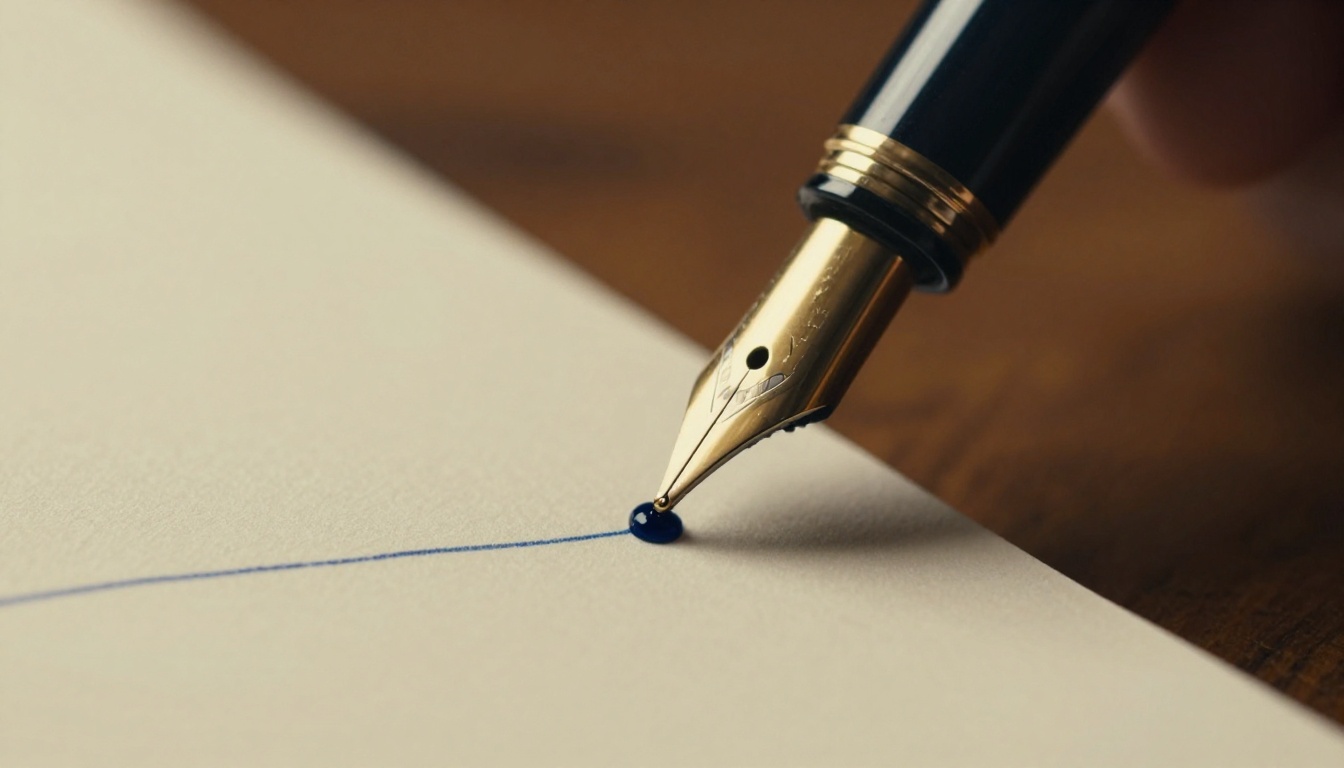
A Montblanc Meisterstuck sitting capped in a desk drawer is a paperweight. A Sailor Pro Gear with its nib broken in over six months of daily use is something else entirely — a tool shaped by the hand that holds it, producing lines no other pen in the world can replicate. The difference matters, and it is the reason this piece exists.
Fountain pens occupy a strange position in 2026. They are simultaneously fetishized as desk accessories and dismissed as anachronisms. Both views miss the point. For anyone who still signs documents, takes meeting notes by hand, or writes letters — and there are more of these people than the tech industry would have you believe — a good fountain pen is the most satisfying writing instrument available. The question is which one.
Four brands dominate the serious conversation: Montblanc, Pelikan, Sailor, and Nakaya. Each approaches the problem of putting ink on paper differently, and each has trade-offs worth understanding before you spend anywhere from $300 to $3,000.
Montblanc Meisterstuck 149: The Pen Everyone Knows
The is the fountain pen equivalent of a Rolex Submariner — recognized everywhere, competent at its job, and carrying a price premium that reflects brand positioning as much as engineering. At roughly $1,170 for the standard black-and-gold version, it is not cheap. But it is not overpriced either, provided you actually write with it.
The 149 is a large pen. Uncapped, it measures around 150mm and has a substantial girth that suits bigger hands. The piston-fill mechanism holds a generous ink reservoir — roughly 1.5ml — which means fewer refills than cartridge-converter pens. The 18K gold nib, available in extra-fine through broad, is smooth out of the box and develops pleasant feedback after a few weeks of use.
Where the 149 falls short is nib character. Montblanc nibs are engineered for consistency, which means they write reliably but without much personality. The line variation is minimal, the feedback subdued. If you want a pen that simply works every time you uncap it, this is the one. If you want a pen that makes writing feel like something more than transcription, keep reading.
The Meisterstuck 149 is the pen you buy when you want to stop thinking about pens. It works. It lasts. It is never the wrong choice for a boardroom. Whether that is enough depends on what you want from the act of writing.
The 146 (Le Grand) is worth considering if the 149 feels unwieldy. Same nib quality, slightly smaller body, around $960. For most hand sizes, the 146 is the better daily writer.
Pelikan Souveran M800: The Engineer’s Choice
Pelikan does not advertise during the Super Bowl. The Hamburg-based maker has been producing pens since 1929 and has spent approximately zero euros on lifestyle branding. The costs around $650–750 depending on the finish, which makes it nearly half the price of the Meisterstuck 149 — and in several respects, the superior pen.
The M800’s piston mechanism is one of the best in the industry: smooth, reliable, with a visible ink window built into the barrel’s signature striped design. The 18K nib is where Pelikan quietly distinguishes itself. It runs wetter than Montblanc’s, with more spring and a touch of softness that allows subtle line variation without being a full flex nib. The medium nib, in particular, puts down a satisfying, well-lubricated line that makes extended writing sessions genuinely pleasant.
Build quality is excellent but less flashy than Montblanc’s. The cap bands are thinner, the clip less prominent. Nobody across a conference table will recognize it. This is either a drawback or the entire point, depending on your disposition.
Montblanc 149 vs. Pelikan M800 vs. Sailor Pro Gear vs. Nakaya Decapod
| Specification | Montblanc 149 | Pelikan M800 | Sailor Pro Gear | Nakaya Decapod |
|---|---|---|---|---|
| Price Range | $1,100–1,200 | $650–750 | $300–400 | $800–2,500+ |
| Nib Material | 18K Gold | 18K Gold | 21K Gold | 14K or 18K Gold |
| Fill System | Piston | Piston | Converter/Cartridge | Converter/Cartridge |
| Nib Character | Smooth, consistent | Wet, soft, springy | Pencil-like feedback | Varies by nib grind |
| Weight | 32g | 28g | 21g | 25–30g |
| Best For | Reliability, presence | Extended writing | Nib connoisseurs | Collectors, daily art |
Sailor Pro Gear: Where the Nib Conversation Changes
If Montblanc and Pelikan represent the European tradition — smooth, wet, cushioned — Sailor represents the Japanese one: precise, controlled, with a feedback that pen enthusiasts describe as "pencil-like" and everyone else describes as "you can feel the paper." The is the pen that converted an entire generation of writers away from European brands, and at $300–400, it did so at a fraction of the price.
The Pro Gear’s 21K gold nib is harder than the 18K nibs used by Montblanc and Pelikan. Higher gold content means a stiffer, more controlled writing experience. The fine and medium-fine nibs are where Sailor excels — they produce thin, crisp lines with a tactile feedback that makes every letter deliberate. You feel the writing. Some people find this fatiguing. Others find it addictive.
Sailor’s specialty nibs deserve special mention. The Zoom nib changes line width based on writing angle. The Naginata Togi series, ground by a single craftsman in Hiroshima, produces line variation that mimics traditional Japanese brush calligraphy. These specialty grinds range from $500–900 and have waiting lists measured in months. They are, by any reasonable standard, the most interesting production nibs being made today.
The trade-off is ink capacity. The Pro Gear uses a cartridge-converter system that holds roughly 0.5ml — a third of what the piston-fill Montblanc and Pelikan manage. Heavy writers will refill daily. The pen body, made from PMMA resin, is lighter and smaller than the European competition, which suits Japanese writing postures but can feel slight in larger Western hands. The Pro Gear Realo addresses the ink issue with a built-in piston mechanism, though it is harder to find and costs more.
Nakaya: The Quiet Pinnacle
Nakaya is what happens when a pen manufacturer decides that every unit will be finished by hand. Based in Tokyo and operated as a subsidiary of Platinum Pen Co., Nakaya produces lacquered fountain pens using techniques borrowed from traditional urushi craft — the same methods used to finish furniture and decorative objects in Japan for centuries.
The entry point is the Decapod, a ten-sided pen available in various urushi finishes starting around $800 for the Aka-tamenuri (a deep, translucent red over black). A Nakaya in full maki-e — hand-painted lacquer with gold or silver powder — can run $3,000–5,000 or more. Production times of three to six months are standard. This is not a pen you order on Tuesday and receive on Thursday.
The nibs are Platinum-made, available in 14K or 18K gold, and can be ordered with custom grinds. The writing experience is closer to Sailor than to European pens — firm, precise, with clear feedback. But the real distinction is the body. Urushi lacquer is warm to the touch, develops a deeper patina over years of handling, and has a tactile quality that resin and precious metals simply cannot replicate. It is the difference between a printed poster and an oil painting — both display an image, but only one changes in the light.
The honest caveat: Nakaya’s customer service and delivery timelines can test patience. Orders placed through Japanese retailers tend to move faster than those placed directly. And the lacquer, while durable, requires more care than resin — no solvents, no prolonged UV exposure, gentle handling.
The Ink Makes the Pen
A $1,000 pen loaded with mediocre ink writes worse than a $50 pen loaded with the right one. Ink selection is not an afterthought — it is half the equation.
For daily use in a professional context, three inks stand out. Pilot Iroshizuku Shin-kai (deep blue-black) is the benchmark: well-behaved in nearly every pen, moderate flow, professional color, minimal feathering on cheap paper. At roughly $25 per 50ml bottle, it is also reasonable value. Sailor Jentle Tokiwa-matsu (dark green) is a sophisticated alternative to blue-black — distinctive without being distracting, and its drier flow pairs particularly well with Sailor’s own nibs. Pelikan Edelstein Tanzanite (blue-violet) is wetter and more saturated, best suited to the broader Pelikan and Montblanc nibs where it can show its shading properties.
For document permanence — contracts, legal signatures, anything that needs to survive a coffee spill or a filing cabinet — Platinum Carbon Black is the standard. It is pigmented rather than dye-based, making it waterproof once dry. The trade-off is maintenance: pigmented inks can clog feeds if left to dry in a pen. Use it in a pen you write with daily, and flush the pen every two to three weeks.
Avoid inks with heavy shimmer particles (marketed as "stardust" or "glitter" variants) in pens you care about. They clog feeds, accumulate in piston mechanisms, and create maintenance headaches that no amount of visual novelty justifies.
Paper Matters More Than You Think
Fountain pen ink on standard office copier paper is a miserable experience — feathering, bleed-through, and none of the line quality the pen is capable of. The paper is the third leg of the writing system, and it deserves the same consideration as the pen and ink.
Tomoe River (now manufactured by Sanzen) is the enthusiast standard: 52gsm paper so thin it feels fragile, yet it handles fountain pen ink with zero feathering and remarkable shading. Midori MD, Rhodia, and Clairefontaine are the accessible alternatives — all offer smooth, fountain-pen-friendly surfaces at reasonable prices. For desk notebooks, the Leuchtturm1917 with 120gsm paper (the newer version, not the original 80gsm) handles most inks well and is widely available.
For correspondence, much like commissioning anything by hand, the stationery itself signals intention. Crane’s cotton paper remains the American standard. In Europe, G. Lalo and Original Crown Mill produce cotton-blend correspondence cards that take fountain pen ink beautifully. A handwritten note on good paper, in good ink, from a good pen still communicates something that no email or text message can.
What to Buy First
If this is your first serious fountain pen and you want the safest entry point: the Sailor Pro Gear in medium or medium-fine. It teaches you what a great nib feels like without requiring a four-figure commitment. Pair it with Pilot Iroshizuku Shin-kai and a Rhodia dotpad notebook. Total investment: roughly $370. That combination will outwrite anything with a ballpoint refill at any price.
If you already own a good pen and want something meaningfully different: the Pelikan M800 in broad. The wet, springy nib is the polar opposite of the Sailor’s controlled precision, and experiencing both ends of the spectrum helps you understand what you actually prefer in a writing instrument.
If money is secondary to the experience: a Nakaya in Aka-tamenuri with a soft-fine nib. It is the pen you will still be writing with in twenty years, and the urushi will look better then than it does now. Like a well-chosen material, it improves with use rather than despite it.
And the Montblanc 149? It belongs in the collection of anyone who writes seriously. But buy it second or third, after you have learned enough about nibs and ink to know whether Montblanc’s particular brand of reliability is what you value most — or whether you would rather spend less and get more character elsewhere.
The Case for Writing by Hand
There is a growing body of research — from Princeton, from the University of Tokyo, from a 2024 study in Frontiers in Psychology — showing that handwriting activates neural pathways that typing does not. Memory retention improves. Conceptual understanding deepens. The slower pace forces a kind of editing-as-you-go that produces clearer thinking.
None of that is why most fountain pen users write by hand. They do it because it feels good. The resistance of nib on paper, the slow emergence of a line, the particular way a well-tuned pen turns the mechanical act of writing into something almost meditative — these are sensory pleasures, not productivity hacks. In an era that has optimized nearly every human activity for speed, choosing to write slowly, with an instrument that demands attention and rewards care, is a deliberate act of taste.
A good pen will not change your life. But it will change the way you sign a letter, take a note, or sit with your thoughts. That is enough.
Looking for luxury brands, stores, and services? Browse our curated directory: